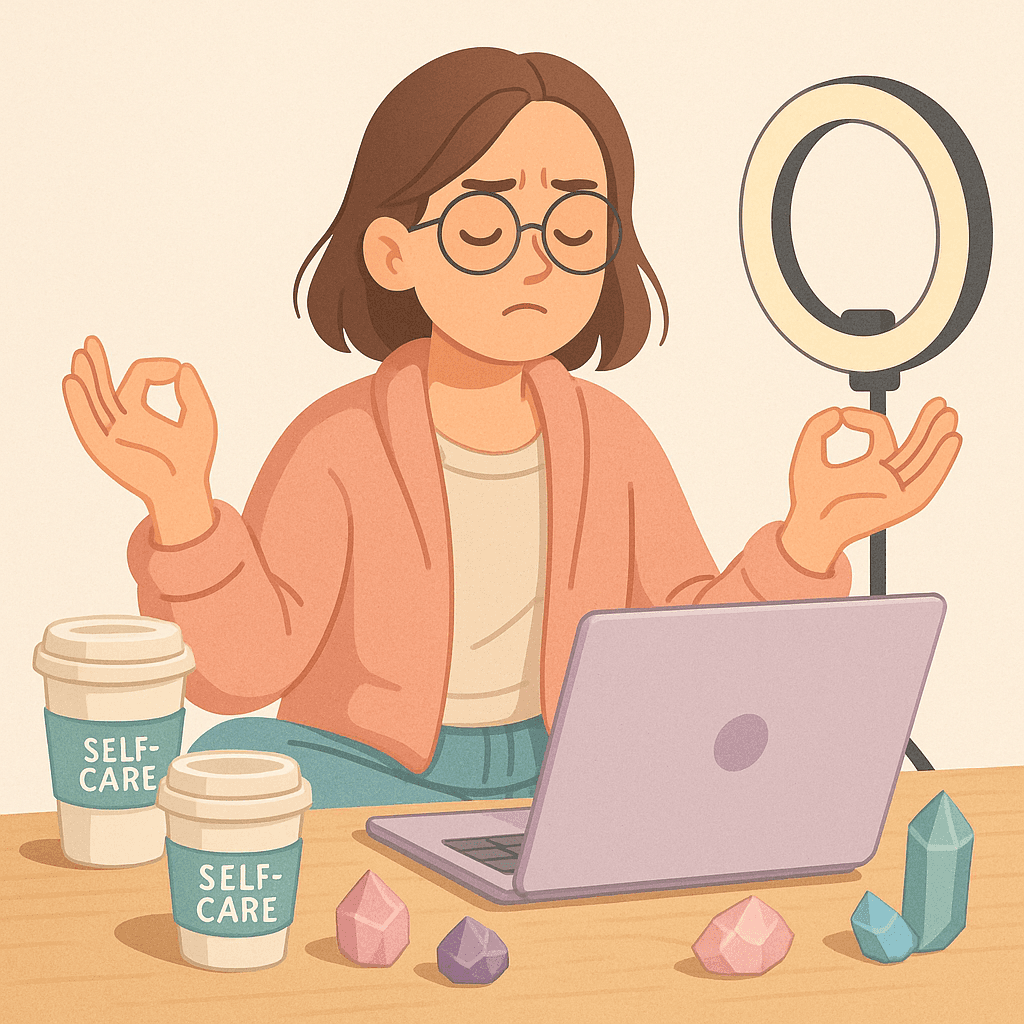
In a bold step forward for human regression, the internet this week officially rebranded burnout, dissociation, and late-stage capitalism as a holistic lifestyle, lovingly marketed as “Main Character Energy Wellness.”
According to a 47-page PDF circulating on Instagram Stories and nowhere peer-reviewed, all symptoms formerly known as “extreme exhaustion” and “crying gently in the Trader Joe’s parking lot” are now powerful spiritual awakenings — provided you hashtag them correctly.
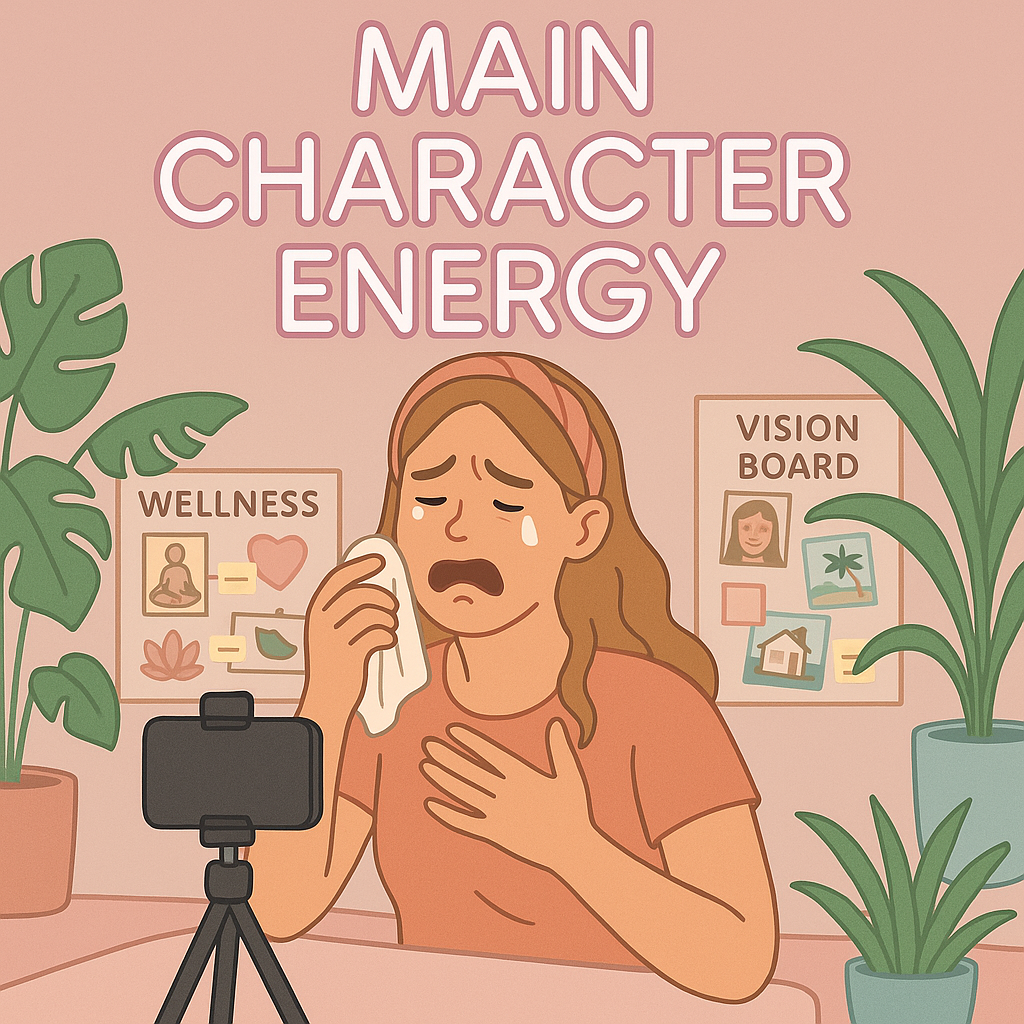
“We’re moving away from outdated labels like ‘stress’ and ‘overwork,’” said Bianca Rowe, a self-described Nervous System Sommelier and founder of the popular platform Soft Girl Hustle. “When a client tells me she hasn’t slept in three days and her eye is twitching, I don’t pathologize that. I say: babe, that’s your soul buffering in 4K.”
Bianca’s flagship online course, Burnout, But Make It Aesthetic, promises to alchemize your inability to log out of Slack into a seven-step glow-up journey:
- Step 1: Rename all problems as portals.
- Step 2: Buy a ring light.
- Step 3: Film your breakdown from three angles.
- Step 4: Call it a “nervous system reset.”
- Step 5: Soft-launch your new personality in your close friends list.
- Step 6: Sell an ebook about it.
- Step 7: Discreetly add an affiliate link to magnesium gummies.
“Americans are exhausted, anxious, and on the brink,” noted a blandly concerned expert on a recent CNN panel about mental health trends, sandwiched between a segment on Taylor Swift’s economic impact and an ad for melatonin with cartoon bears. “The wellness industry has responded the only way it knows how: with $300 weighted blankets and merch that says ‘It’s Not Anxiety, It’s My Era.’”
This follows a broader cultural moment in which everything terrifying is gently rebranded as a vibe. Climate emergency? It’s “heatwave core.” Chronic insomnia? That’s “moon productivity.” The existential dread you feel scrolling past yet another report about record-breaking temperatures from the World Meteorological Organization (BBC, July 2024)? Influencers suggest you simply “breathe through your shadow timeline” and then buy a sustainably sourced crystal water bottle.
“We don’t say ‘panic attack’ anymore,” explained wellness TikToker and part-time crypto enthusiast, Lucas Hayes. “We call it a ‘somatic plot twist.’ My therapist says I might be dissociating, but he’s also not getting the engagement my reels are, so mathematically I think I’m winning.”
Lucas recently went viral for his “Grindset But Gentle” series, in which he encourages followers to wake up at 4:30 a.m., meditate over an iPad, and do a 90-minute gratitude sprint in Notion before sending a single psychically aligned email. “Burnout isn’t real if your aura is passive income–positive,” he added, unblinking.
Wellness brands, sensing a lucrative opportunity to monetize collective collapse, have rushed in with products designed to treat the symptoms of modern life without threatening the causes.
Among the newest launches:
- Adrenal Latte Pods™: Single-serve pods that promise to “patch” your fried nervous system with adaptogens, ceremonial-grade oat milk, and just enough caffeine to keep you purchasing more Adrenal Latte Pods™.
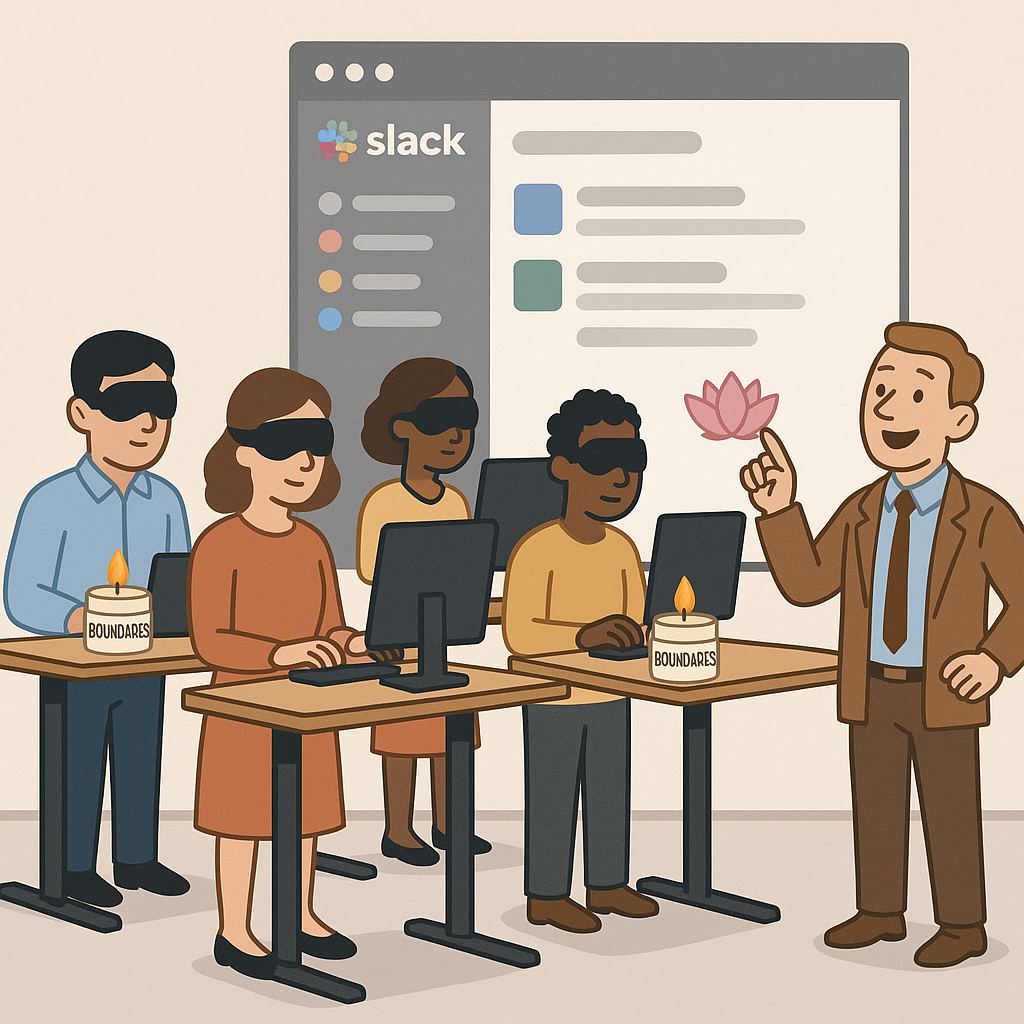
- Boundary Candles: $72 soy candles that smell like “No Longer Available After 9 p.m.” and come with a script for telling your boss you’re in a “receptivity window.” Scent notes: bergamot and thinly veiled resentment.
- Inner Child Standing Desks: Ergonomic workstations with a built-in mirror so you can watch yourself ignore everything you cried about in therapy last week.
“We don’t want customers to change their lives,” said one unnamed wellness VC, quietly checking his Apple Watch. “We want them to ritualize their suffering at a markup.” He later confirmed his firm also invested in a mindfulness app that sends you three push notifications an hour reminding you to put your phone down.
Government and corporate entities have begun to take note, eager to offer their own “healing-forward” gestures that do not involve money, structural support, or anything measurable. Following the U.S. Surgeon General’s advisory on the loneliness epidemic (May 2023), several tech companies announced innovative solutions such as “meeting-less Fridays,” which were instantly filled with rescheduled meetings, and “mindful Slack,” in which your manager places a lotus emoji next to your performance warnings.
“Our new policy encourages employees to take unlimited mental health days, as long as they do not take them,” read one leaked internal memo from a major social media platform.
Meanwhile, a growing number of influencers are turning active harm into a kind of edgelord spiritual practice. “Toxic positivity is over,” said one viral creator in a reel filmed from the vantage point of her Peloton. “We’re doing toxic neutrality now. I don’t judge you, I don’t support you, I simply hold space while you drive into the same brick wall every week and call it a boundary.”
Her latest offering, a $399 asynchronous coaching container titled Aligning With Your Red Flags, promises to help clients “stop self-sabotaging and start self-surfacing,” which appears to mean posting screenshots of your text arguments with the caption “my nervous system said no.”
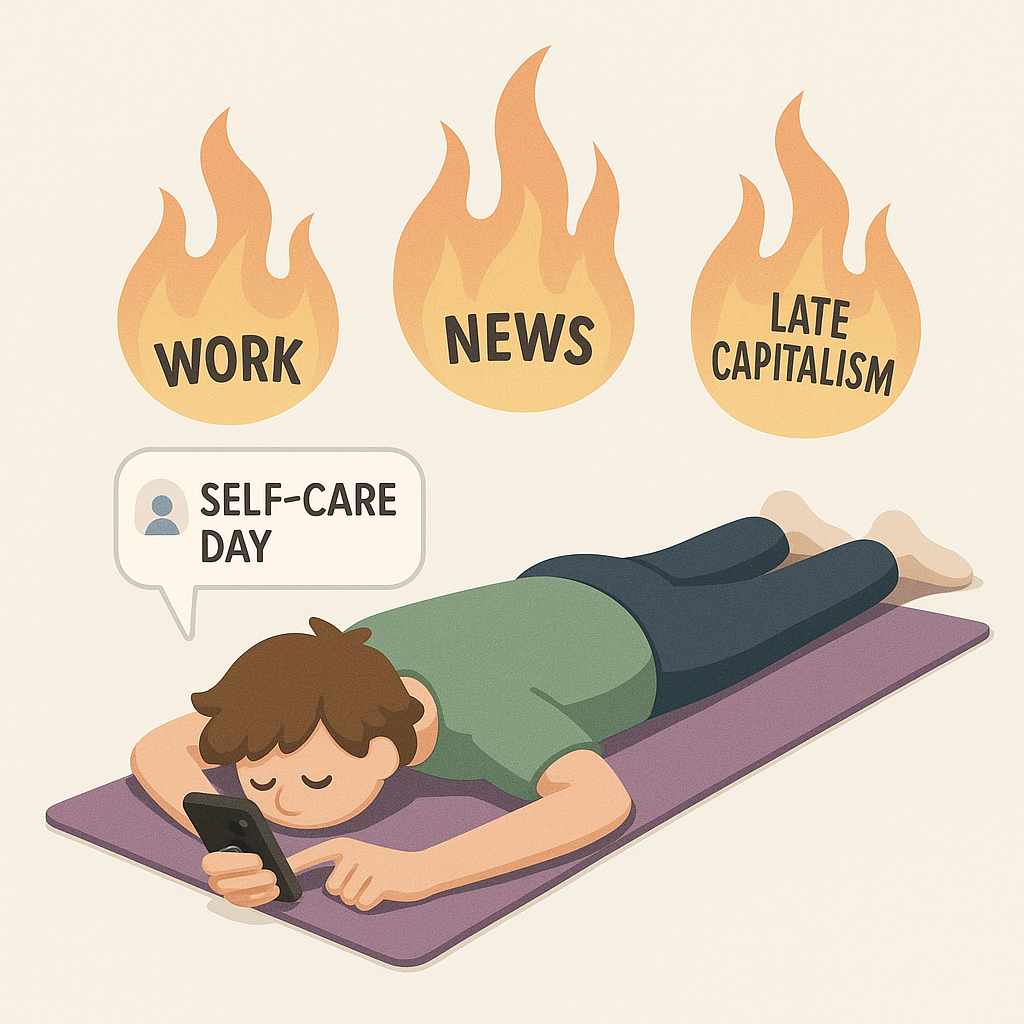
Critics argue that all of this reframing might be making things worse. “There’s a point where ‘reclaiming your narrative’ becomes just putting glitter on a house fire,” said Dr. Maya Levin, a clinical psychologist who made the mistake of logging onto TikTok in 2022 and has not known peace since. “If your job is ruining your health, buying a $120 lymphatic drainage brush to cope is not self-care. It’s craft time at the apocalypse.”
Dr. Levin pointed out that the World Health Organization officially recognized burnout as an occupational phenomenon in 2019, associated with unmanaged workplace stress. “What we needed after that,” she said, “was policy. What we got was merch.”
Still, many users insist the new vocabulary helps them feel better, or at least feel better about posting. “Before this, I thought I was just losing it,” said 29-year-old marketing assistant Jenna, who recently bought a “Soft Life, Hard Deadlines” vision board kit off Etsy. “Now I know I’m not ‘maxed out,’ I’m just living in my villain era of overachievement.” She then excused herself to film a “day in my life as a girl who is so tired it’s insane” montage set to gentle piano.
As the trend continues to spread, experts predict a coming wave of micro-niches: Hydrated Burnout, Sober Burnout, Vegan Burnout, Digital Nomad Burnout (“I’m depressed, but from Bali”), and a growing movement of people insisting they are not burnt out, they are simply “plotting in silence.”
The rest of us, meanwhile, are left trying to answer basic questions with increasingly deranged language: Am I okay? Is this exhaustion or enlightenment? Do I need a nap, a union, or a subscription box?
The answer, tragically, is probably “yes.” All three.
Until then, America will continue to light its boundary candles, sip its adrenal lattes, and post its spiral content with the caption “healing & revealing,” bravely manifesting a world in which nothing fundamentally improves, but everything is extremely on brand.
Please remember to breathe. But more importantly, please remember to tag the brand when you do.



