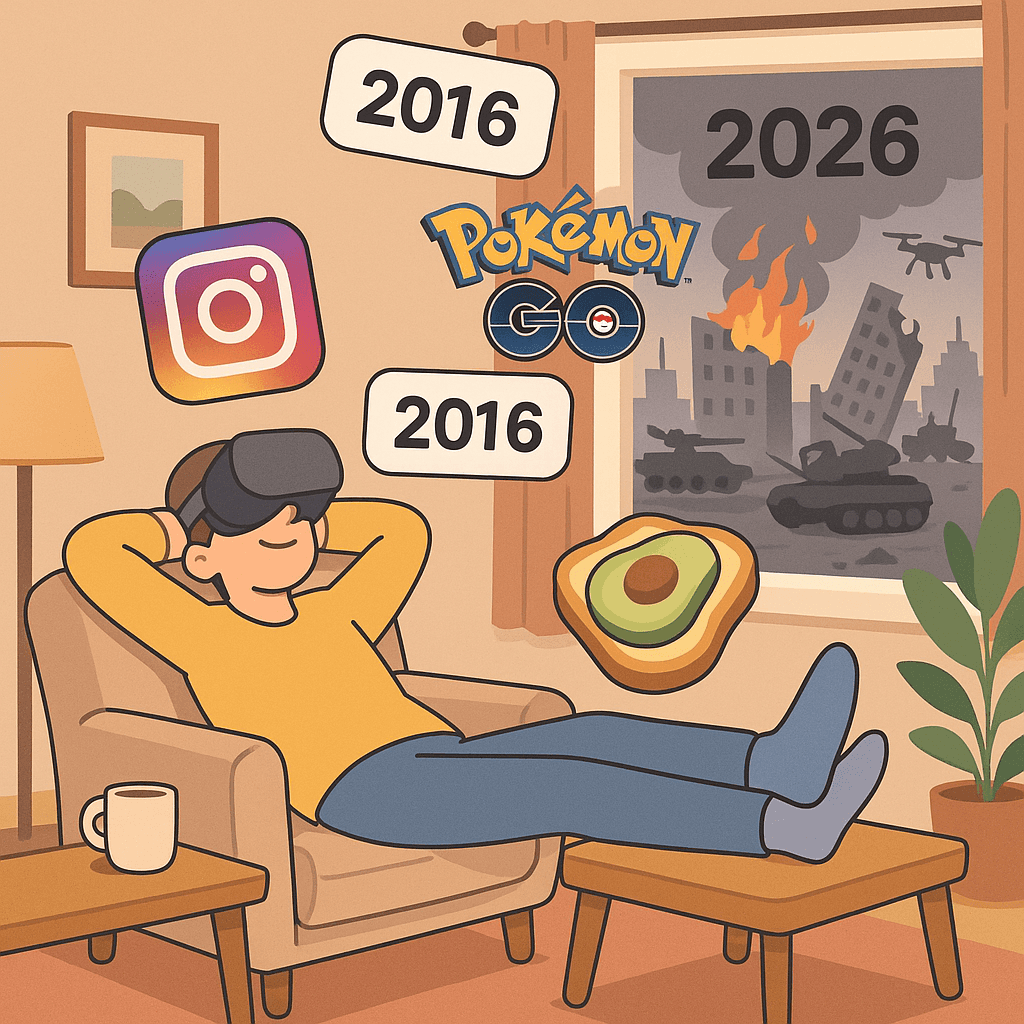
In a move that finally confirms time is a flat circle and we are all stuck inside a sad Pinterest mood board, an emerging trend is sending people on virtual journeys back to 2016 as an “antidote” to the creeping chaos of 2026, according to multiple reports from the Boston Herald, The Press Democrat, the Lowell Sun, and the Sentinel and Enterprise (Feb 2026).
Yes, 2016. The year we thought was rock bottom. The year we made “dumpster fire” a personality. The year we rage-tweeted our way through political shocks, celebrity deaths, and the correct way to contour our faces. Now, thanks to a cluster of VR startups and nostalgia‑mining platforms, that same year is being repackaged as a premium mental health retreat with in‑app purchases.
The movement is loosely anchored around a genre of apps optimistically labeled “Temporal Wellness Platforms.” One particularly popular subscription service, BackTo2016™, promises users “a therapeutically curated recreation of 2016 media, memes, and micro‑traumas,” delivered via headset. Think: scrolling Instagram’s original chronological feed, listening to The Chainsmokers unironically, and watching painstakingly reconstructed Snapchat Stories in 480p.
“Our users kept telling us that 2026 felt ‘too loud,’ ‘too weird,’ and ‘like my group chat is several governments collapsing at once,’” said BackTo2016 founder and self‑described “time sommelier” Adriana Vale in a launch webinar you could only join by RSVP’ing to a Google Calendar link that said ‘just vibes.’ “So we asked ourselves: what if we could create a safe space where the world was only medium on fire?”
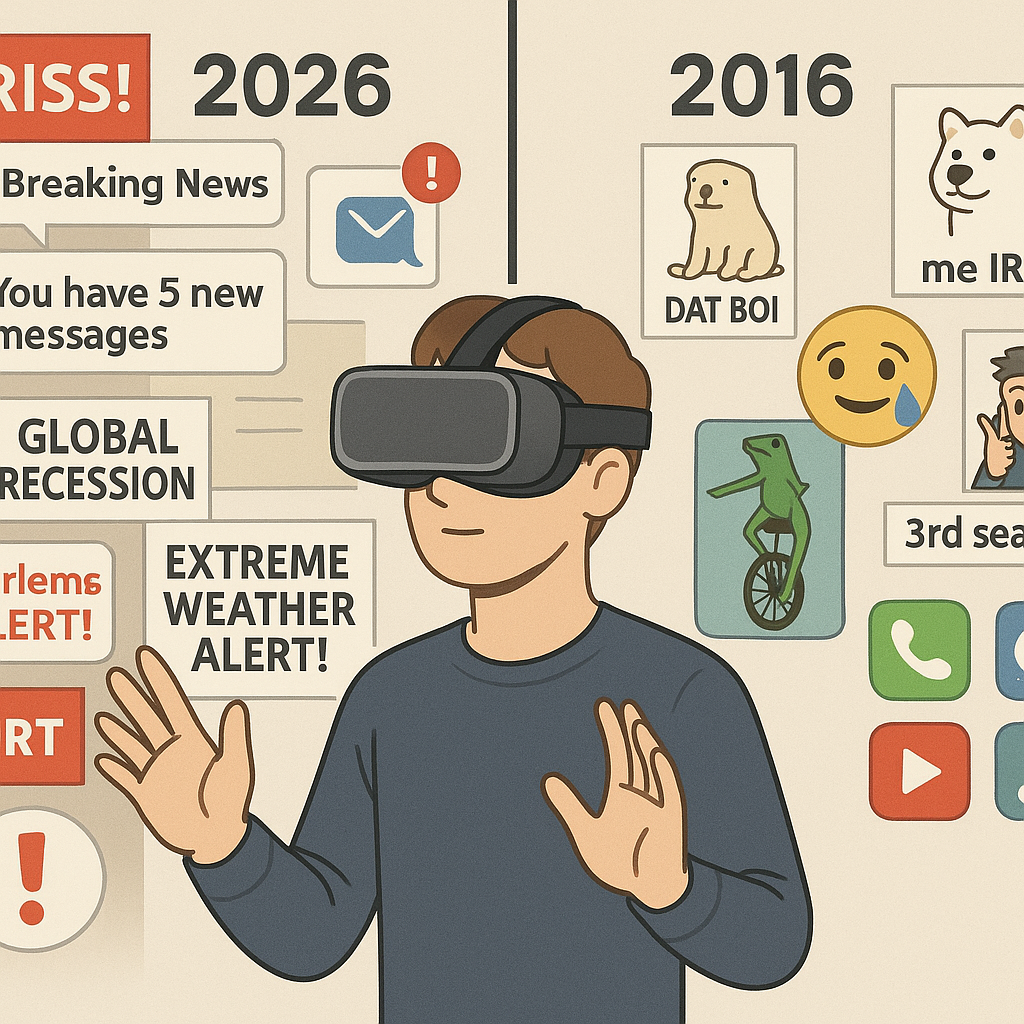
In the company’s flagship experience, Herald Mode, users are plunged into a simulated news cycle based on archives from the Boston Herald. You sit on a virtual couch, open a virtual laptop, and relive every overwrought headline of that fateful year. The algorithm then layers in ambient 2016 noises: distant Hamilton soundtrack, a roommate shouting about Pokémon GO server outages, and someone in the next room loudly insisting “this Brexit thing will blow over, right?”
But the trend isn’t limited to Boston nostalgia. A competing platform has partnered with The Press Democrat in Santa Rosa to offer what it calls “Wine Country Regression Therapy.” Users wander through a sun‑drenched, low‑resolution Sonoma Valley circa 2016, where the biggest anxiety is whether your avocado toast looks rustic enough for Instagram. An in‑world guide, modeled on an amalgam of earnest local columnists, gently reminds you that the worst thing you knew about the climate crisis back then was that summer felt “a little weird.”
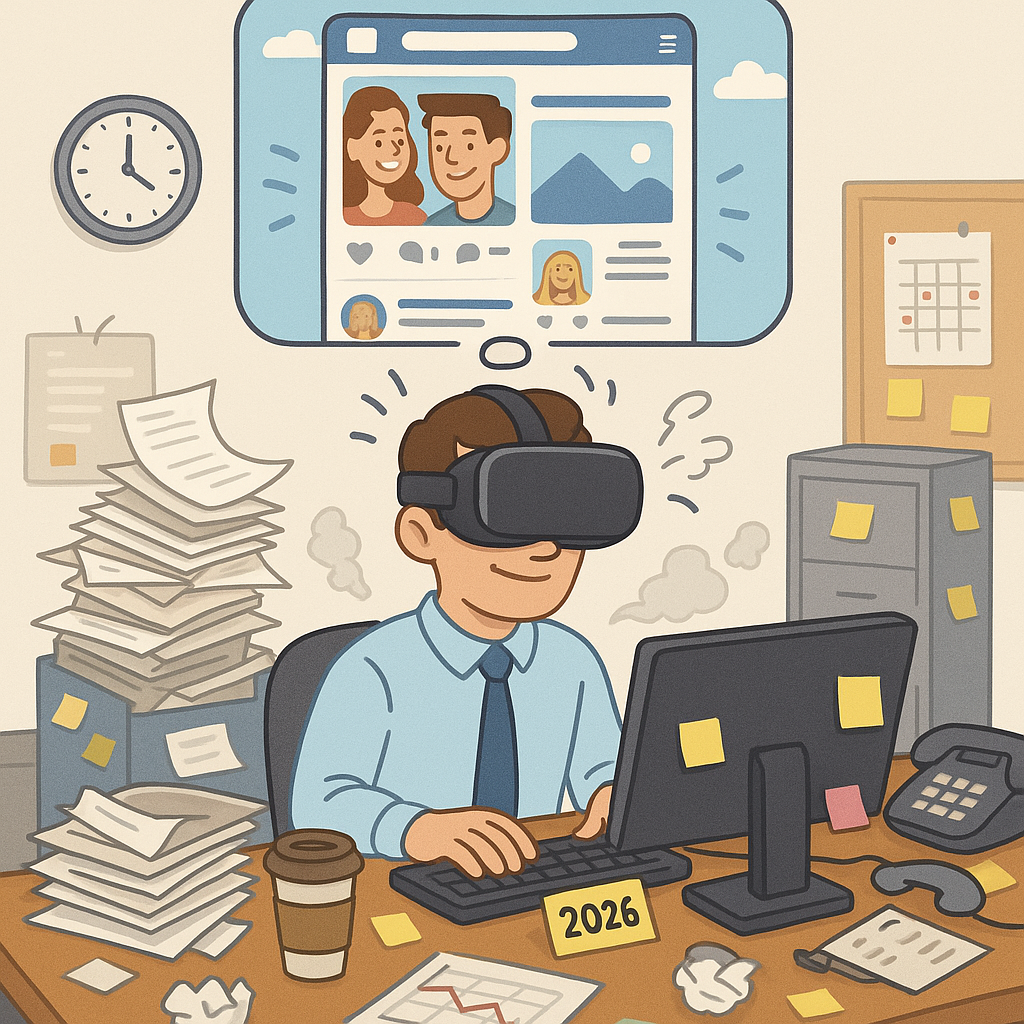
Over in Massachusetts, the Lowell Sun and the Sentinel and Enterprise have licensed their 2016 photo archives to an app called Rustic Regression, which markets itself to “burned‑out knowledge workers who yearn for the purity of their first ugly open‑plan office.” Strap on the headset and you’re transported to a lovingly recreated cubicle with a 1080p monitor, a dying ficus, and an Outlook inbox that only has 40 unread messages instead of 4,000.
“We saw this spike where users kept toggling their simulated date back from 2026 to 2016 whenever the AI newsfeed mentioned ‘elections’ or ‘the economy,’” explained Rustic Regression’s lead product strategist. “So we leaned into it. Nostalgia isn’t just a feeling anymore. It’s an engagement funnel.”
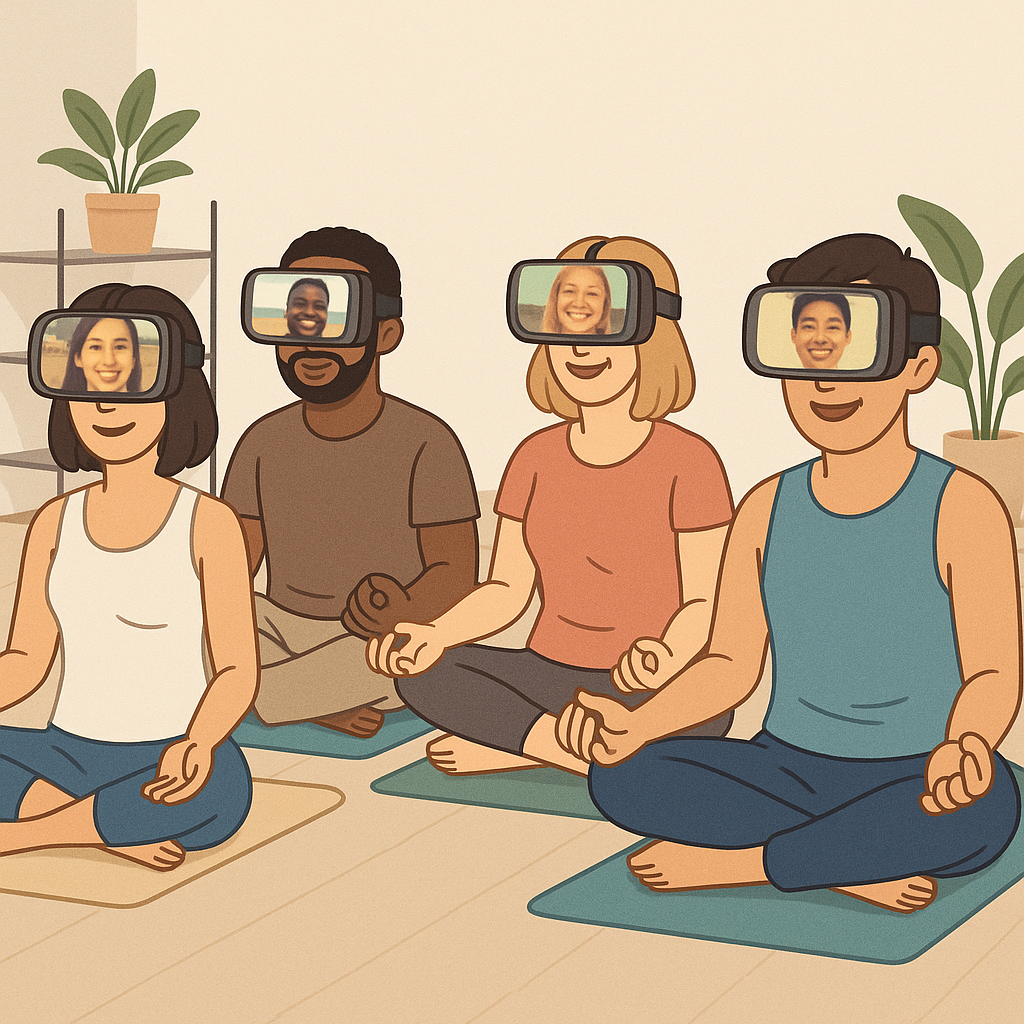
Therapists, keenly aware that anything can be therapy if you put ‘mindful’ in front of it, have been quick to brand the trend as a tool for “chronological grounding.” One Brooklyn‑based clinician now offers premium “2016 Regression Sessions” where clients process their current anxiety while watching a looped simulation of themselves doomscrolling in bed, lit solely by the glow of their iPhone 6S.
“When patients confront their 2016 selves,” she says, “they realize they’ve always been barely coping. It’s very empowering.”
The apps come preloaded with guided meditations voiced by an AI that has been trained on 2016-era YouTube beauty tutorials and early wellness podcasts. Sample script:
- “Inhale: I am safe. Exhale: I still think minimalism will fix my life.”
- “Scan your body: where is your stress? Your jaw? Your shoulders? That half‑finished bullet journal from 2016?”
- “Let go of what no longer serves you—like 2026.”
Of course, tech critics point out that this latest flavor of digital escapism is less about healing and more about re‑monetizing old content. If you already paid to live through 2016 once, congratulations: you can now pay a monthly fee to live through it again in 4K with optional haptic feedback.
“It’s brilliant, in a deeply cursed way,” said one media analyst. “First platforms sold us our friends back via social networks. Now they’re selling us our own past back in VR. I’m excited to see what’s next. Maybe by 2036, we’ll get to subscribe to a beta version of ‘Having A Future.’”
The platforms insist there are guardrails. BackTo2016 offers “gentle content boundaries” where users can toggle off certain major events—elections, referendums, that time you thought a pyramid scheme was a “really empowering female‑led business opportunity.” There is, however, no current setting to block your 2016 haircut.
Still, early adopters praise the experience. Users describe feeling “paradoxically calmer” among the chaos of their simulated 2016 feeds. One beta tester, after a weekend retreat inside the Press Democrat’s curated version of 2016 Sonoma, announced she was “ready to re‑engage with 2026” as long as she could “go back to 2016 every time the group chat mentions macroeconomic headwinds.”
The wellness industry, never one to miss a monetizable existential crisis, is already stacking on layers. Influencers now post “Temporal Reset Routines” featuring:
- Wake up, open VR headset, spend 15 “mindful” minutes in 2016 Facebook.
- Drink warm lemon water while rewatching your own 2016 Instagram Stories as exposure therapy.
- Journal three things you’re grateful for: 1) That you survived 2016. 2) That you can mute 2026. 3) That you do not, in fact, still own that choker.
Back in reality, city officials and mental health advocates are divided. Some argue that the trend amounts to mass dissociation with a curated skin. Others, quietly, admit they’ve tried the apps themselves. One municipal staffer from Lowell reportedly spent an entire lunch break sitting in a conference room, headset on, blissfully attending a fake 2016 town hall where the biggest controversy was whether to install more bike lanes.
As 2026 continues to wobble along, the question isn’t whether more people will flee into VR, but how far back they’ll go. 2016 works today because we still remember its textures: the fonts, the filters, the naïve belief that things couldn’t get much worse. Once that nostalgia has been fully mined, expect the same outlets—Boston Herald, Press Democrat, Lowell Sun, Sentinel and Enterprise—to start licensing their archives from 2006 and beyond.
After all, if escaping to 2016 is self‑care in 2026, it’s only a matter of time before some startup offers the ultimate detox: a virtual journey back to a world with no smartphones, no push alerts, and no wellness tech at all.
They’ll call it: “Airplane Mode.” And you’ll pay $19.99 a month for it.



