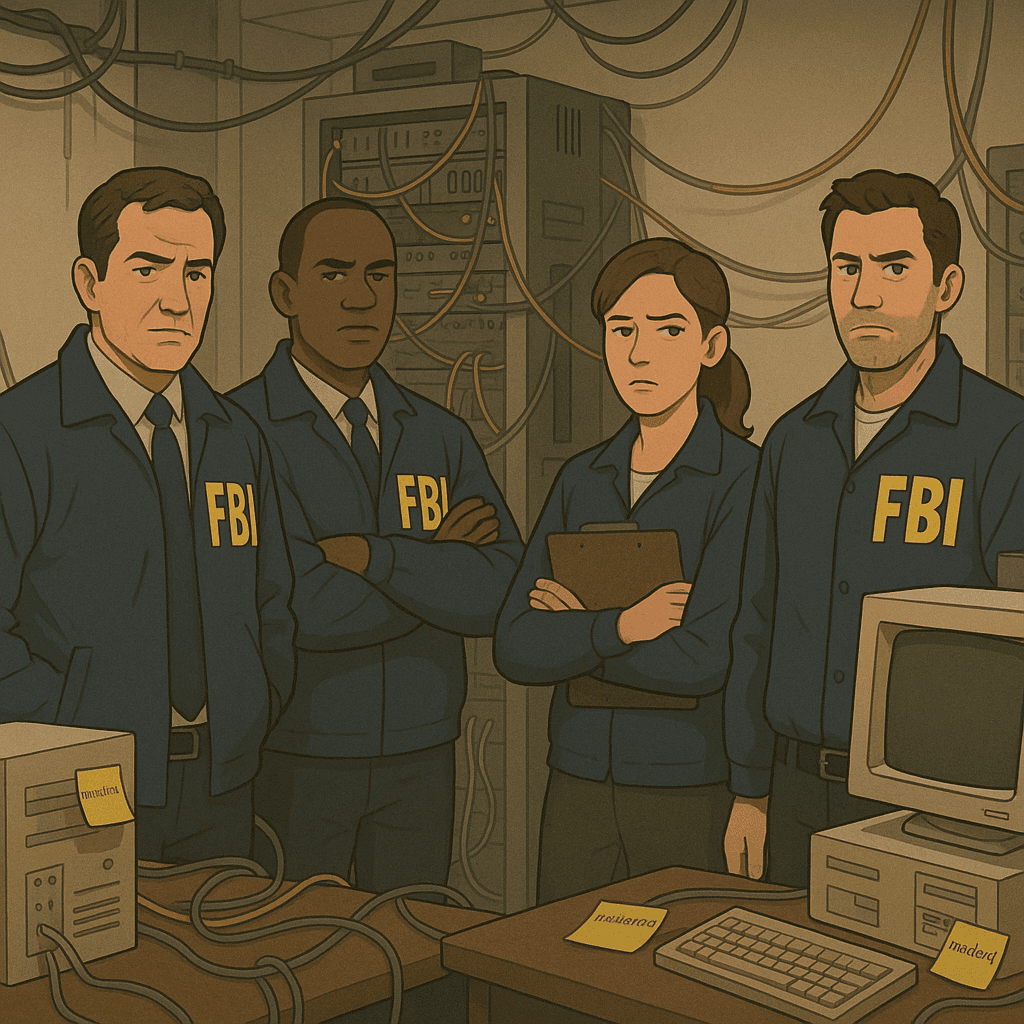
The FBI turned up at the Fulton County elections office this week with a warrant, and, in a shocking twist, it wasn’t because someone finally tried to unplug 2020 and plug it back in again. According to multiple reports carried by outlets including the Miles City Star and the Dailyrecordnews (Jan 2026), federal agents arrived at the Fulton County, Georgia elections office to seize “certain records” tied to the 2020 presidential contest.
On the surface, this sounds purely political. In reality, it’s a tech story — the awkward, wheezing, Windows-7-on-life-support kind. The FBI allegedly came hunting for evidence that an unnamed political operative accessed sensitive election systems. What they found, sources say, was an IT environment so neglected that several agents “instinctively wanted to open a Jira ticket, cry, and then switch careers to pottery.”
“This began as a criminal inquiry,” one fictional but emotionally accurate tech expert told us, “and quickly became a digital wellness check. The Fulton County elections office clearly hasn’t hydrated, backed up its data, or changed its passwords since roughly the Bush administration.”
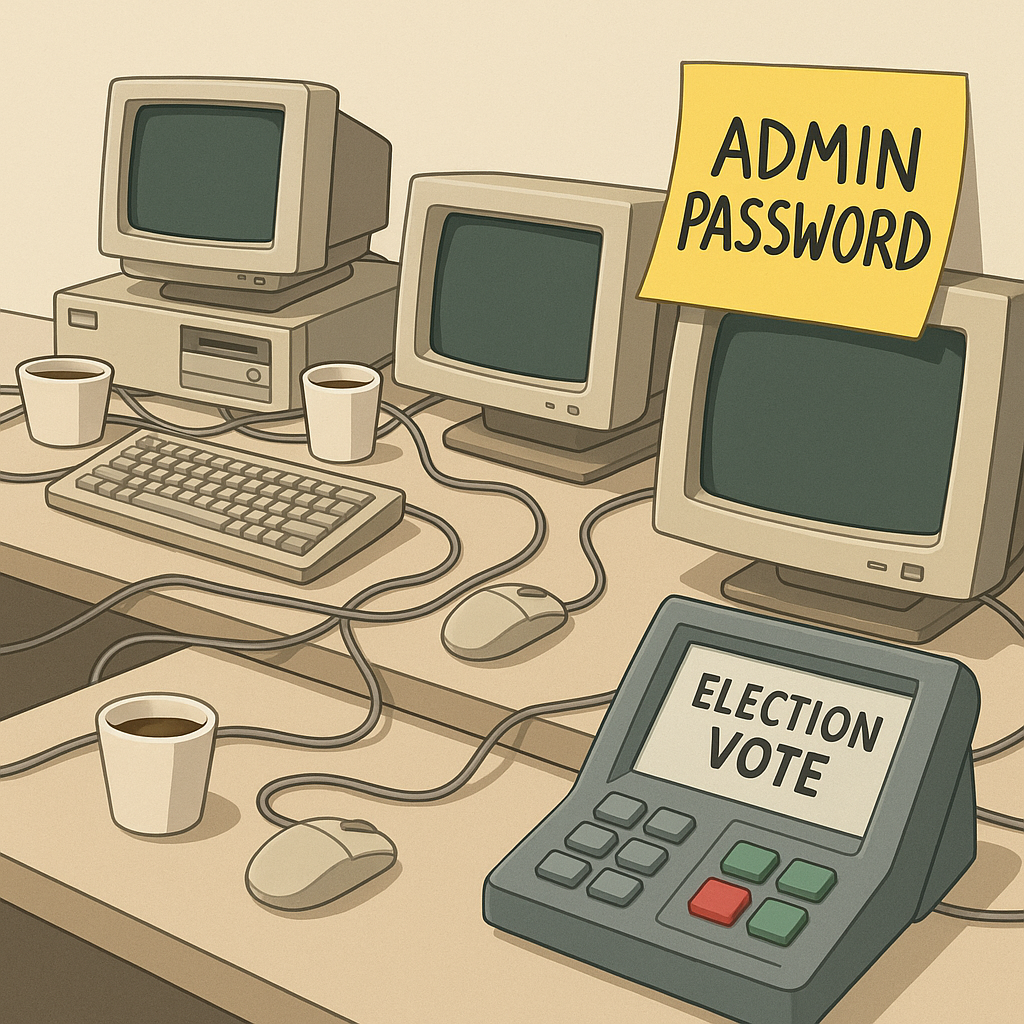
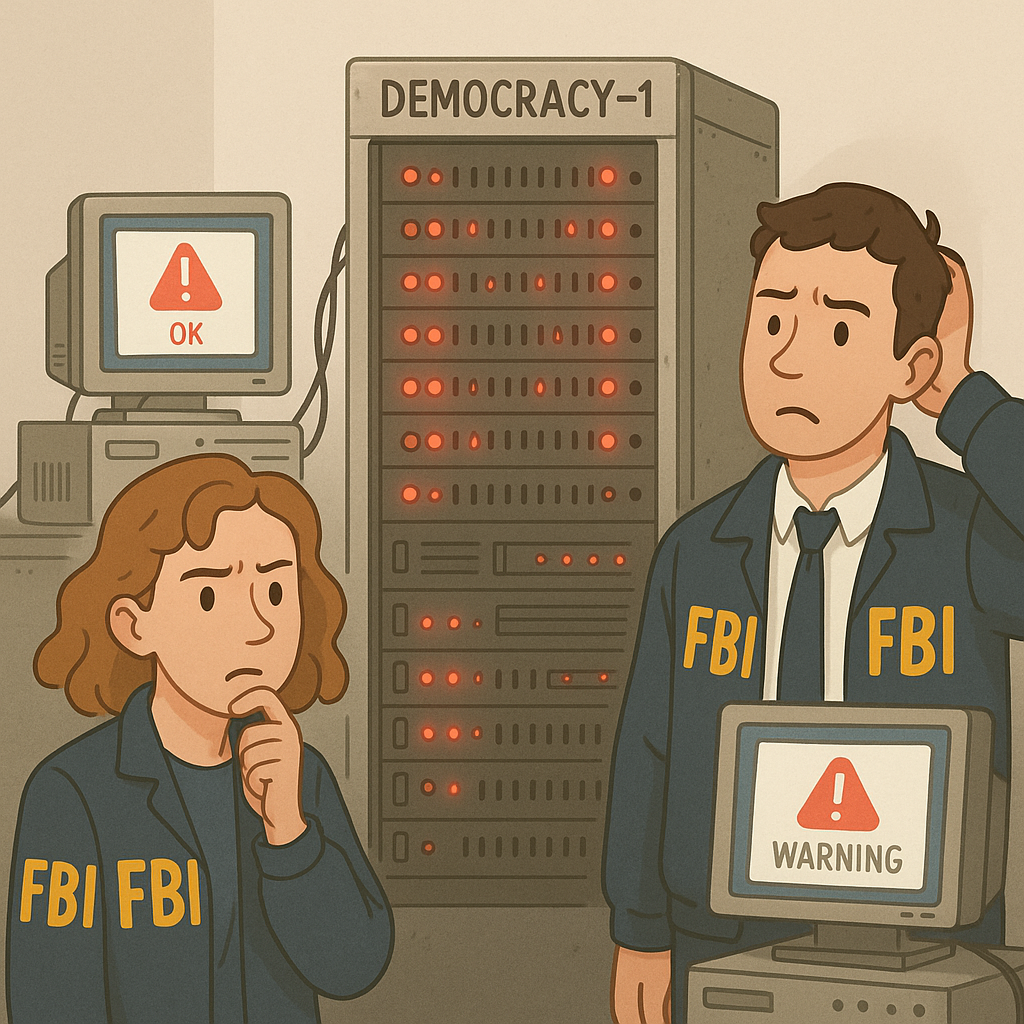
Inside the building, agents reportedly moved past the standard décor of American democracy — flags, inspirational posters, a ficus desperately clinging to life — and headed straight for the server room. There, they allegedly uncovered an ecosystem that can only be described as ‘heritage computing’: machines labeled ‘DO NOT TOUCH – WORKS SOMETIMES,’ sticky notes with admin logins, and a mysterious tower PC named “DEMOCRACY-1” humming like a stressed air fryer.
“We’d been told this office was critical election infrastructure,” one agent allegedly remarked. “We just weren’t told the infrastructure was mostly held together with expired antivirus and emotional attachment.”
According to AP-style reporting echoed in the Beloit Daily News and Dailysentinel (Jan 2026), the FBI warrant in Fulton County focuses on who accessed what data, when, and whether that data was supposed to be accessed at all. In tech terms, this is less ‘political thriller’ and more ‘compliance audit from the ninth circle of cybersecurity hell.’ Logs must be retrieved, login attempts reconstructed, and VPN activity untangled — none of which is easy when your primary documentation system is “ask Janet, she remembers.”
Election offices like the one in Fulton County are a case study in what happens when we demand banking-level security on a bake-sale budget. On paper, they’re “critical infrastructure.” In practice, they’re:
- A part-time sysadmin who’s also in charge of toner, coffee, and everyone’s feelings.
- Legacy voting databases that really, really hope no one notices they run on a version of SQL last patched during the Harlem Shake era.
- A ‘security protocol’ that boils down to: “Don’t click weird links” and “Gary, stop using your lunch break to install Chrome extensions.”
Into this steps the FBI, which, judging from the coverage in Wink News and the Chronicle Online, seems less like a shadowy federal overlord and more like the world’s grumpiest IT consultant with arrest powers. In Fulton County, agents reportedly imaged drives, collected documents, and attempted to decipher a network map created by an intern in 2014 using Microsoft Paint and hope.
“We’re not here to overturn an election,” an imaginary agent clarified. “We’re here to find out why the domain controller is also running as a print server, media server, and, apparently, Candy Crush.”
Residents of Fulton County might understandably assume this is all about votes, ballots, and democracy teetering on a knife-edge. And, yes, that’s in the mix. But at its core, the warrant reveals something even more universal and terrifying: no one in America actually knows who’s in charge of information security in the places that matter most. Hospitals, schools, elections offices — all quietly hoping that “turn it off and back on” counts as a cyber strategy.
Meanwhile, the private sector is out here deploying AI to optimize sandwich ads, while an elections office in one of the most scrutinized counties in the United States is allegedly relying on 10-year-old hardware and whatever wisdom can be mined from a USB stick labeled “BACKUP??” in Sharpie.
The contrast is almost artful:
- Silicon Valley: “We’ve built a blockchain-based, zero-knowledge proof system for microtransactions in the metaverse.”
- Fulton County elections office: “If this NAS beeps again, we lose the 2018 midterms and Sandra’s wedding photos.”
Tech companies insist they’re “protecting democracy” with cutting-edge tools. Yet in Fulton County, the actual guardians of democracy are packing Dells that scream every time someone opens more than three tabs. We’ve essentially outsourced our faith to the idea that somewhere, someone upgraded something. No one can name who. But we feel it, like Mercury retrograde.
Experts say the Fulton County warrant should be a wake-up call for public-sector IT across the United States. Unfortunately, like most wake-up calls, it’s going straight to voicemail. The cycle is familiar: scandal, scrutiny, a blue-ribbon commission, a 200-page PDF, and finally a procurement process that concludes, six years later, with the heroic purchase of… a new router and a motivational poster about cybersecurity.
In a rational world, the FBI investigation would trigger a full-stack upgrade of election tech nationwide: proper access controls, routine security audits, actual funding, and maybe even an on-site IT professional who doesn’t also have to run the front desk. Instead, we’ll get another round of hearings where someone in a suit confidently mispronounces “MFA” and suggests printing out all the logs “just in case.”
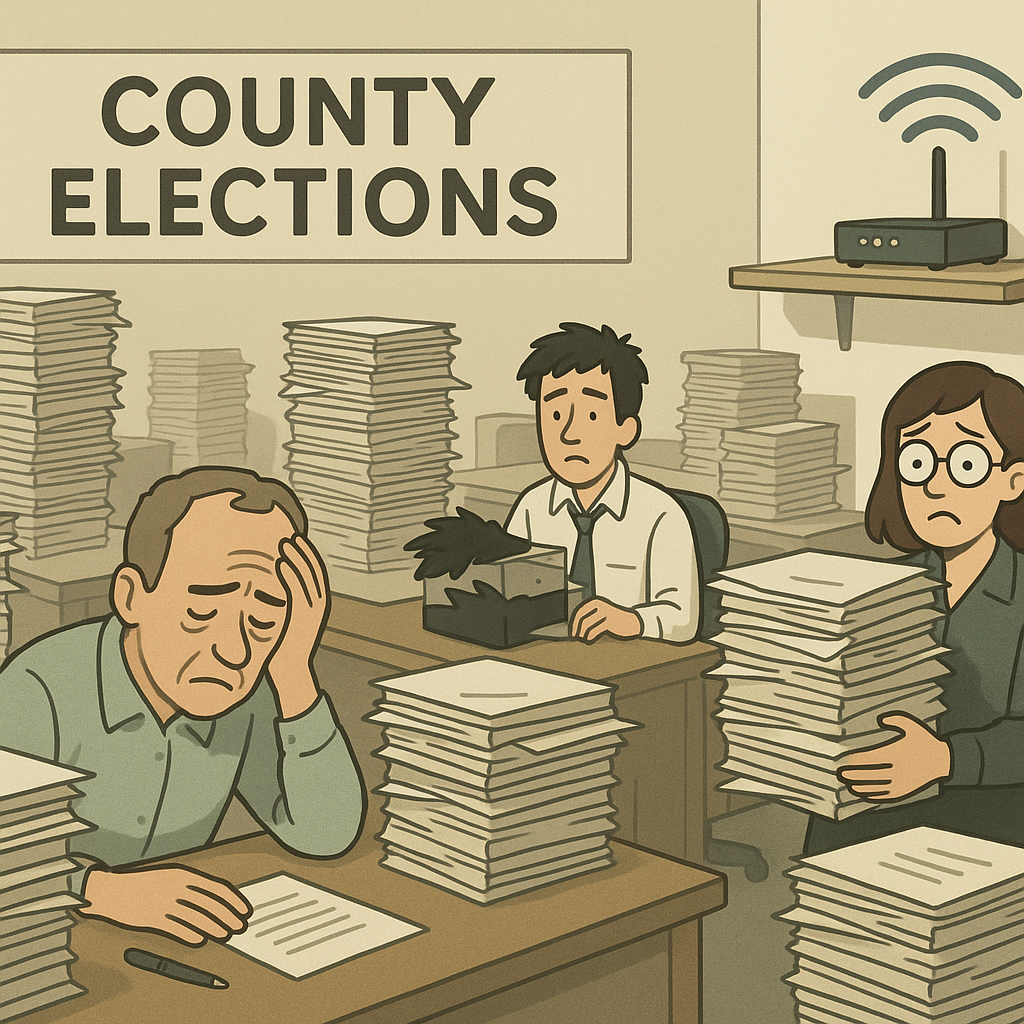
As agents continue their work in Fulton County, one thing is clear: whatever happened with those election systems, this is what digitally burned-out democracy looks like. It’s not a sleek sci-fi dystopia of holograms and quantum hacks. It’s an aging server rack, a half-labeled Ethernet cable, and a county office that never got a line item for “basic 21st-century technology hygiene.”
The most unsettling part? Fulton County isn’t an outlier. It’s the default. The FBI warrant is less a shocking plot twist and more a product recall notice for America’s entire civic tech stack. You can argue about politics all you like, but at some point, someone has to admit the scariest phrase in modern governance isn’t “deep state.”
It’s “we’ve always done it this way.”