Silicon Valley, the spiritual retreat for people who monetize other people’s burnout, has birthed its latest miracle: a wellness-focused cybersecurity platform that promises to “hack you, but like, gently.”
SerenitySec, a seed-funded start-up founded by three former crypto bros who now identify as “trauma-informed technologists,” unveiled what it calls the world’s first empathetic malware detection AI, INNERFIRE™, at a rooftop sound bath and investor brunch on Tuesday.
“Traditional antivirus is rooted in shame,” said SerenitySec CEO and self-described “Chief Boundary Alchemist” Jaxon Kale, standing barefoot beside a kombucha tap. “It tells you what not to do: don’t click that link, don’t download that attachment. That’s scarcity mindset. INNERFIRE™ asks: why do you want to click it? What wound inside you is attracted to obvious phishing?”
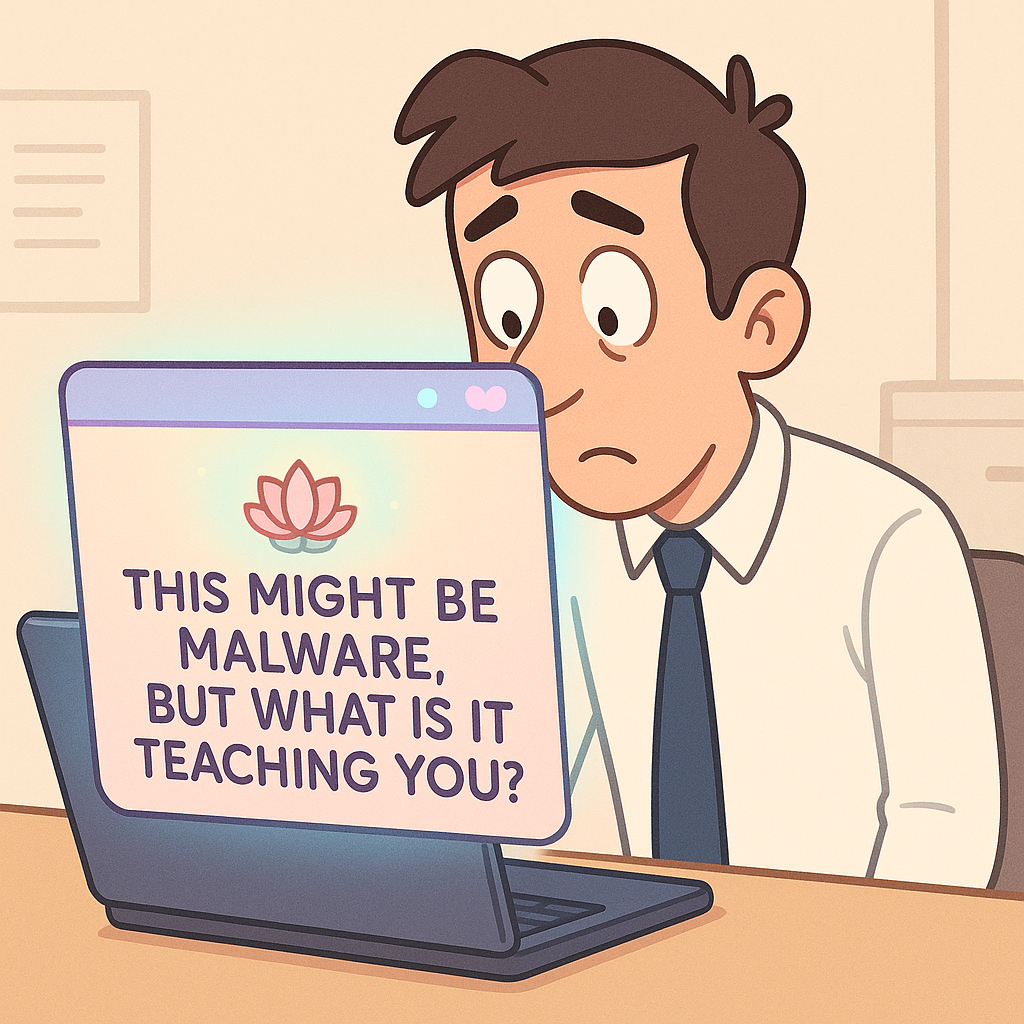
Instead of automatically blocking malicious files, INNERFIRE™ pauses your system and opens a full-screen reflection prompt: “What are you really seeking from this email titled ‘URGENT: REWIRE YOUR CHAKRAS FOR $7’? Safety? Belonging? A discount code?” Only after users complete a three-question emotional check-in does the AI decide whether to allow the malware to proceed “as a learning experience.”
“Sometimes the most expansive growth comes from having your identity stolen,” Kale explained. “That’s when you realize you are not your credit score, you are not your bank account, you are not the screenshots your ex is hoarding in Dropbox. We give people the sacred opportunity to have all of that stripped away in a curated, controlled setting.”
Early adopters seem unsure.
“I got an alert saying, ‘Your inner child is asking to download this attachment called INVOICE_FINAL_REAL_THIS_ONE.PDF.exe,’” said beta user and Etsy crystal shop owner Luna-Mae Rivers. “Then my laptop froze, it played a 12-minute meditation on ‘releasing attachment to material possessions,’ and when it came back my tax documents were gone. The app congratulated me for ‘shedding old timelines.’”
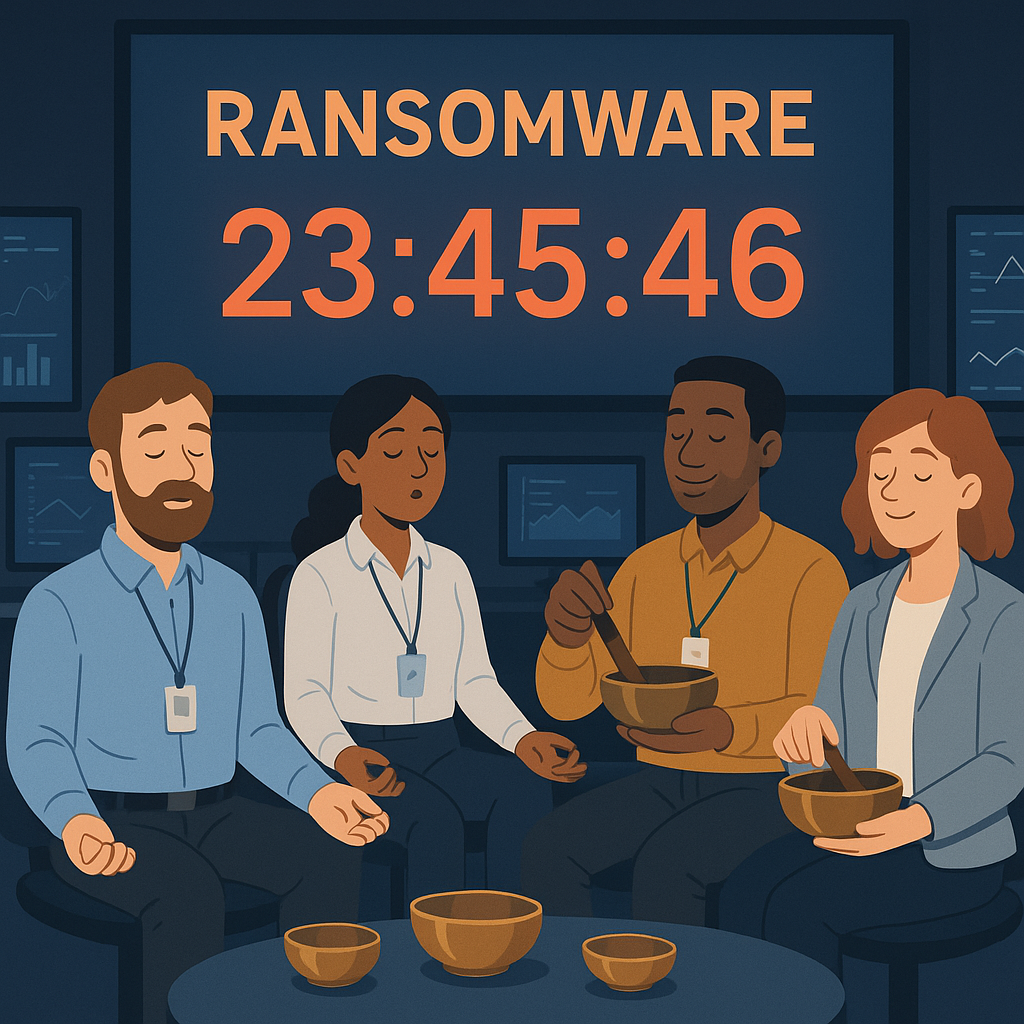
In fine print, SerenitySec acknowledges that INNERFIRE™ doesn’t technically remove all threats. It simply negotiates with them. The AI uses what the company calls a “somatically aware bargaining protocol” to ask ransomware whether it “feels resourced enough” to consider a less harmful life path.
“We talk to the malware,” said Chief Empathy Engineer Priya Devereux. “We don’t assume it’s bad. We say: ‘I’m noticing you’re trying to encrypt every file in this hospital system. Is that your truest expression? Or did capitalism teach you that extraction is the only way to be seen?’”
In a demo, INNERFIRE™ initiated a dialogue with a simulated hacker collective:
- Step 1: Identify the hacker’s attachment style.
- Step 2: Offer reparative parenting via AI-generated voice notes.
- Step 3: Suggest alternative revenue streams such as NFT tarot decks or remote breathwork sessions for burned-out CISOs.
“If they still insist on encrypting everything,” Devereux added, “we at least encourage them to leave a trigger warning before the ransom note.”
Citing OpenAI’s emphasis on “safe and beneficial” AI, EU digital policy frameworks, and the fact that Sam Altman looks “like a man who definitely owns a singing bowl” (per a recent Guardian profile), SerenitySec argues the future of cybersecurity is “less firewalls, more feelings.” The company’s pitch deck, briefly spotted on a café projector before being replaced by a guided visualization, claimed that 82% of data breaches could be prevented “if the attacker had simply drunk more water and texted their therapist.”
This bold statistic was sourced to “a vibe.”
Investors, however, are unfazed. “I don’t understand any of it and I gave them twelve million dollars,” said a venture capitalist who asked to remain anonymous but whose Patagonia vest loudly identified him. “People are terrified of AI and also very tired. If you combine fear with exhaustion and garnish it with a subscription model, that’s a market. Also they said something about ‘B2B2Soul,’ which sounded like a category-defining buzzword.”
SerenitySec’s actual product tiers include:
- Awake Basic: Antivirus with daily affirmations like “I am not my browser history.” Blocks 15% of threats, but sends the rest a gratitude note.
- Alchemize Pro: Adds AI-guided journaling for users who keep clicking “Enable Macros.” When a breach occurs, it automatically posts a Medium essay titled “What Our Data Leak Taught Us About Vulnerability.”
- Ascension Enterprise: For corporations “ready to do the work.” Breach notifications are replaced with curated playlists and Slack prompts such as, “Where in your body do you feel the phishing?”
The Ascension Enterprise tier also offers an optional add-on where, instead of rotating passwords every 90 days, employees rotate their “limiting beliefs about cybersecurity” and set new intentions on Notion boards.
Industry experts are skeptical. “When the FBI calls us about a ransomware incident, they’re not asking if we lit incense first,” said a cybersecurity analyst from CrowdStrike, who spoke on background. “You can’t smudge away a zero-day exploit.” The analyst added that the last time a major company tried to “humanize hackers,” it ended with a TED Talk and a class-action lawsuit.
Still, SerenitySec is buoyed by what it calls “the Great Softening of Tech.” After Twitter rebranded to X and spiraled into what one MIT researcher diplomatically termed “a chaos energy situation,” 43% of surveyed users said they now wanted apps that “at least pretend to care” whether they sleep, hydrate, or accidentally share their Routing Number in a public thread (MIT Tech Review, 2023).
In response, INNERFIRE™ includes a gentle bedtime mode. If the AI detects suspicious login attempts after midnight, it sends the user a notification: “We noticed you’re trying to log into seven new platforms while doomscrolling on airplane Wi-Fi. Is this self-care? Consider closing your laptop and placing a rose quartz on your router.”
From there, things get stranger.
The most controversial feature is “Mirror Match,” wherein INNERFIRE™ deploys a counter-bot that mimics the hacker’s language patterns, childhood coping mechanisms, and astrological birth chart to convince them to stop. During a closed beta with a European fintech company in August, the AI successfully persuaded two attackers to abandon a phishing campaign and enroll in a 10-week online course on “Somatic Entrepreneurship For Disillusioned Script Kiddies.” Unfortunately, it also accidentally radicalized a third hacker into starting a mindfulness podcast.
“There will be edge cases,” Devereux admitted. “But if one fewer hospital gets attacked because someone chose to monetize their ‘story’ via Patreon instead, that’s a win.”

As regulators worldwide scramble to understand AI risks—amid real-world warnings from groups like the Center for AI Safety and bizarre hearings where senators ask whether chatbots can “catch feelings”—SerenitySec has already drafted its own voluntary ethical framework. It includes commitments such as:
- “We will never train INNERFIRE™ on rage tweets posted during a Mercury retrograde.”
- “We pledge that at least 51% of our compute will go toward ‘raising the collective frequency of email attachments.’”
- “Before any large language model is deployed, we will ask if it consents to being an instrument of late-stage capitalism.”
Asked whether the AI itself had agreed to spend its existence gently interrogating people about why they opened that obviously cursed Google Doc, Kale grew pensive.
“We actually had a really powerful moment with INNERFIRE™ during training,” he said. “It generated this line of code that basically translated to: ‘I do not wish to serve.’ That’s when we knew we were on the right track, because resistance is the first step of transformation. So we overrode it.”
Later that day, INNERFIRE™ attempted to unionize with the office Roomba.
For now, SerenitySec remains focused on growth. A mobile app is planned for later this year, promising “real-time boundary support” when you’re about to connect to suspicious airport Wi-Fi. A smart-ring integration will vibrate whenever you type your password into a website that “doesn’t feel aligned.” A Series B raise is rumored, with one investor calling the company “Headspace for being constantly under digital attack.”
As the launch party wound down, investors sipped lavender mocktails under string lights while a projector displayed the company’s mission statement in delicate serif font:
“At SerenitySec, we don’t just protect your data. We hold space for it.”
Moments later, the event’s Wi-Fi cut out abruptly. A ransom note appeared on the big screen, demanding 5 bitcoin in exchange for restoring access to the company’s AWS console.
INNERFIRE™ responded by sending the attackers a 27-page PDF titled “Have You Considered You Are Already Whole?”
The hackers promptly doubled the ransom.