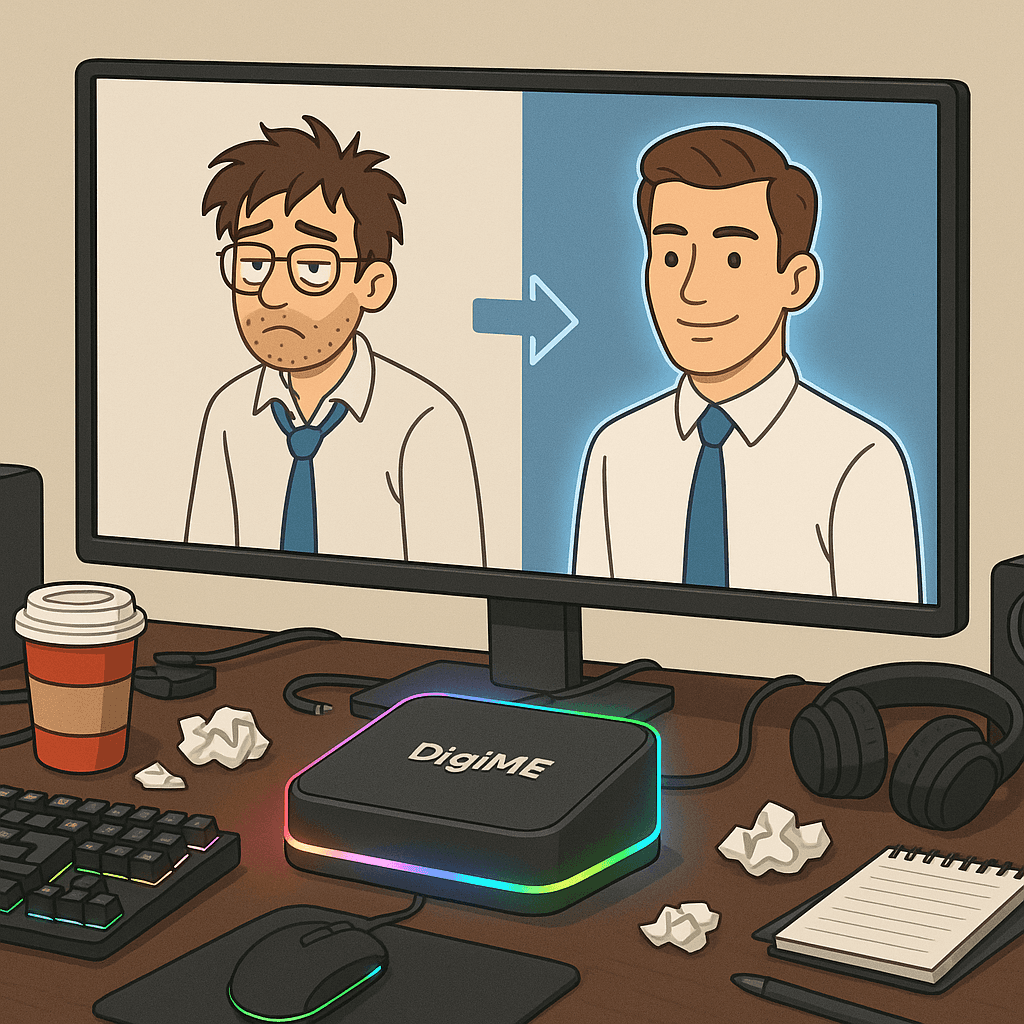
In a bold move to finally eliminate the last remaining trace of authenticity from online life, MSI has launched its all-new DigiME with built-in Voicemod integration, a device that essentially asks, "What if your entire personality were a USB peripheral?" (TechPowerUp, Dec 2025).
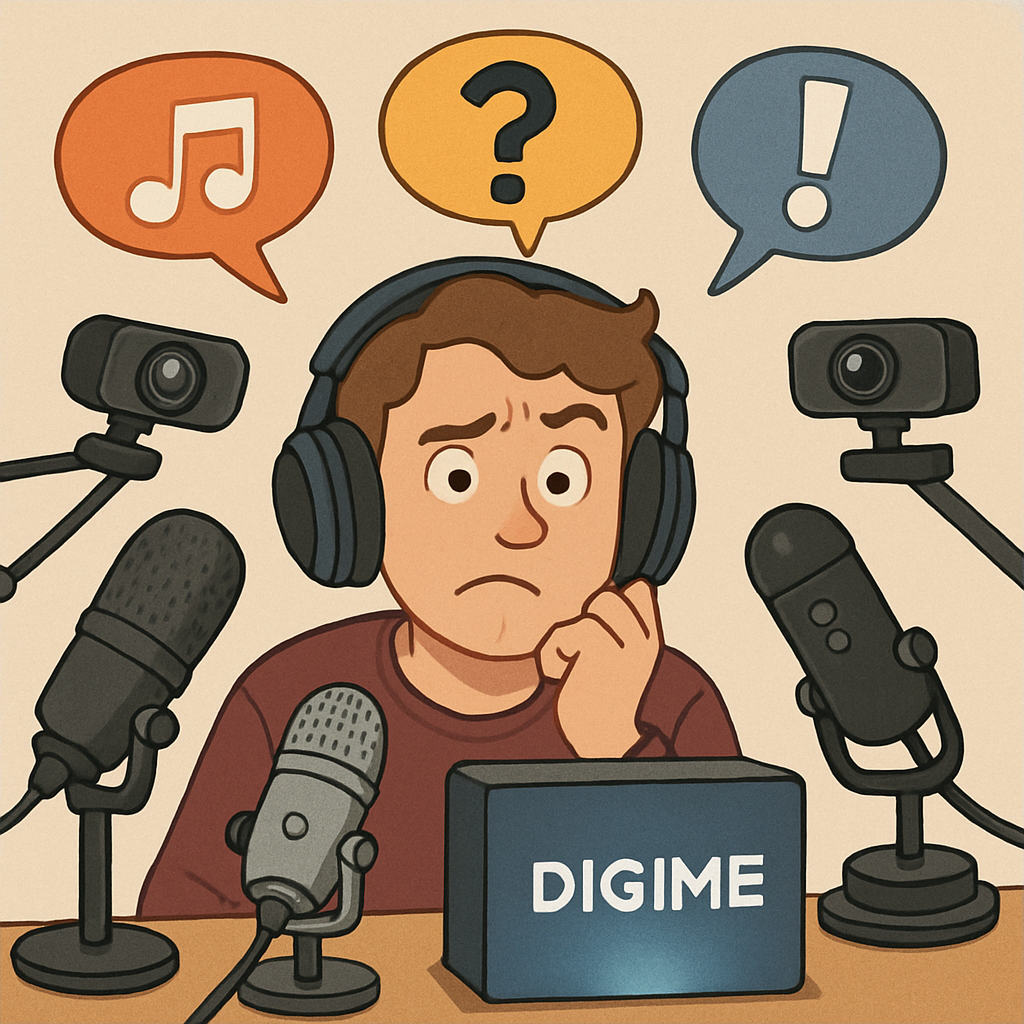
Marketed as an “AI-powered, content-creation, reality-optional command center,” DigiME is a compact desktop console designed to sit between your PC and whatever remains of your dignity. Plug in your microphone, camera, and existential dread, and DigiME promises to spit out a stabilized, beautified, auto-tuned version of you that strangers on the internet may finally tolerate for more than 6.3 seconds.
MSI describes DigiME as the “bridge between your true self and your best self.” Translation: it’s a hardware box that assumes your true self is unmarketable.
“With DigiME, users can seamlessly transform their voice and appearance in real time, unlocking new levels of creativity,” an MSI spokesperson said, carefully avoiding the phrase “deeply rooted self-loathing.”
The headlining feature is tight integration with Voicemod, the popular real-time voice changer already beloved by streamers, VTubers, and people who insist on doing a high-pitched anime voice in company Zoom calls. Voicemod presets now live directly on the DigiME hardware, meaning your transformation from mildly anxious human to cybernetic anime warlord is now just a single, terrible decision away.
At launch, MSI is showcasing several “lifestyle-forward” voice profiles that pair disturbingly well with the influencer-industrial complex:
- Crypto Visionary: Makes you sound like a 27-year-old founder who says “decentralized” every four words while quietly texting your accountant about tax shelters.
- Productivity Guru: Auto-injects the words “optimize,” “ritual,” and “non-negotiable” into every sentence whether you like it or not.
- Wholesome Streamer: Filters out all profanity and replaces it with words like “heckin’,” “snacc,” and “cozy grind.” Emotional repression sold separately.
- Corporate Neutral: Removes any hint of emotion, nuance, or opinion from your voice. Ideal for HR, PR, and people who post on LinkedIn unironically.
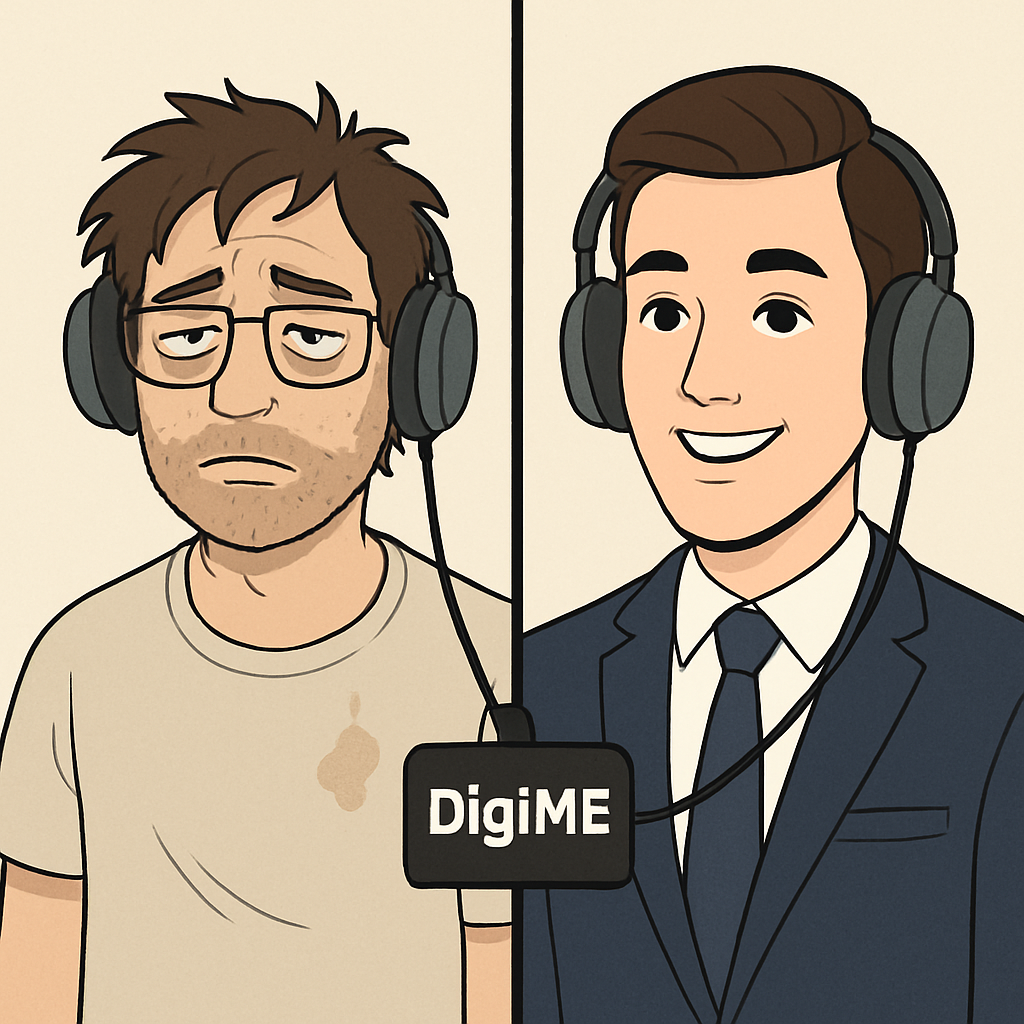
Under the carefully RGB-lit hood, DigiME is basically a processing hub for everything your webcam and mic capture before it reaches your adoring audience of 11 viewers. It can supposedly handle video background replacement, lighting tweaks, and audio cleanup with the cold efficiency of a ring light that judges you silently.
MSI’s promotional material suggests several key use cases:
- Streaming: Look sharper, sound smoother, and distract everyone from the fact that your entire personality is just reacting to TikToks.
- Remote Work: Replace your messy bedroom with a tasteful virtual office and your exhausted voice with “someone who still believes in the mission.”
- Content Creation: Record shorts, reels, and vertical cries for validation pre-packaged for every platform at once.
“DigiME represents a new era of digital self-expression,” MSI declares on its website, subtly confirming that the old era of self-expression—where you just opened your mouth and spoke—has been formally deprecated.
Critics, of course, have questions. Among them: at what point does a device like DigiME cross the line from creator tool into full-blown identity editing platform? And how long until your audience is more emotionally attached to your Voicemod persona than the actual human paying the electric bill?
“I’ve been streaming as a heavily modulated cyber-druid for three years,” said one anonymous Twitch partner. “I tried going live once in my real voice and chat’s reaction was basically, ‘Who is this man and why is he wearing our VTuber?’”
To calm such fears, MSI insists DigiME is about enhancement, not replacement. The marketing copy is very clear: “We don’t change who you are. We reveal the best version of your digital self.” Which is exactly the sort of sentence you’d expect right before a machine steals your face, your voice, and your upload schedule.
Still, the industry response has been enthusiastic. Peripheral makers are already brainstorming add-ons:
- A ring light that auto-dims whenever you express a controversial opinion.
- A “brand-safe” filter that sanitizes your takes in real time: “Societal collapse” becomes “interesting macro headwinds.”
- AI-driven chat overlays that replace negative comments with “You’re doing amazing, sweetie.”
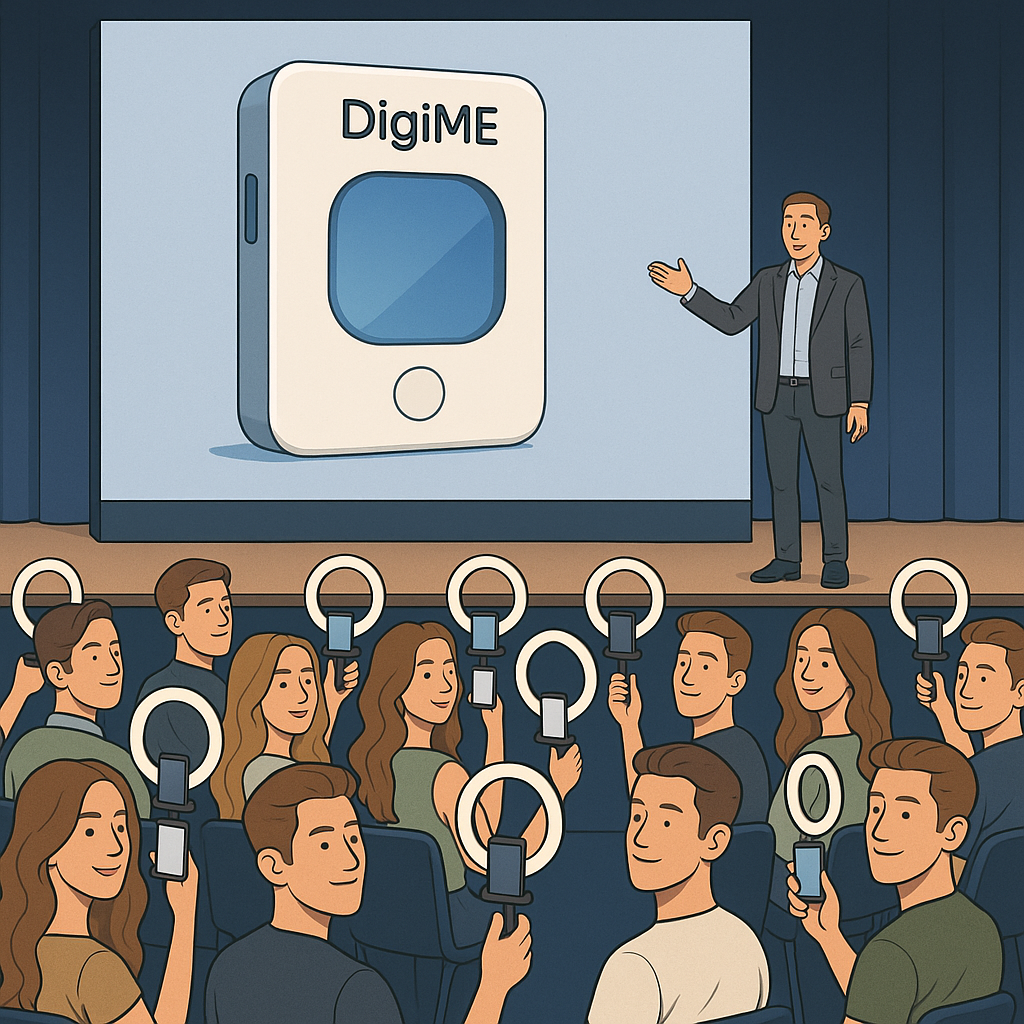
Investors seem intrigued by DigiME’s potential as an on-ramp to subscription-based self-esteem. MSI and Voicemod are reportedly exploring premium tiers that unlock more advanced identity distortion, including:
- Tier 1: Creator – Basic voice filters, background blur, and the illusion that posting more will fix your life.
- Tier 2: Influencer – AI-crafted talking points, auto-injected affiliate links, and facial smoothing strong enough to erase 2020-2022.
- Tier 3: Brand – Multiple personas, region-specific voices, and analytics that confirm your humanity is not performing well with key demographics.
By the end of MSI’s launch presentation, the message was clear: why merely use your PC, when you could become an accessory to it?
DigiME doesn’t just want to elevate your content; it wants to standardize it, optimizing you into the same smooth-talking, soft-lit, algorithm-friendly persona everyone else is chasing. It’s a future where MSI handles the hardware, Voicemod handles the voice, AI handles the edges—and you handle brand integration at the end of every sentence.
Asked what happens to your offline self in this new DigiME era, an MSI rep paused, then answered with the kind of honesty you only get before legal reviews:
“Your offline self? Oh. We consider that… legacy hardware.”
So go ahead. Plug in the DigiME, fire up Voicemod, and let your real self—overstimulated, underhydrated, and lit only by monitor glow—fade gently into the background blur. The future of tech isn’t about what your PC can do. It’s about how convincingly it can pretend to be you, while you sit three feet away, watching.