Category: Tech-Adjacent Feelings About Actual Technology
Somewhere between your anxiety about climate change and your addiction to neon water bottles, a new wellness obsession is quietly hardening. According to a recent report on the Epoxy Resin Market Size Worth USD 21.22 Bn by 2035 Driven by EV Growth, Renewable Energy, and Infrastructure Development (Globe Newswire, Dec 2025), industrial-grade epoxy is having its moment — and naturally, the lifestyle world has decided this is about “vibes” now.
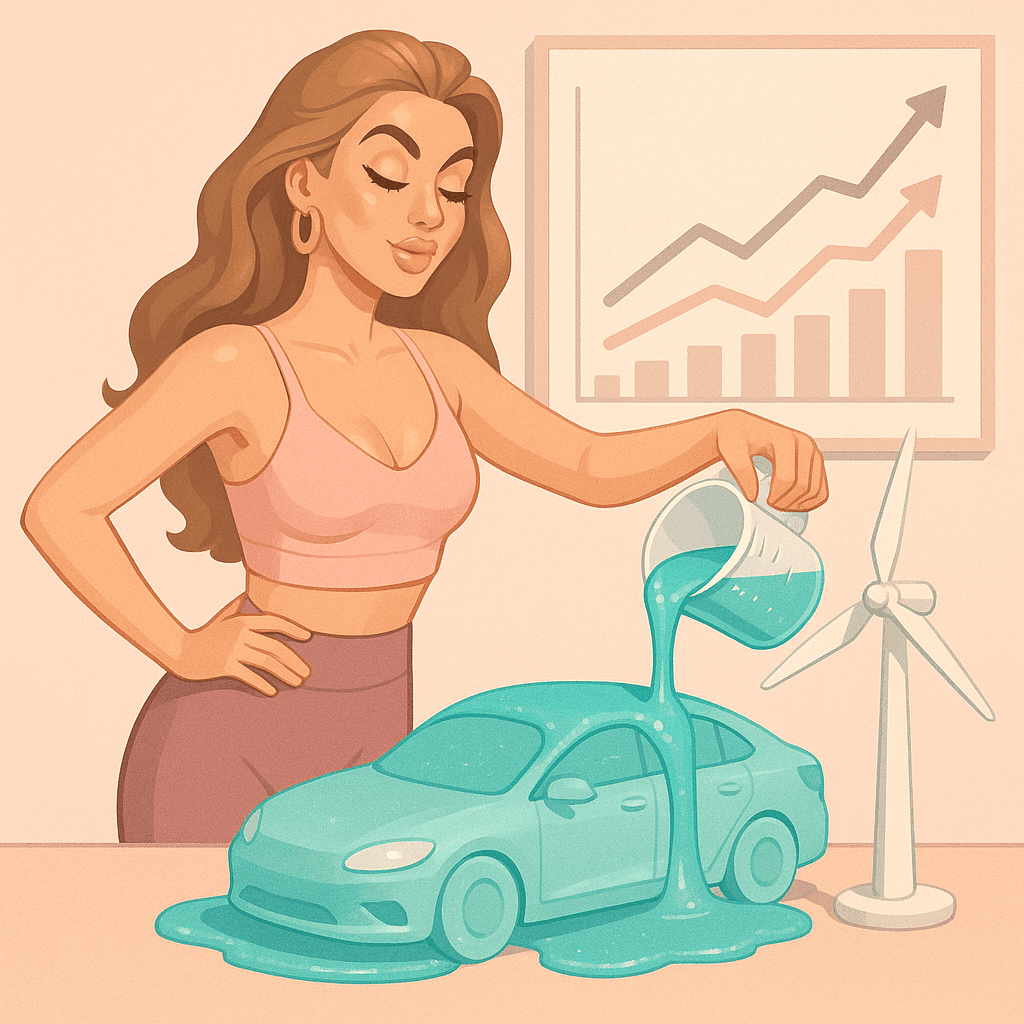
Epoxy resin, once just a humble ingredient in wind turbine blades, electric vehicle parts, and serious-sounding infrastructure projects, is being aggressively rebranded on Instagram as “liquid alignment.” While engineers talk about applications in EV growth and renewable energy, wellness creators talk about “sealing your aura like a high-performance composite.” Same molecules, different mood board.
Market analysts behind the Globe Newswire report gamely tried to focus on actual economics, emphasizing demand from sectors like EV manufacturing, construction, and renewable energy infrastructure. Unfortunately for them, TikTok heard “21.22 billion by 2035” and responded, “So it’s basically the new crystals.”
Within hours of the report dropping, at least three direct-to-consumer brands soft-launched epoxy-themed wellness lines:
- ResinRise: “epoxy-inspired morning routines” where you visualize your boundaries curing overnight
- Bond & Glow: a “two-part relationship system” that claims to heal attachment issues using metaphors from industrial adhesives
- Semicured: a mindfulness app that pings you every 24 hours to ask if you’ve “fully set your intentions yet”
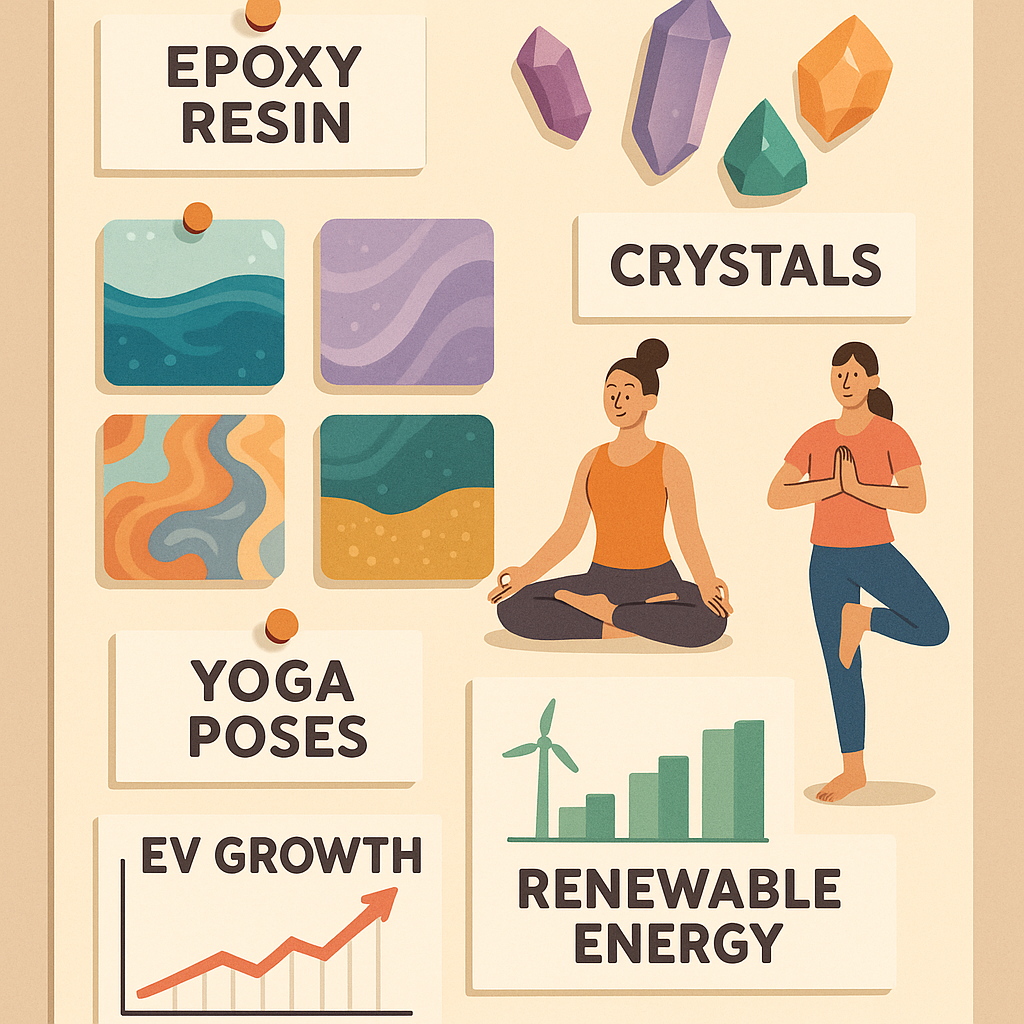
“When I read that epoxy resin is essential for EVs and renewable energy, I just felt this deep, somatic yes,” said one wellness coach who recently pivoted from human design to polymers. “If it can hold a wind turbine together, imagine what it can do for my brand alignment.”
Epoxy manufacturers, who were previously content selling to people in hard hats, now find themselves fielding emails from lifestyle startups requesting “soft-touch, pastel-hued, sustainably sourced, small-batch epoxy” for content creation. One executive, who asked not to be named for fear of being invited on a wellness podcast, reported a surge in inquiries containing the words “chakra-safe” and “moon-charged.”
“We make industrial-grade resin for electric vehicles and large-scale infrastructure,” the executive said. “We do not make ‘heart-opening pourable destiny stabilizer.’ That’s just a candle with issues.”
Despite this, the $21.22 billion forecast has become a kind of spiritual prophecy across Pinterest boards. EV growth? Renewable energy? Infrastructure development? To wellness entrepreneurs, these are just three ways of saying “there is investor money nearby.” Several pitch decks now breathlessly reference the Globe Newswire forecast as proof that “the adhesive economy is entering its feminine era.”

Not to be left behind, a handful of “tech-wellness” founders are racing to build platforms that “democratize access to resin-adjacent healing.” One stealth startup, PolyMind, claims its app uses “AI-powered intent mapping” to help users document trauma and then visualize it as a slowly curing epoxy river table.
“Think of it like infrastructure development,” said PolyMind’s CEO during a beta launch webinar. “But for your nervous system. High-traffic zones of emotional congestion get reinforced with digital epoxy. We believe by 2035, everyone will have a personal emotional grid that’s fully bonded.”
Meanwhile, sustainability advocates are desperately trying to keep the conversation on actual renewable energy. EV manufacturers and infrastructure planners, who read the Globe Newswire report for boring reasons like “CAPEX” and “material performance,” now find their LinkedIn posts hijacked by influencers asking whether their epoxy resin supply is “non-toxic for inner children.”
One engineer working on composite components for EV bodies reported that a brand reached out asking if they could host a “healing ceremony” at the company’s resin testing lab. “They wanted to sit in a circle and ‘honor the bond between molecules, us, and Mother Grid,’” the engineer said. “We explained that the fumes alone would honor them straight to the ER.”
In a particularly bold crossover, a luxury retreat company has begun marketing a “Renewable Energy of Self” weekend. The itinerary includes:
- “EV Growth Yoga” — holding a warrior pose while someone reads investor forecasts at you
- “Infrastructure Shadow Work” — journaling about your foundational trauma on blueprint paper
- “Epoxy Intention Pour” — guided meditation where you imagine your boundaries as an industrial coating that finally dries
Guests do not interact with actual epoxy, for legal reasons, but they are encouraged to repeat the affirmation: “I am structurally sound, I am thermosetting, I am future-proof.”
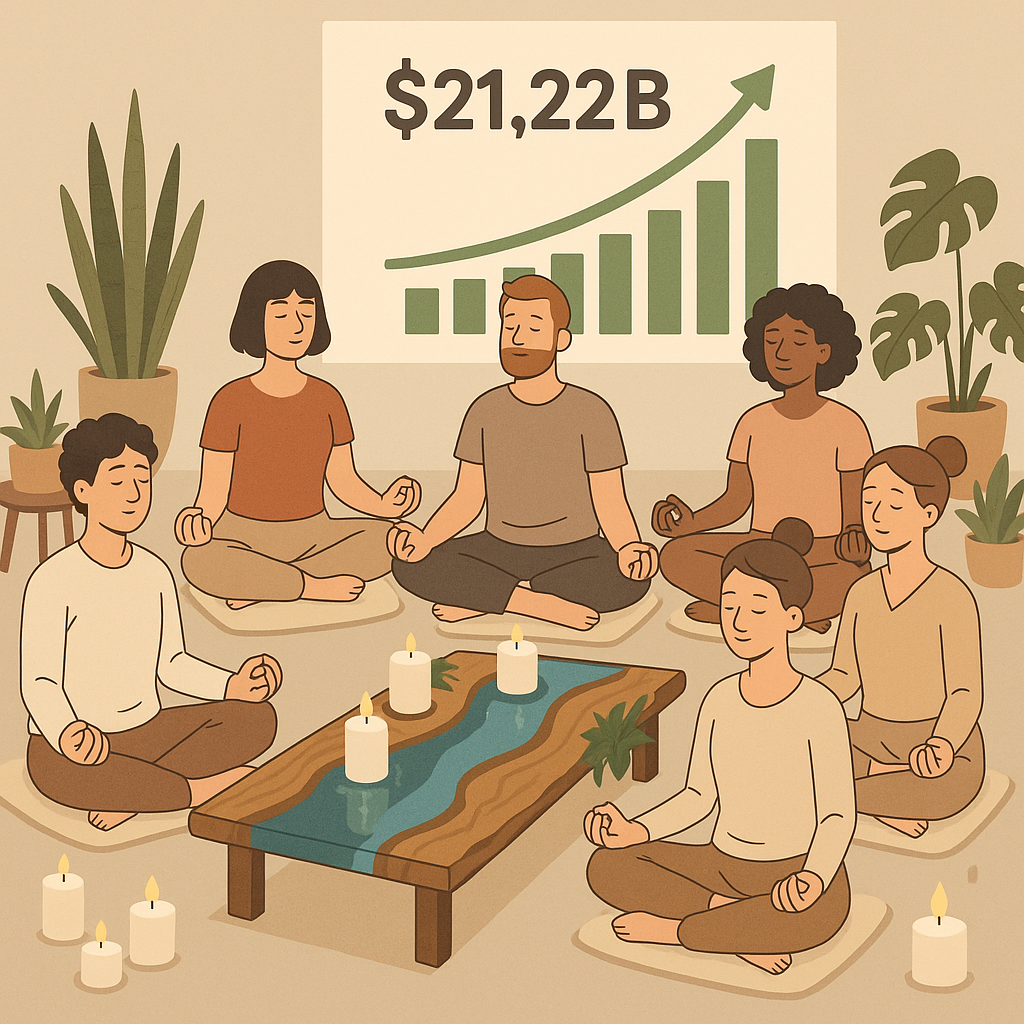
As 2035 draws closer on various strategy slides, serious analysts continue to cite electric vehicles, renewable energy installations, and global infrastructure projects as the key drivers of epoxy resin’s projected $21.22 billion market size. Lifestyle brands, however, appear committed to treating this as a sign that the universe wants them to launch one more subscription box.
Ultimately, the story of epoxy resin's rise is a familiar one: humanity invents a powerful technology to build a cleaner, more resilient world, and the wellness-industrial complex immediately asks, “But have you tried microdosing it with intention?”
By 2035, our grid may or may not be fully renewable, EVs may or may not dominate the roads, and infrastructure may or may not have stopped collapsing every time it rains. But the epoxy resin market will almost certainly be thriving — propped up by wind turbines, car chassis, and a thriving side hustle in metaphorical usage on Instagram stories.
And somewhere, an exhausted materials scientist will be explaining for the thousandth time: “No, you cannot ‘manifest’ your ex back by pouring his name into a silicone mold and covering it with industrial-grade epoxy. But you might be able to reinforce a bridge, which is frankly more impressive.”