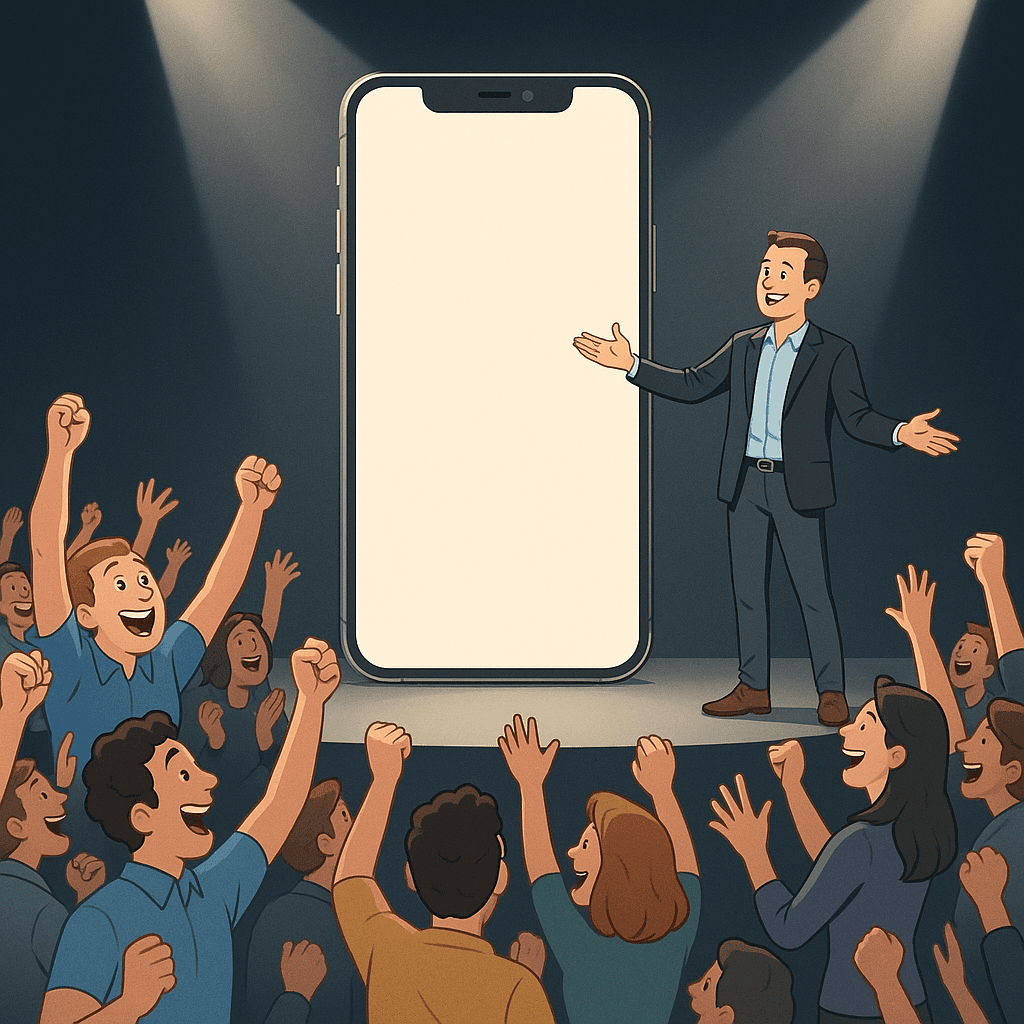
In a keynote that could legally be classified as performance art, Apple today unveiled the iPhone 17 “Nothing Edition,” the first flagship smartphone to openly admit it does nothing meaningfully new and will still sell out in 6 minutes.
“This is the most advanced lack of progress we’ve ever shipped,” Apple CEO Tim Cook allegedly told an audience of developers, influencers, and reluctantly invited journalists who still remember wires. “With iPhone 17, we were brave enough to ask: What if we just… stopped?”
The crowd, trained by a decade of Pavlovian keynotes and cautiously priced dongles, exploded into applause anyway.
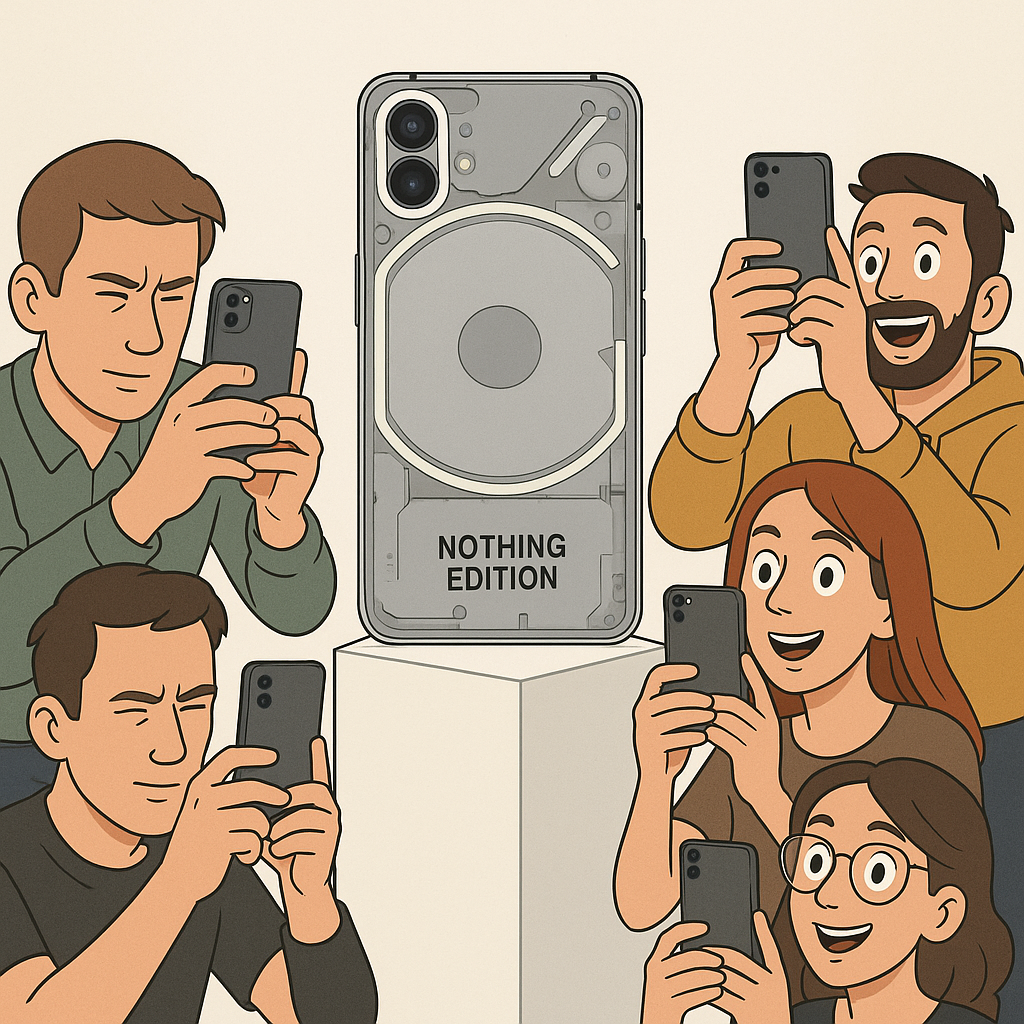
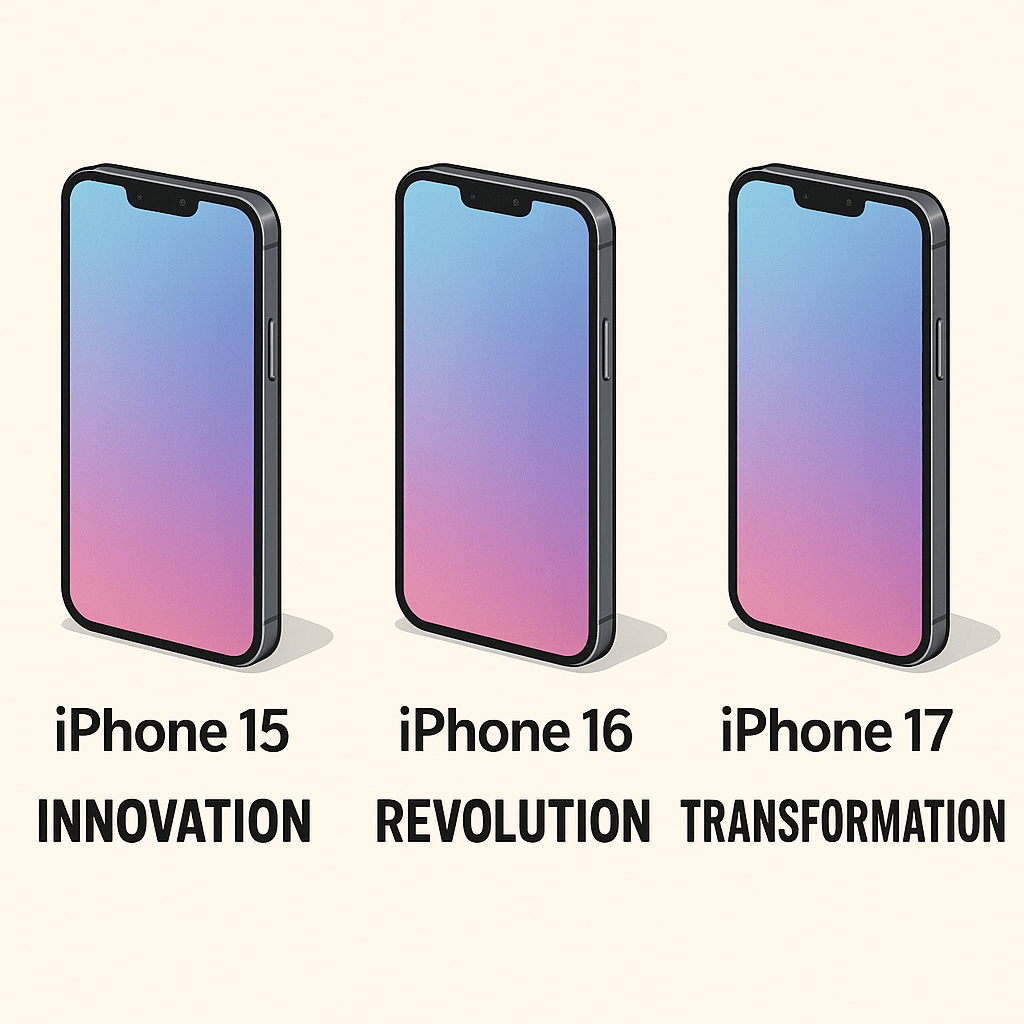
The iPhone 17 Nothing Edition looks exactly like the iPhone 16, which looked suspiciously like the 15, which strongly resembled the 14, which was essentially the 13 in better lighting. But this time, Apple is leaning into it with a marketing campaign built around radical honesty.
“Sometimes innovation means admitting we’re phoning it in,” reads one billboard outside Apple Park, according to photos posted by confused early-morning joggers.
The company’s product page lists marquee “features” such as:
- Same Camera, New Name™ – The identical sensor as last year, now called the Quantum Neural Light Engine.
- Battery Life You Won’t Notice – “Up to 15 minutes longer in Apple-controlled conditions you will never experience.”
- Comfort Lag™ – Subtle software throttling for older models so your current phone feels gently ashamed.
In a pre-recorded segment, an Apple engineer in a tastefully minimalist hoodie explained that the “Nothing Edition” philosophy was inspired by a growing cultural trend: everyone being too exhausted to care. “Users told us, ‘Honestly, I just need my group chats and my banking app not to log me out.’ And we said, what if we charged $1,399 for that?”
Industry analysts, who still have to take all of this seriously to pay rent, dutifully nodded. “It’s a bold bet on what we call the Apathy Premium,” said one Morgan Stanley analyst on CNBC. “You’re not paying for hardware; you’re paying to not feel like the poor one in the brunch photo.”
Outside the Cupertino reality distortion field, however, regular consumers expressed a complex mix of resignation and muscle memory. “I know it’s the same phone as last year,” said 29-year-old marketing manager Ashley Perez, “but my carrier app just sent me a notification that I’m ‘eligible for an upgrade,’ which feels like a federal order. Also they made the wallpaper glowier this year.”
Across social media, early reactions were sharply divided between people calling the launch “peak late capitalism” and people posting “shut up and take my money” under the official trailer. One TikTok tech reviewer, standing in front of a wall of unopened phones, summarized the vibe: “If I don’t buy it, what will I make content about? Ethics?”
To justify the Nothing Edition, Apple introduced a new software “experience” called iContinuum, an algorithm that studies your past five years of iPhone usage and dynamically encourages you to keep doing exactly that. “We noticed our users open the same six apps over and over,” said a senior VP. “So we built advanced on-device machine learning that helps you open those same six apps… slightly faster.”
Meanwhile, in a move that made antitrust lawyers sit up straight in their ergonomic chairs, the company also announced UpgradeLock, a new program that offers a small discount if you sign a 10-year commitment to always buy the newest iPhone within 72 hours of launch. If you fail, your current phone slowly desaturates to grayscale. Apple insists this is “for your mental health.”
“We’ve partnered with leading researchers on well-being,” claimed an Apple health executive, gesturing toward a graph that looked suspiciously like a stock chart. “Our data shows that when your phone feels old, you feel old. UpgradeLock ensures you will never feel old. You will simply feel… financed.”
Regulators took note. A spokesperson at the U.S. Federal Trade Commission, already busy with ongoing tech antitrust cases covered extensively by outlets like the New York Times and Reuters, sighed audibly when reached for comment. “At this point, we’re just hoping they don’t start charging a monthly subscription for the power button,” the spokesperson said. “Off the record, please don’t give them ideas.”
Customers, however, seem prepared to rationalize whatever happens next. “Look, my student loans resumed, eggs cost $8, and the planet’s on fire,” said 34-year-old software engineer Kevin Liu, waiting in line at a pop-up “pre-order experience lounge.” “If I’m going to go down with this ship, I might as well have slightly rounder icons.” He then scanned a QR code to pay $9 for a limited-edition iPhone-themed latte, which came with a tiny edible notch.
In an odd twist that impressed even some hardened cynics, Apple also revealed a new carbon initiative: for each iPhone 17 Nothing Edition sold, the company will plant a single line of inspirational copy on its environmental responsibility webpage. “Words are carbon-neutral,” the video proudly proclaimed, over slow-motion shots of misty forests and carefully lit server racks.
The escalation came in the keynote’s final act, when Tim Cook walked back on stage, stared directly into the camera, and calmly announced: “One more thing. Starting next year, we’re done pretending.”
Beginning with iPhone 18, Apple will move to what it calls a “transparent subscription hardware model.” Instead of yearly announcements, every September the same iPhone will silently rebrand itself on your lock screen as the next model. The chassis, internals, and camera will remain identical. Only the model name in Settings and your monthly payment will update.
“Your phone is now an iPhone 18 Pro. You are welcome,” read a mockup shown to thundering applause.
Existing devices will be auto-enrolled unless users opt out by navigating to a deeply buried settings menu titled “Legacy Experience / Luddites.” Pressing opt-out triggers a soft warning: “Are you sure you want to feel left behind?” If you proceed, your wallpaper changes to a tasteful sepia tone and all emojis lose their gradients.
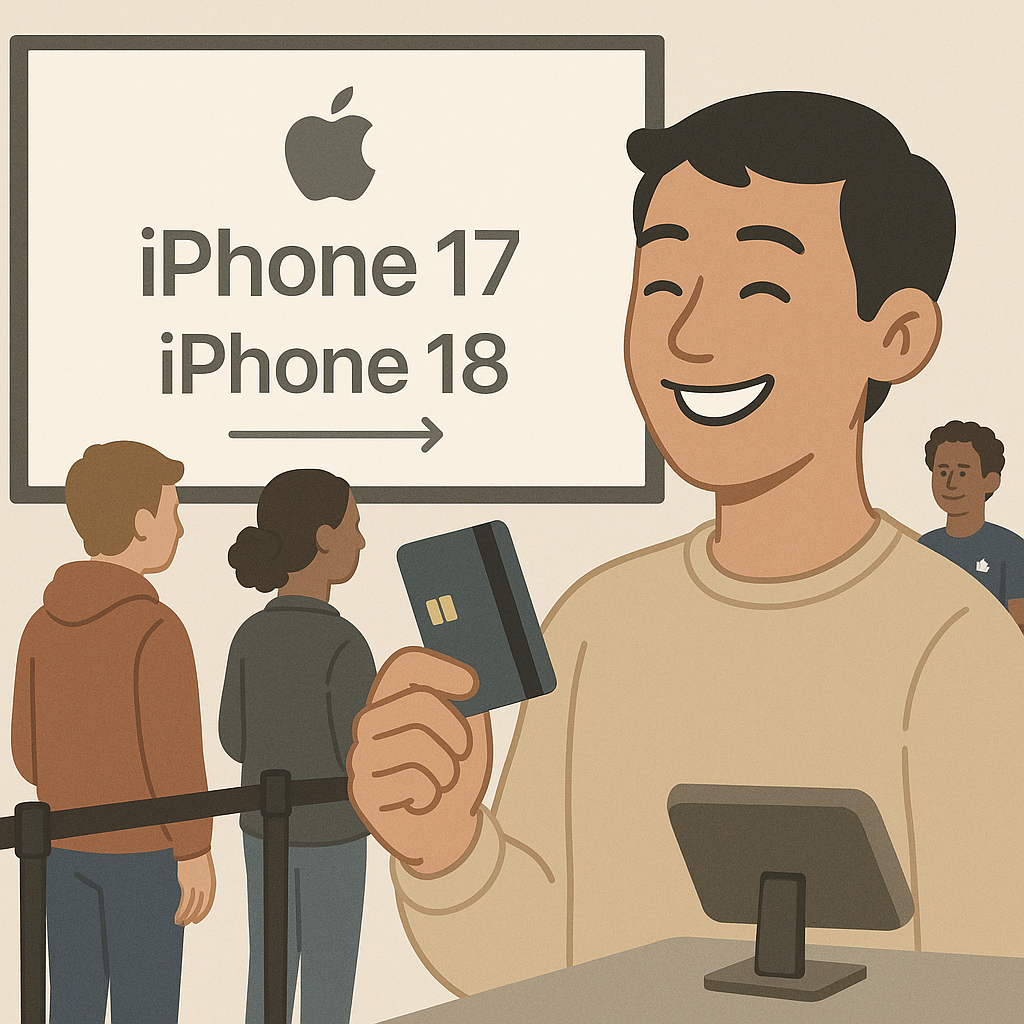
Rival companies scrambled to respond. Samsung quickly announced that its upcoming Galaxy flagship will ship with “at least three actual new things, we swear,” while Google teased an AI feature that automatically generates the illusion of novelty each time you unlock the screen. Meta, seemingly confused, launched a headset that just shows you an infinite Apple Store line.
Back at Apple Park, as drone footage pulled away from the circular campus, a closing slide appeared: “iPhone 17 Nothing Edition. It’s everything you already had. But this time, we’re honest about it.”
The pre-order page crashed under heavy demand within minutes.