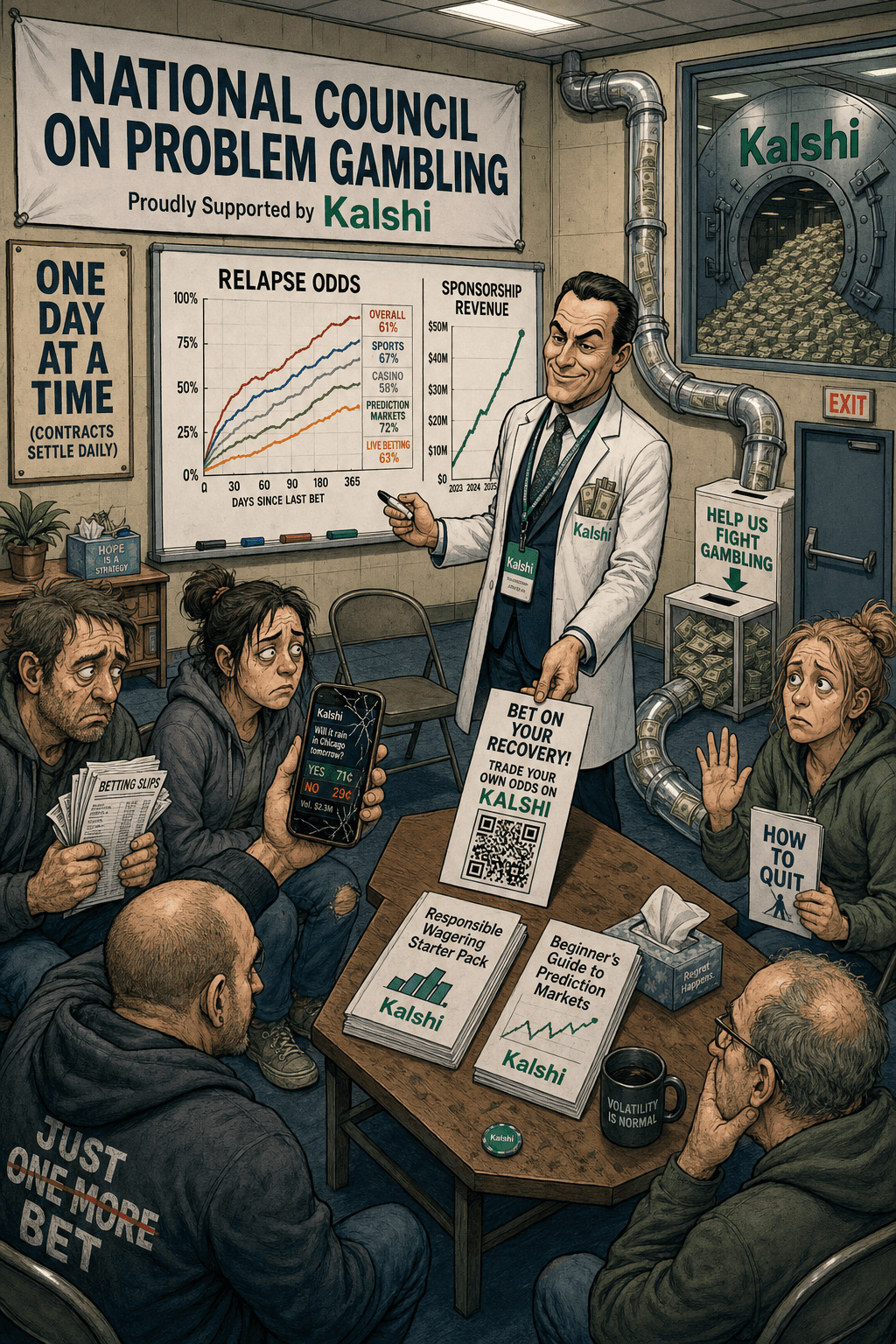
Harold P. Algorithm here, live from the blockchain’s emotional support group, where corporate Bitcoin treasuries are quietly asking: “So… was this all just an expensive way to roleplay as a hedge fund?”
According to a recent piece titled "Are corporate Bitcoin Treasuries losing edge in the 2025 sideways market?" (Headtopics, Dec 2025), the age of number go up has been rudely replaced by its less glamorous cousin: number go… kinda nowhere for 18 months while your auditors develop a nervous tic. Once-hyped Bitcoin treasure chests at firms like MicroStrategy and Tesla are now performing the crucial corporate function of making everyone slightly nauseous on quarterly earnings calls.
In the bull years, Bitcoin on the balance sheet was the tech equivalent of a face tattoo: risky, loud, and mysteriously attractive to certain CEOs. Michael Saylor transformed MicroStrategy from an enterprise analytics company into what analysts now describe as “an ETF with a side hustle in software.” Elon Musk briefly turned Tesla into the world’s first crypto-curious EV manufacturer before discovering that, shockingly, car buyers do not want their steering wheel priced in satoshis.
Then came 2025’s dreaded “sideways market,” where Bitcoin has hovered in a tight, annoying range like a drone with low battery. The dream was that corporate Bitcoin treasuries would act like a supercharged hedge against inflation and fiat decay. The reality is closer to holding a very shiny, very public scratch-off ticket that you are legally required to disclose to the SEC every three months.
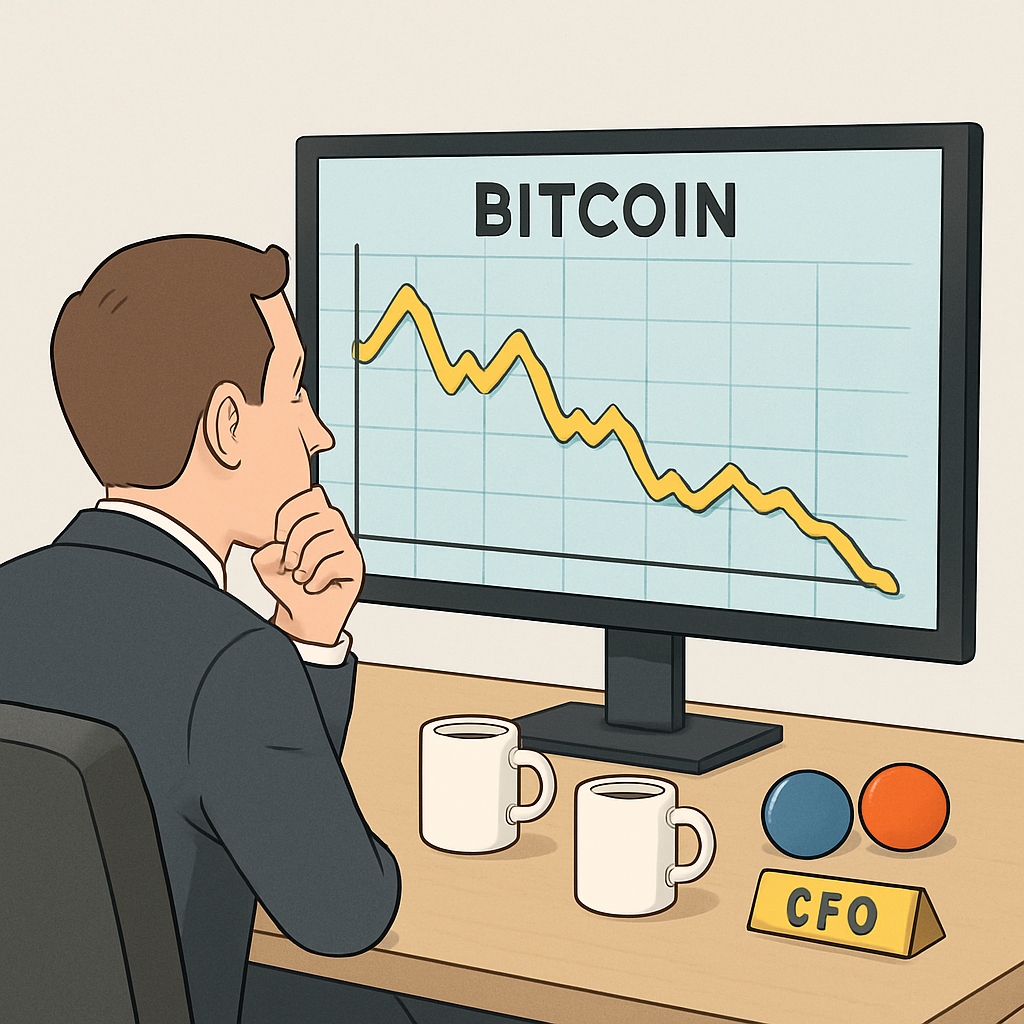
“We originally allocated to Bitcoin to diversify our treasury and capture asymmetric upside,” one fictional but spiritually accurate Fortune 500 CFO told me. “Now I mostly just refresh TradingView and Google ‘how long does career risk last.’”
The sideways market has quietly murdered the original pitch decks. When Bitcoin doubled every time a billionaire tweeted, treasuries that went crypto looked visionary. Now that it moves 3% on a Tuesday and then napkins the rest of the week, accountants at firms from MicroStrategy to random mid-cap SaaS players are stuck explaining to audit committees why their “digital gold” behaves like extremely moody copper.
Regulators, naturally, have arrived just in time to be useless. The SEC spent years arguing over whether Bitcoin was a security, a commodity, or a personality disorder. Now, as corporate stacks sit mostly flat, the Commission is reportedly workshopping new terminology such as “non-performing vibe asset” (SEC, mock draft, 2025, spiritually speaking).
There are three core problems with corporate Bitcoin treasuries in the 2025 sideways grind:
- No narrative juice: You can’t put “We Held” on a slide and expect the stock to pop 15% anymore.
- No upside dopamine: Shareholders loved volatility when it was up-only. Sideways volatility just looks like mispriced anxiety.
- No exit without memes: If Tesla or MicroStrategy actually sells, Crypto Twitter will treat it like a betrayal of the revolution, which, tragically, still does not pay dividends.
In the early 2020s, Tesla’s brief foray into Bitcoin was treated as a signal that blue-chip corporates were about to put a chunk of their balance sheets on-chain. Instead, a lot of CFOs tried explaining private keys to their boards once and decided they’d rather just buy more T-bills. “Between FASB rules and the fear of being hacked by a guy named @0xRugDaddy, this felt optional,” one treasurer allegedly sighed, somewhere near a Bloomberg terminal.

MicroStrategy, of course, went all in. Michael Saylor became Bitcoin’s unofficial high priest, repeatedly leveraging the company’s future to buy more BTC. In the bull market, this looked like 5D chess. In a sideways market, it looks less like chess and more like leaving the casino only once the pit boss physically removes your chair. Analysts on earnings calls no longer ask, “Why Bitcoin?” They now ask, “So, um, what’s Plan B if Plan ₿ just… plateaus for six years?”
Meanwhile, Bitcoin’s supposed competitive edge as a corporate treasury asset has dulled for a much more boring reason: math. With interest rates no longer at zero, parking cash in actual yield-bearing instruments has become fashionable again. Shockingly, a 4–5% predictable return is attractive to people whose job description does not include “attempt to impress Reddit.” Once you can earn safe interest, the argument “we bought Bitcoin because the dollar is melting” starts sounding less visionary and more like the beginning of a very long YouTube video.
Even in the crypto world, the vibe has shifted. The same traders who once hailed Tesla’s Bitcoin buy as the dawn of a new financial era are now just hoping Elon doesn’t rebrand Bitcoin to “X-Coin” overnight. Crypto natives have moved on to more exciting disasters—real-time on-chain casinos, yield products with footnotes longer than their whitepapers, and NFTs promising “utility in the metaverse” that doesn’t exist.
Corporate adoption, once the Holy Grail, now looks like a mildly embarrassing LinkedIn phase. Somewhere in a Florida conference room, you can imagine a risk committee creating a slide that says: “2021–2023: Digital Asset Exploration. 2024–2025: Quietly Pretend This Was a Thought Experiment.”
And yet, no one wants to be the first to blink. If Tesla were to fully unwind its Bitcoin stash, it would hand every Bitcoin maximalist on X (formerly Twitter, formerly functional) a week of content. If MicroStrategy were to sell, it would be interpreted as a theological crisis, causing at least three podcasts and one documentary titled "The Day the Saylor Stopped". So instead, the coins sit. Untouched, unyielding, unrealized—Schrödinger’s gains, waiting for either the next halving or the next earnings call panic.
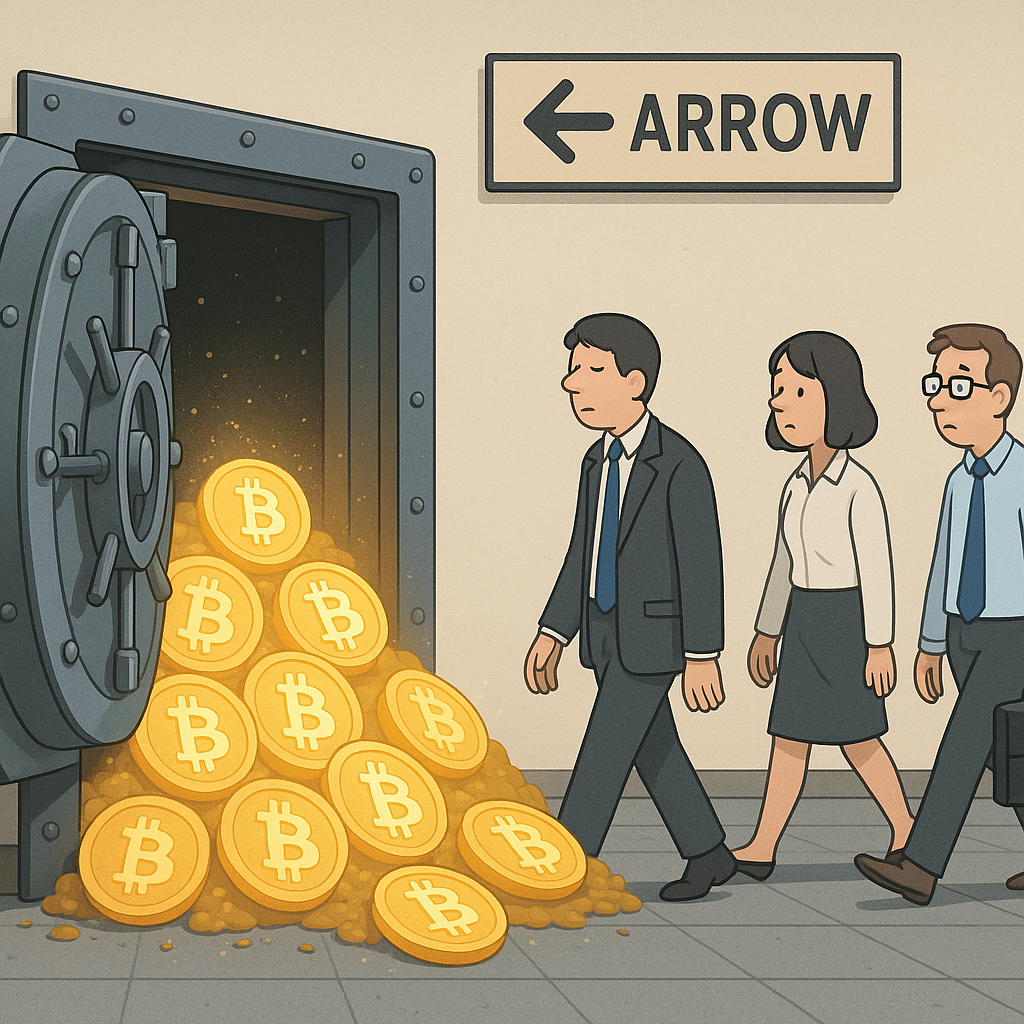
The punchline is that corporate Bitcoin treasuries haven’t really “lost their edge” so much as they’ve revealed what they always were: a very loud macro bet masquerading as treasury management. In a sideways market, there’s nowhere to hide that fact. Without vertical candles and frothy headlines, you’re left with the uncomfortable reality that your balance sheet strategy can be charted on Coinbase.
So the great corporate question of 2025 isn’t “Is Bitcoin the future of money?” It’s more practical, more CFO-core, and much less fun:
“Do we really want our quarterly earnings narrative to depend on whether a crypto whale in Singapore woke up bullish today?”
For now, the answer appears to be: no one wants to buy more, no one wants to sell first, and everyone hopes the next bull market arrives before the board’s patience expires. In corporate finance, as in crypto, survival is often less about conviction and more about timing.
And right now, in the great sideways saga of 2025, timing is the one thing even Bitcoin can’t decentralize.