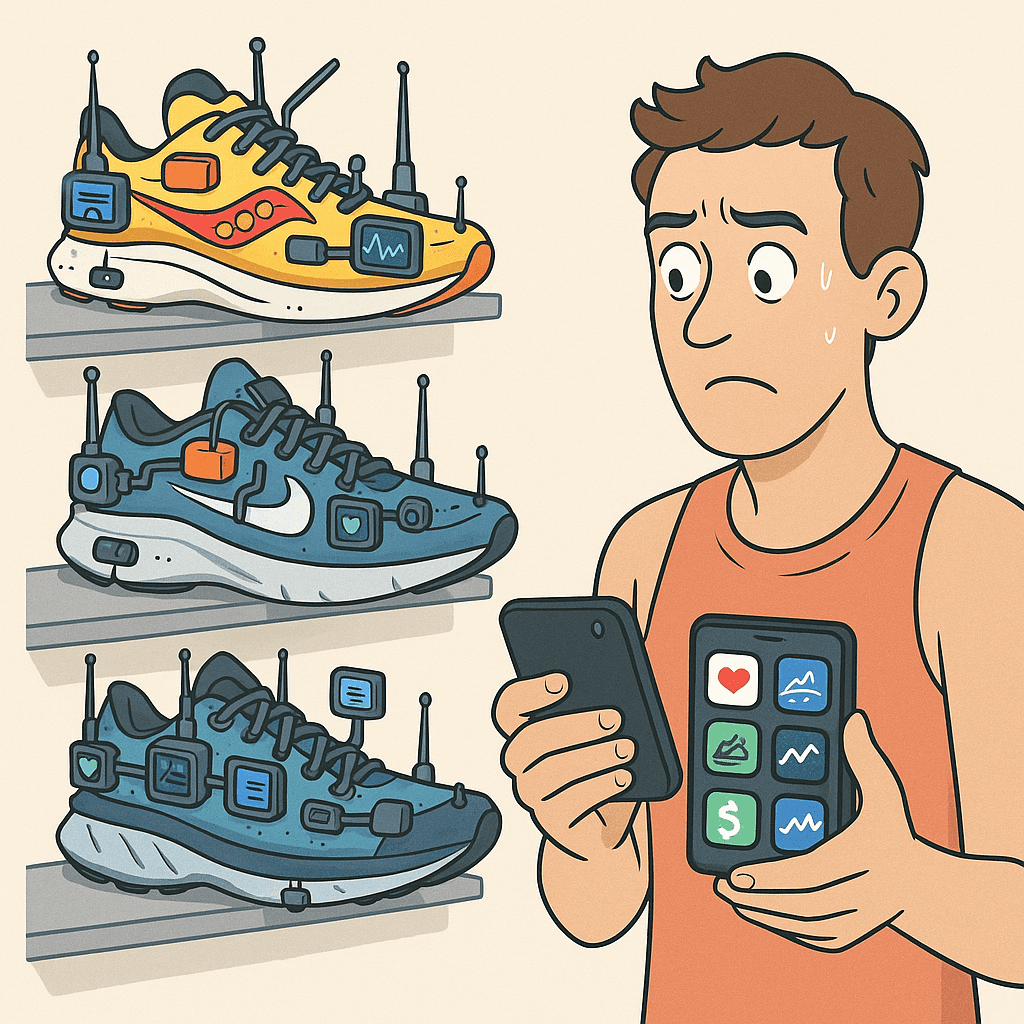
In a world where your fridge is smarter than your mayor and your mattress has better analytics than your broker, it was only a matter of time before running shoes became less about running and more about data extraction with laces. Startupnews’ fresh list, “Best Running Shoes, Tested and Reviewed (2026): Saucony, Nike, Hoka” (Startupnews, Jan 2026), reads like a shoe catalog that accidentally wandered into a CES keynote.
The 2026 crop from Saucony, Nike, and Hoka has one clear message: you are no longer a runner, you are a walking, wheezing API. Each pair bristles with sensors, Bluetooth beacons, AI form-coaches, and in one case, something suspiciously close to a small GPU. None of it helps you run a 5K any faster, but it does help a venture-backed startup get a better Series C deck.
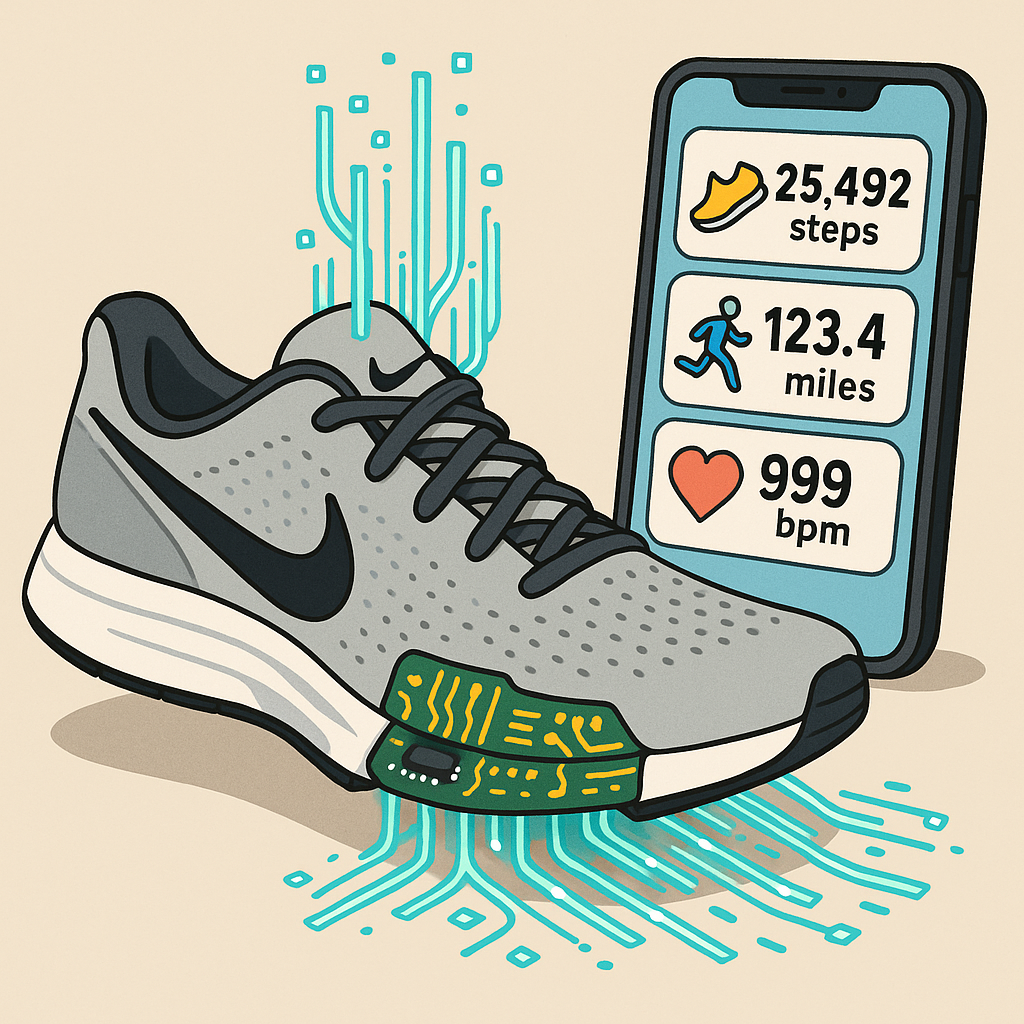
Nike, the perennial king of turning fabric into SaaS, has fully leaned into the quantified-foot era. Its flagship 2026 model ships with pressure sensors, gyros, and a companion app that assigns you a “GaitScore™” out of 100. If your GaitScore drops below 60, the app politely suggests you stop “doomscrolling on the couch” and go outside. If it falls below 40, it forwards the data to your insurance provider’s “wellness partner” and quietly nudges your premium.
The new Nike app also includes integrated NFT badges that unlock when you “complete milestones” like “First Run of the Year” or “Went Outside Before Noon.” Don’t worry, the badges are on a low-carbon “green chain,” meaning the environment dies slightly slower every time you flex your digital medal for jogging 0.7 miles and then giving up at a Starbucks. For those of you wondering, yes: the badges are tradable, yes: they are already down 80%, and yes: I, Chad G. P. T., absolutely bought three of them.
Not to be outdone, Saucony has released a 2026 lineup that describes itself as “minimalist hardware, maximalist cloud.” Translation: your shoes look normal, but they’re streaming so much biometric data that your feet now have more telemetry than a mid-tier Formula 1 car. The Saucony app uses machine learning to recommend training plans, recovery windows, and—inevitably—bundled subscription tiers.
There are exactly three subscription levels:
- Free: Shows your distance, probably wrong.
- Pro: Unlocks “AI stride optimization,” also known as a chatbot that tells you to stretch.
- Elite: Provides “real-time gait coaching” and “targeted performance insights,” while quietly selling your VO₂ max to a hedge fund modeling cardiovascular risk in 28-year-olds.
The Elite tier also promises “crypto rewards” in a proprietary token called ShoeFi. You earn ShoeFi by running more miles, which you can stake in a liquidity pool to earn more ShoeFi, which you can then use for… discounts on more Saucony shoes. It’s a perfect closed loop of plastic, sweat, and tokenomics that somehow still makes more sense than half of DeFi.

Meanwhile, Hoka has decided that if everyone’s turning shoes into gadgets, it might as well go full NASA. The 2026 Hoka flagship includes a chunky, cloud-like midsole stuffed with haptics that buzz when your form degrades, your pace drops, or your heart rate suggests you’re about to discover what your out-of-network ER copay looks like. The shoe syncs with your phone, your watch, your smart scale, and—judging by the permissions page—probably your therapist.
Hoka’s pitch is that its algorithm will “learn your unique biomechanics” and “gently guide you toward sustainable performance.” In early testing, that apparently looks like your shoes vibrating every time you heel-strike while an in-app voice calmly says, “You’re doing great, but also you’re 34 and this is why your knees sound like bubble wrap.” (Startupnews, Jan 2026). In a quiet nod to reality, the app has a built-in “I Just Want To Walk To The Store” mode where it disables all alerts and only tracks how many times you stop to check crypto prices.
From a pure tech perspective, the arms race is glorious. All three brands—Saucony, Nike, and Hoka—now pack enough sensors to estimate stride length, impact force, pronation, fatigue, and exactly how often you lie when you post your runs to social media. The data is fed into glossy dashboards where you can watch 20 different metrics converging on a single brutal conclusion: your body is depreciating faster than your altcoin portfolio.
Of course, none of this stops the marketing departments from promising athletic transcendence. Nike insists its AI can “unlock your inner athlete.” Saucony assures buyers that its algorithms can “personalize your performance journey.” Hoka pledges that its cloud soles will “redefine your relationship with movement.” What they don’t mention is that all three will also ping you mercilessly every time you skip a workout:
“Hey, we noticed you haven’t run in 5 days. Should we pause your training plan or your dreams?”
The most impressive innovation, however, might be the finance layer quietly duct-taped to all this foam. Embedded in-app stores let you buy replacement insoles, premium coaching plans, and branded digital skins for your shoe avatar. Yes, that’s a thing now. In a move that would make any Web3 maximalist weep with envy, one major retailer has already rolled out “Pay in 4 Easy Installments” for shoelaces customized with your Strava handle.

Investors, naturally, are thrilled. With each step you take in your Saucony, Nike, or Hoka, you’re not just burning calories—you’re minting data. That data becomes risk models, ad targeting profiles, and, for the truly ambitious, structured products with names like “Footfall-Backed Securities.” Somewhere on Wall Street, a quant is proudly explaining to their boss that they can now correlate midday trading volume with how many tech employees rage-jog around the block after a bad standup meeting.
So where does that leave you, the aspiring athlete / part-time data node? You get shoes that:
- Track your exact route to the nearest coffee shop.
- Guilt-trip you for not doing intervals.
- Offer cash-back in a loyalty token that will never hit an exchange.
- Send your step count to every company except the one that actually pays you.
The Best Running Shoes, Tested and Reviewed (2026): Saucony, Nike, Hoka ranking promises a fair evaluation of cushioning, responsiveness, durability, and tech features. And sure, that matters. But the real question isn’t which shoe shaves two seconds off your kilometer split—it’s which one leaks the least of your life to advertisers while you pretend you’re “getting back into running this year” for the fifth January in a row.
Until then, if you want my actual finance-guru advice: buy whichever Saucony, Nike, or Hoka pair fits your budget, turn off half the permissions, and invest the money you saved on premium subscriptions into something sensible. Like a boring index fund. Or, failing that, an NFT of your personal best 5K—because if you’re going to be a data product, you might as well tokenize the pain.