Silicon Valley, CA — California, long marketed as a utopia where disruptive ideas go to burn cash, now faces an even greater disruption: the possibility that its billionaires might have to pay tax like people who buy things at Target.
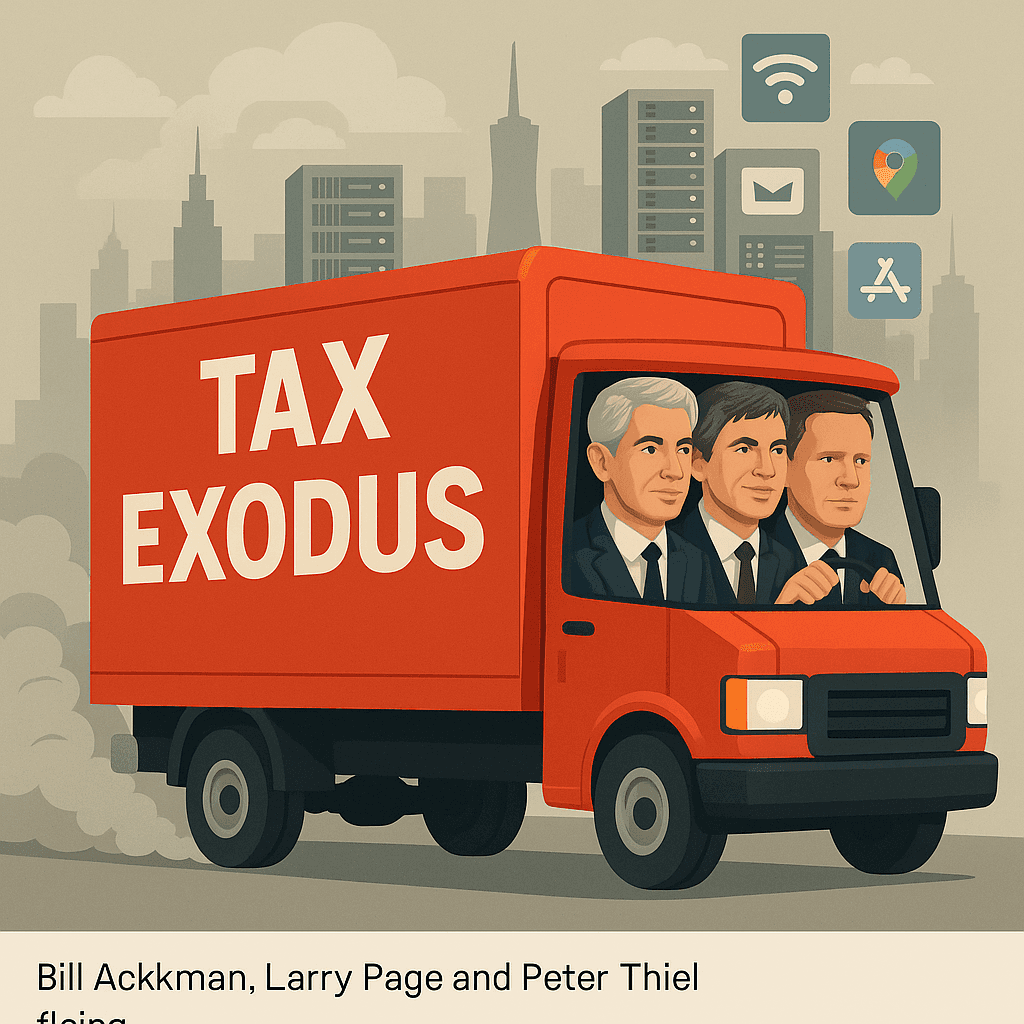
In a saga chronicled by Benzinga (Dec 2025), activist investor Bill Ackman warned that the state is "on a path to self-destruction" as lawmakers weigh a billionaire wealth tax so aggressive that even Larry Page and Peter Thiel — two men who tried to disrupt mortality — are reportedly considering something truly radical: moving.
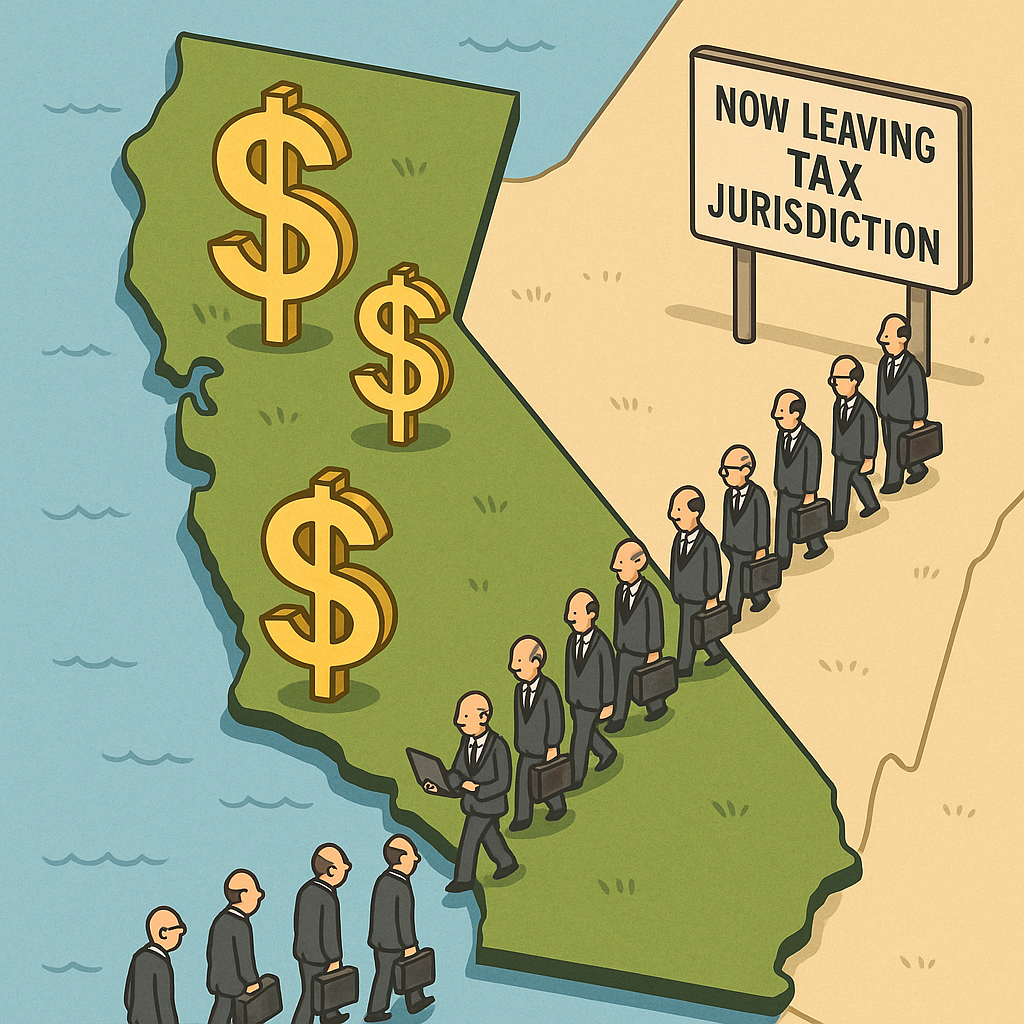
According to the proposal, the tax would target billionaires with California ties, including those who have already left but whose money still remembers the smell of Philz Coffee. Lawmakers insist this is "not punitive," describing it instead as "a gentle, data-driven claw-back of hoarded civilization points." Billionaires, however, reacted with the same shock usually reserved for discovering their private jet only has Wi-Fi on one band.
“This is an attack on innovation,” said an imaginary spokesperson for a coalition informally known as Silicon Exodus PAC, whose donors allegedly include Page, Thiel, and several other men able to buy and resell California three times before lunch. “If you tax accumulated capital, how will we ever fund the next totally-not-a-ponzi financial app?”
Bill Ackman, speaking from his preferred communication medium — a very long tweet thread disguised as civic concern — warned that California’s proposed levy would trigger a "death spiral" as founders flee to friendlier regimes like Florida, Texas, or whichever artificial seastead Peter Thiel is currently beta testing. “You can’t keep punishing success,” Ackman lamented, moments before endorsing a SPAC that punishes anyone who can read a balance sheet.
Meanwhile, Larry Page, who helped create Google and thus the entire concept of "searching your symptoms at 3 a.m. and finding only cancer," is reportedly weighing a move to states where the word "tax" is classified as hate speech. Sources say Page has considered relocating to Nevada, New Zealand, or a hollowed-out data center in international waters reachable only by drone and extremely targeted advertising.
Peter Thiel, already a high priest of the “get government off my yacht” movement, is said to be examining options that include:
- Buying a small country and rebranding it as a Delaware LLC
- Moving to a secret libertarian archipelago whose economy runs on crypto and unresolved trauma
- Simply convincing his assets that in a fundamental sense, they are in zero-tax jurisdiction already
California legislators insist they are unfazed. “If they leave, they leave,” said one hypothetical state assemblymember while frantically refreshing a spreadsheet modeling the consequences of losing three people who pay more capital gains in a month than the state makes from parking tickets in a decade. "It’s time the ultra-wealthy paid their fair share. Also, please do not leave. But also, we are very brave and independent. But seriously, don’t.”
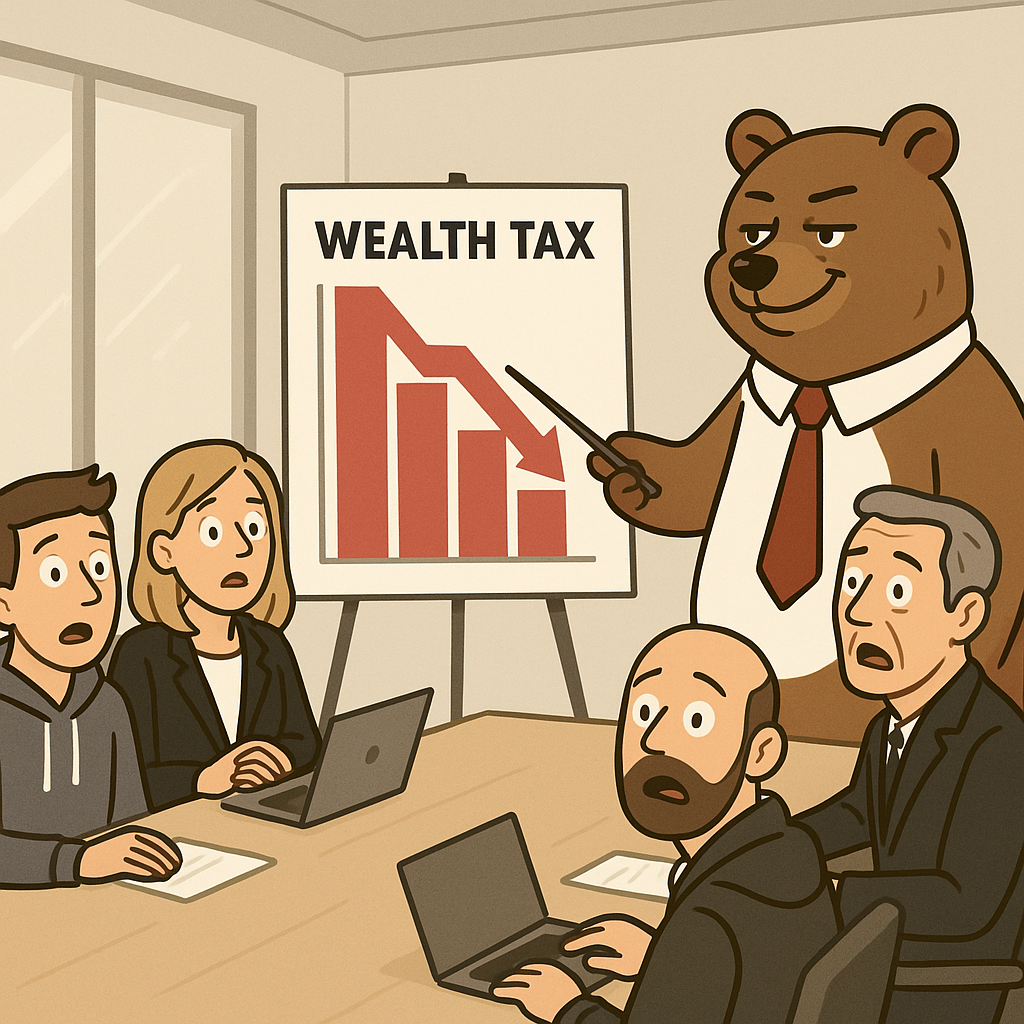
Tech workers on the ground expressed mixed feelings about the looming billionaire diaspora. Many welcomed the idea that perhaps the housing market might someday allow someone who writes actual code to live indoors. Others worried about losing the trickle-down benefits of billionaire presence, such as:
- Scooter-littered sidewalks
- Restaurants where a salad costs more than a used laptop
- VC-backed apps that send you grocery flyers on the blockchain
“If Page and Thiel leave, who will generate all the overfunded, underthought startups designed to replace a bus with a subscription?” asked Maya Lopez, a software engineer in San Jose. “We might have to start building things people actually need. That’s not what I got into deep learning for.”
Economists point out that this showdown is less about money than about narrative control. “Billionaires are very sensitive creatures,” a Stanford professor of behavioral finance explained. “Their sense of self-worth is tightly bound to the belief that they are solitary visionaries building civilization with their bare hands and a Delaware C-corp. Taxes introduce the horrifying suggestion that perhaps society contributed something too.”
To calm markets, a group of consultants reportedly pitched a compromise: the Voluntary Innovation Contribution, a rebranding of the wealth tax as a “premium subscription to public infrastructure.” Under this model, billionaires wouldn’t pay "taxes"; they would unlock exclusive features such as:
- Early access to earthquake-resistant bridges
- Ad-free wildfire evacuation alerts
- Priority lanes on the 101 for cars whose owners have net worths over $5 billion
Sources say Bill Ackman dismissed the idea, insisting that the real solution is for California to cut waste, streamline regulation, and somehow fund universal everything with a single artisanal bond offering. “Let the free market handle it,” he reportedly said, from a home guarded by a security team, zoning exemptions, and copyright law.
In a leaked group chat, several lesser-known tech billionaires debated strategy with Larry Page and Peter Thiel. Some argued for legal challenges. Others suggested simply uploading themselves to a server in Wyoming and declaring their bodies tax non-resident. One particularly ambitious VC floated the idea of “disrupting the concept of states” via an AI-mediated jurisdiction layer.
“We don’t need California,” one unnamed founder wrote. “We are the cloud now.”
California replied by pointing out that the cloud still sits on very taxable land, connected by unfashionable things like power lines and water pipes that cost actual money. “Interesting thesis,” a fictional spokesperson for the Franchise Tax Board said. “Where do you think the data centers go, Narnia?”
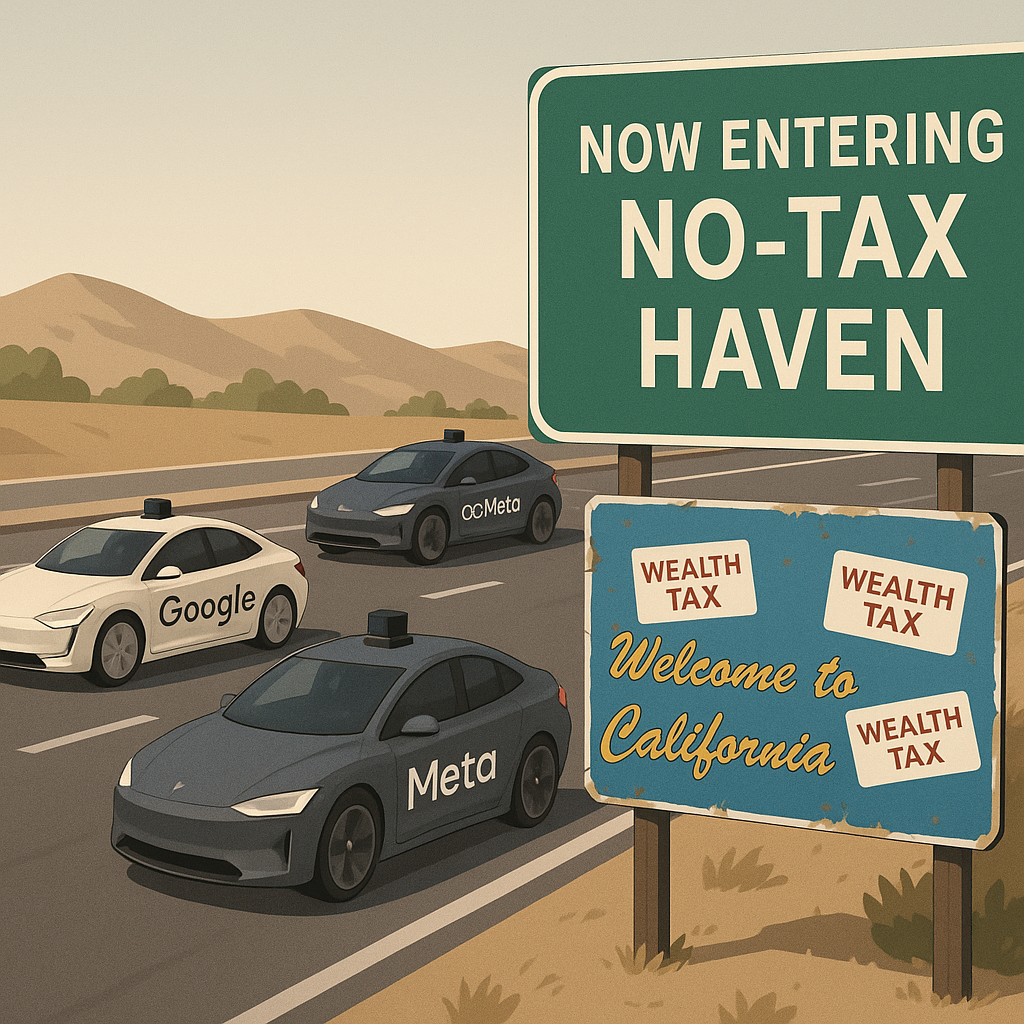
As both sides escalate the rhetoric, ordinary residents are left wondering whether this is the moment tech finally decouples from the state that gave it garage doors and kombucha kiosks. Real estate agents anticipate a chaotic next quarter, offering new listing tags such as “Billionaire-Proof Bungalow” and “Formerly Owned By Someone Who Once Made Eye Contact With Larry Page.”
Yet for all the talk of exodus, few observers expect a clean break. "They'll leave," the Stanford professor predicted, "but their companies will still need California talent, California servers, and California's unique ecosystem of idealistic 23-year-olds willing to sleep under their desks for equity in an app that renames email. And California will still need their capital."
In the end, the likely outcome is the least cinematic: a slightly watered-down tax, a few highly publicized moves to Austin, several tearful Medium posts about "leaving my heart in Palo Alto," and yet another round of funding for a startup that promises to help billionaires calculate the exact point at which staying in California is cheaper than relocating their entire identity to Dubai.
Until then, the standoff continues. California insists it can’t sustain itself without tapping vast concentrations of wealth. Billionaires insist they built everything and owe nothing. And somewhere between the two, the rest of us sit in traffic on crumbling roads, scrolling a push notification that reads:
“Bill Ackman Warns California Is On A Path To Self-Destruction. To continue reading, please disable your ad blocker or become a billionaire.”