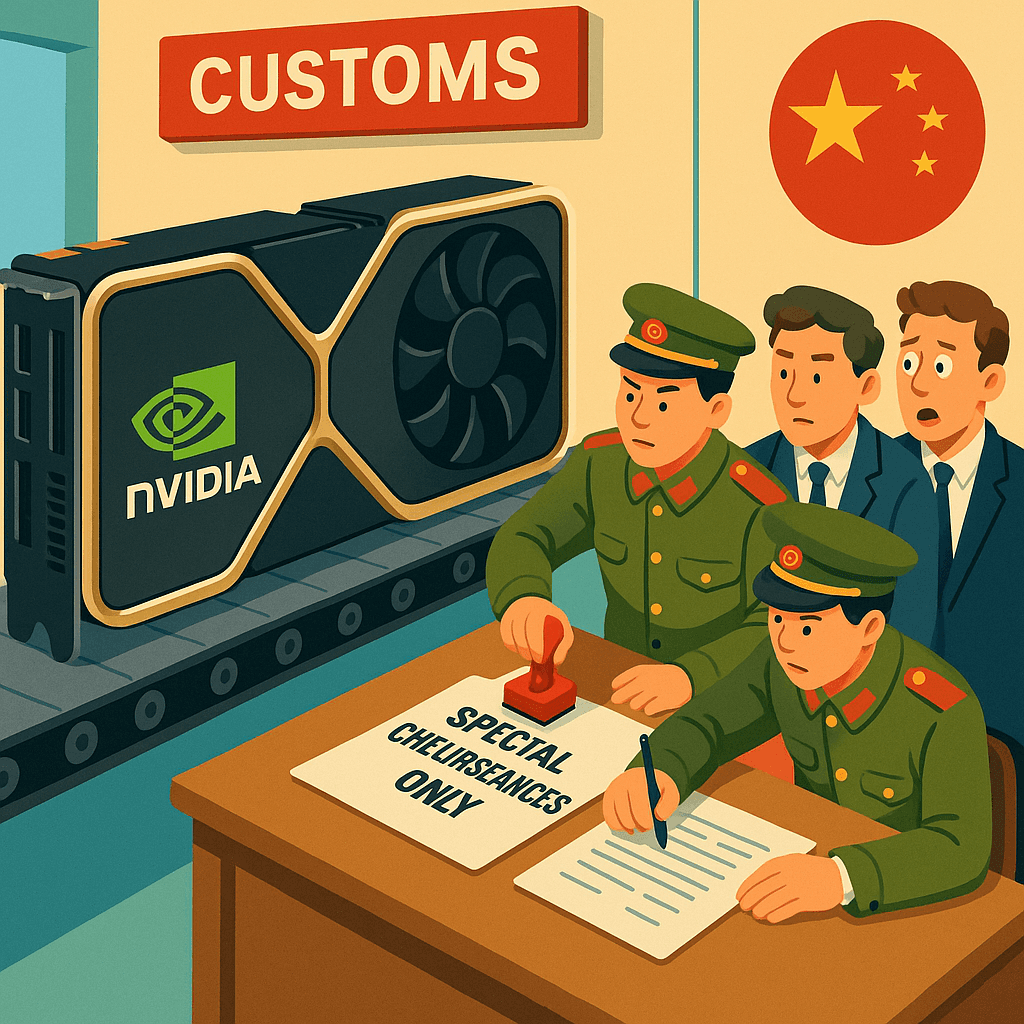
China has reportedly decided that buying Nvidia chips should be treated like adopting a tiger: technically possible, but only under “special circumstances” and with enough paperwork to deforest three provinces (The Economic Times, Jan 2026).
The new restrictions, aimed squarely at Nvidia’s most coveted AI accelerators, land like a GPU-sized meteor in the middle of the global AI boom. The move doesn’t outright ban Nvidia hardware in China; it just nudges it into a regulatory escape room where every door is labeled “Strategic Security Considerations” and the floor is lava.
The result: a sudden global shortage of chill among AI investors, data center operators, and that guy on LinkedIn whose whole personality is “LLM latency charts.”
According to the report in The Economic Times, Chinese regulators are now limiting purchases of advanced Nvidia chips to “special circumstances,” an ambiguously ominous phrase that in tech usually means “we’ll let some of you do it, but everyone else gets vibes and throttling.” The policy is understood to apply to high-end GPUs like the H100 and its export-compliant cousins, the creatively named H20 and cuddly-but-crippled L20, which were specifically engineered so the U.S. Commerce Department could sleep at night.
Nvidia, headquartered in Santa Clara but spiritually located inside every AI slide deck on Earth, has been walking a tightrope between U.S. export controls and China’s bottomless appetite for compute. Now Beijing appears to be politely sawing through the rope from its side, in the name of “self-reliance” and “not letting your entire tech ecosystem be gated behind a single American graphics card company that used to primarily care about rendering realistic puddles in video games.”
“You can still buy Nvidia chips,” one Shanghai-based cloud architect said. “You just have to prove you won’t use them for anything important, powerful, interesting, profitable, geopolitically awkward, or remotely fun.”
For China’s AI startups, the message is clear: it’s time to pretend you were always super passionate about domestic accelerators from companies like Huawei and Biren. Founders who spent 2024 flexing Instagram stories of gleaming GPU racks are now frantically digging out pitch decks that say ‘We’ve always believed in indigenous silicon’ and hoping their investors don’t remember the words “Nvidia moat” from last quarter.
Global cloud vendors, already juggling U.S. export controls and rising energy costs, are reacting with the calm, measured composure of someone watching their production cluster go down during a live demo. Multinationals with data centers in Beijing and Shenzhen are now running internal war games with thrilling scenarios like:
- “What If Our Model Serving Tier Is Just a Raspberry Pi and Prayer?”
- “Can We Rebrand Latency as ‘Thoughtful AI’?”
- “Is a PDF with Screenshots of Our App Legally a SaaS Product?”
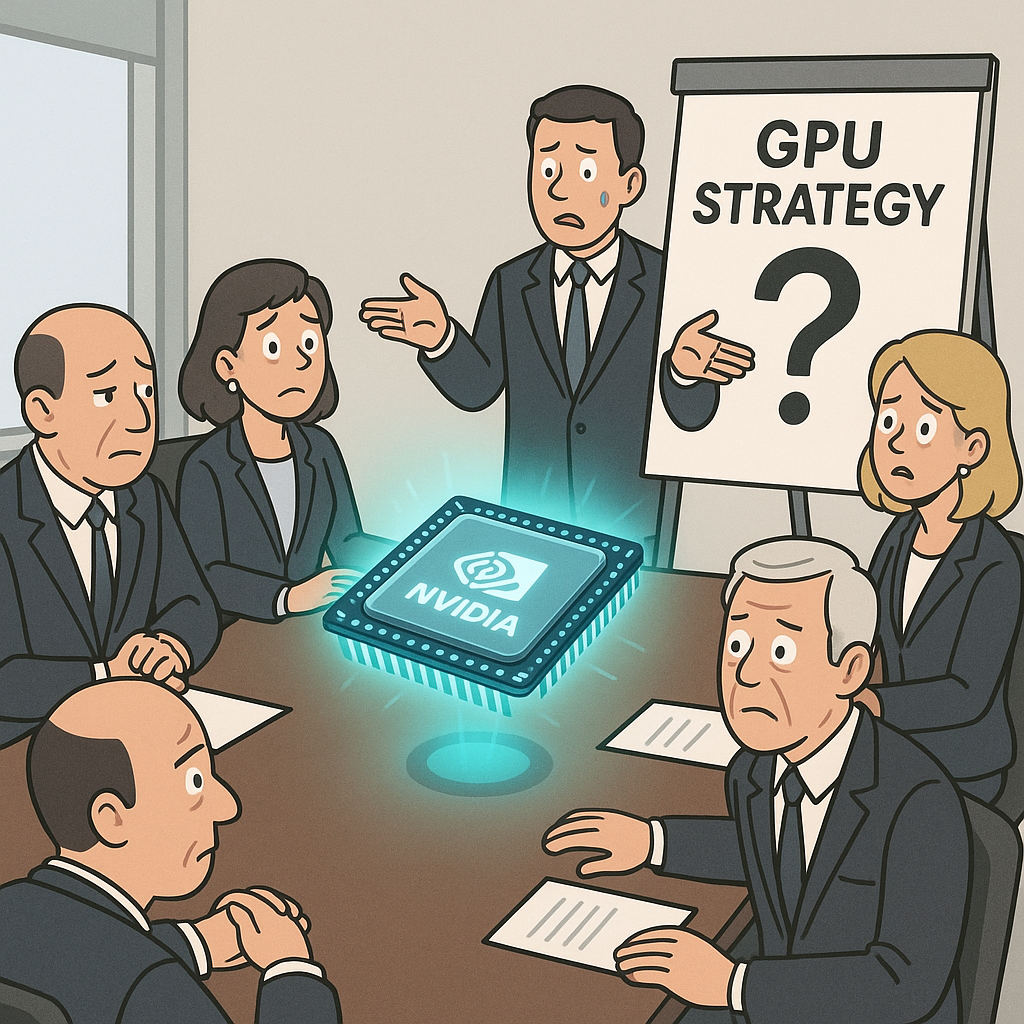
On the U.S. side, policymakers are doing a victory lap so vigorous it may qualify as renewable energy. Washington has spent the last two years weaponizing Nvidia’s GPU lineup like it’s the Manhattan Project with RGB lighting, tightening export controls to slow down China’s AI capabilities. Now, with Beijing itself rationing Nvidia hardware, U.S. officials can cross off another item from their vision board titled “Make Chips the New Oil, Without All the Tankers Getting Stuck in Canals.”
But the reality is more complicated than a bipartisan tweet thread. Restricting Nvidia chips inside China doesn’t just kneecap some future sci-fi super-AI run by the People’s Liberation Army; it also makes life harder for everyday developers trying to build boring-but-useful things like translation tools, manufacturing optimizers, and that startup that promised “AI that writes code” before quietly pivoting to “AI that suggests Jira ticket titles.”
Nvidia, watching all this from its fortress of trillion-dollar market cap, is doing what any sensible tech giant would: nodding diplomatically in all directions while quietly shipping truckloads of whatever it’s still allowed to sell. Officially, the company insists it will “continue to serve customers in all compliant markets.” Unofficially, it’s probably brainstorming product names like:
- H100-CN: Runs at 40% speed and periodically pauses to display a friendly message about export compliance.
- A900 Harmony Edition: Trained to forget anything that looks like dual-use research.
- RTX Diplomat: Comes with ray tracing, DLSS, and a pre-installed copy of international trade law.
Inside Chinese tech circles, the mood is a familiar mix of defiance, pragmatism, and spreadsheet-driven despair. Big players like Tencent and Alibaba can probably navigate the new “special circumstances” maze with their usual combination of lobbying and elaborate PowerPoints about national AI competitiveness. Smaller companies, meanwhile, are about to discover how fast a cap table can turn into a ghost story once investors see the phrase “our GPU strategy is vibes-based.”
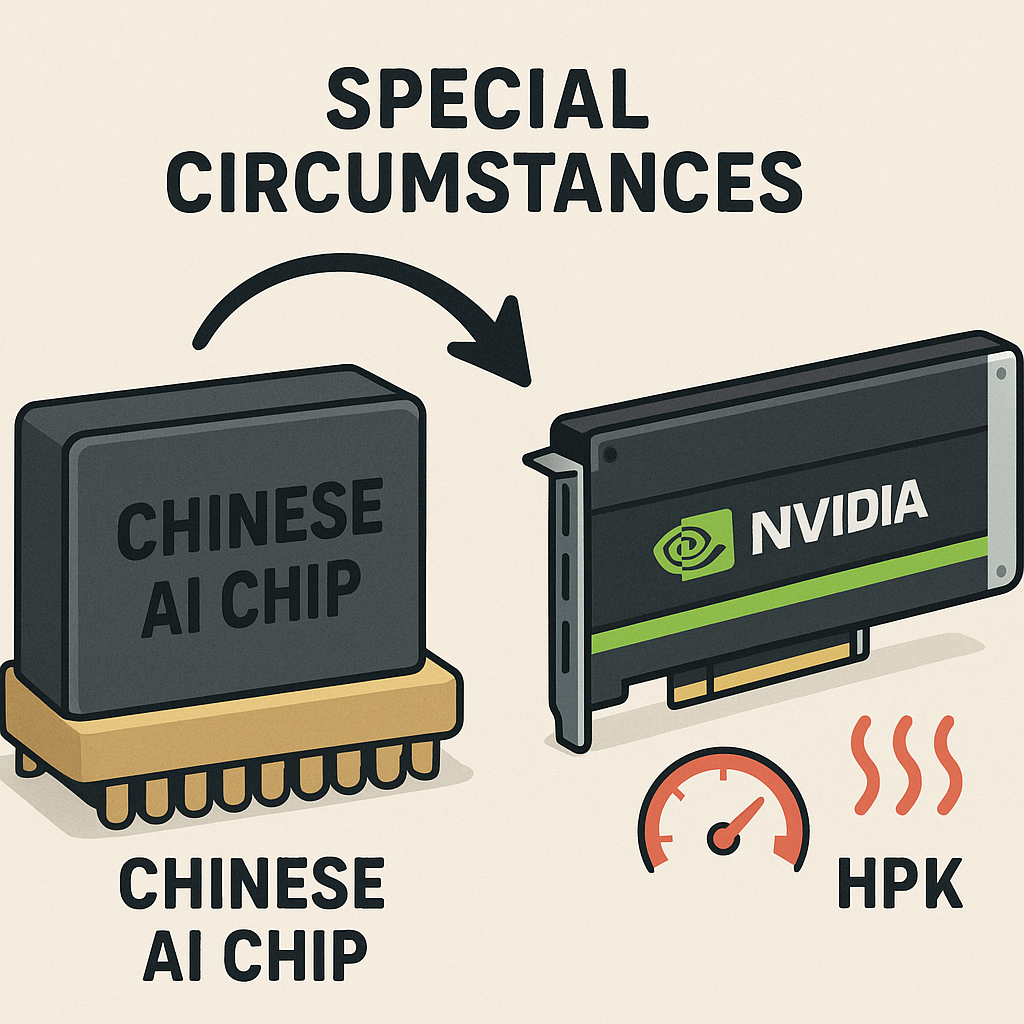
The irony is that every attempt to choke off Nvidia in China just accelerates Beijing’s obsession with building its own alternatives. If history is any guide, local chipmakers will spend the next 18 months furiously taping out new accelerators, while government officials host conferences with titles like “Symposium on Sovereign Compute: From CUDA Dependency to Proudly Buggy SDK.” The first generation will be slow, hot, and allergic to PyTorch. The second will be merely terrible. The third might be good enough that everyone outside China suddenly regrets not paying more attention.
In the meantime, the global AI industry is bracing for another round of scarcity cosplay. Expect more startups boasting about “model efficiency” when what they really mean is “we couldn’t get H100s,” more research teams proudly announcing breakthroughs in “small models” because their training cluster is actually a couple of abandoned gaming rigs, and more VC memos arguing that “the real AI edge is not compute, but founders” while quietly asking each portfolio company, “So, uh, how many GPUs do you actually have?”
China limiting Nvidia chip purchases to “special circumstances” doesn’t end the AI boom. It just makes it weirder, more regional, and even more dependent on whose orders get approved by which committee this quarter. The next wave of unicorns may not be the ones with the biggest models, but the ones who figure out how to ship something useful on yesterday’s hardware while pretending that was the plan all along.
Or, as one exhausted CTO of a cross-border AI startup put it while staring at a spreadsheet of rejected purchase orders: “In 2020, we were told ‘software is eating the world.’ In 2026, the world replied: ‘Cool, but how many Nvidia chips you got?’”



