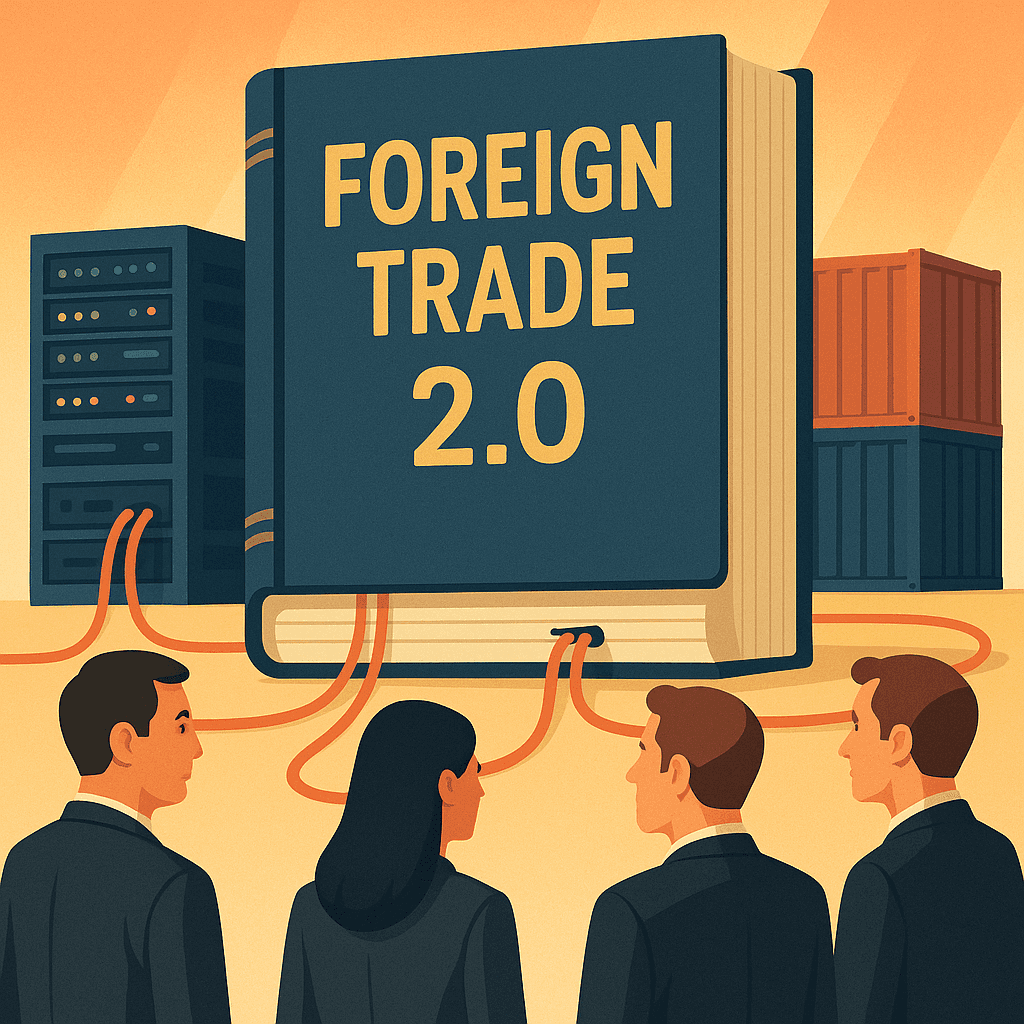
BEIJING — China has officially patched its trade war software, rolling out a revised Foreign Trade Law designed to “bolster trade war capabilities” while maintaining the traditional UI of saying everything is about “win–win cooperation” (Al-sharq Al-awsat, Dec 2025).
The National People's Congress Standing Committee announced that the legal update will give Beijing “more flexible tools” to manage exports, imports, and the occasional diplomatic tantrum. In tech terms: China just shipped TradeOS 2.0, and it comes with built‑in support for sanctions, counter‑sanctions, and an experimental ‘rage tariff’ slider.
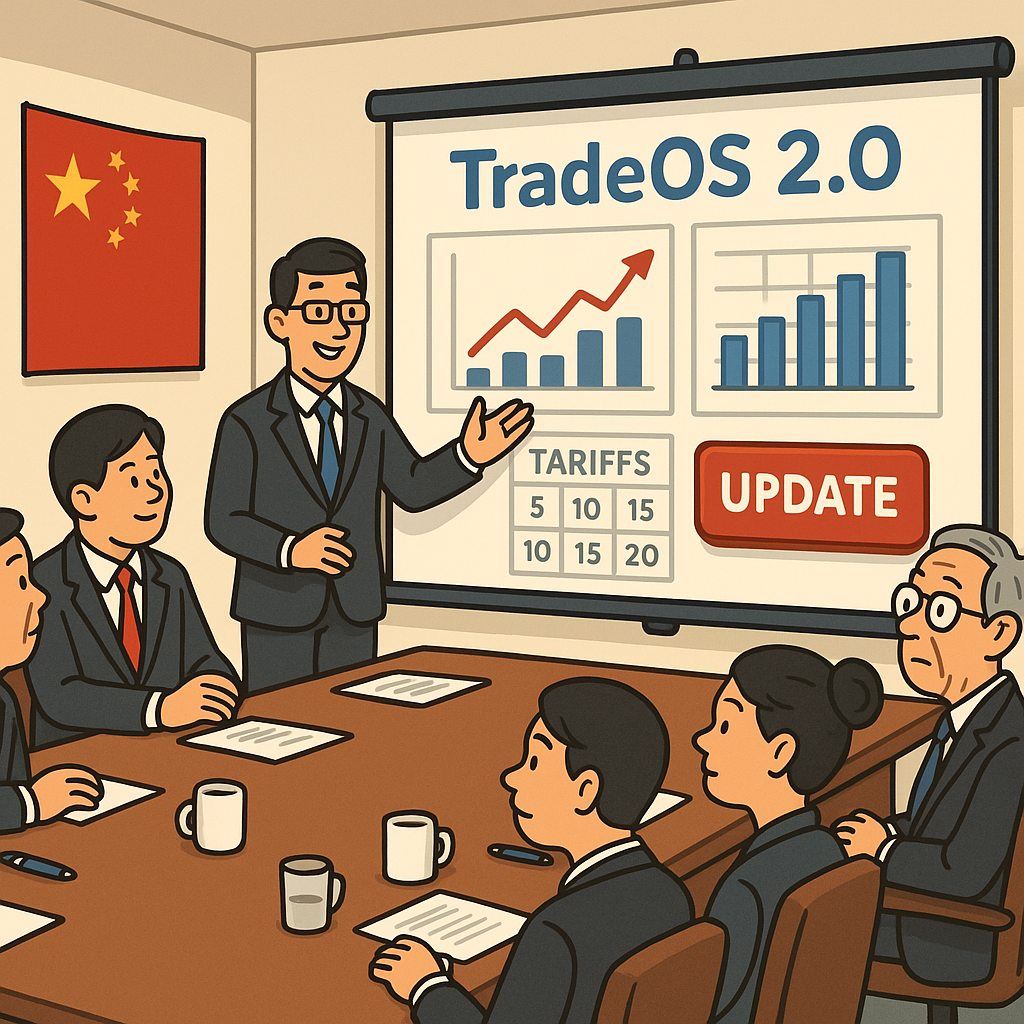
Officials insisted the revised Foreign Trade Law is not aimed at any specific country, an assertion they helpfully undercut by mentioning “the United States” every 90 seconds. Behind them, a giant screen displayed an infographic titled “Global Trade Harmony” superimposed over a flaming Earth and a QR code for the Ministry of Commerce’s new retaliation dashboard.
According to Al-sharq Al-awsat, the text of the law emphasises the need to “safeguard national security” and “protect development interests,” which is legalese for we would like the option to turn your semiconductor supply chain into a subscription service. The Ministry of Commerce framed it as a “necessary modernization” of the country’s foreign trade framework, which previously had to be rebooted manually every time Washington discovered a new acronym like CHIPS, IPEF, or ‘strategic decoupling’.
To explain the changes, the Ministry unveiled a glossy product brochure that looked suspiciously like a software launch deck:
- Smart Sanctions™: AI-driven targeting of foreign entities, optimized for maximum panic with minimum paperwork.
- Adaptive Export Controls: Dynamic toggles for gallium, germanium, and other minerals you just learned can end civilization.
- Partner Pain Index: Real-time dashboard rating how upset each trade partner is, from “mildly concerned” to “secretly Googling ‘move factory to Vietnam’.”
“This is a high‑performance legal engine for the era of uncertainty,” a Commerce Ministry spokesperson said, standing in front of a slide reading TRADE PEACE THROUGH SUPERIOR FIREPOWER. “China remains committed to open markets, as long as we hold the admin password.”
Foreign companies operating in Shanghai, Shenzhen, and that one industrial park your supply chain guy swears is “totally low-risk” reacted to the news the way they always do: by asking their lawyers what it means and updating their risk profile from ‘yellow’ to ‘screaming chartreuse.’ Several US and EU firms quietly admitted they have no idea whether they’re in compliance, since the law references “national security” so many times it starts to feel like an auto‑fill bug.
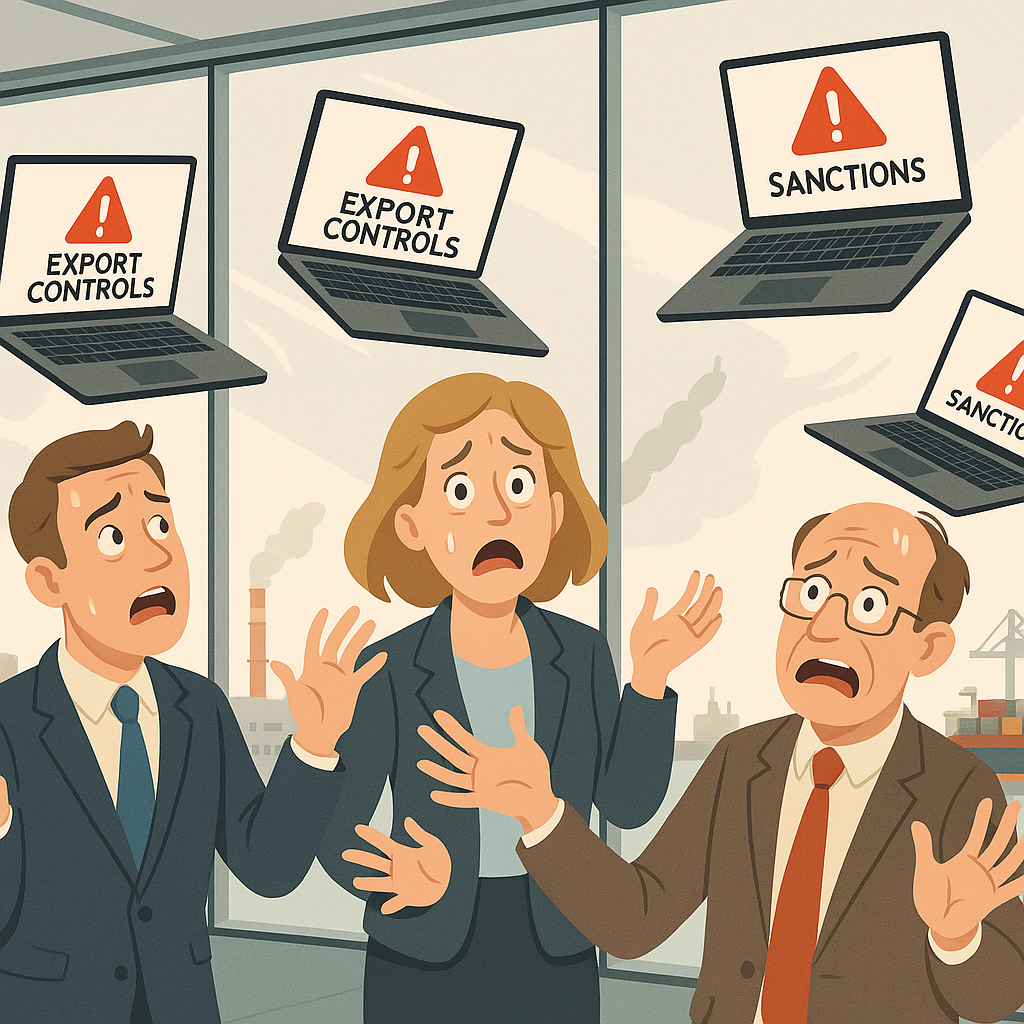
“The challenge is that every side keeps saying this is about ‘rules‑based trade,’” said a trade lawyer in Brussels, “but the only rule is: whoever controls the export licenses controls the vibes.” He then opened yet another PowerPoint titled Contingency Plan 7: If Rare Earths Become NFTs.
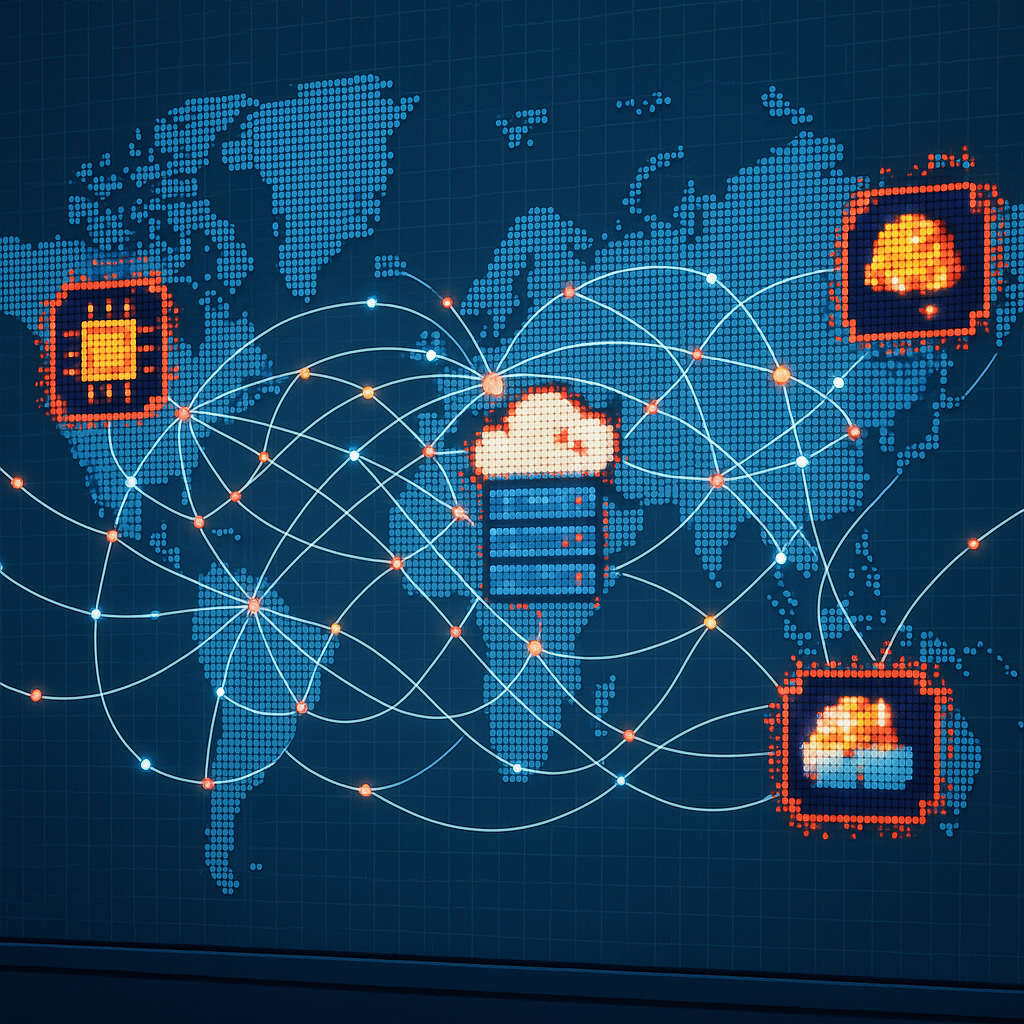
Tech companies are especially nervous. The law explicitly empowers Beijing to respond to foreign restrictions with “corresponding measures,” a phrase that has historically ranged from “mild paperwork delay” to “your entire product line is now classified as a security threat.” Chipmakers, cloud providers, and EV firms are reportedly running simulations to find out how many embargoes you can stack before a data center turns into an artisanal bitcoin mine by default.
Silicon Valley, for its part, has responded with its usual blend of denial and pitch decks. One venture capitalist in California described the updated Foreign Trade Law as “a clear go‑to‑market opportunity for compliance‑as‑a‑service platforms,” before asking a junior associate whether China still allows Zoom calls.
“Look, if Beijing wants to bolster trade war capabilities, we just raise a new fund called Retaliation Resilience Fund I,” the VC said. “We’ll invest in startups that do ‘geopolitical observability’ or ‘supply chain chaos orchestration.’ Slap some AI on export licenses. It’ll be fine.” He then paused to text his partner: “Hey, what’s our exposure to ‘China’ as a concept?”
In Washington, US officials pretended to be surprised that China would ever think of upgrading its legal tools while the United States upgrades its own restrictions every fiscal quarter. An anonymous Commerce Department staffer, hunched over a spreadsheet of entities that may or may not exist, admitted the arms race has become absurdly software‑like.
“They push a patch to their Foreign Trade Law; we ship an update to the Entity List,” the staffer said. “At this point we basically do DevOps for geopolitics.”
Europe, caught between its dependency on Chinese markets and its dependency on US security umbrellas, reacted by issuing a strongly worded PDF. The document stressed “concern,” “dialogue,” and “the importance of stable trade,” which experts agreed is Brussels‑speak for “we’re going to have twelve summits and still end up buying the same batteries.”
Back in Beijing, state media celebrated the revised Foreign Trade Law as evidence that China is ready for “complex external challenges.” A commentary on CCTV described it as “a shield against unilateralism and protectionism,” accompanied by B‑roll of container ships, smiling factory workers, and a slow zoom on gallium ingots like they were rare Pokémon drops.
Economists warn that the new powers could escalate tit‑for‑tat measures in high‑tech sectors already on life support. Semiconductors, AI chips, cloud services, and EV components are all now effectively hosted on a cross‑border version of AWS: Arbitrary Weaponized Sanctions. Each time Washington tweaks a rule, Beijing can now answer with legally pre‑installed countermeasures.
The result is a global tech industry operating in permanent beta. Production plans are provisional. Data centers are diplomatic hostages. And the phrase “supply chain” has become less a description of logistics and more like a clinical diagnosis.
Still, Chinese officials insist the revised Foreign Trade Law is fundamentally about stability.
“By clarifying our rights and mechanisms, we increase predictability,” a legal scholar in Beijing explained. “The world can now precisely predict that if you restrict our exports, we will restrict yours, only with nicer infographics.”
As the law takes effect, multinationals are frantically rewriting their 2026 strategies. Some are exploring “friend‑shoring,” moving parts of their supply chains to countries that are, at minimum, not currently drafting their own Trade War Enhancement Pack. Others are just adding a new line item to their tech budgets: “Geopolitical Runtime Errors.”
In the end, the revised Foreign Trade Law might be remembered less as a single piece of legislation and more as the moment global trade finally admitted what it has quietly been for years: a massively multiplayer online strategy game with very real loot.
The only question left for the tech world is whether they’re players, or just purchasable skins.