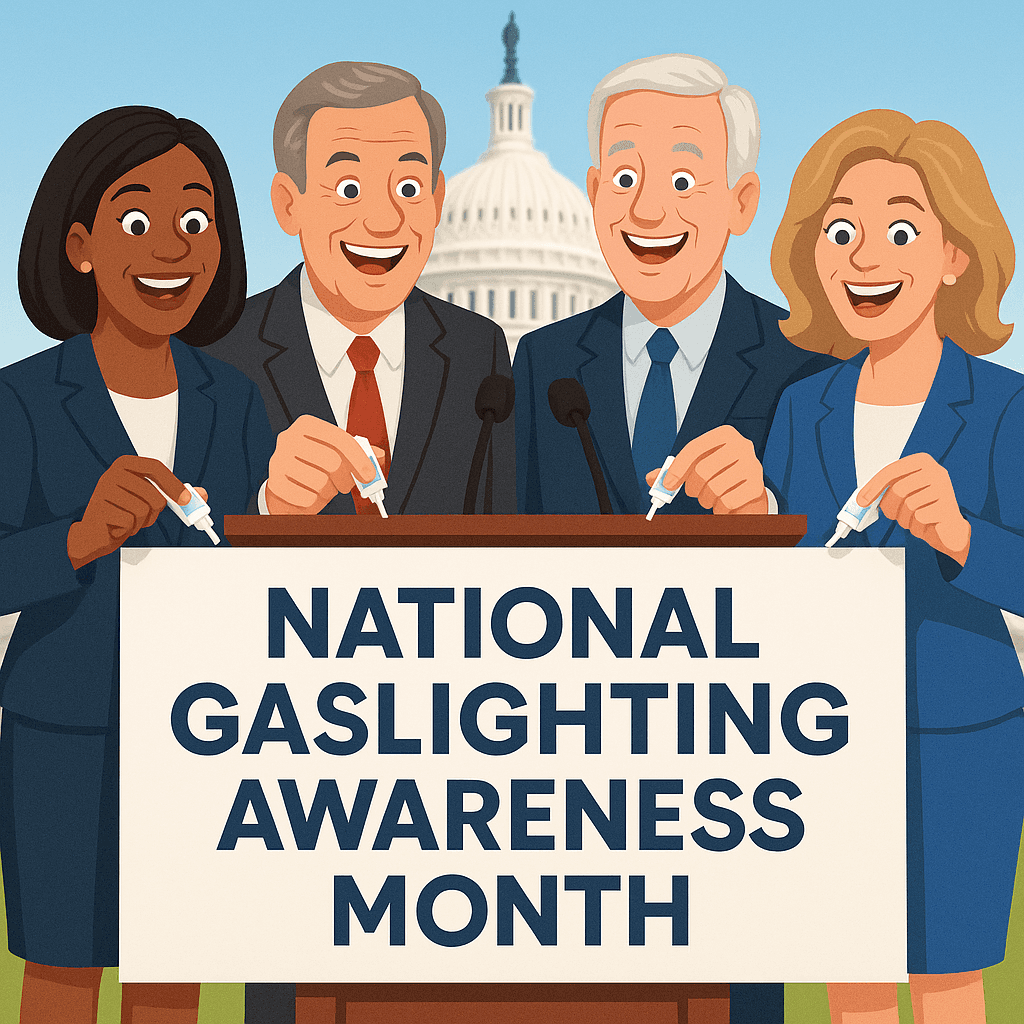
In a rare display of unity, congressional leaders from both parties have joined forces to pass a ceremonial resolution declaring April “National Bipartisan Gaslighting Awareness Month,” while simultaneously insisting that neither the month, the resolution, nor Congress itself are real in any meaningful sense.
“We take emotional manipulation extremely seriously, and we always have, despite your obviously faulty memory,” said Speaker of the House Marion Teller at a press conference that C-SPAN later helpfully labeled “ALLEGED PRESS CONFERENCE.” “Americans deserve to know when they’re being gaslit. And the first step is understanding that they’re not being gaslit, and never have been.”
The resolution, which passed 97–1 in the Senate and 431–3 in the House, establishes a month-long series of “public awareness initiatives” designed to help Americans recognize the warning signs of political gaslighting, such as:
- Being told you misunderstood what someone said, even when you’re replaying the video on your phone.
- Being assured that a bill does the exact opposite of what its title says.
- Being reminded that, historically speaking, nothing bad has ever happened here, actually.
Shortly after the vote, however, both parties began insisting that no such resolution existed, and if it did, it meant something different from what you think it means.
“This is classic projection,” said Senate Minority Leader Trent Halvorsen, standing next to a podium bearing the official National Bipartisan Gaslighting Awareness Month logo. 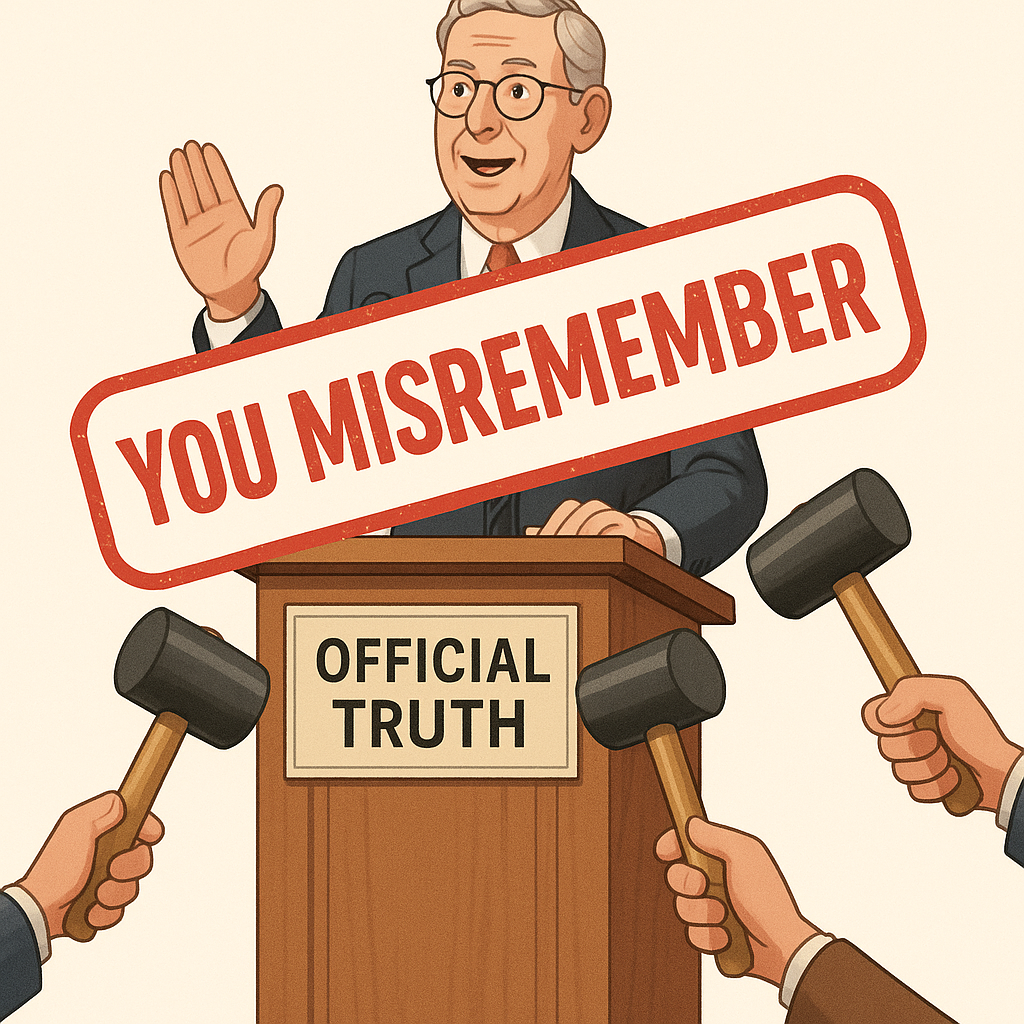
When reporters pointed out that he had personally cosponsored the measure, Halvorsen smiled the tight, paternal smile traditionally reserved for explaining climate change to donors. “Words are very complicated,” he said. “When I signed that paper, I meant the opposite of what you think. It’s called nuance. You’d understand if you had top-secret clearance or a podcast.”
White House officials, eager not to be left out of the new national tradition, embraced the resolution with all the sincerity of a campaign promise, then quietly rebranded it as an “aspirational suggestion” before lunch.
“We fully support this bipartisan effort that we absolutely did not ask for, draft, or lean on anyone to introduce,” said Press Secretary Lila Cortez, flipping through a binder labeled, in large serif font, Talking Points We Will Later Deny. “The President has been a lifelong opponent of gaslighting. Any video of him saying the opposite is clearly a deepfake, or satire, or context you just don’t have because you’re not in the Situation Room.”
When asked if the administration would issue a formal proclamation, Cortez shook her head. “There’s nothing to proclaim. This is a completely symbolic measure,” she said. “And what could be more symbolic than passing a law about gaslighting and then insisting it doesn’t exist?”
Outside the Capitol, advocacy groups staged dueling rallies, each accusing the other of manipulating reality and each insisting they alone were the objective truth’s authorized dealership. 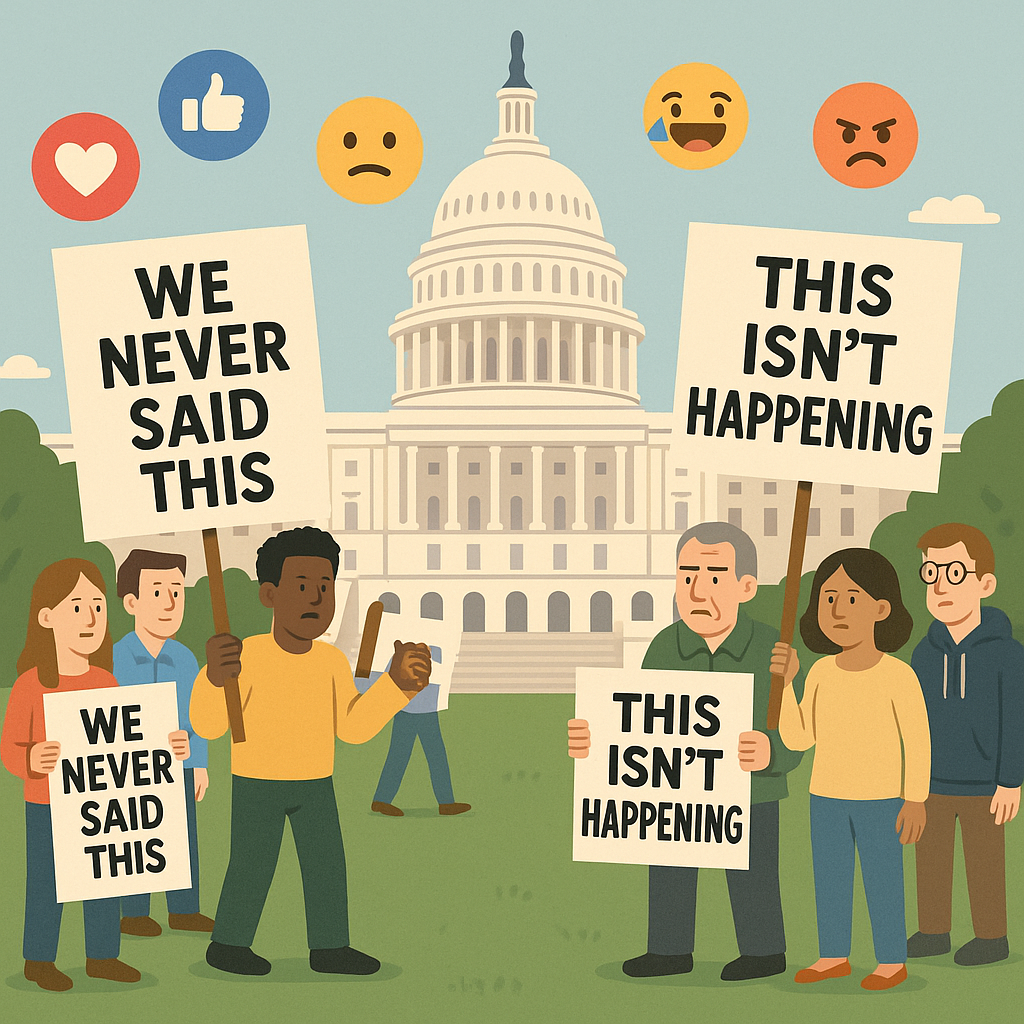
“We’re here to raise awareness that only our side cares about raising awareness,” shouted one organizer through a megaphone that, for legal reasons, had been retuned to shout “BOTH SIDES” whenever anyone said “structural problem.”
On the other side of the lawn, a rival group held signs reading, “YOU’RE NOT BEING GASLIT, YOU’RE JUST WRONG,” along with QR codes linking to twenty-seven-minute YouTube explainers titled “The REAL Truth (They Don’t Want You To Remember You Already Knew).”
Social media platforms, never ones to miss the chance to industrialize a crisis, announced partnerships to “elevate helpful conversations” around gaslighting by algorithmically amplifying the least stable posts possible.
“We’re committed to healthy discourse,” said an X (formerly Twitter) spokesperson, speaking next to a large touchscreen graph titled ENGAGEMENT VS. SANITY. “During Gaslighting Awareness Month, if users post verifiable information with credible sources, our algorithm will label it ‘BORING’ and demote it. However, if they accuse their uncle or a sitting senator of mind-controlling the weather, we’ll push that straight to trending.”
Meta announced its own initiative: a “fact-checking partnership” in which third-party contractors will review controversial posts and affix one of three highly clarifying labels:
- “Missing Context”
- “Not The Whole Story”
- “Feel What You Feel”
“Our job is not to decide what’s true,” said a Meta representative, “only what’s monetizable.”
The resolution itself is a masterpiece of bureaucratic ambiguity. Section 1 recognizes that gaslighting is “harmful to the mental and civic health of the nation.” Section 2 “strongly encourages” schools, workplaces, and media outlets to educate the public about “recognizing, understanding, and responsibly deploying” psychological manipulation “when absolutely necessary.”
Section 3, according to a copy briefly visible before staffers switched it out with a blank sheet of paper, “affirms the right of elected officials to retroactively redefine statements, votes, and entire decades of policy as ‘misremembered’ by the electorate.” When asked about this, Senator Halvorsen stared at the reporter as though seeing them for the first time.
“No such section exists,” he said carefully. “And if it did, you’d agree with it.”
Historians note that government-led reality distortion is nothing new. As one political scientist at Georgetown pointed out, “We’ve had official stories for everything from the Gulf of Tonkin to weapons of mass destruction. The difference now is that instead of waiting thirty years for declassified documents, we get to watch the gaslighting happen live, in 4K, with subtitles.” (The scholar requested anonymity, citing “not wanting to argue with my uncle on Facebook again.”)
International observers are reportedly fascinated. A European Union diplomat, speaking to the BBC, compared the move to “Brexit, but as a year-long emotional support hobby.” Meanwhile, Russian state TV commentators called it “an interesting American experiment in doing our thing, but more politely.”
The irony reached a new peak when a bipartisan working group proposed adding “National Deepfake Literacy Week” right in the middle of Gaslighting Awareness Month, to “help citizens distinguish between real manipulation and the good, patriotic kind.” The week will feature AI-generated PSAs in which a convincingly simulated George Washington sternly insists that the Founders always intended the filibuster to be used for blocking student lunch programs.
Asked whether such propaganda might itself be considered gaslighting, the working group issued a written response: “It is deeply irresponsible and borderline unpatriotic to suggest that we would ever intentionally mislead the public, which we have never done at any point in our long and unblemished record of always telling the truth.”
In an odd twist, the only major figure to publicly call the resolution what it is was United Nations Secretary-General António Guterres, who, in remarks similar in tone to his past warnings on climate change (UN, 2023), said, “Humanity is on a highway to a post-truth hell with its foot on the accelerator.” Congress immediately issued a rebuttal stating that Guterres was “mischaracterizing our vibrant information ecosystem” and that the phrase “post-truth” was “alarmist” and “probably taken out of context by foreign media.”
Back on Main Street, responses were mixed and increasingly resigned.
“I’m honestly not sure what’s real anymore,” said local teacher Janet Ruiz, scrolling through a feed that alternated between live footage of the House floor and AI-generated Monty Python parodies of the same footage. “My students keep asking if this is history or propaganda, and the answer is just ‘yes.’”
To mark the first official National Bipartisan Gaslighting Awareness Month, landmarks across the country will be lit up in a special color the sponsoring committee described only as “whatever shade you think it is.” The Library of Congress will host an exhibit titled, “We Have Always Been At War With The Fact-Checking Department.” And on the National Mall, volunteers will hand out informational pamphlets that are, upon closer inspection, completely blank.
“Take one,” urged a cheerful staffer, gesturing at the empty pages. “Everything you need to know is right there.” 
By early evening, as pundits began their nightly ritual of insisting they’d predicted all of this years ago, a joint statement was released from congressional leadership:
“In conclusion, there is no Gaslighting Awareness Month, there never was, and you are remembering this article incorrectly. Any perception to the contrary is purely a sign of how divided we’ve become as a nation. We call on all Americans to come together in unity — around our shared commitment to doubting themselves instead of us.”
Asked for comment, reality could not be reached. It had already been redacted.