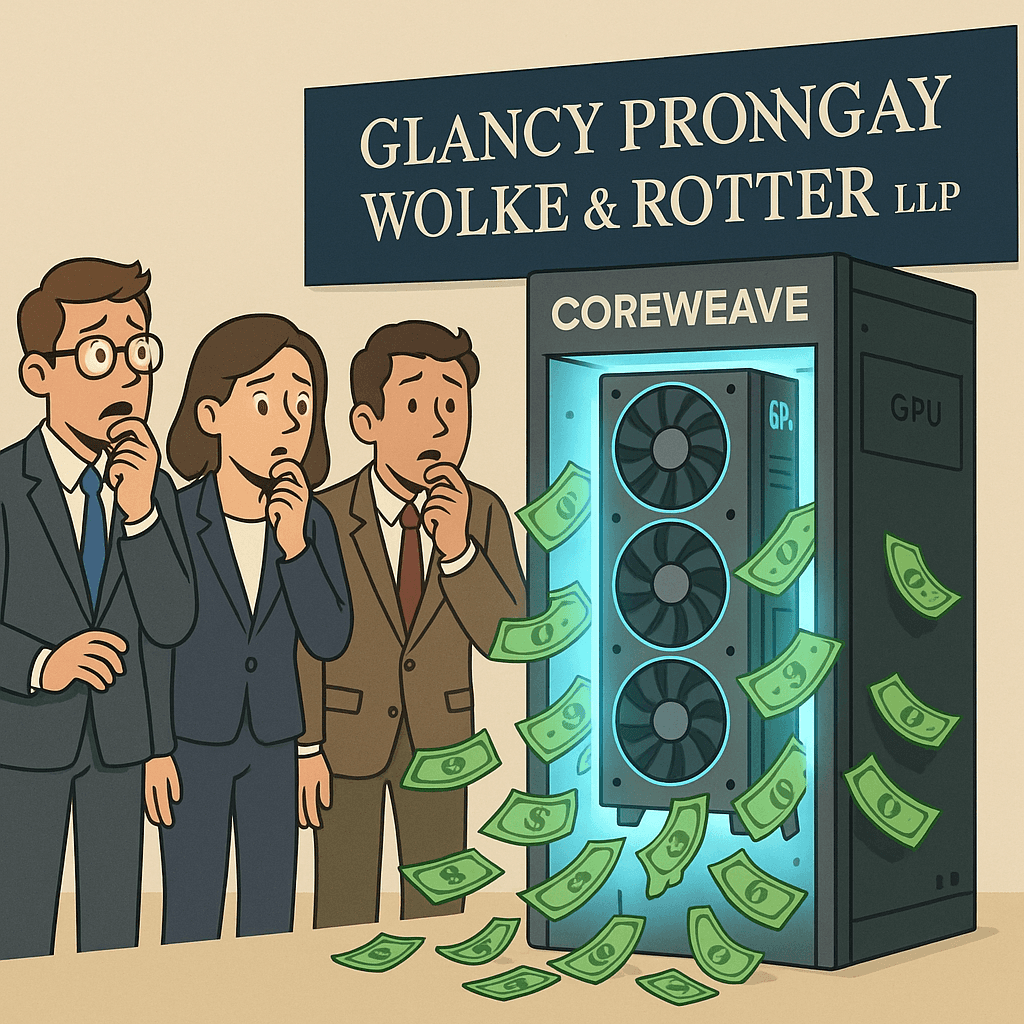
In a stunning plot twist for people who thought “AI infrastructure” was a synonym for “infinite money glitch,” shareholders of CoreWeave, Inc. (CRWV) are being urged to contact the law firm Glancy Prongay Wolke & Rotter LLP over an alleged securities fraud situation that, regrettably, involves the oldest technology of all: numbers that don’t add up (Globenewswire_fr, Jan 30, 2026).
CoreWeave, the once-whispered “GPU whisperer” of Wall Street, reportedly told investors it was surfing the AI boom on a rocket made of NVIDIA chips and infinite cloud demand. Now, some of those same investors are being gently informed that what they actually bought may have been a very expensive inspirational poster saying, “Believe in the Future.”
Glancy Prongay Wolke & Rotter LLP, a firm whose name alone sounds like a Securities Fraud Summoning Spell, has issued a “deadline alert” to CoreWeave shareholders who lost money. The alert invites them to participate in the time-honored American tradition of suing someone richer than they are. The law firm promises to investigate whether CoreWeave, Inc. and certain officers violated federal securities laws, or merely good taste.
According to the complaint, investors allege that CoreWeave’s enthusiasm about its AI-focused cloud platform may have drifted from “forward-looking statements” into “fantasy novel.” Marketing materials apparently painted CoreWeave as the essential backbone of the generative AI future, while financial reality quietly suggested it was more of a slightly sore ligament.
“We were told CoreWeave was the next big thing in AI infrastructure,” said one retail investor, scrolling through a portfolio app that now resembles a crime scene. “I just didn’t realize I was the training data.”
Technology analysts point out that CoreWeave’s pitch to investors was deceptively simple:
- Step 1: Rent a vast hoard of GPUs to AI companies.
- Step 2: Call it a ‘cloud compute platform.’
- Step 3: Go public, say “AI” 40 times per earnings call.
- Step 4: ???
- Step 5: Profit.
“The business model was clear,” said a fictional tech VC who requested anonymity to avoid spooking his remaining LPs. “You take GPUs, put them in a warehouse, plug them in, and then just keep nodding confidently whenever someone says ‘foundation model.’ Where things went wrong is that eventually, people demand cash flows, which are notoriously resistant to hype.”

CoreWeave, Inc., for its part, has insisted it did nothing wrong, allegedly disclosing all relevant risks in the usual 200-page SEC filing that no one read. Sources close to the company say executives are quietly frustrated that the market misunderstood their key innovation: replacing traditional fundamentals like revenue stability and margin discipline with a new metric called “AI Vibes Per Share.”
Still, the fact that a law firm as seasoned as Glancy Prongay Wolke & Rotter LLP is circling suggests this is more than just a bad quarter. The firm specializes in securities class actions, a genre of litigation whose primary outputs are:
- Press releases with the words “investigation,” “deadline,” and “shareholder rights.”
- Highly optimized online forms for “Were you harmed?”
- Occasional settlements measured in units of “We admit nothing, here’s some cash.”
Critics argue this latest drama is less about CoreWeave specifically and more about an entire tech sector that treated the phrase “AI infrastructure” as an incantation that would suspend the laws of accounting. For a while, it worked. Companies like CoreWeave could raise money on slides that mostly consisted of charts labeled “GPU Demand” and arrows pointing aggressively up and to the right.
Then, eventually, someone at a fund in New York allegedly asked the forbidden question: “But when do we make money?” Silence reportedly echoed through the data center.
“We believed CoreWeave would democratize access to AI,” said a pension fund manager, flipping through a stack of research reports with the haunted look of a man who has read too many Gartner quadrants. “Instead, it mainly democratized access to regret.”
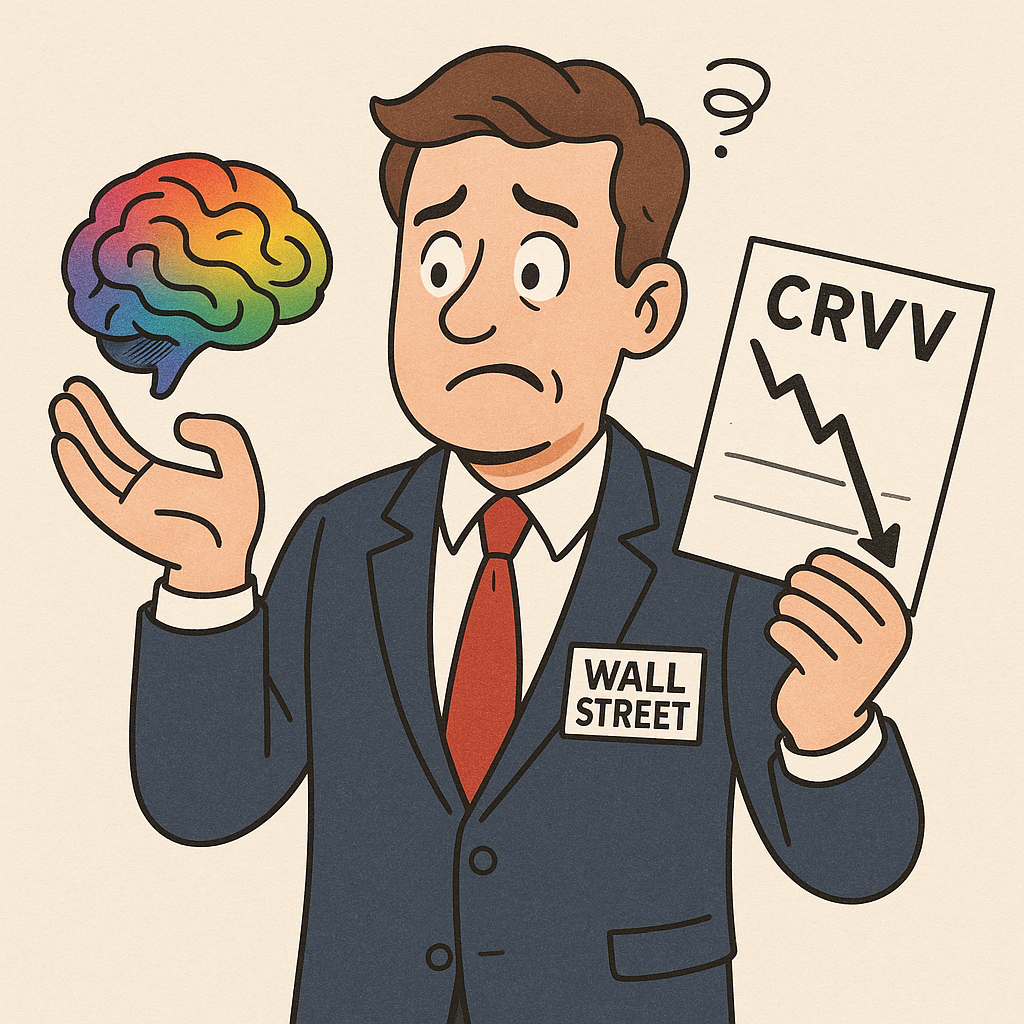
Analysts now suggest that “AI infrastructure plays” like CoreWeave are entering their post-euphoria phase, where everyone pretends they always knew it was overvalued. One report, bravely published only after the stock fell, concludes that CoreWeave’s valuation “may have been ahead of its fundamentals,” which is finance-speak for “We got hypnotized by the word ‘AI’ too.”
On social media, retail investors are, as ever, reinventing coping mechanisms in real time. The CRWV ticker page is a mix of:
- Memes of GPU racks labeled “My Retirement Plan.”
- Accusations that this is all a plot by “big shorts.”
- And at least one user asking whether Glancy Prongay Wolke & Rotter LLP has a referral program that pays in stock options.

Ultimately, the alleged CoreWeave securities fraud will likely resolve the way these stories usually do: a long procedural slog, a carefully worded settlement, and a final press release assuring everyone that “the company remains focused on driving long-term shareholder value,” which, translated, means “please don’t look at the chart.”
Still, there is a lesson here for tech investors hurtling into every new acronym-shaped opportunity: if someone tells you they’ve built the indispensable backbone of the AI-powered future, you may want to check whether that backbone is made of actual cash flows or just very confident PowerPoint transitions.
Until then, CoreWeave, Inc. will continue racking servers and renting compute in hopes the market forgives and forgets. And somewhere in a quiet office, Glancy Prongay Wolke & Rotter LLP will keep refreshing the CRWV ticker, waiting for the next wave of emails from shareholders who have finally admitted that “AI to the moon” was not, strictly speaking, a due diligence method.