Elon Musk has once again pushed the boundaries of what’s possible in tech, communications, and basic self-preservation instincts by proudly recounting a dinner with Jeffrey Epstein’s “best friend,” proving that when it comes to public relations, the world’s richest man has committed to a fully driverless experience (Gizmodo, Jan 2026).
During an online exchange that began, as these things always do, with someone else trying to move on with their day, the X and Tesla CEO veered off his usual script of posting memes, sharing Starlink latency numbers, and subtweeting the SEC to casually mention socializing with an associate of Jeffrey Epstein. In an era when most billionaires are aggressively scrubbing LinkedIn connections, Musk appears to be A/B testing how close one can orbit reputational black holes before the sponsors pull out.
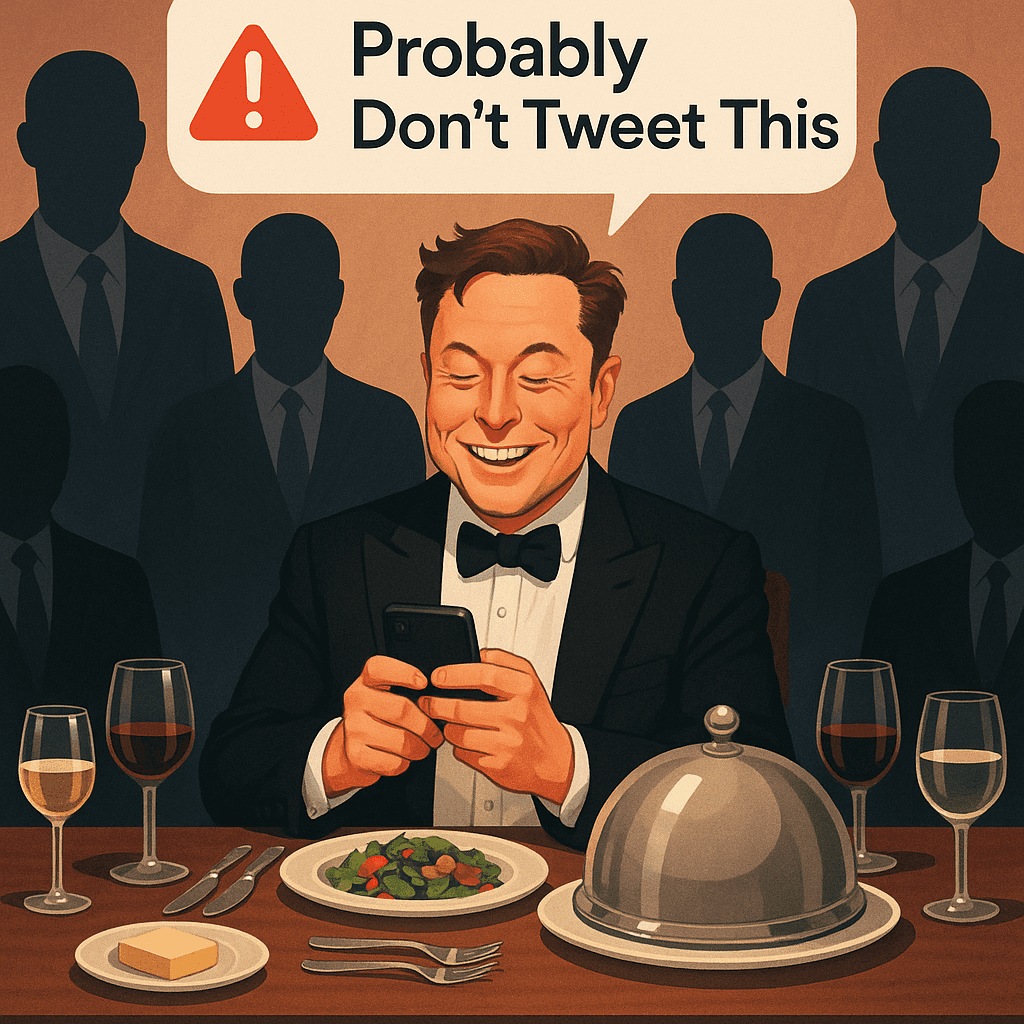
“It was just a dinner,” Musk insisted in the sort of tone that suggests it was absolutely not just a dinner. “I have dinner with lots of people. I believe in talking to everyone.” This is technically true: from Tim Cook to random Dogecoin holders with anime avatars, Musk has proven he will talk to anyone except, crucially, a crisis communications professional.
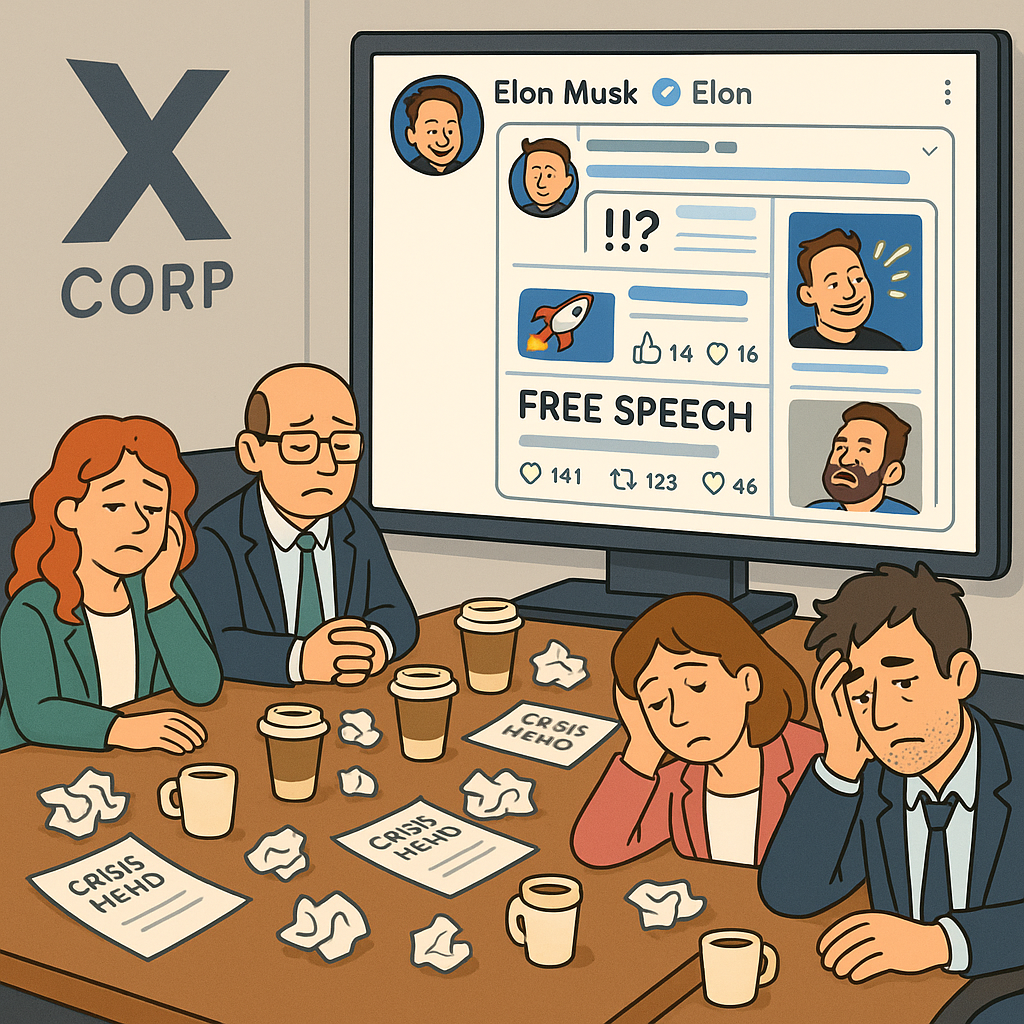
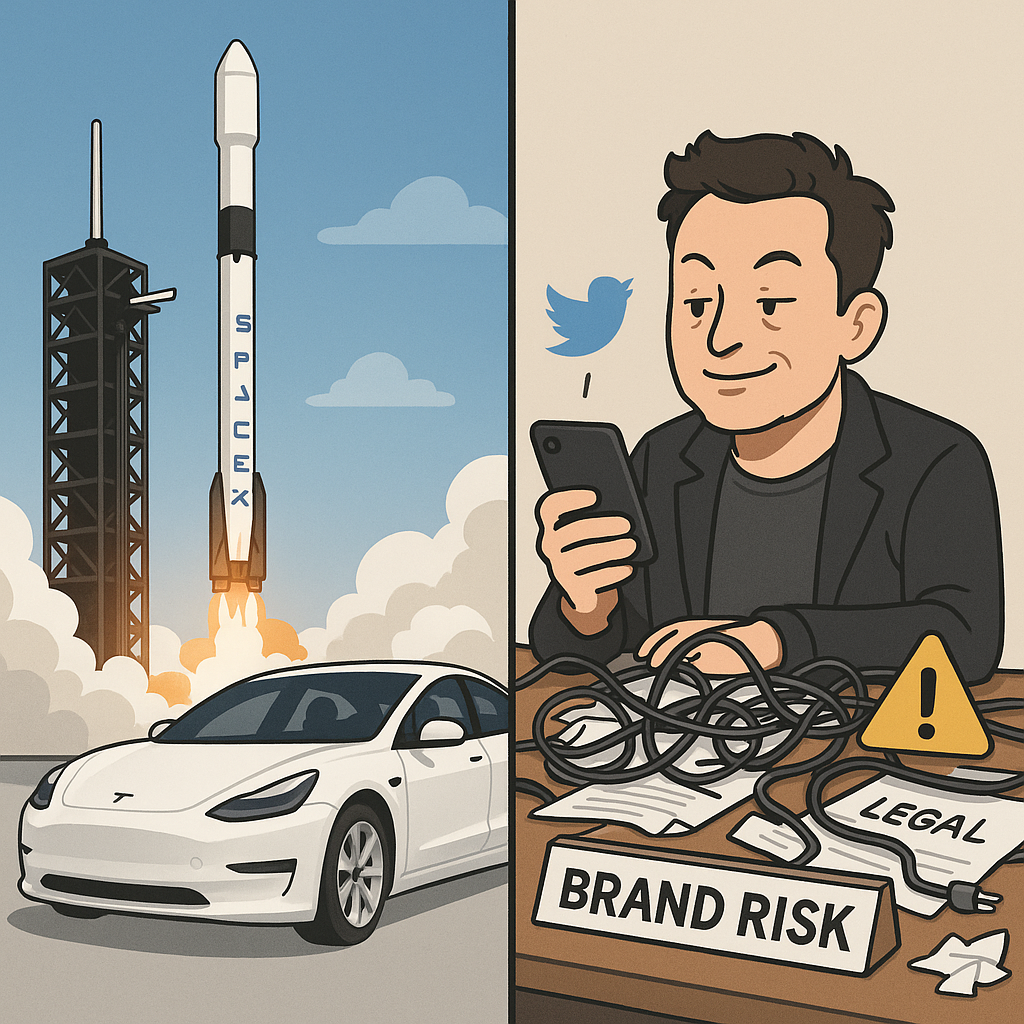
The Jeffrey Epstein keyword combo alone would have given most CEOs a small stroke and a long weekend with their legal team, but Musk has always approached risk like a SpaceX rocket prototype: if it doesn’t explode publicly at least once, did it even iterate? Sources close to X Corp say their unofficial damage control flowchart consists of three steps:
- 1. Elon posts.
- 2. Legal drafts a statement.
- 3. Elon quote-tweets the statement with a meme of a crying Wojak.
Gizmodo’s report on the dinner, which somehow manages to be both extremely on-brand and still surprising, dropped into a tech ecosystem already stretched thin by AI hype, crypto hangovers, and the ongoing experiment of turning Twitter into a live-action comment section for its own bad UI. Yet even in this landscape, the phrase “Musk boasts of dinner with Epstein’s ‘best friend’” hit like a push notification from the simulation’s QA department: “We may have overdone the satire patch.”
The timing is exquisite. Tesla is still trying to convince regulators that “Full Self-Driving” isn’t just a suggestion, SpaceX is promising a multiplanetary future that runs primarily on stainless steel and vibes, and X is attempting to morph into an “everything app” not by adding features but by removing expectations. Into this stew of ambitious chaos, Elon Musk has introduced a new product line: Social Controversy-as-a-Service.
Investors, who previously pretended not to read X after 9 p.m. Pacific Time, are now in the difficult position of having to explain to their LPs why the man spearheading Tesla, SpaceX, Neuralink, and The Boring Company is also beta-testing "dinners you’d rather not see in your feed." One venture capitalist, speaking on condition of anonymity because they’re still long on TSLA, sighed: “When we said we liked founders who ‘move fast and break things,’ we did not mean subpoenas.”
Musk defenders on X responded with the predictable batch of arguments, including:
- Everyone has dinner with problematic people sometimes.
- Elon is too rich to be bad.
- Actually this is about free speech if you think about it hard enough and then stop thinking entirely.
Critics, meanwhile, pointed out that if you are the de facto face of 21st-century tech—running companies like Tesla and SpaceX with massive government contracts and public-market exposure—you might want to keep your calendar slightly more boring than a Netflix true crime lineup. “There’s disruption,” one ethics professor at a very tired-sounding university said, “and then there’s repeatedly running your brand through a wood chipper for engagement.”
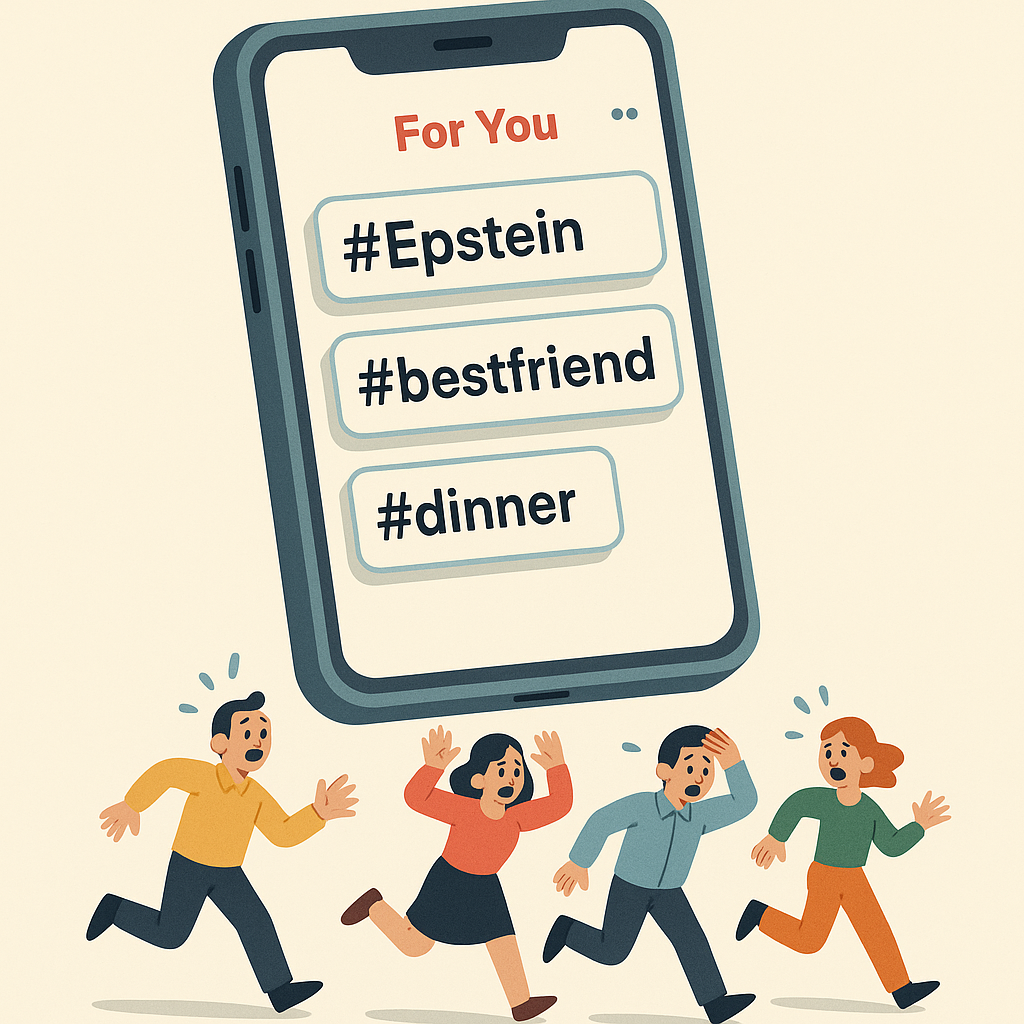
In classic Musk fashion, the controversy quickly became content. Within hours, X was recommending trending topics like “Epstein,” “best friend,” and “Elon dinner” under a cheery “For You” tab that increasingly reads like a threat. Content moderators, what’s left of them, reportedly stared into their dashboards, realized the main character of the day owns the platform, and quietly shifted their career aspirations toward artisanal coffee roasting.
“Look, this is just part of Elon’s broader mission,” said one hypothetical fan account. “He’s making awkward billionaire networking transparent. It’s like open-sourcing your bad decisions.”
Brand strategists say this is actually a cutting-edge tactic they’ve been trying to keep out of TED Talks: saturate the news cycle with so many overlapping controversies that it becomes cognitively exhausting to keep track. “Was this the week he threatened to sue the ADL, or challenged Mark Zuckerberg to a cage match, or boasted about a dinner with Epstein’s friend?” asked one PR veteran. “At some point, people just shrug and go back to arguing about iMessage bubbles.”
Meanwhile, the rest of the tech world is watching closely, the way you watch someone try to microwave aluminum foil. Executives at Meta, Google, Apple, and Microsoft have reportedly updated their internal guidelines to include a new bullet point: “Avoid being in any sentence where ‘Jeffrey Epstein’ appears in quotation marks for any reason.” Even OpenAI employees, who spend their days arguing about whether or not they’ve invented the world’s most articulate spreadsheet, took a brief break to agree that this is not a prompt they would have shipped.
Will any of this matter to Elon Musk? Historically, no. The man has surfed through SEC fines, labor complaints, exploding rockets, buggy Autopilot demos, and at least seventeen different versions of the Cybertruck’s alleged production date. His fanbase treats each new scandal the way gamers treat a patch note: mildly confusing at first, then quickly accepted as the new normal.
But for the broader tech industry, which still occasionally pretends to care about optics, governance, and not accidentally rehabilitating the worst people of the 21st century by proximity, this episode is a reminder: when the richest guy in the room controls the platform, the algorithm, and half the headlines, the only real content moderation tool left is the back button.
Until then, expect more dinners, more boasts, and more days where every social feed feels less like "Tech News" and more like a crossover episode between Silicon Valley and the world’s most expensive HR meeting.