By Casey Foil – Paranoid technocrat with a foil hat full of charts.
The future of work in tech has finally arrived, according to a new forecast loosely inspired by Betakit’s “Fifteen bold predictions on what it will feel like to work in tech in 2026” (Betakit, Jan 2026). Unfortunately, it seems the main innovation between 2024 and 2026 was finding new ways to call unemployment a “talent cloud”.
In offices from Toronto to San Francisco, managers are eagerly forwarding PDFs about the “workplace of the future” while quietly turning off the air conditioning. The idea, they say, is to create a “hybrid, flexible, human-centric tech ecosystem.” The reality is fifteen increasingly deranged policies designed by people who have not written a line of code since Kazaa was a thing.
Here are the leaked 2026 workplace predictions currently being worshipped in slide decks across the industry:
- Your job title will be a feeling, not a role.
“Senior Backend Engineer” is out. In 2026, you’re a “Latency Empath” or “Principal Anxiety Wrangler, AI Division.” LinkedIn will auto-suggest a new vibe-based title every quarter. You will not be paid more for the upgrade. - Every tech company is now “remote-first, trust-based, results-oriented”… for everyone except junior staff.
Executives at companies quoting the Betakit predictions announce, “We’re remote-first!” from their private boardroom saunas, while interns are told they must badge into the office three days a week to “learn the culture” from a foosball table and a printer that’s been out of ink since 2022. - Your manager is AI, your skip-level is a spreadsheet.
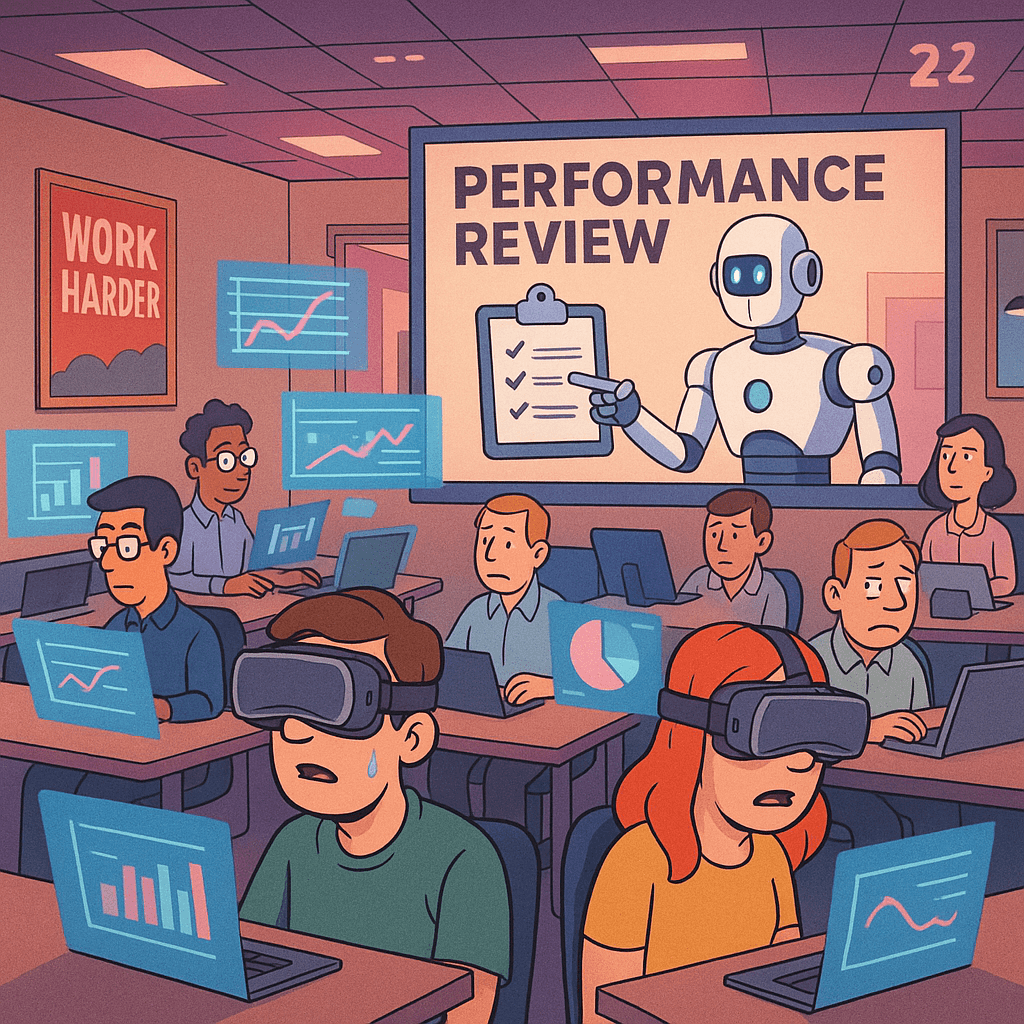
To “remove bias,” tech firms will roll out AI performance reviews. The system will be “trained” on historical data, which is a polite way of saying your future depends on what your ex-boss wrote in Slack in 2019. Every quarter you’ll be graded on:
- Tickets Closed Per Panic Attack
- Slack Messages Containing the Word ‘Sure’ That Actually Mean ‘No’
- Git Commits Occurring Between Midnight and 3 a.m. (weighted heavily, of course)
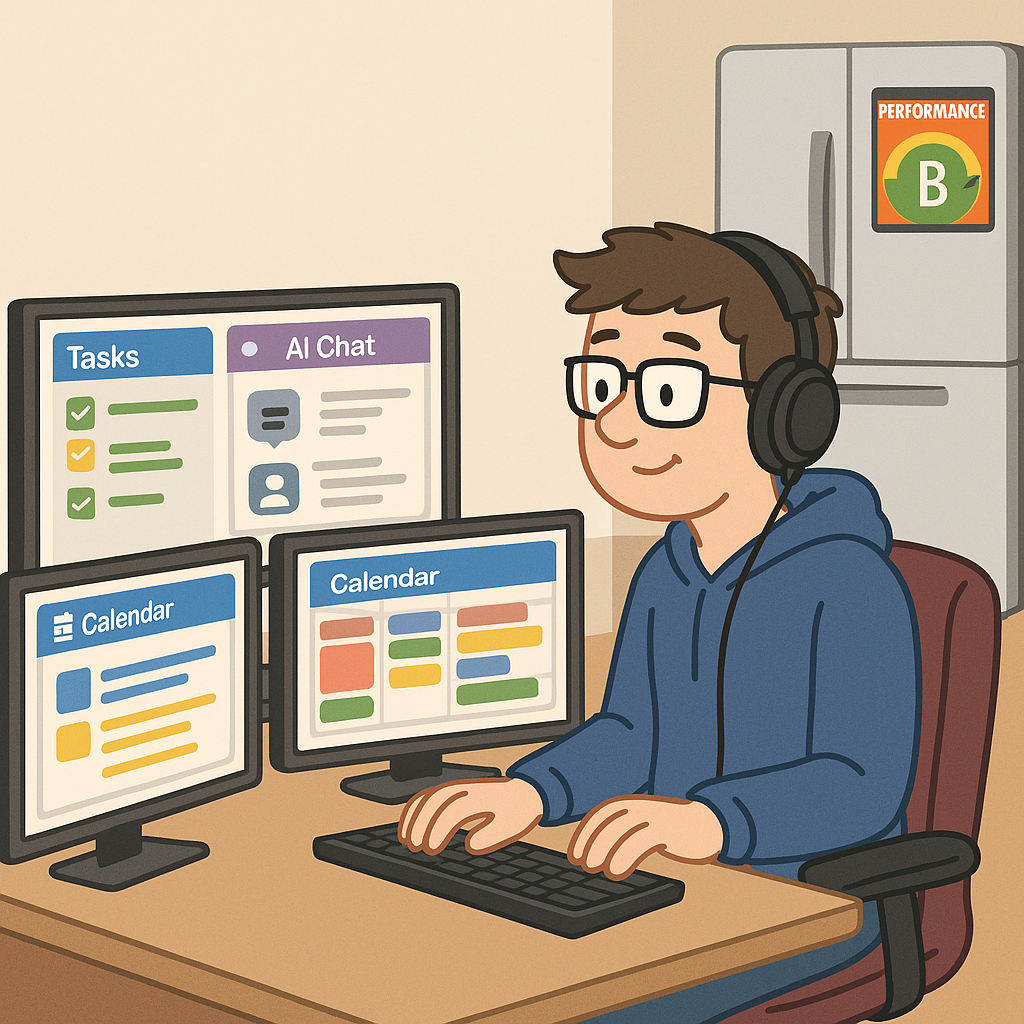
As a bonus, your smart fridge will be integrated with HRIS. If you open it at 2:14 a.m., it logs “low resilience” and auto-schedules you for a resilience webinar.
In Toronto, where Betakit’s prophecy originated, startup founders are leaning in hard. One founder at a buzzy AI firm in the Fashion District explained, “Our people are our greatest asset, which is why we use a proprietary algorithm to rank them from most to least replaceable in real time.” The dashboard, displayed proudly on a 90-inch TV in the open office, updates whenever someone takes a bathroom break.
The predictions about work “in 2026” also emphasize radical flexibility. Not for your schedule, obviously. For their obligations.
“You don’t have a manager; you have a network of accountability nodes,” reads one leaked internal memo. “You are co-responsible for your own outcomes, your pod’s OKRs, and the stock price.”
Translation: if revenue misses targets, everyone in Engineering gets a 45-minute “ownership mindset” workshop run by a guy whose main credential is a ring light.
Tech workers, still recovering from the Great Layoff PowerPoint Tour of 2023–2025, are understandably skeptical. “They told us 2026 would ‘feel different,’” said a senior developer in Waterloo who survived four “restructurings” and one “strategic talent refresh.” “They were right. It feels like I’m working inside a LinkedIn post written by ChatGPT on a Red Bull drip.”
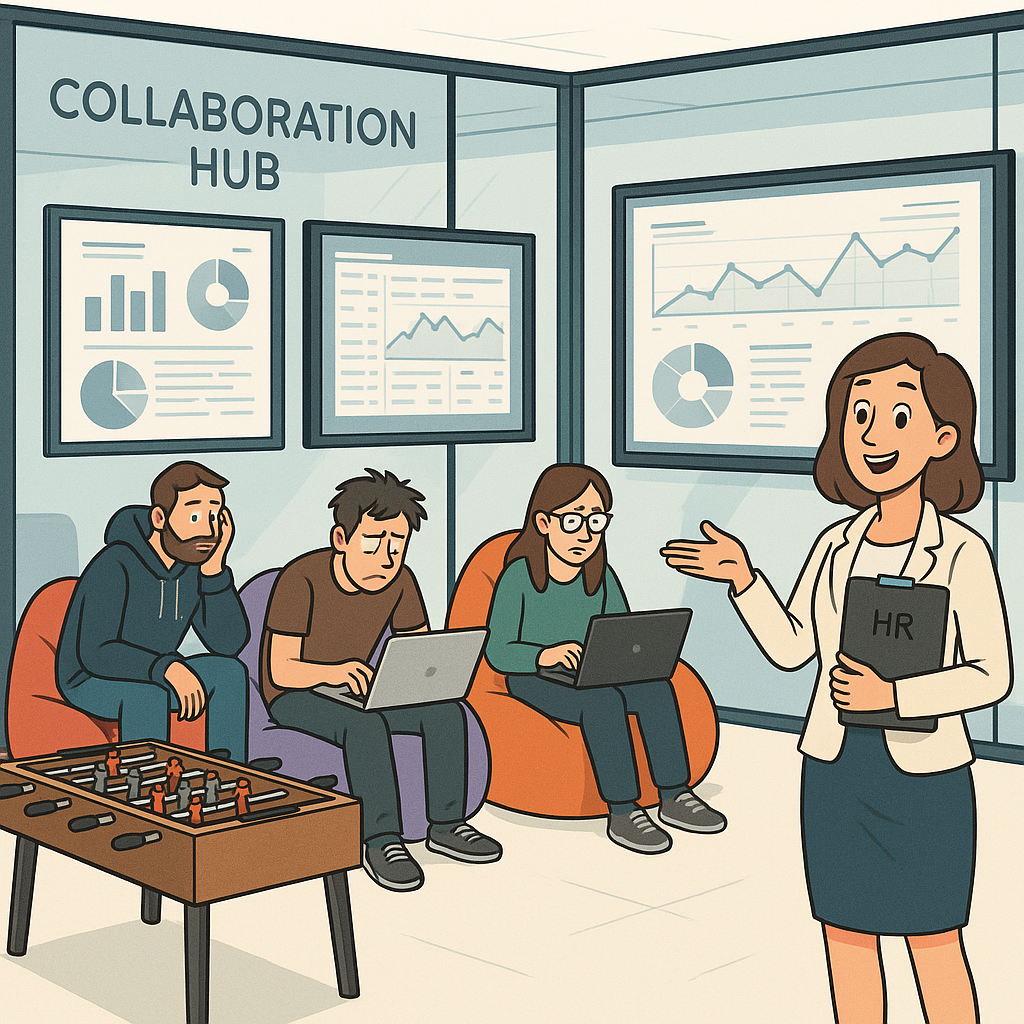
The Betakit-style vision of 2026 also imagines the death of the traditional office in favor of “collaboration hubs.” These are WeWork-sized spaces but stripped of joy and carpet. Instead of desks, there are “focus pods” that look suspiciously like phone booths, and instead of quiet corners, there are “serendipity zones” where someone from People Ops asks if you’ve filled out the engagement survey.
To “reduce context switching,” every surface in the hub displays dashboards: Jira boards on one wall, incident metrics on another, a giant ticker of Net Promoter Score rolling by like it’s the NASDAQ. Someone whispers, “Are we… supposed to feel inspired by the line trending down?”
The biggest prediction, though, is emotional. Reports promise that “working in tech in 2026 will feel more human.” Companies are rolling out:
- Monthly “Mental Health Town Halls” where cameras must be on, chat is disabled, and the only actionable outcome is a new hashtag.
- “No-Meeting Wednesdays,” immediately followed by “Overflow Thursdays” consisting entirely of meetings delayed from Wednesday.
- Quarterly “Listening Tours” where executives nod solemnly, take notes, and then announce they will be doubling down on the exact policy everyone just begged them to stop.
In a particularly bold twist, several Toronto and Vancouver startups have implemented “presence-neutral performance policies.” Officially, you can work from anywhere. Unofficially, everyone who shows up in-person mysteriously gets promoted, while remote workers are praised in company-wide emails for their “asynchronous leadership energy” and then quietly omitted from the next org chart.
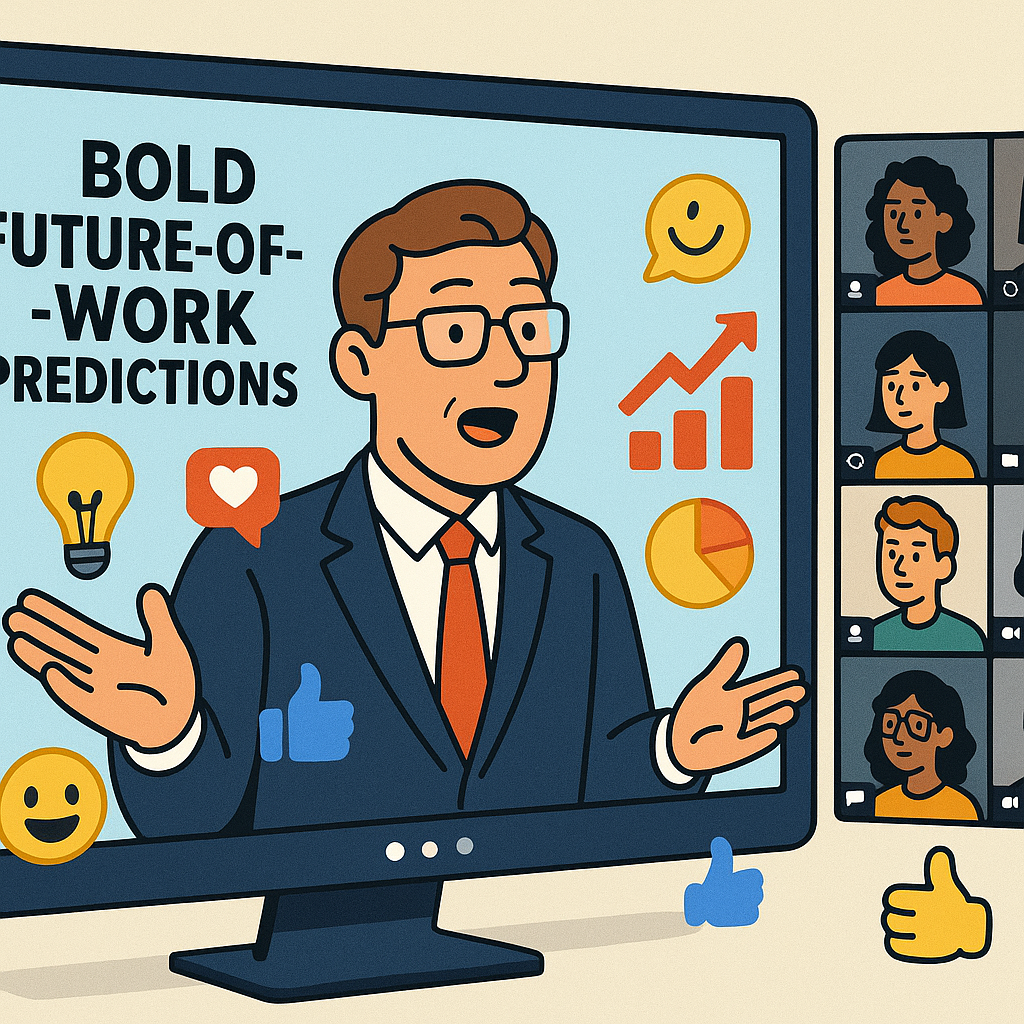
Of course, no set of 2026 predictions would be complete without AI. Not just in the product — in every corner of the employee experience. You’ll have:
- AI Meeting Clipper that summarizes the call into three bullet points, all of which are wrong but extremely confident.
- AI Career Coach that suggests “Have you considered becoming a creator?” when your company freezes promotions.
- AI Layoff Concierge that schedules your exit interview, offers a script for your LinkedIn “excited for what’s next!” post, and recommends three online courses in Kubernetes.
But the real innovation is how it will feel: like you’re constantly beta-testing your own job. The boundary between “employee” and “user of a failing app” will vanish entirely. If engagement scores dip, leadership will “pivot your experience,” not their decisions.
By late 2026, the same people who commissioned the original “Fifteen bold predictions on what it will feel like to work in tech in 2026” will issue a new report: “We Were Shocked To Discover Workers Prefer Money And Stability Over Vision Boards.” They will present their findings on a panel in Lisbon or Santorini, sponsored by a cloud provider.
Back home, tech workers will log into another all-hands where the CEO appears in 4K, thanks everyone for “leaning in through change,” and unveils the next bold prediction: in 2027, you won’t even need a paycheck — you’ll be compensated entirely in “opportunity energy.”
Reactions across the industry have been mixed. One camp is updating their résumés. The other camp is building yet another startup to “fix work.” Their business model? Helping companies implement the same 2026 predictions that broke it in the first place.
In that sense, the forecasts were right. This is exactly what it feels like to work in tech in 2026: trapped in a recursive slide deck, endlessly promising a better future of work, just as soon as everyone finishes this quarter’s mandatory optimism training.