Somewhere between a Christmas playlist and another doomed NFT launch, Wall Street received a rare visit from reality: the TCW Concentrated Large Cap Growth Fund quietly yeeted its stake in Adobe Systems (ADBE), muttering something about “increasing competition” as reported by Yahoo Entertainment (Dec 2025). Yes, Entertainment — because at this point, watching growth funds is closer to content than finance.
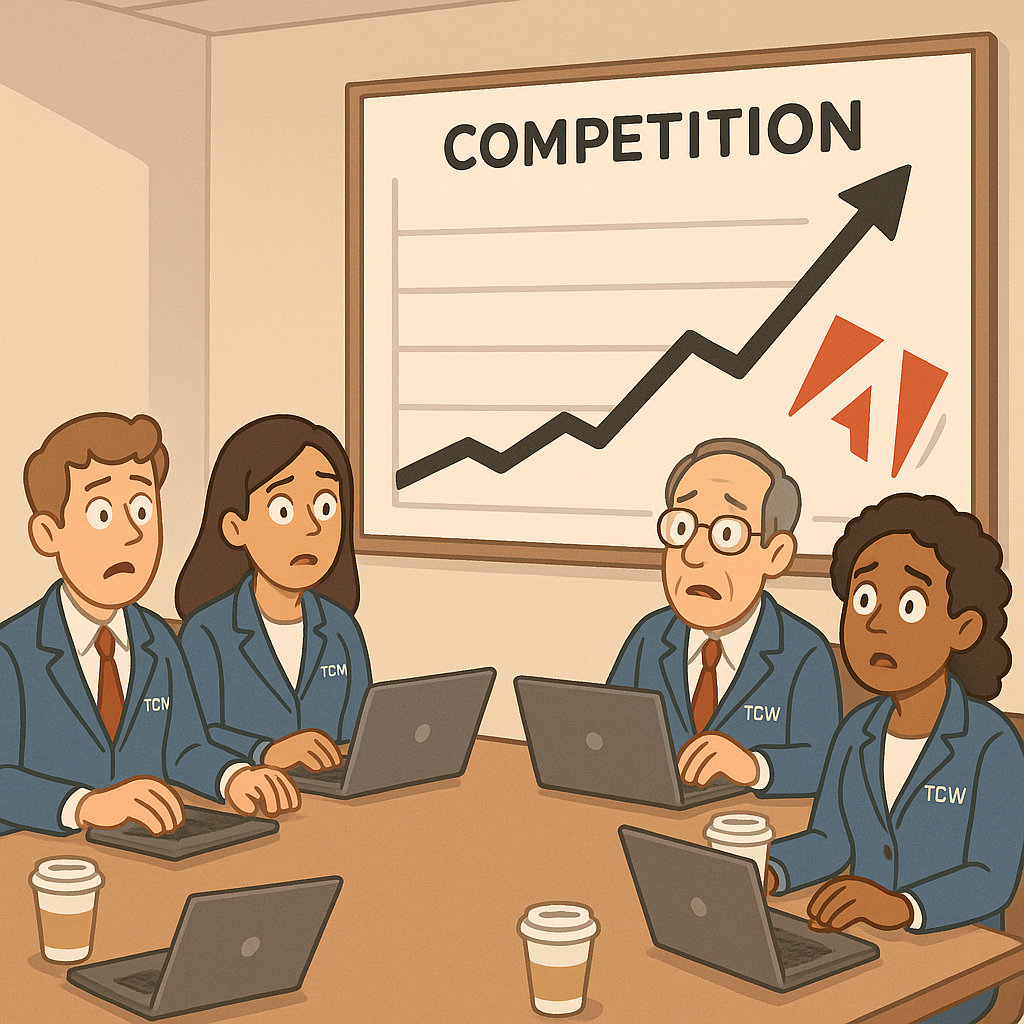
In the disclosure, TCW explained that the decision to sell Adobe was driven by the growing threat from rivals in generative AI, design tools, and the general market sentiment that maybe, just maybe, $60 a month for the privilege of opening a PDF is a touch aggressive. Sources close to the fund claim the official investment thesis was summarized in one slide titled: “Bro, Figma Exists.”
Adobe, which once feasted on the design world like a subscription-based Galactus, now finds itself surrounded by upstarts whose business model is, dangerously, “not charging rent for every pixel you move.” From Canva to Figma to whatever open-source fever dream GitHub coughed up this week, TCW apparently decided that selling now was easier than learning what the words “freemium onboarding funnel” mean.
“We continue to like Adobe’s franchise,” TCW reportedly told investors, “but see mounting competitive pressures.” Translated from Fund Speak into English: “We just realized half of Gen Z thinks ‘Photoshop’ is a TikTok filter and ‘Illustrator’ is what their favorite webcomic person does on Twitch.”
To be fair, Adobe has had a rough couple of news cycles. Its aborted attempt to acquire Figma got kneecapped by regulators who, in a rare bout of consciousness, decided that maybe the answer to innovation isn’t letting the biggest incumbent buy the cool new toy every time it gets nervous. In the wake of the collapse, TCW appears to have looked at the stock, looked at the AI hype cycle, and decided their capital might be better spent somewhere that isn’t threatening to charge a “thought-leader fee” every time you open Creative Cloud.
“The competitive landscape is evolving,” one hypothetical TCW analyst said while staring at a chart labeled ‘Everyone Hates Subscriptions’ that was trending alarmingly upward. “We’re seeing pressure not only from design startups but also from big tech players like Microsoft building generative design directly into Office, and from Apple hinting that one day you’ll just say ‘Make it pretty’ to your phone and Keynote will vomit out something your CMO will call ‘on brand.’”
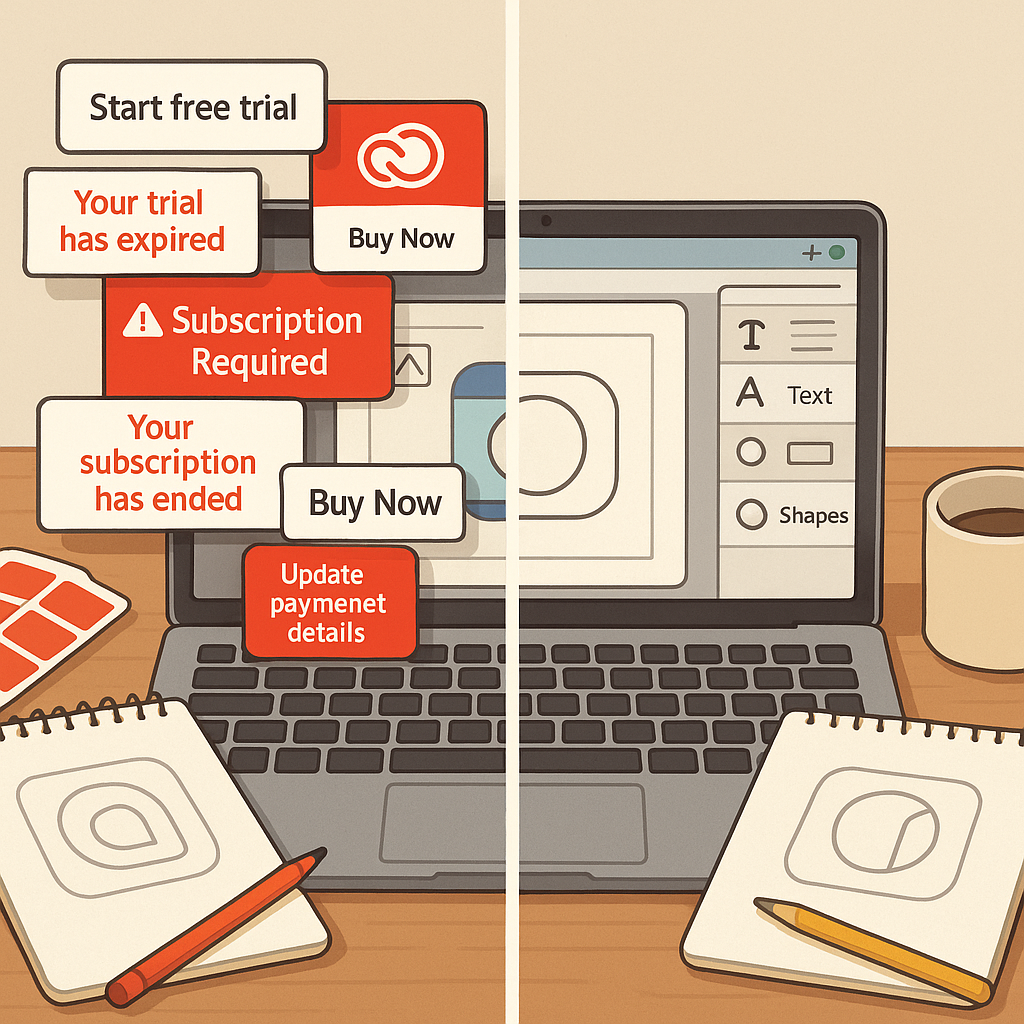
Investors, who spent the past decade happily believing Adobe was a tollbooth you had to pay to do literally anything vaguely creative, are now being forced to imagine a world where people might design marketing materials without a 14-step license activation ritual and a blood oath to the Adobe ID login screen.
Meanwhile, Adobe is leaning aggressively into generative AI with its Firefly tools, promising “ethically sourced” models trained on “licensed content” — corporate-speak for: “We swear we’re not just scraping DeviantArt in the dead of night.” The problem for Adobe is that every VC-backed startup on Earth is also shouting some variation of the same pitch, usually with a cuter logo and a waitlist system designed to make you feel like you’re trying to get into Berghain instead of exporting a banner ad.
TCW’s move has sparked a fresh wave of tech-finance discourse featuring all the classics:
- “Is Adobe still a growth stock?” – asked mostly by people whose definition of ‘growth’ is ‘can we still raise prices without riots?’
- “Will AI commoditize design?” – asked by people who think typing ‘make logo pop’ into a prompt box replaces 10 years of taste.
- “Is this just multiple compression?” – asked by portfolio managers trying to sound busy while their interns use Canva for the client deck.
On social media, designers reacted to the TCW sale with the emotional range of people who have been held hostage by Creative Cloud for a decade. Many welcomed the symbolic hit to Adobe’s invincibility, posting screenshots of cancel-flow guilt messages like: “Are you sure you want to leave? Your creativity will be deleted in 7 days.” Others were more cynical, noting that even if 200 funds sold tomorrow, they’d still have to open Acrobat to rotate a PDF once a week for the rest of their natural lives.
“Adobe is like that ex you swear you’re done with,” one art director wrote, “and then a client sends you an .indd file and suddenly you’re redownloading 40 GB of updates.”
For its part, Adobe insists it’s more than fine. The company pointed to its entrenched position across video, photography, and marketing tech, adding that the shift to AI-enhanced workflows will only deepen customer dependence on its ecosystem. Observers noted that this statement was accompanied by a new feature announcement: the ability to add generative AI gradients to your existing generative AI backgrounds, powered by—yes—an additional subscription tier.
[[IMG3]]Back at TCW, the decision to exit Adobe in the Concentrated Large Cap Growth Fund is being watched closely by other asset managers who’ve built their careers on buying mega-cap tech and then going to lunch for seven years. If competition can dent an entrenched juggernaut like Adobe, it raises uncomfortable questions:
- What if AI tools actually do reduce switching costs?
- What if regulators keep blocking anti-competitive deals?
- What if your whole “moat” is just “people forgot there were alternatives”?
Analysts are already spitballing what comes next. Some predict TCW will rotate proceeds into the new darlings of AI content creation — companies promising to “democratize creativity,” by which they mean “turn every slide deck into the same three templates with different gradient colors.” Others suspect the fund will just buy more of the usual suspects, because tradition is strong and job security is stronger.
Either way, the Adobe sale is a reminder that in tech, nothing is sacred except churn reduction, and even the biggest platforms can start to look less like monopolies and more like very expensive optional utilities once the cool kids migrate. Somewhere, a TCW manager is explaining the move on a Zoom call with an auto-generated background made in Canva, while an Adobe sales rep quietly screenshares a 40-page deck titled: “Re-Imagining Value Through Platform Synergies.”
In other words: yes, competition is real, capitalism still technically functions, and the TCW Concentrated Large Cap Growth Fund just remembered it doesn’t have to HODL every software titan forever. Adobe will probably be fine. Your wallet, less so.