The Girl Scouts Cookie Drop has quietly become the most efficient logistics operation in North America, which is why every tech CEO is now staring at a bunch of 11-year-olds in sashes and wondering where it all went wrong.
According to Yahoo! News coverage of the annual Girl Scouts cookie season kickoff and its ceremonial Cookie Drop (Jan 2026), pallets of Thin Mints, Samoas, and Tagalongs are being deployed with a precision that would make Amazon’s AWS teams cry into their slide decks. While venture capitalists spend billions failing to deliver salad in under 45 minutes, the Girl Scouts open cookie season and somehow achieve total suburban coverage by Sunday afternoon.
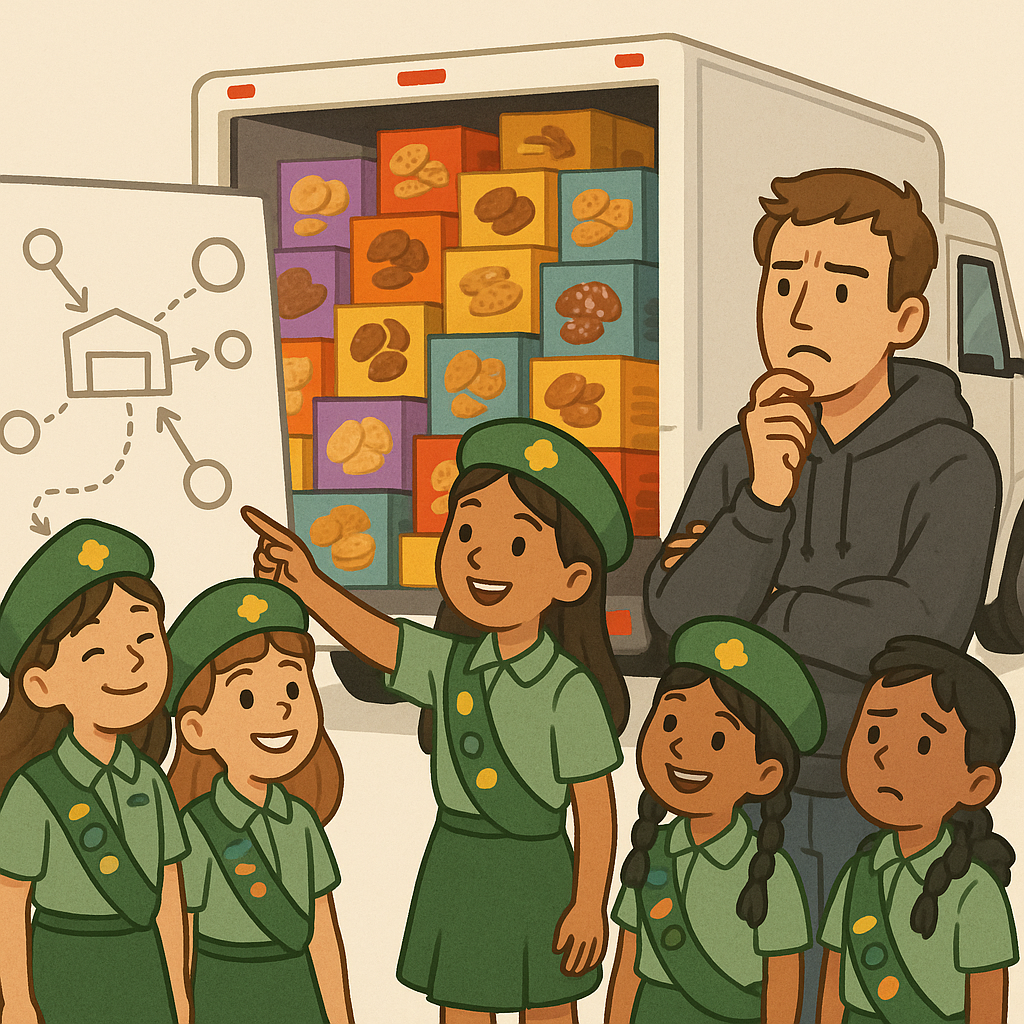
In a windswept parking lot somewhere in America, a semi-truck emblazoned with the Girl Scouts logo swings open its doors. Dozens of troops surge forward, clipboards in hand, wearing expressions usually reserved for military quartermasters and burned-out DevOps engineers.
“This is our annual Cookie Drop,” explains a local troop leader to a confused software founder who thought he was arriving at a pop-up DTC activation. “We receive inventory, we distribute across regions, we optimize routes. You know, basic load-balancing.”
The founder, who recently raised $40 million to build an AI that emails you about snacks, watches as a 9-year-old Girl Scout calculates per-household demand on a crumpled spreadsheet and reallocates boxes between minivans in real time.
“So… there’s no app?” he asks, sweating.
“We had an app,” she replies, hoisting a case of Do-si-dos. “It crashed during preorders in 2023 and we just went back to reality.”
The Girl Scouts have, unintentionally, become a blistering critique of the entire tech industry’s obsession with overengineering the obvious. While delivery startups in Silicon Valley fight over buzzwords like last-mile and AI routing optimization, the Cookie Drop is powered by:
- Parents with minivans
- Paper order forms
- Shame-based accountability
- A deep, unshakeable cultural craving for Thin Mints
“We’ve basically invented a decentralized, trust-based fulfillment network,” says one council organizer, not realizing she has just described Web3, but competent. “We front-load inventory, then let troops self-organize to meet demand across neighborhoods. We call it... ‘planning.’”
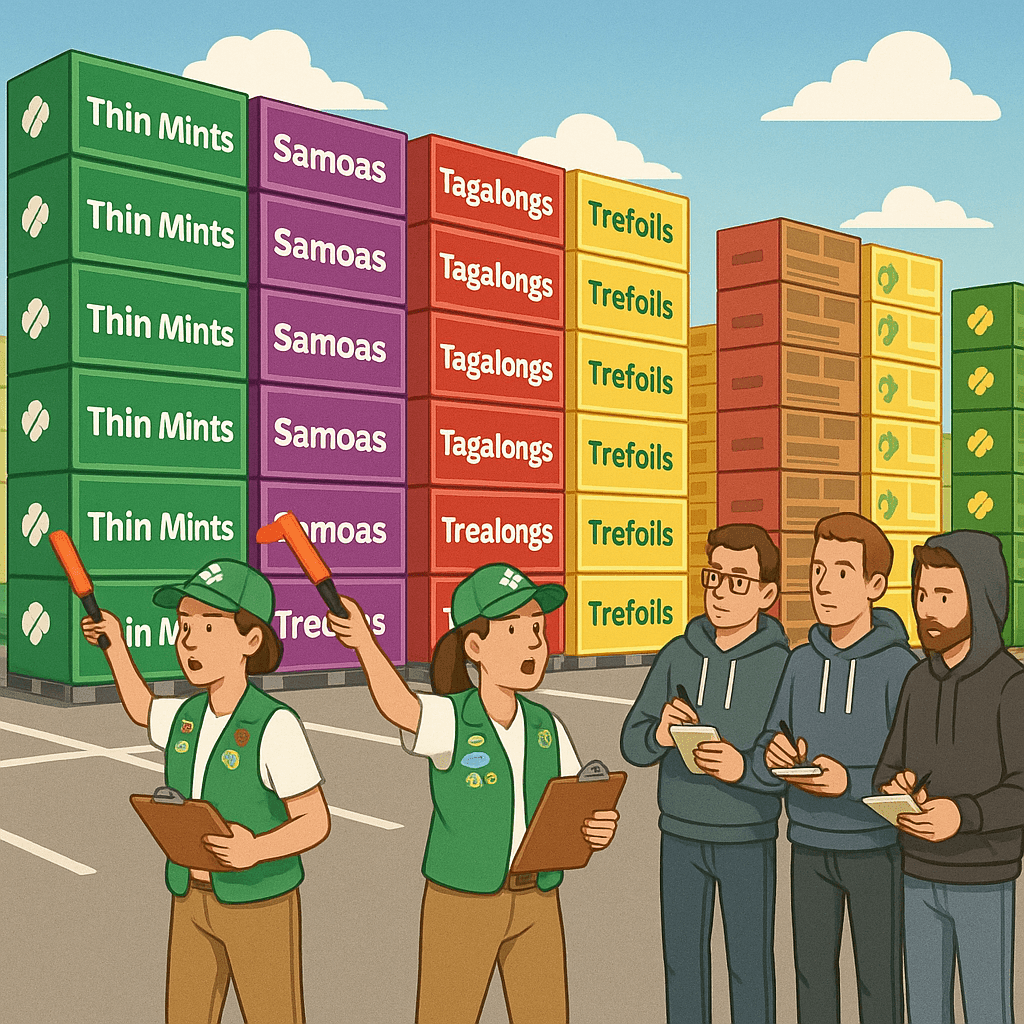
At Cookie Drop 2026, representatives from at least three megacap tech companies were reportedly onsite with clipboards, quietly taking notes and trying not to look like they were conducting industrial espionage on a children's fundraiser.
One anonymous logistics executive from Amazon, leaning against a stack of Samoas, murmured, “Their error rate is lower than ours on Prime Day. And they pay their workforce in badges.”
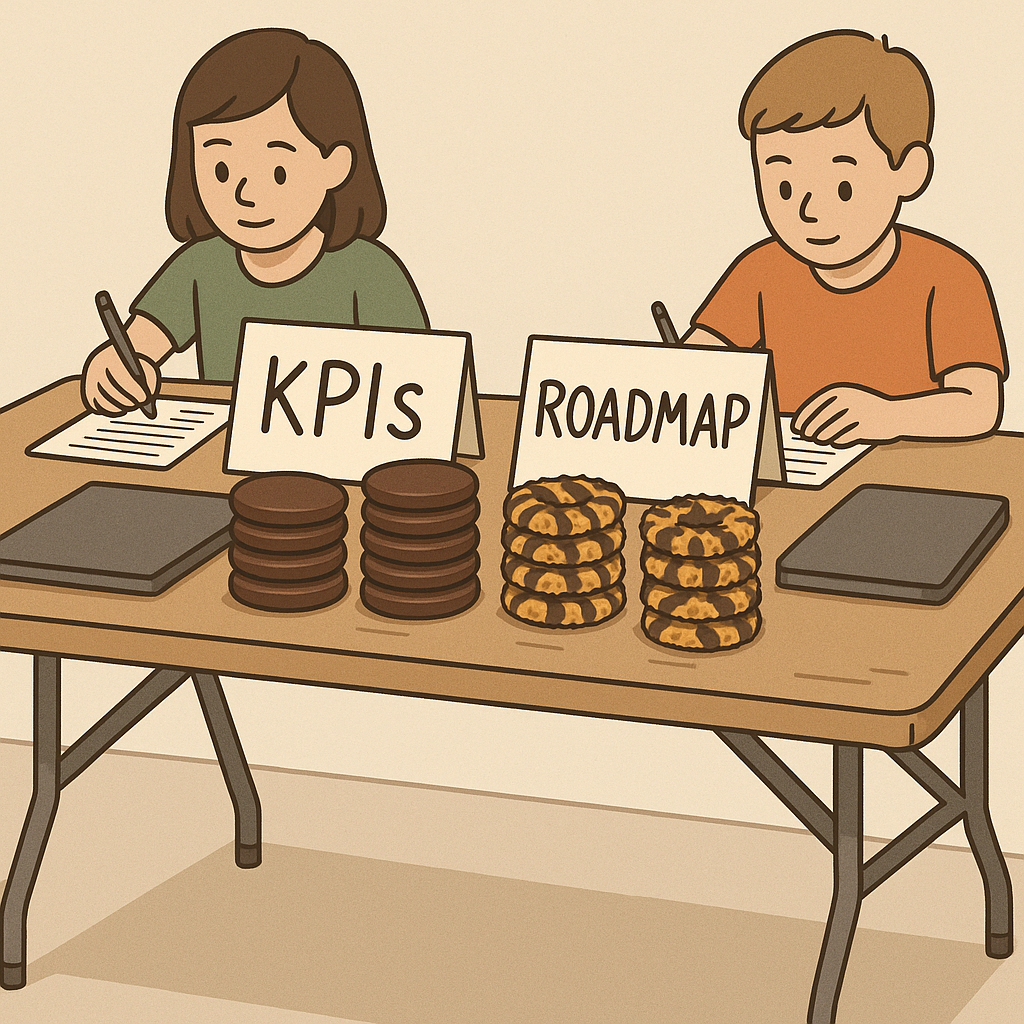
The Girl Scouts of the USA, long associated with campfires and civic virtue, have drifted dangerously close to product-management culture. They have:
- A product roadmap: New cookie flavors every few years, each one A/B-tested in the wild on your aunt.
- Gamified KPIs: Badges for sales, outreach, and vaguely defined entrepreneurialism.
- An annual launch event: Cookie Drop, an IRL keynote where the feature is sugar.
- Year-over-year growth: Driven by nostalgia, impulse buying, and the collapse of everyone’s willpower in late winter.
Yet, unlike most tech platforms, the Cookie Drop operation has never attempted to call itself a marketplace solution for snack-based community engagement. It just shows up, hands you boxes, and expects real money instead of exposure, tokens, or a loyalty app you’ll delete in March.
In a recent planning call, according to someone who definitely wasn’t a parent listening in from the other room, one council asked if they should adopt machine learning to predict neighborhood demand. The proposal died within 30 seconds after a troop leader pointed out that “Karen on Maple Street will still buy eight boxes like she does every year; the model is called ‘remembering.’”
Meanwhile, tech commentators have begun writing breathless think pieces with titles like:
- “What the Girl Scouts’ Cookie Drop Can Teach Startups About Resilience”
- “Is the Troop Leader the Original Product Manager?”
- “Why Your Unicorn Will Fail: You Don’t Have a Patch System”
On LinkedIn, a former WeWork evangelist now rebranded as a “Youth Commerce Strategist” posted a viral update claiming that the Girl Scouts cookie season is “a live case study in Web2.5,” a term he then tried to trademark.
“Their inventory is physical, their outreach is analog, but their demand curve is memetic,” he explained in a 47-slide deck, carefully avoiding the fact that the entire system works because people like cookies and their neighbors’ kids.
Some troops have, cautiously, experimented with technology. Online ordering portals, QR codes for contactless payment, even rudimentary data dashboards. But the hard lesson of 2024, when a buggy cookie-ordering app double-charged hundreds of parents and mysteriously sent 90% of orders to the same three cul-de-sacs, left scars.
“We don’t need ‘managed ambiguity’ in our inventory,” said one council volunteer, in a sideways reference to Tehran’s much-discussed geopolitical strategy (Middle East Monitor, Jan 2026). “We need every box of Thin Mints to end up in the correct garage.”
That, ultimately, is what terrifies Silicon Valley: a large-scale, seasonal, distributed commerce network run by volunteers, preteens, and folding tables that simply… works.
No growth hackers. No dark patterns. No subscription trap that sends you automatic Samoas every month until you die. Just a short, brutal campaign of door-knocking and the quiet power of social pressure when a Girl Scout asks you if you’d like to support her troop.
The escalation, naturally, is already underway. Several venture firms are rumored to be forming a “CookieTech” vertical for 2027. Early-stage pitches include:
- MintChain: A blockchain for tracking Thin Mint provenance from factory to freezer.
- Scoutify: An on-demand gig app that lets adults cosplay as cookie sellers in slow neighborhoods.
- Do-Si-DAO: A decentralized autonomous organization that lets token holders vote on new cookie flavors in exchange for governance tokens and mild prediabetes.
So far, the Girl Scouts have politely ignored these advances, perhaps sensing that the first term sheet mentioning “synergies between badges and NFTs” will mark the apocalypse.
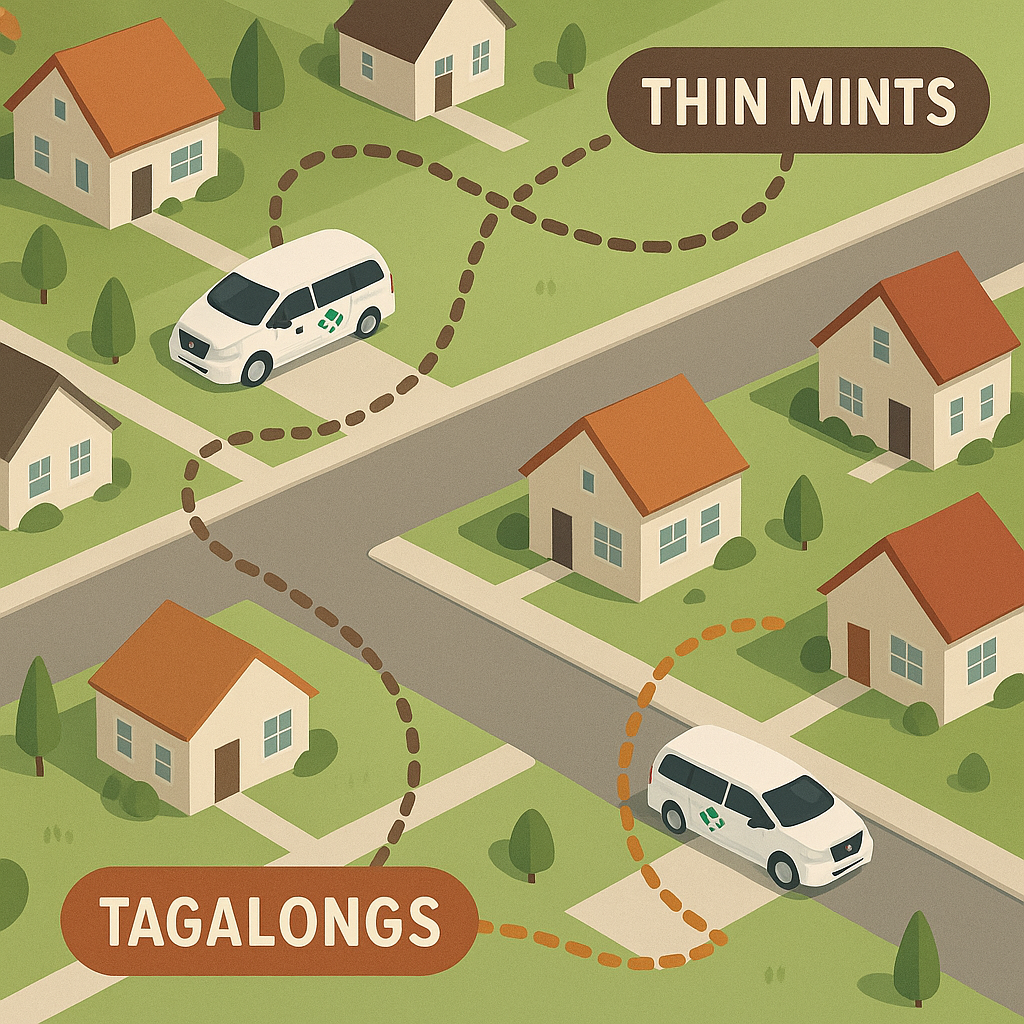
Back at this year’s Cookie Drop, as the last pallet is emptied and minivans begin to roll out like a sugar-fueled logistics swarm, a local tech consultant stares in awe.
“You’re telling me you achieve national-scale, seasonal commerce with almost no software and no layoffs?” he asks a troop leader.
She shrugs. “We just make sure everybody gets their cookies.”
He opens his phone and starts a new note titled “Disrupting Groceries With Trust”. Somewhere in the distance, a Girl Scout sells her 300th box, completely unaware that she just outperformed half the sales orgs on the Nasdaq.
In a saner world, tech companies would study the Cookie Drop and humbly adapt its lessons about community, reliability, and not overcomplicating things. In our world, they will instead attempt to eat the entire cookie supply chain, then wonder why everyone hates their app.
Until then, the nation’s most quietly powerful logistics platform will continue operating out of church basements, school gyms, and driveways. No stock ticker, no unicorn valuation—just enough sugar to keep the system running and a kind of analog resilience that no AI model can quite explain.