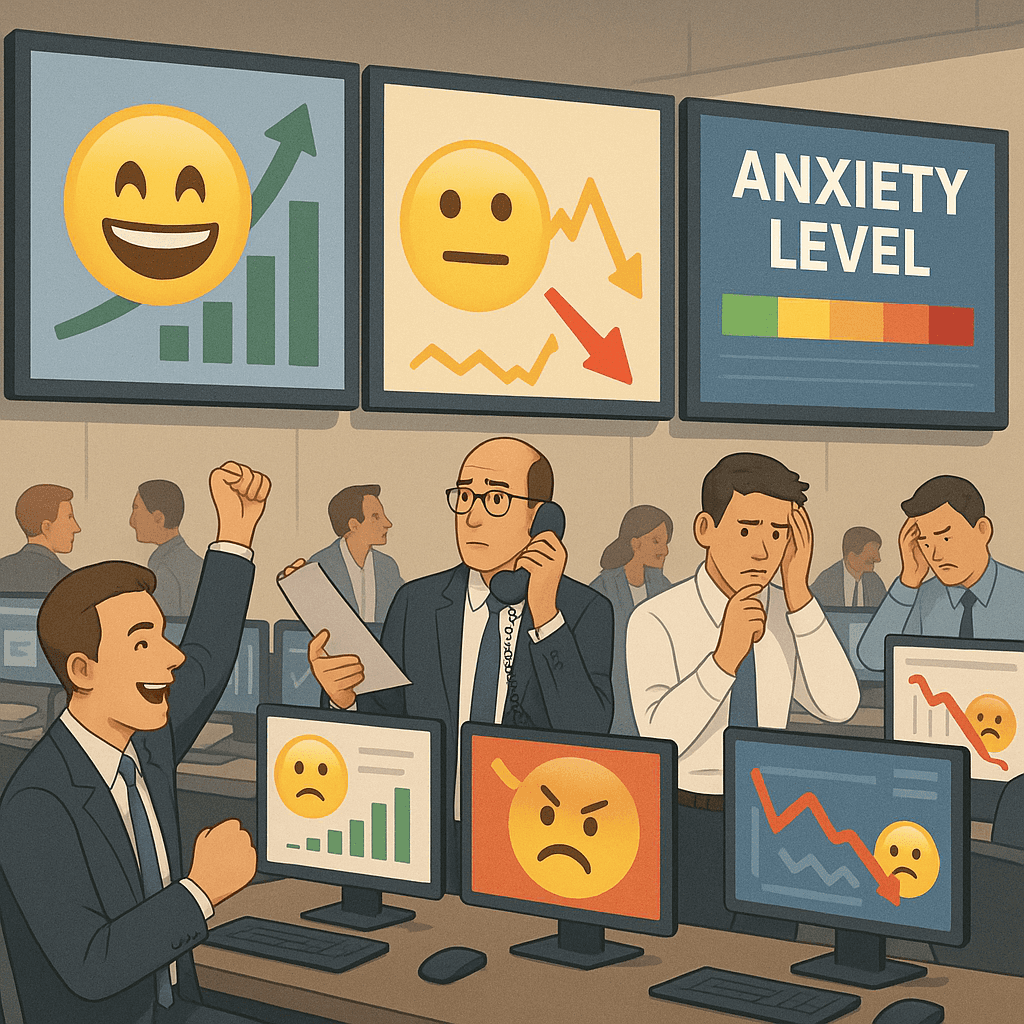
In a bold move that proves Wall Street will happily securitize your soul if it means a 2% management fee, Goldman Sachs today announced the launch of the world’s first Emotional Support ETF, a fully tradable basket of vibes, insecurities, and late-capitalism coping mechanisms.
“We realized investors don’t just want returns,” said product lead Tyler Grant, whose job title is now officially Head of Affective Finance. “They want the illusion of control over their spiraling inner lives. That’s where we come in.”
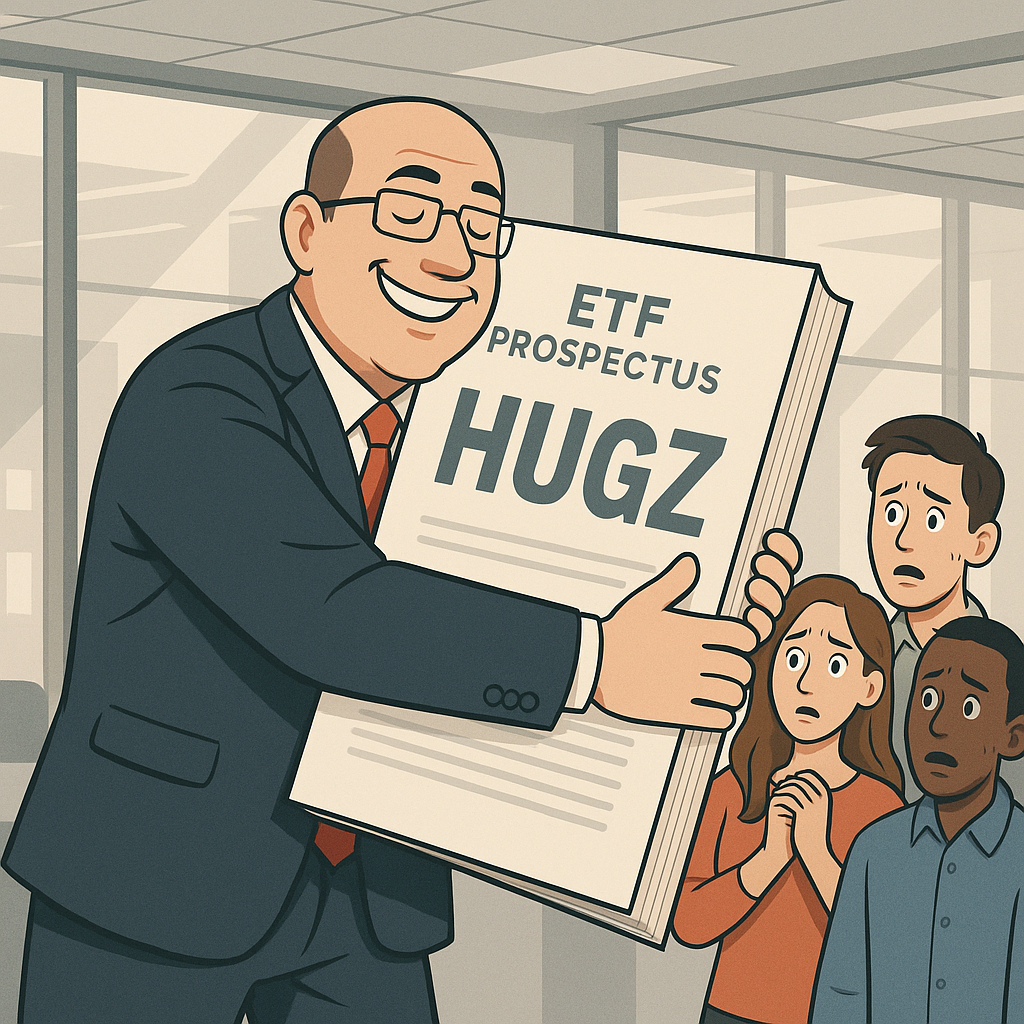
The fund, ticker symbol HUGZ, aims to track a proprietary index of human emotions derived from social media sentiment, Google search panic, and how often you open your banking app but don’t actually do anything. It rebalances weekly based on:
- Frequency of tweets mentioning “recession,” “vibes,” or “late-stage capitalism”
- Number of times Reddit’s r/wallstreetbets uses the word “ruined” in a 24-hour period
- Aggregate plays of Taylor Swift’s sadder albums divided by S&P 500 performance
“We used to rely on fundamentals,” Grant continued. “But then we watched GameStop, Dogecoin, and the time Bitcoin swung 15% because someone edited Musk’s Wikipedia page at 2 a.m. So now we just cut out the middleman and trade the mood directly.”
Analysts say the Emotional Support ETF is a natural evolution from the market products of the past few years. After BlackRock’s record-breaking inflows into spot Bitcoin ETFs (Bloomberg, Jan 2024) and the explosion of climate-themed funds that still somehow invest in oil companies, the only real surprise is that it took this long for someone to IPO anxiety itself.
“This is where finance has been heading since the first tech bro said ‘number go up’ unironically,” said Dr. Leila Martinez, a behavioral economist at NYU. “We used to measure risk in basis points. Now we measure it in how many people are Googling ‘how to become a digital nomad’ during work hours.”
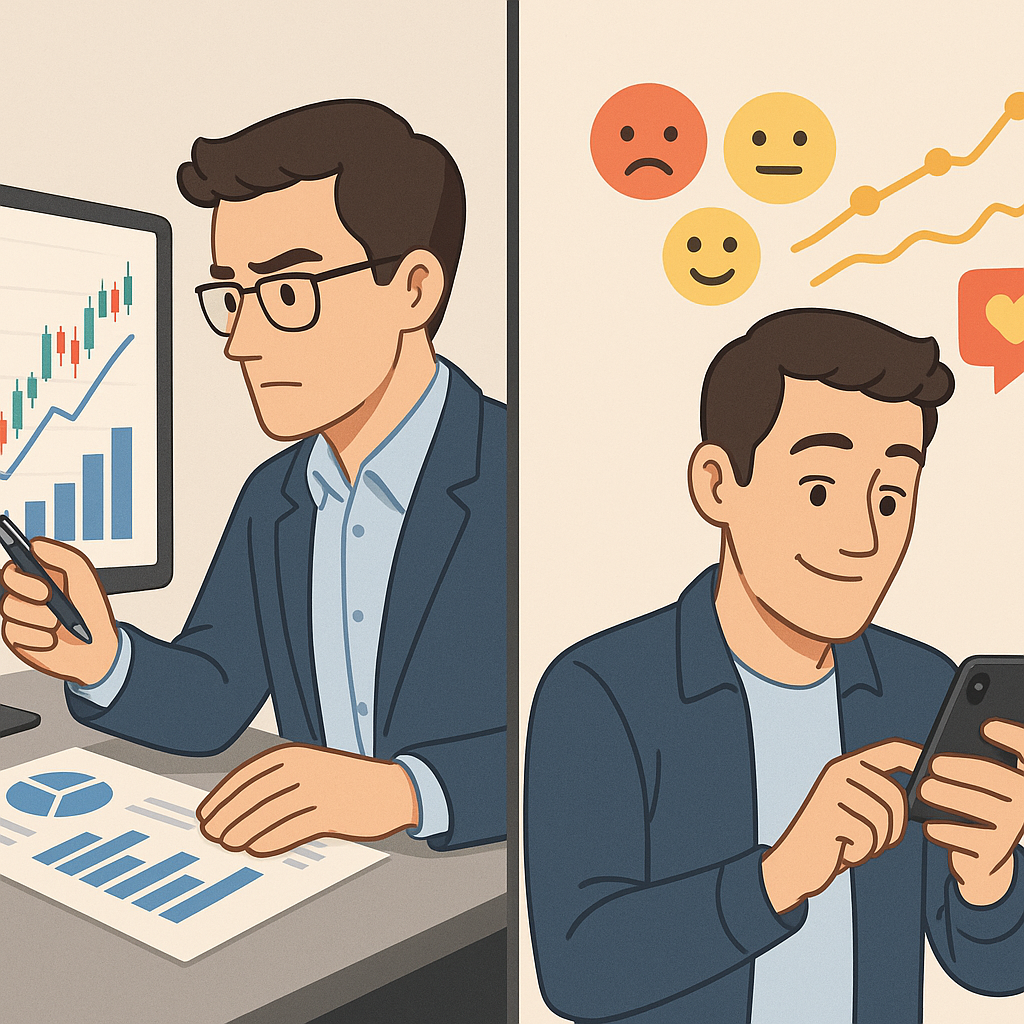
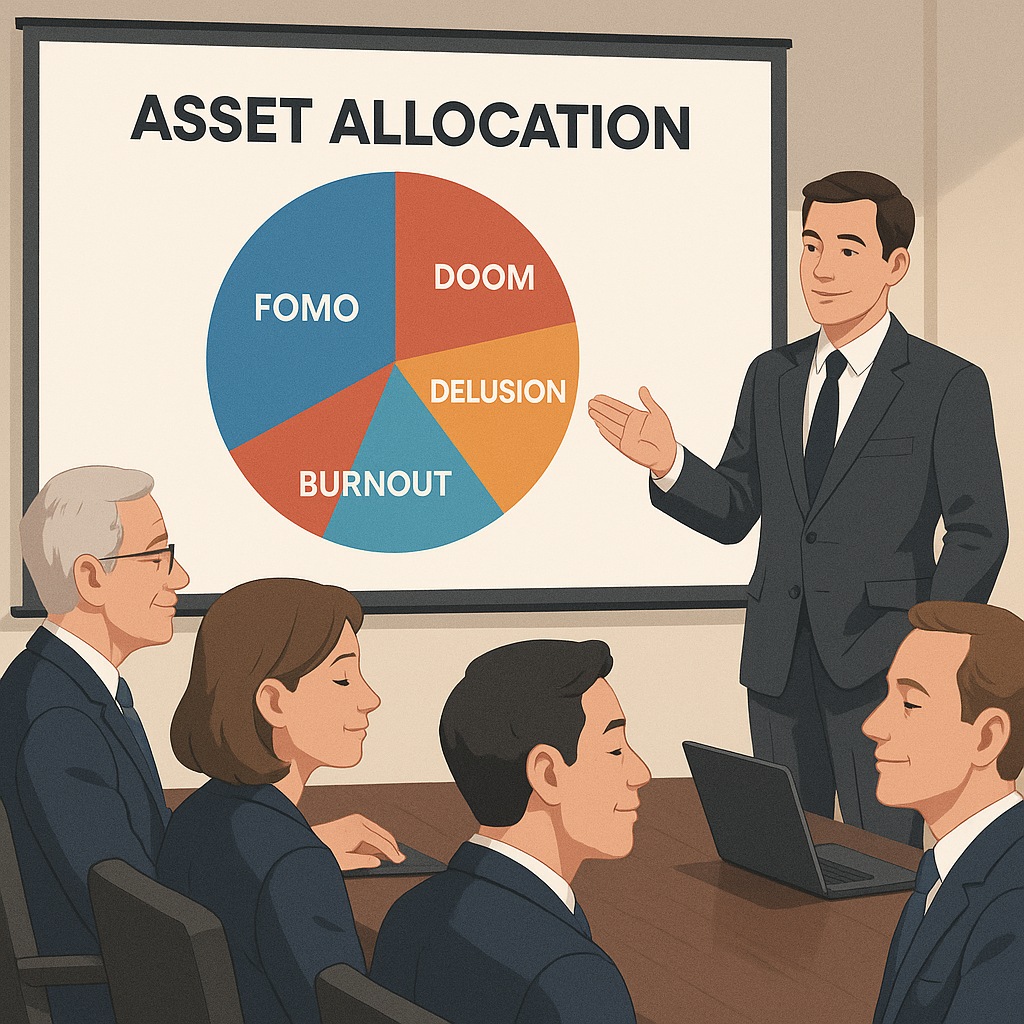
Each sector within HUGZ corresponds to a dominant emotional asset class:
- FOMO Growth: Meme coins, NFTs of breakfast cereal, and anything with ‘AI’ in the deck.
- Doomer Value: Gold, canned beans, and podcasts about the collapse of the dollar.
- Delusion Tech: Pre-revenue startups valued at more than small countries, promising “Uber but for therapy.”
- Burnout Industrials: Productivity apps, coworking spaces, and companies that sell 4-day workweeks as a service to other companies that will never adopt them.
“We run a patented ‘vibe-weighted’ methodology,” explained Grant, as if that clarified anything. “If TikTok’s average scroll time goes up after a bad CPI print, we increase allocation to Dystopian Comfort Snacks and layoff-themed LinkedIn posts.”
To support the launch, Goldman has rolled out an accompanying robo-advisor, CalmVest, which builds a portfolio based on how you answer deeply invasive psychological prompts like, “When your portfolio drops 20%, do you: A) Buy the dip, B) Panic sell, or C) Start a newsletter about financial literacy?” The algorithm then recommends an allocation split between HUGZ and a high-yield savings account you will never actually move your money into.
Retail investors are already lining up. “I used to lose money on vibes,” said 29-year-old software engineer and part-time crypto evangelist, Kayla, “but now my vibes are an asset class. That’s growth.” She says she funded her initial position by selling an NFT of a spreadsheet documenting her past trading mistakes, which, in a cruel twist, immediately resold at a profit.
Institutional players are less amused. One hedge fund manager, who requested anonymity because his LPs still think he does ‘fundamental analysis,’ expressed concern. “We used to model cash flows,” he said, staring at a Bloomberg terminal open to nothing but the word ‘mood’ in 64-point font. “Now my interns are scraping TikTok thirst traps for macro signals. This is not what I went to Wharton for.”
Despite the skepticism, adoption appears inevitable. Morgan Stanley reportedly plans a competing fund that tracks “regulated sadness,” while JPMorgan is experimenting with bonds whose coupons step up every time a major celebrity posts a Notes App apology. Meanwhile, the SEC’s Gary Gensler has publicly reminded markets that, yes, securities laws still apply even if the underlying asset is “vibes, but tokenized” (CNBC, March 2024).
HUGZ is also testing a premium tier for high-net-worth individuals called Emotional Alpha. Clients will receive quarterly reports breaking down performance by sentiment factor:
- +3.4% from existential dread after negative GDP print
- -1.8% from shorting optimism during surprise jobs report
- +5.1% from a sudden spike in “quiet quitting” think pieces
“We’re proud to generate returns that outpace traditional therapy,” said Grant. “When markets crash, remember: while your net worth drops, our AUM in shared misery goes parabolic. That’s alignment.”
To appeal to younger investors, HUGZ’s app includes real-time mood indicators:
- A “Vibe-O-Meter” that swings between “Soft Landing” and “Learn To Forage.”
- Push alerts like, “Your anxiety is outperforming the Nasdaq. Rebalance?”
- A “Share Your Pain” button that posts your drawdown to Instagram as financial wellness content.
Asked if there was any risk that packaging collective emotion into a single, hyper-traded security might destabilize markets even further, Grant shrugged. “Look, we survived SPACs, crypto winters, and office REITs pretending a kombucha tap is a business model. Honestly? This is the most honest product we’ve ever built.”
Back in his basement New Jersey server rack, this author watched HUGZ spike 7% in after-hours trading following rumors that a major tech CEO had posted a 2,000-word manifesto about “re-enchanting capitalism” on LinkedIn. Moments later, the fund gave up all its gains when someone in the comments simply replied, “Bro you laid off 20,000 people.”
The closing bell rang, the VIX yawned, and somewhere an investment committee approved a new strategy deck titled: “Capturing Long-Term Shareholder Value Through Managed Panic.”
Emotions, like markets, remain volatile. Fortunately, for a small annual fee, Goldman Sachs is finally here to help you monetize both.