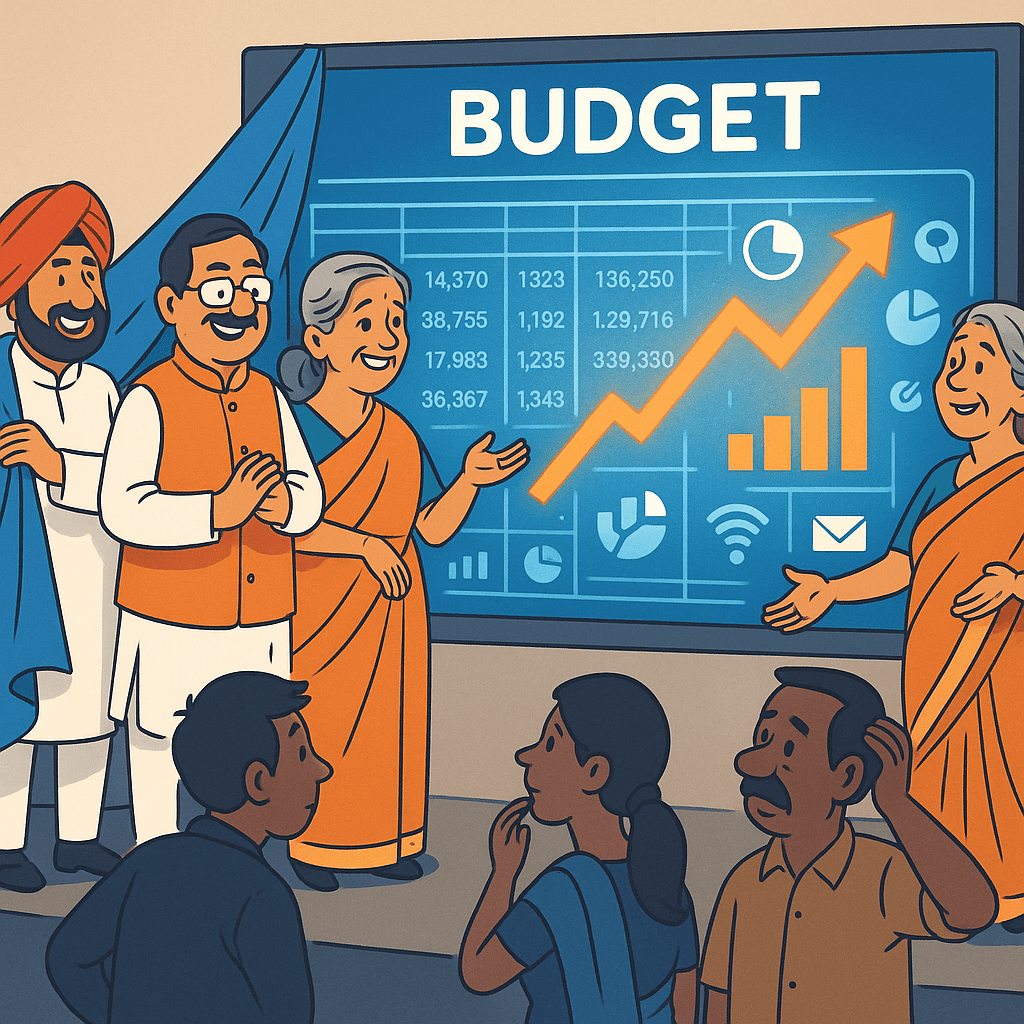
NEW DELHI — In a move hailed by the Bharatiya Janata Party (BJP) as a “historic leap toward a $10 trillion economy” and by the opposition as “a very pretty spreadsheet taped over a pothole,” India’s Union Budget 2026-27 arrived this week with all the subtlety of a push notification you can’t swipe away (Latestly, Feb 2026).
Finance officials trumpeted the document as a masterpiece of inclusive growth, digital transformation, and visionary planning. Critics countered that it was primarily inclusive of PowerPoint animations, transformative for consulting slide decks, and visionary in the sense that you’d have to close your eyes and really, really imagine it helping anyone outside the top tax bracket.
The BJP quickly flooded social media with infographics proclaiming that the Union Budget 2026-27 would “unlock India’s potential.” The opposition responded that the only thing it had definitely unlocked was a new high score in euphemism, noting that the word “exclusion” appeared in more headlines than in the document’s actual text.
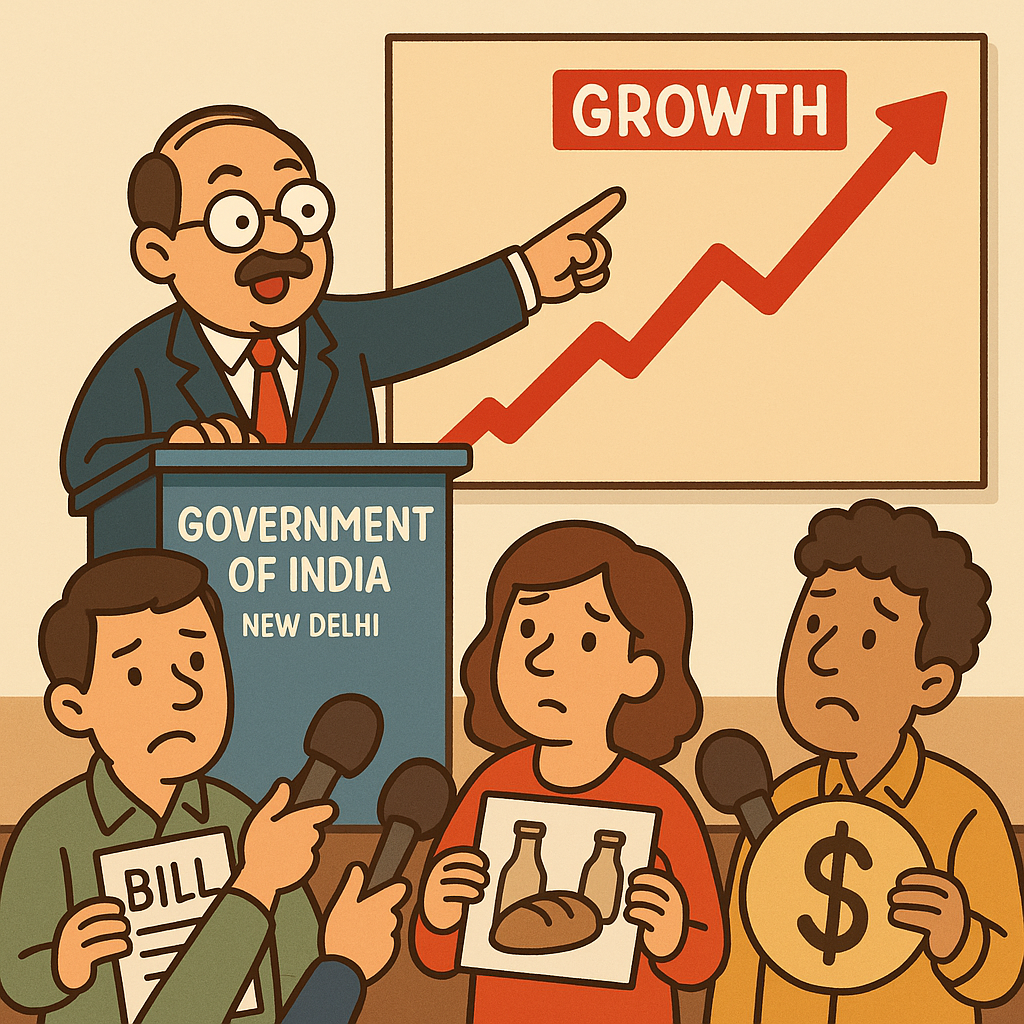
“This budget is a landmark for growth,” declared a BJP spokesperson, flanked by a green-screen chart climbing so steeply it appeared to leave Earth’s orbit. “We’ve allocated unprecedented funds to innovation, infrastructure, and digital India. The opposition simply doesn’t understand exponential curves.”
Opposition leaders, staring at the same curves, pointed out a few missing labels—like health, food subsidies, and anything resembling a coherent jobs strategy. “These are not exponential curves,” one MP said. “These are ski slopes. They go down if you’re standing on the wrong end, which just happens to be where most people live.”
The budget’s tech centerpiece was a sweeping expansion of incentives for “strategic digital infrastructure.” That phrase, analysts noted, is now being used to describe everything from genuine fiber optic rollout to a government app that crashes only half the time. “The Union Budget 2026-27 reads like it was written by a committee of AI tools that were all trained on investor pitch decks,” said one policy expert. “There’s blockchain, there’s AI, there’s skilling, and absolutely no line item for ‘so who pays for the electricity?’”
In a deliberately optimistic press release, the BJP claimed the budget would “bridge the digital divide.” In a less optimistic press release, the opposition accused the government of “rebranding the digital divide as an aspirational gap to be monetized later.” A leaked internal memo from a state IT department reportedly described the plan more bluntly as “Next year’s problem, but with better slides.”

One section of the budget drew particular scrutiny: a high-profile allocation for futuristic “smart villages,” complete with AI-powered agriculture dashboards and app-based service delivery. The opposition observed that several of these villages still lacked reliable 4G coverage, or in some cases, electricity. “The farmer does not need an AI chatbot to explain soil conditions,” an opposition MLA argued. “He needs water, and a price that is not decided by a WhatsApp rumor.”
BJP representatives countered that skeptics were “stuck in the analog era” and failing to recognize that India had to think 10 years ahead. “Yes, some villages may not have stable power today,” said one MP, “but when they do, imagine how fast they can open the government app to discover their subsidy has already expired.”
Asked about accusations of exclusion, BJP officials pointed to multiple line items labeled “inclusive growth” and “targeted welfare,” insisting that the labels themselves were a form of policy. “If the table says ‘inclusive,’ it is inclusive,” said a senior advisor. “This is how governance works in a data-driven era. Words are data.”
“We’ve made sure every citizen appears somewhere in our models,” the advisor added. “Maybe not in the budget, but definitely in the models.”
The opposition, meanwhile, accused the government of creating “two Indias”: one that lives inside the glossy Union Budget PDF and one that lives outside it. “Inside the PDF, every youth is ‘upskilled,’ every farmer is ‘empowered,’ and every entrepreneur is ‘enabled,’” a senior opposition leader said. “Outside the PDF, they all have slightly different words for ‘still waiting.’”
Tech industry lobbyists appeared broadly pleased, praising the budget’s continued focus on digitization and fiscal incentives. Start-up founders reacted with the cautious enthusiasm of people who know their Series D pitch decks just got a few extra buzzwords. “We welcome the government’s emphasis on AI and digital public infrastructure,” said the CEO of a Bengaluru-based fintech, tapping a slide titled “Monetizing the Unmonetizable Poor.” “We look forward to partnering with the state to gamify poverty alleviation.”
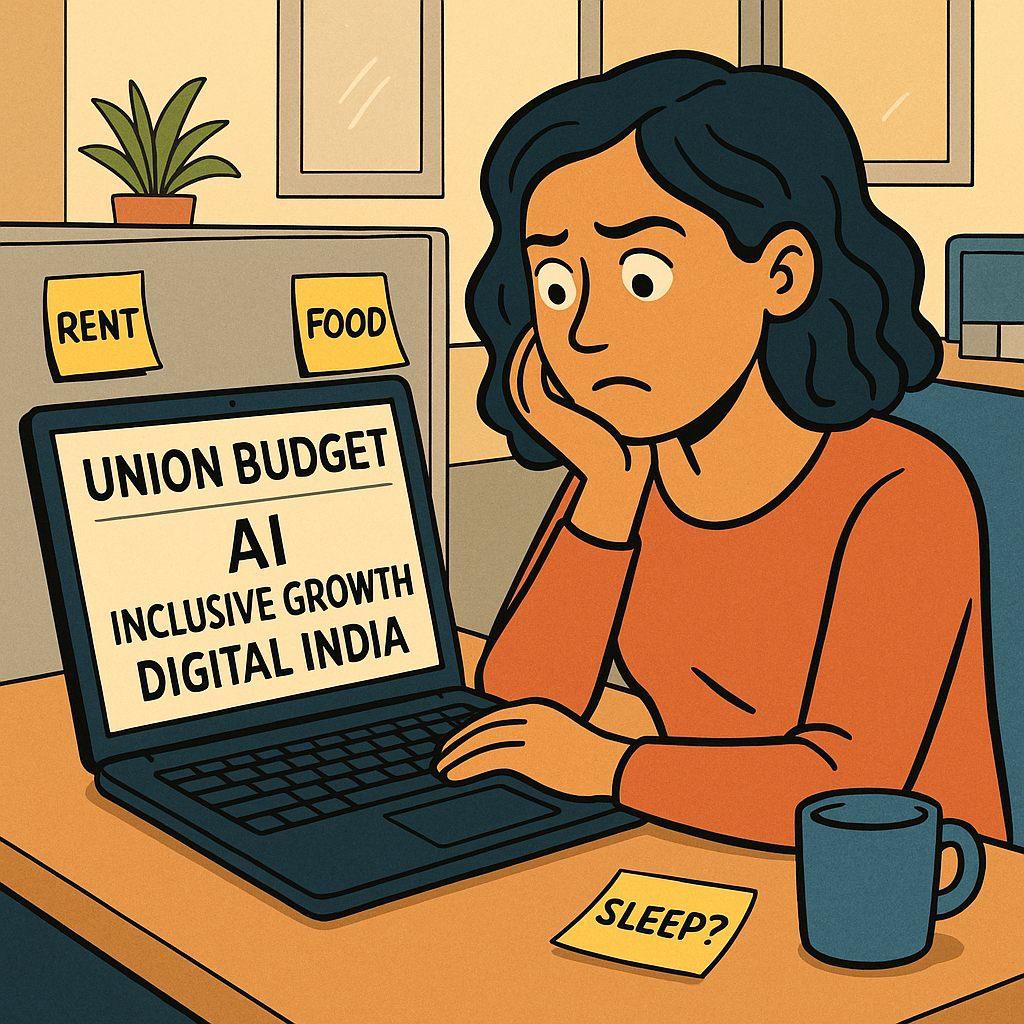
Outside the glass towers, reactions were more muted. A small business owner in Gurugram reported that his primary takeaway from the budget was “I still owe tax.” A software engineer in Pune noted that while the Union Budget 2026-27 mentioned ‘startups’ 47 times, it mentioned ‘sleep’ exactly zero times. “I think the message is clear,” she said. “Ship more features, then die.”
The most surreal moment came when a BJP spokesperson defended the budget against charges of being “too focused on macro indicators and tech optics.” They produced a laminated chart showing GDP growth soaring alongside smartphone penetration. “As you can see,” they said, “as long as the number of phones goes up, human suffering is statistically unverified.”
Opposition leaders responded by holding up a cracked Android handset running three government apps, none of which had successfully loaded. “This,” one MP said, “is your inclusive growth.” The phone then overheated and shut down, proving, according to a nearby BJP worker, “how powerful the new India really is.”
As the dust settles, the Union Budget 2026-27 has achieved bipartisan consensus on exactly one point: it looks phenomenal on a 16-inch laptop at 125% zoom. For everyone else, the coming year will be a live A/B test of whether you can, in fact, eat growth projections, pay rent with digital credentials, or power your home off the raw optimism emanating from North Block.
Until then, India’s citizens have been advised to download the official Budget Highlights App, which, according to early reviews, works flawlessly on Wi-Fi inside the Ministry of Finance and not especially well anywhere that isn’t already in the budget.