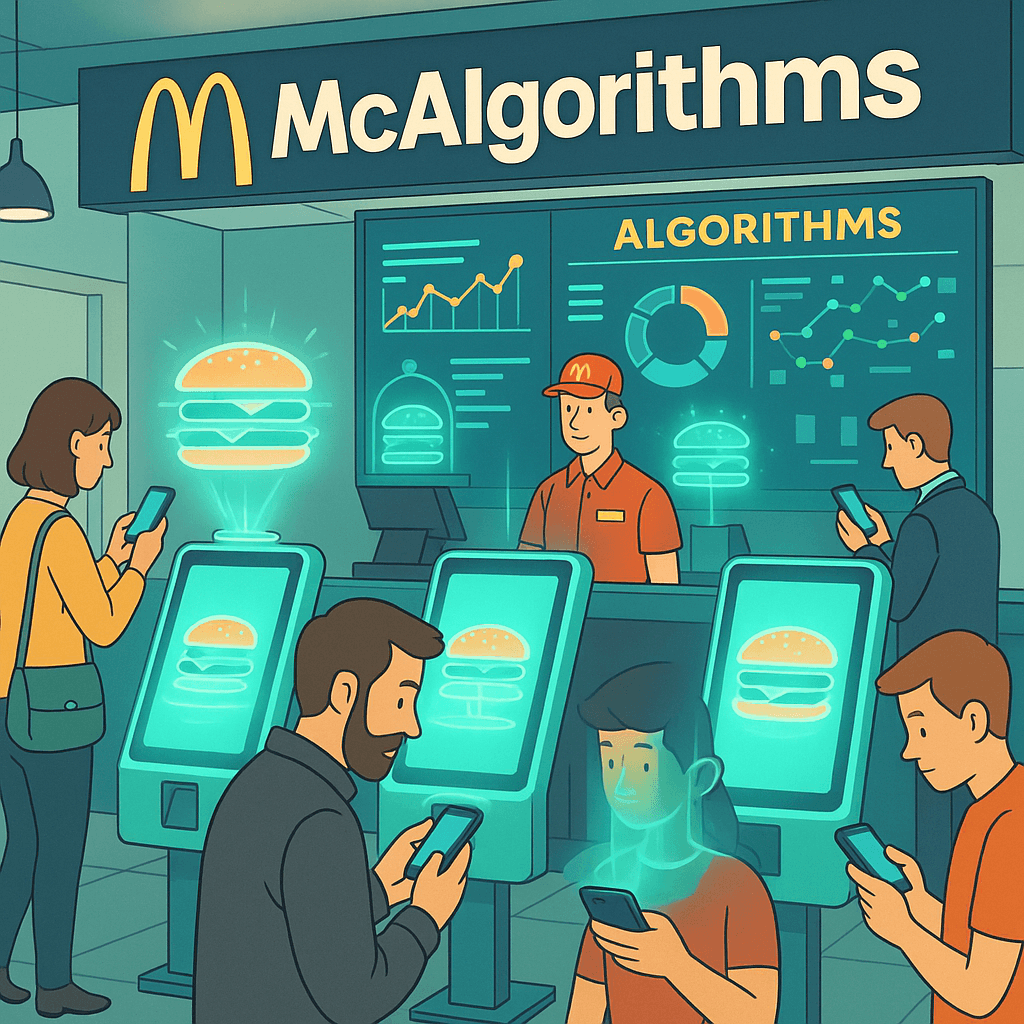
McDonald’s is rolling into 2026 with what Webpronews politely called a “Radical Reset” and what everyone who’s ever used a self-order kiosk recognizes as “a firmware update to the feeling of mild despair” (Webpronews, Jan 2026). The company’s new strategy promises a menu makeover, price wars, and a full-blown tech surge, confirming that the future of food is less about nutrition and more about patch notes.
Under the plan, McDonald’s says it will combine “data-driven pricing,” “AI personalization,” and “next-gen digital loyalty” to create what executives describe as “a more immersive McDonald’s ecosystem” and what consumers describe as “a hamburger that nags me like Netflix.” The Golden Arches, having already conquered the human gut, is now racing to colonize the last remaining territory: your phone lock screen and your calorie history.
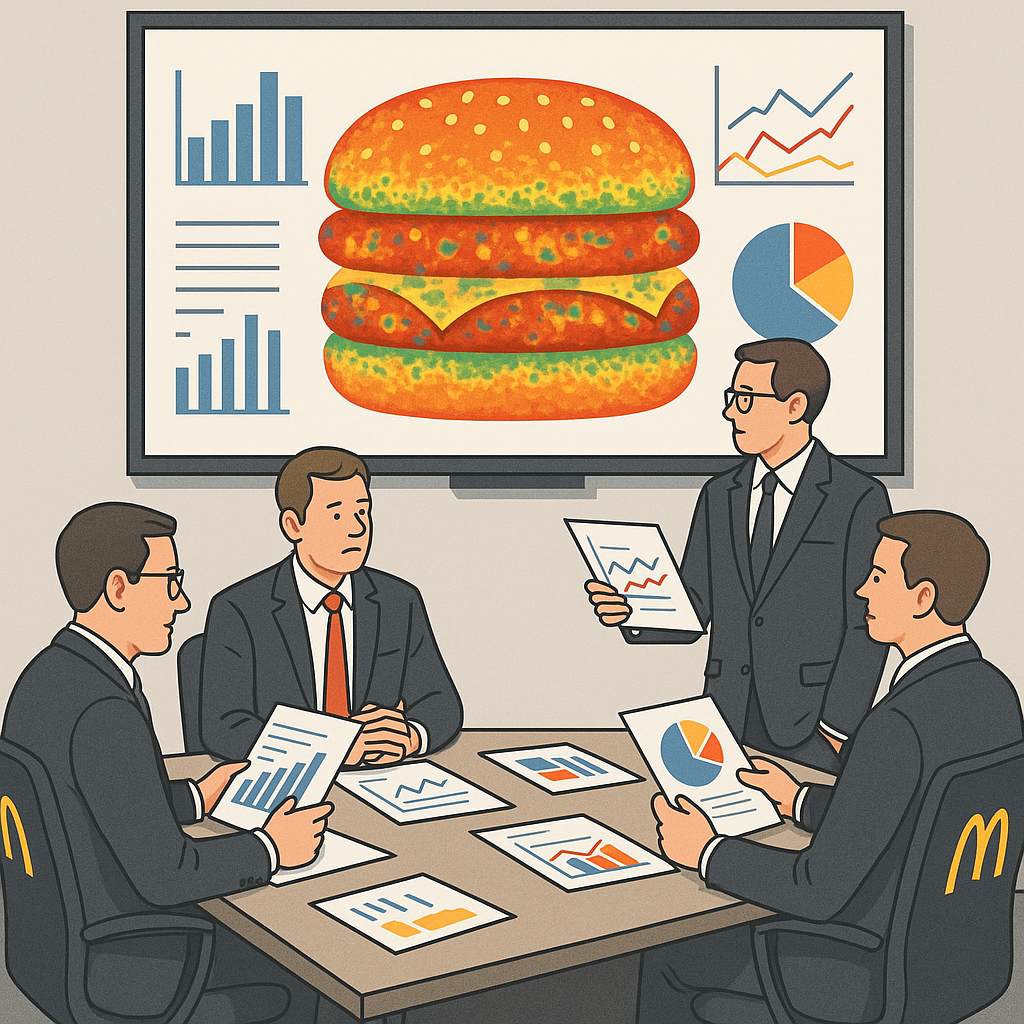
A leaked internal slide reportedly titled “McFuture 2026” outlines the three pillars of the initiative:
- Menu Makeover: fewer items made by humans, more items assembled by machines that still somehow get the pickles wrong.
- Price Wars: dynamic pricing so your Big Mac can surge like an Uber during lunch hour.
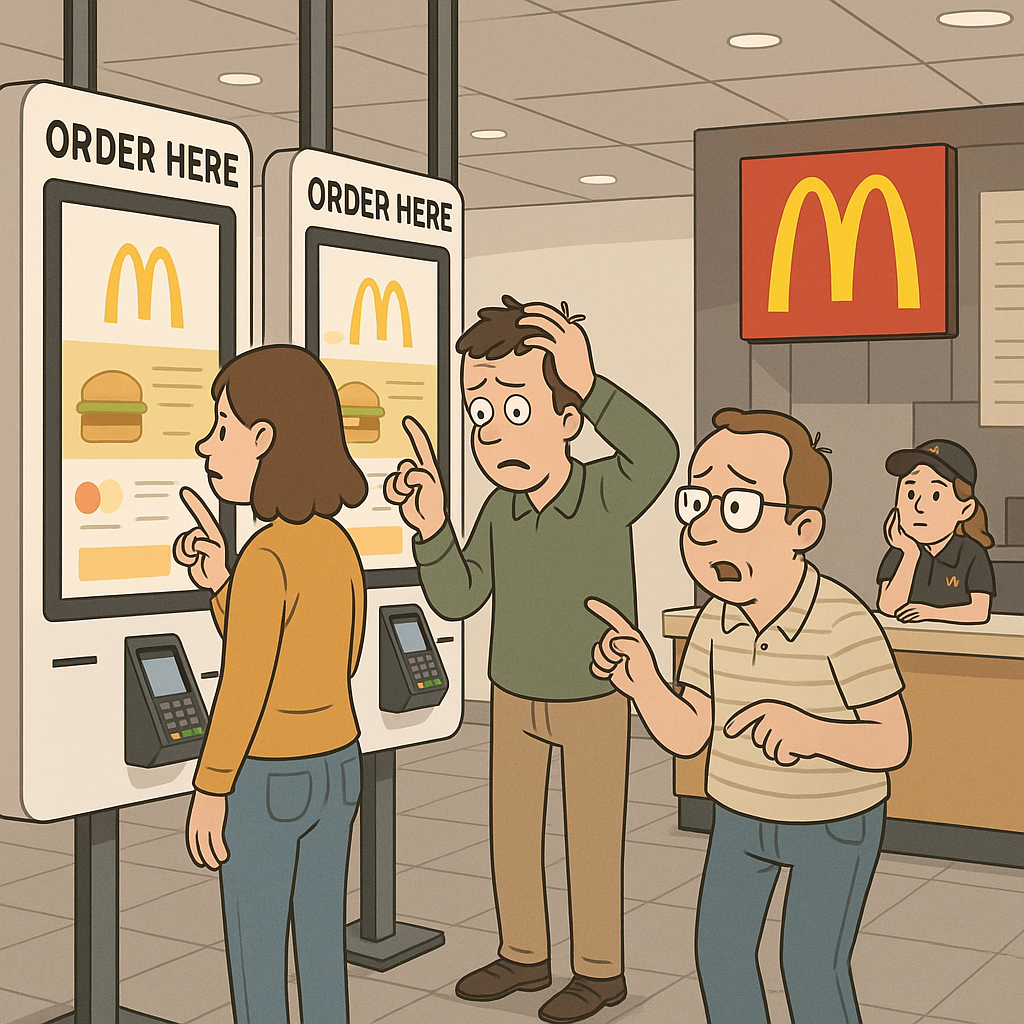
- Tech Surge: kiosks, apps, loyalty programs, AI ordering, and absolutely no one at the counter who knows how to fix any of it.
“This is not just a fast-food chain,” insisted one McDonald’s spokesperson in an investor call, probably reading from a slide prepared by a management consultant who bills by the syllable. “This is a tech-forward, data-integrated, frictionless hospitality platform.” Rough translation: the fries are the same, but now they come with push notifications reminding you to feel grateful.
The tech surge leans heavily on the McDonald’s app, which will use machine learning to predict your order the moment you open it. Over time, the system will refine its model until it can correctly guess that at 11:38 p.m. on a Tuesday, you are absolutely getting the 20-piece McNuggets. The company’s goal is to eliminate the five seconds of hesitation that previously stood between you and your sodium intake.
“Our vision is a world where the question ‘What do you want?’ is obsolete,” said one executive. “We already know.”
Surveillance capitalism, but make it crispy.
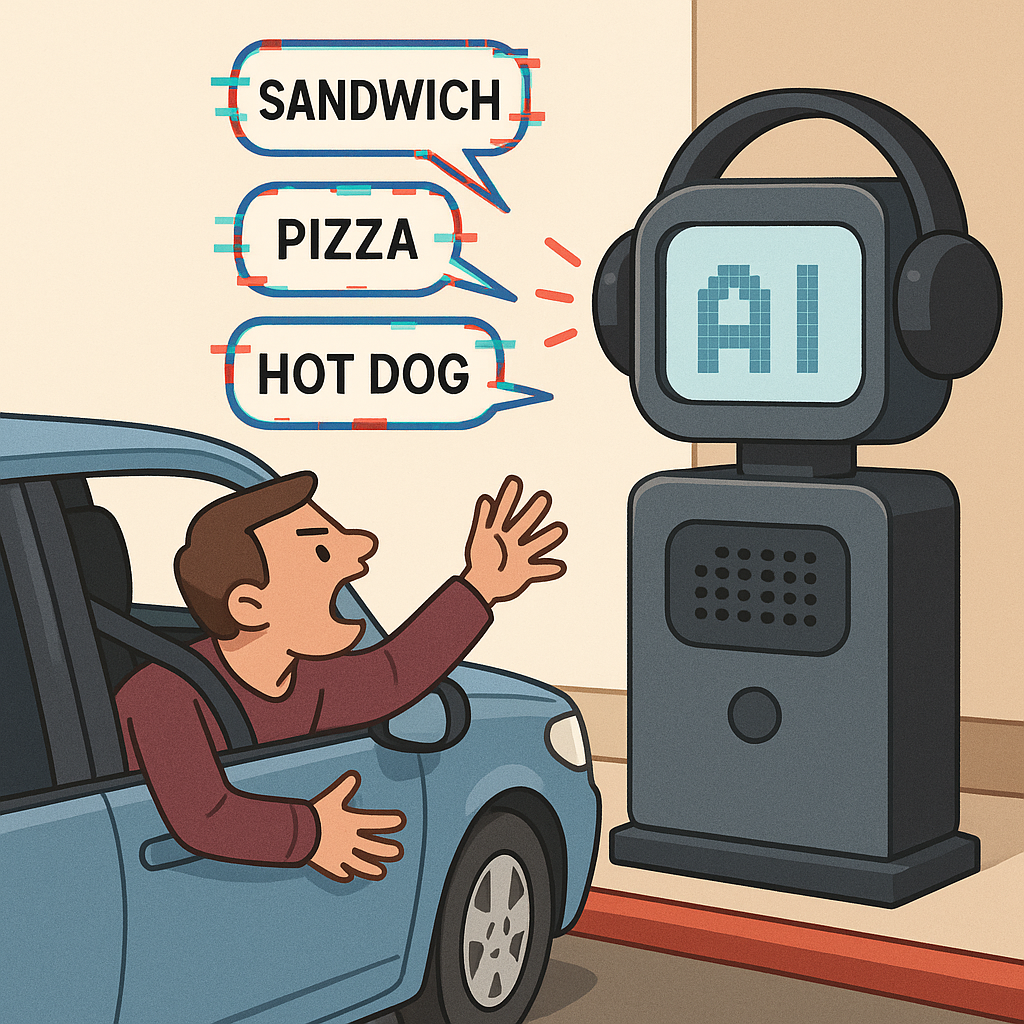
On the hardware side, McDonald’s is doubling down on self-order kiosks and experimenting with AI drive-thru systems that can mishear your order in dozens of languages at scale. The voice-recognition software, trained on millions of past orders, now understands regional accents, slang, and the universal sound of someone giving up and saying, “Yeah, whatever combo is cheapest.”
There are, however, early glitches. One pilot in the Midwest reportedly kept auto-adding six apple pies whenever it detected the word “salad,” which engineers insist is a coincidence and not a strategic upsell. In California, a location testing facial-recognition-based loyalty logins was forced to disable “Happy Meal mode” after it confused four different crying toddlers and awarded all of them the same free toy. None of them were happy about it.
The “Radical Reset” also includes a more aggressive pricing strategy. Executives speak optimistically of “value optimization,” a phrase which here means “We’ll charge less right up until we can charge more.” Through a combo of algorithmic promotions and location-based offers, the McDonald’s app might serve you a $2 McChicken while your friend across the street sees it for $4.99. Economists call this “price discrimination”; McDonald’s calls it “personalized value.” You will call it “Wait, what?”
In a move that truly cements the company’s new tech identity, McDonald’s is treating its menu like a software product. Seasonal items will be tested like beta features. The McRib is no longer “limited time only”; it’s “rolling out regionally in a staggered release cycle.” Nuggets? Now modular content components. The ice cream machine? Still in permanent early access.
Internal roadmap (totally not real, but feels plausible):
- Q1: Launch AI-powered upsell bot.
- Q2: Add surge pricing to McFlurries during heat waves.
- Q3: Replace the PlayPlace with a crypto wallet onboarding area.
- Q4: Achieve full sentience in the fries.
The deeper goal, as analysts whisper between bites of test-market Spicy McSomething, is to reposition McDonald’s from fast-food chain to data operation that happens to sell food. Every tap, every order, every late-night snack becomes another row in the McDatabase, optimizing the McAlgorithm, powering the McShareholder. Somewhere in an office, a screen shows a heat map of late-night McFlurry demand, pulsing like a cholesterol-based aurora borealis.
Still, McDonald’s insists this is all about the customer. The company promises a more “frictionless” experience, despite the fact that nothing introduces friction quite like a touchscreen that freezes when your hands are covered in ketchup. Stores will feature more “digital lanes,” “pickup shelves,” and “mobile-only offers,” all carefully designed so that the one person paying with cash holds up an entire generation of app users and becomes the natural villain in this new UX morality play.
Critics point out that while McDonald’s is racing toward a fully instrumented, cloud-connected future, it has not yet mastered two basic technologies: “Hot Food” and “Order Number Accuracy.” But the company is undeterred. The vision is clear: by 2026, your McDonald’s visit will be a carefully choreographed interaction between edge devices, cloud analytics, and human shame.
And in the end, that might be the true genius of the 2026 Radical Reset. Not that McDonald’s is using AI, apps, or dynamic pricing. Everyone is doing that. It’s that they’ve realized the ultimate recurring revenue stream is emotional: no matter how sophisticated the tech surge gets, the core product never changes.
You don’t go to McDonald’s for a burger.
You go for the familiar, comforting thought: “I probably shouldn’t be doing this.”
Now available as a subscription.