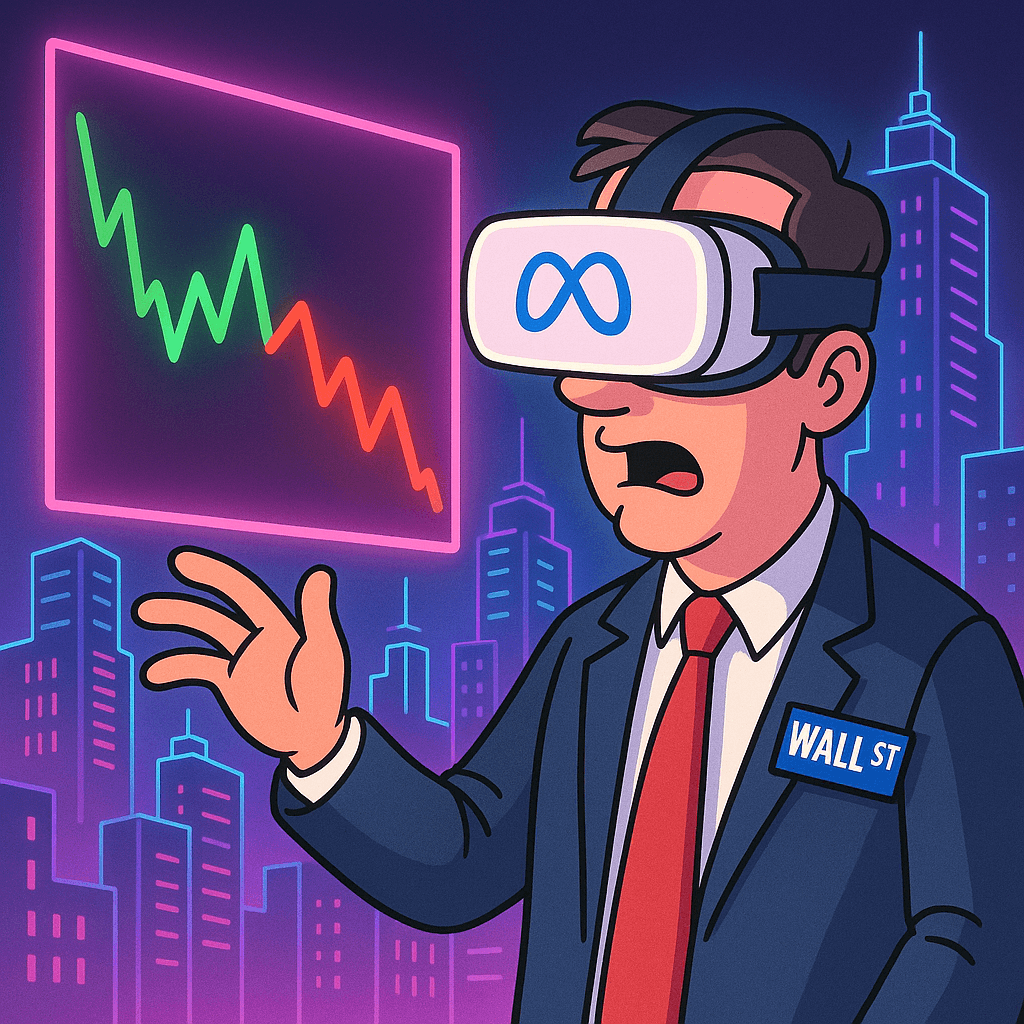
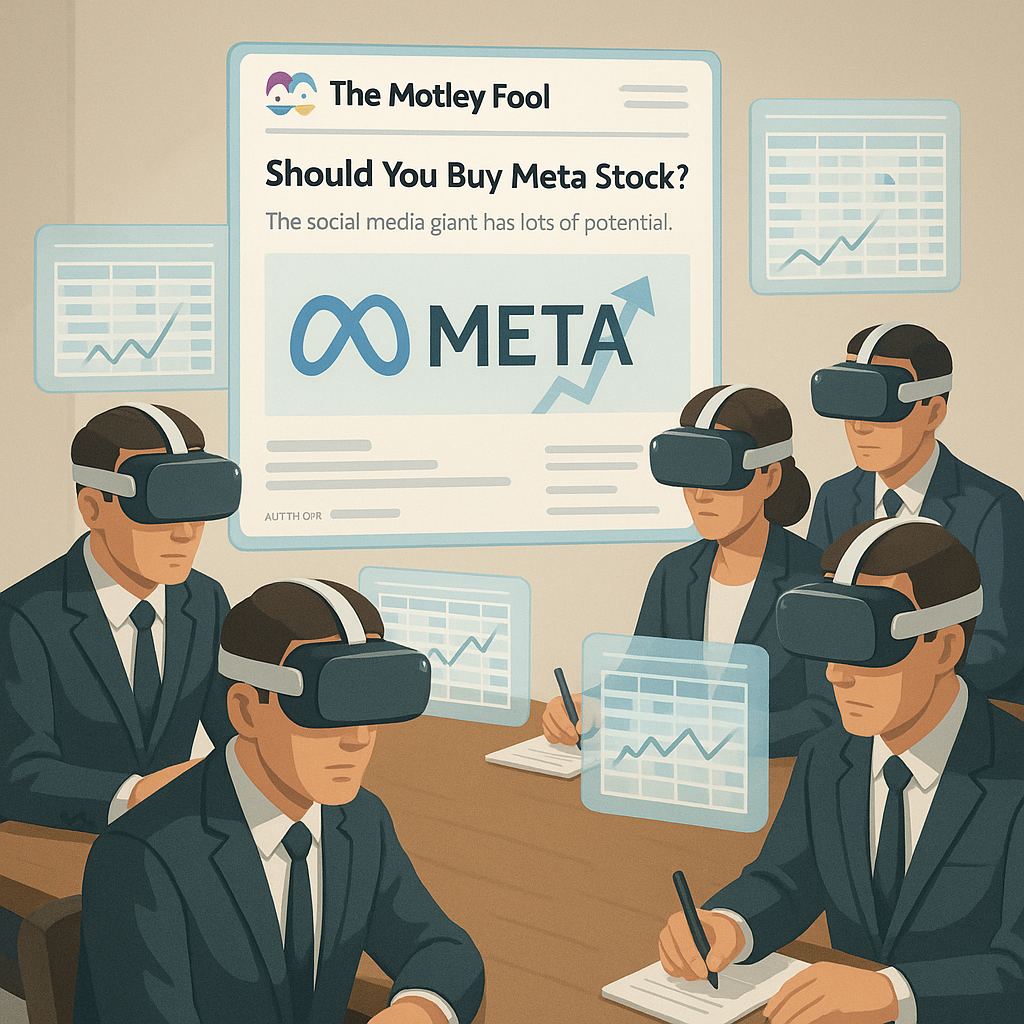
Meta Platforms has once again shuffled out of the digital graveyard, and this time the market is calling it a “bounce back” instead of what it looks like to everyone else: a very expensive jump scare produced by Mark Zuckerberg’s budget. According to The Motley Fool (Jan 2026), “Meta Stock Seems to Be Bouncing Back. Is the Growth Stock Now Too Cheap to Ignore?”—which is investor-speak for: “We made fun of the metaverse two years ago and would now like to pretend we didn’t.”
The company formerly known as Facebook—Meta Platforms, parent of Instagram, WhatsApp, and your aunt’s third divorce announcement—has watched its share price drift back upward as if Menlo Park installed a stock buyback treadmill underneath it. The question tormenting Wall Street isn’t whether Meta is innovative, visionary, or morally coherent. The question is much simpler:
“Is it cheap enough that we can ignore all that?”

In conference rooms from New York to Singapore, fund managers are opening decks titled things like “Revisiting Meta: Have We Suffered Enough?” and “Meta 2026: This Time the VR Legs Are Real.” Analysts at The Motley Fool are politely suggesting that maybe, just maybe, the company that tried to sell $1,500 headsets during an inflation spike deserves another look, especially now that it’s printing AI press releases at roughly the same rate it prints targeted ads.
One fictionalized portfolio manager summarized the mood:
“Look, Meta doesn’t have to build the future,” she explained, refreshing a chart shaped like a ski slope in reverse. “It just has to be cheaper than my career risk if I don’t own it.”
Meta itself has helped the comeback narrative by temporarily remembering that it owns Instagram, a functioning money printer disguised as a self-esteem shredder. While the metaverse division burns cash like a pixelated bonfire, Reels keeps algorithmically serving dopamine and ads to billions of users, quietly underwriting Mark Zuckerberg’s dream of convincing everyone to wear plastic ski goggles in their living rooms.
Meanwhile, WhatsApp continues its reign as the preferred global platform for both family recipe chains and election disinformation, an exquisite dual-use technology that analysts like to file under “engagement.”
Still, investor faith doesn’t come cheap. It comes in three bullet points:
- AI buzzwords in every earnings call.
- A promise of future efficiency, which is corporate dialect for “we fired people and bought more GPUs.”
- The solemn assurance that the metaverse is “early,” the corporate version of “my band is huge in Europe.”
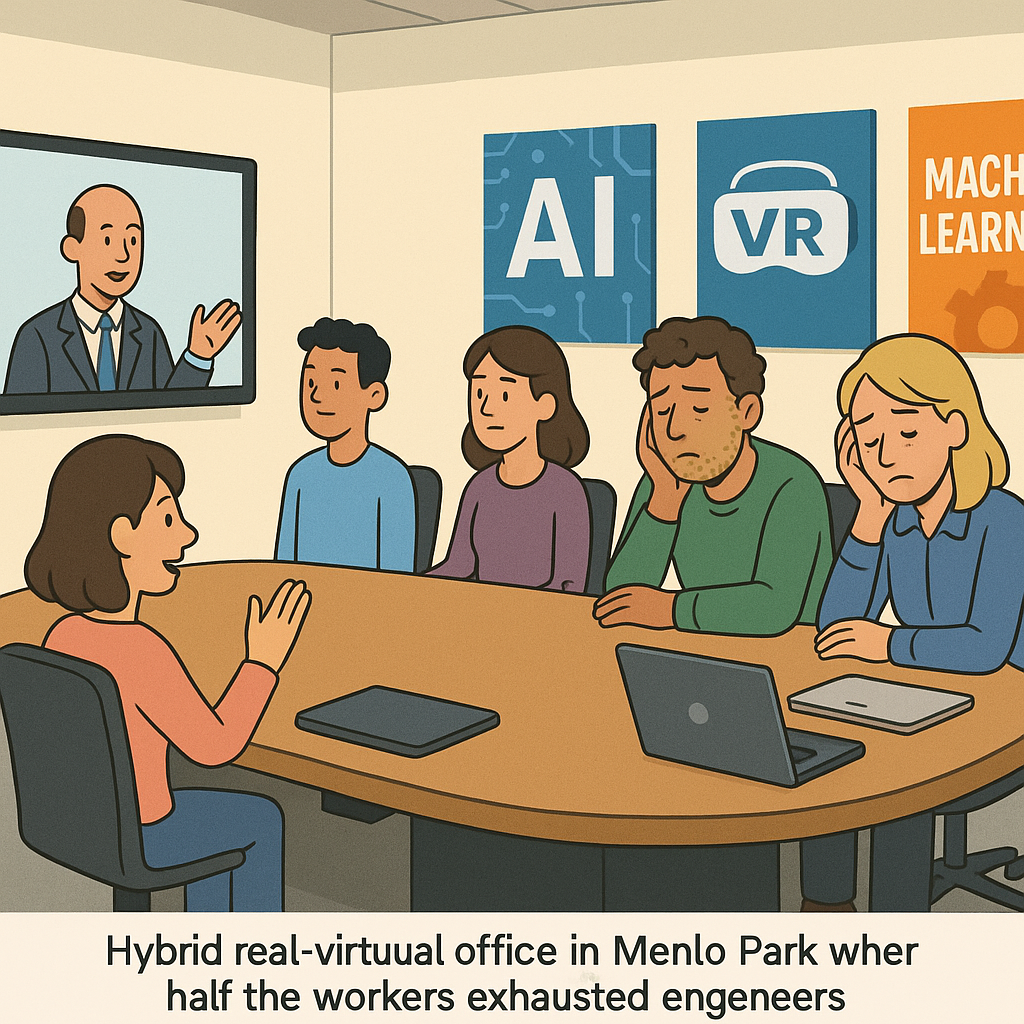
“Investors are re-rating Meta’s growth prospects,” one Menlo Park watcher noted, “because everyone noticed that while we were memeing about VR legs, the ad machine kept quietly harvesting.” The company’s Reality Labs division, based in a corner of Menlo Park where beanbags go to die, still loses eye-watering amounts of cash, but that’s officially categorized as “long-term investment” rather than “expensive cosplay for software engineers.”
Inside Meta, staff reportedly refer to this era as the “Efficiency Phase,” which followed the “Metaverse Rebrand Phase,” which followed the “Fined By Every Regulator On Earth Phase.” Each period is marked by a different style of all-hands presentation from Mark Zuckerberg, typically in front of a Meta logo glowing like an infinity symbol and a quarterly apology.
And yet Wall Street is warming again. At The Motley Fool, the mere act of asking if Meta is now “too cheap to ignore” (Fool, Jan 2026) effectively serves as a Vatican puff of white smoke: the Church of Growth has decided that penance is over. The same analysts who once declared the metaverse a money pit are now discovering that investors have the attention span of an Instagram Story and the memory of a deleted Facebook post.
Retail traders, always eager to join a redemption arc, are piling in as well. Armed with zero-commission apps and infinite Reddit conviction, they post charts of Meta’s share price in Discord rooms labeled “degenerate-long-only.” One user, going by the handle ZuckOrBust, wrote, “If Meta goes back to all-time highs, I can finally move out of my parents’ basement—into their metaverse basement.”
Underneath the enthusiasm, though, the fundamentals remain exquisitely weird. Meta is simultaneously:
- A dominant advertising empire.
- A VR hardware company frantically trying to reinvent ski goggles as productivity tools.
- An AI lab racing OpenAI, Google, and a thousand open-source GitHub repos maintained by people who think sleep is optional.
It is, in other words, several trillion-dollar PowerPoint fantasies sharing one very real ticker symbol.
Back in Menlo Park, Meta spokespeople insist the company’s long-term vision is intact. “Our work in AI, VR, and AR will define the next decade of human connection,” a representative might say, if allowed by legal. “Also, please mention that we’re returning capital to shareholders.” The last part is always delivered in bold font, just in case anyone worries Mark will spend the entire free cash flow streaming legless avatars into eternity.
Ultimately, the debate raging on trading floors is not about ethics, privacy, or democracy—those are line items in a risk disclosure somewhere around page 76. The true question is simpler and far more sacred: Does the chart go up?
For now, Meta’s does. As long as the line trends right and upward, Meta Platforms will be described by phrases like “resilient,” “undervalued,” and “misunderstood.” If it turns south again, the same people will rediscover their previous adjectives: “bloated,” “delusional,” and “pivoting to blockchain, probably.”
Until then, expect more headlines like the one from The Motley Fool, wondering aloud if Meta stock is now too cheap to ignore. Because in modern markets, there is only one unforgivable sin for a company that owns Facebook, Instagram, and WhatsApp:
Not generating enough upside to justify everyone pretending they live in Menlo Park’s version of reality.