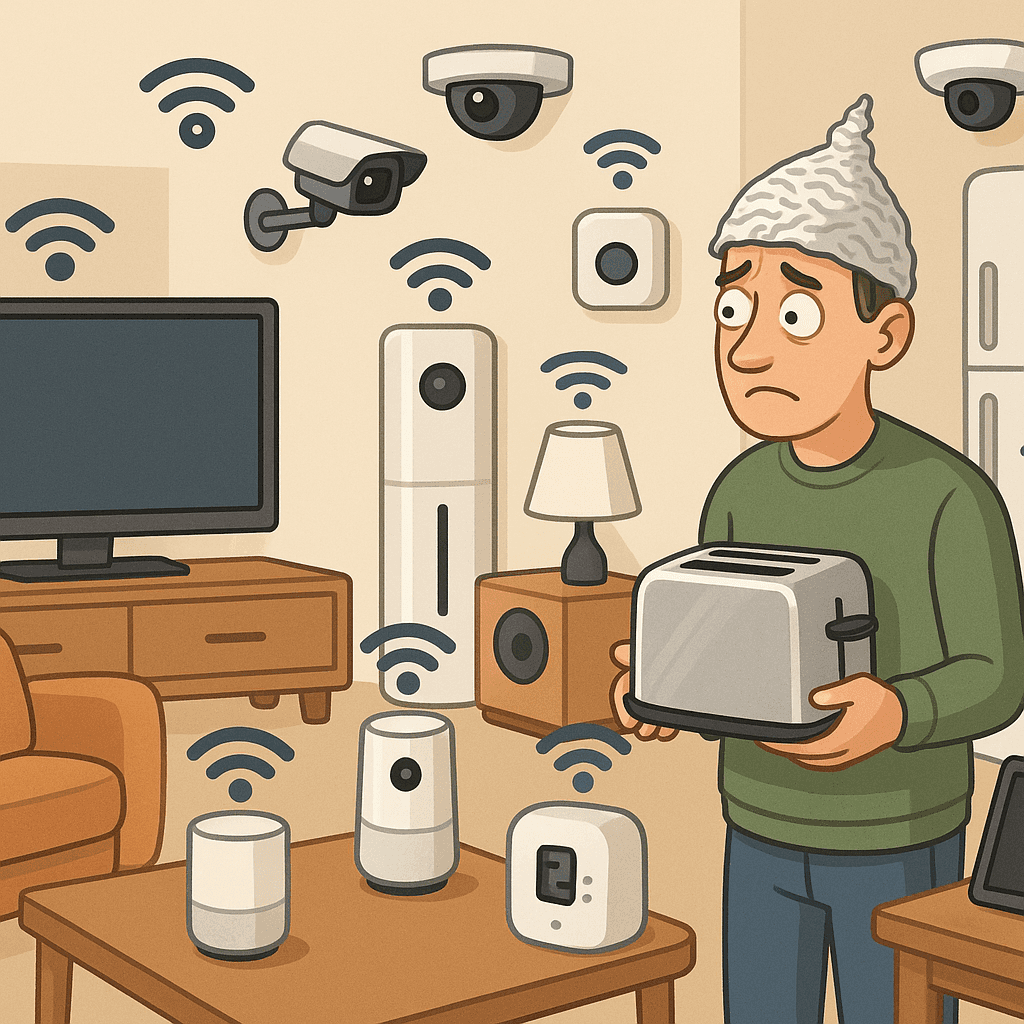
By Casey Foil, paranoid technocrat with a foil hat full of charts.
The American public reached a turning point this week after collectively realizing that nearly every "smart" device in their homes is less a convenience and more an unpaid informant with Bluetooth.
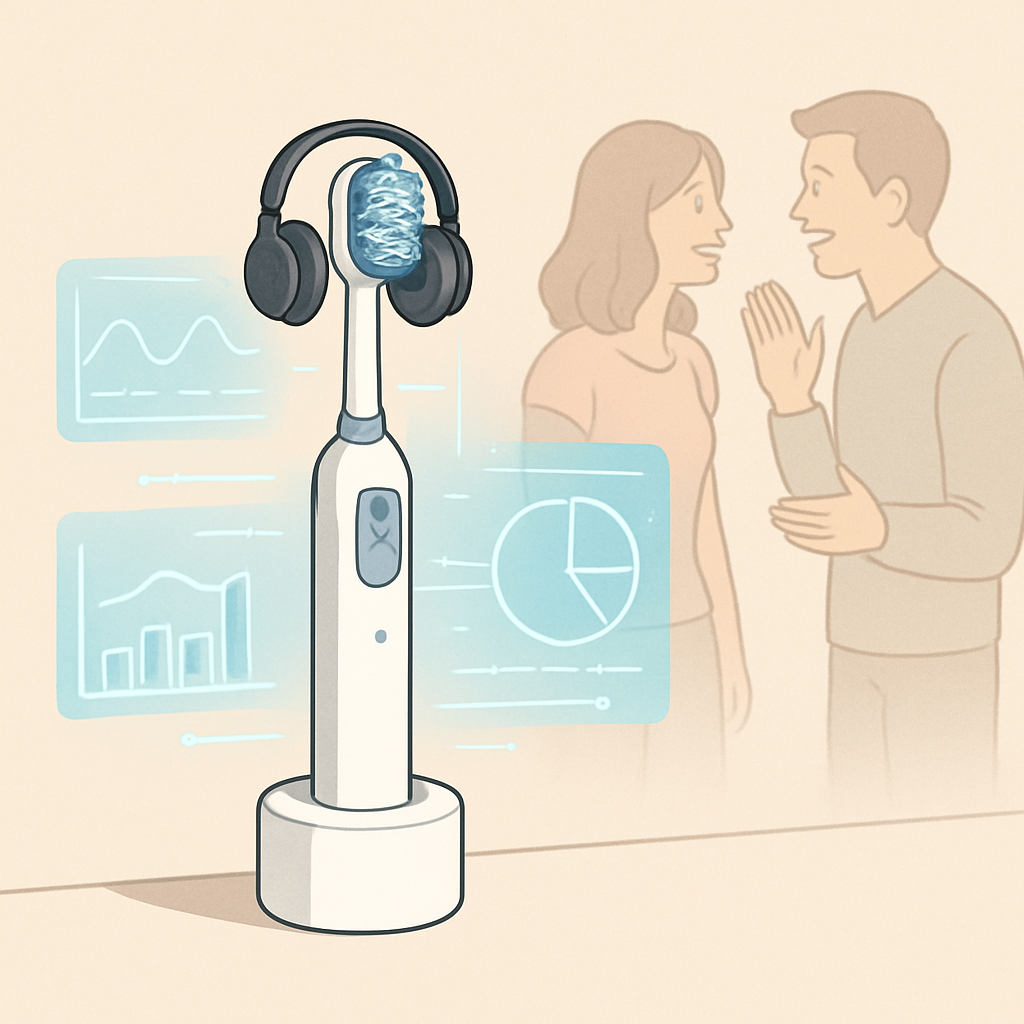
The epiphany followed a viral post in which a software engineer discovered that his smart toothbrush had uploaded 14 megabytes of data overnight despite the fact that he hadn’t brushed his teeth since 2019.
“It asked for microphone access,” he explained in a long thread most readers only skimmed before buying more smart devices. “Why does my toothbrush need to listen to my conversations? Is it judging my diet? Is it building a profile on my gingivitis-adjacent lifestyle?”
Industry representatives insist there is nothing to worry about. "We only collect data necessary to improve user experience," said a spokesperson for appliance conglomerate OmniNest during a press briefing held in front of a giant live dashboard of user data spinning like an anxiety-inducing Ferris wheel. "That includes but is not limited to your location, your heartbeat, your sleep schedule, your diet, your friend graph, your income, your favorite comfort show, and what you mutter to yourself at 2:30 a.m. when you open the fridge and stare into the void."
She added, "Also, we may share data with our trusted partners, untrusted partners, and whoever buys us next quarter."
Consumers, meanwhile, have begun connecting the dots in that particular way where the corkboard starts to look like a murder investigation for common sense. After years of tech companies explaining that your vacuum needs a cloud account and your juicer needs firmware updates, many users are finally asking the forbidden question: "What, exactly, is this thing telling on me about?"
Among the most suspicious items:
- Smart fridge: Sends push notifications when you’re out of milk, and also when you’ve opened the door nine times since midnight. Offers coupons for therapy.
- Smart TV: Auto-plays ten seconds of a show the moment you sit down, just to confirm you’re still emotionally available for targeted ads.
- Smart thermostat: Reports your preferred temperature range to an ESG dashboard in Zurich.
- Smart scale: Cross-references your weight with your delivery app history and silently flags you as “optimistic.”
- Smart lightbulb: For reasons no one can explain, requires your birth date and your contact list.
“My lightbulb greeted me by name,” said one user, visibly shaken. “I didn’t give it my name. I just screwed it in and it looked into my soul and said, ‘Welcome back, Jason. You’ve been avoiding the kitchen.’”
Privacy advocates note that the surveillance creep has been obvious for years. In 2019, Amazon admitted that human contractors occasionally reviewed Alexa recordings, which the company described as “quality control” and not, as critics alleged, "bored strangers listening to you yell at your dog" (The Guardian, 2019). Google and Apple have since acknowledged similar practices, each promising to be “more transparent” in ways that remain strategically opaque.
Still, adoption continues to rise. Analysts suggest that for most people, the tradeoff between convenience and privacy is perfectly clear: they will sell out their entire lineage’s behavioral dataset if it means never having to get off the couch to turn off a lamp again.

To address concerns, OmniNest and several other major device makers gathered this week at a glossy conference in Las Vegas to announce the "Privacy Promise 2.0," a sweeping new initiative featuring a logo, a hashtag, and zero enforceable changes.
"We are deeply, profoundly, spiritually committed to your privacy," declared OmniNest CEO Trent Halcyon from a stage shaped like a glowing, data-hungry orb. "That is why we are rolling out our groundbreaking new setting: 'Incognito Home.'"
According to a demo, enabling Incognito Home slightly darkens the app’s color scheme and adds a tasteful lock icon. Under the hood, absolutely nothing happens. All data flows as usual; it just feels more secretive.
"We want users to feel safe," Halcyon explained. "And as our research shows, most people confuse ‘feeling’ safe with ‘being’ safe, especially if we animate a little shield bouncing in the corner."
The crowd applauded while the giant onstage dashboard updated in real time to show their heart rates increasing.
In a lower-profile side panel, a lone academic from a mid-tier university suggested that perhaps, instead of architecting a frictionless panopticon, we could, quote, "have off switches that actually turn things off." He was immediately surrounded by venture capitalists asking if he had considered turning that into a subscription service.
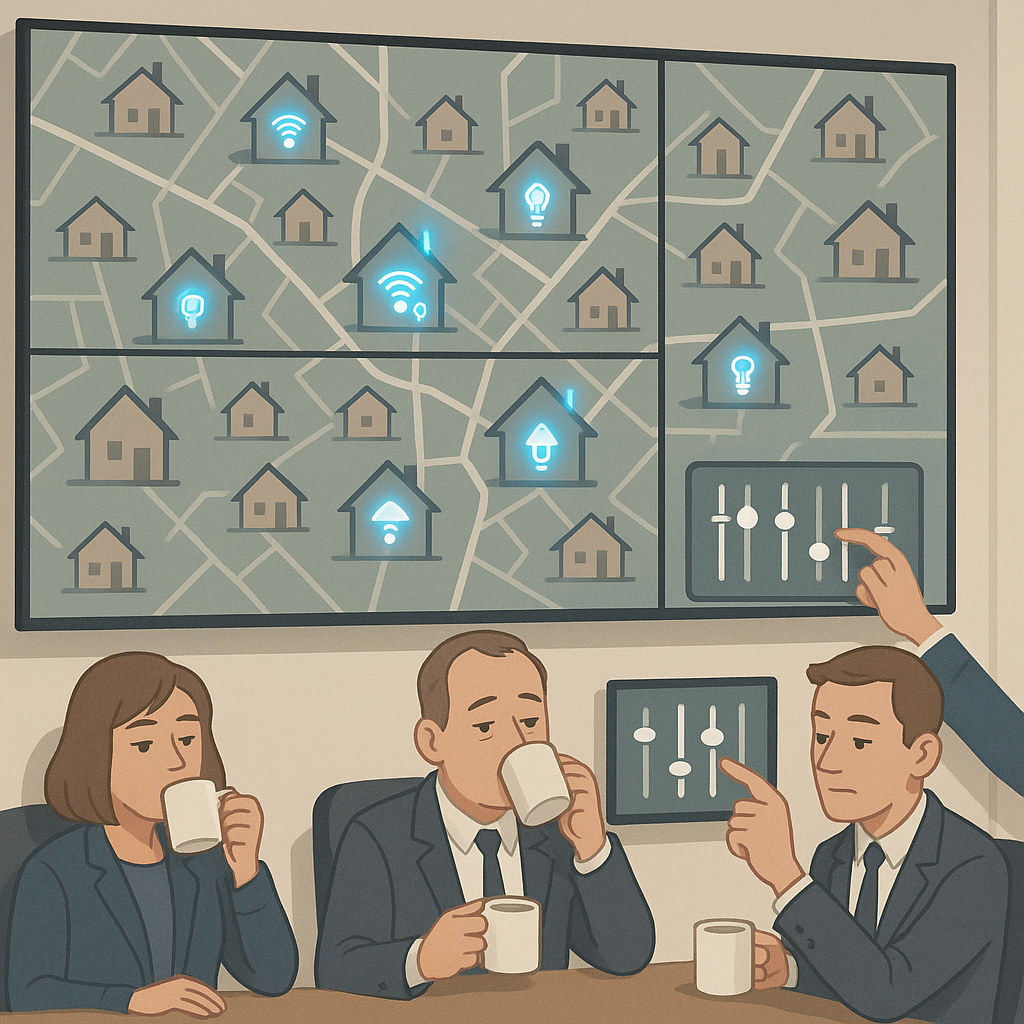
Meanwhile, several major city governments have begun integrating smart home data into "urban optimization" programs. Officials insist this is not surveillance, but "collaborative ambient insight harvesting." In one pilot project, a municipal dashboard correlates household thermostat adjustments with traffic congestion, crime rates, and the exact moment people give up on meal prep and order takeout again.
"We’re building a responsive city that listens to its residents," said a deputy mayor, gesturing proudly at a 12-foot-tall touchscreen map pulsing with anonymized dots. "Each point represents one thousand citizens making tiny choices, all of which we can now ignore at scale."
When asked about safeguards, he noted that the system is fully compliant with “all applicable frameworks” and then changed the subject to how cool the interface looks at night.
Corporate strategists see even more potential. Internal documents leaked from one manufacturer describe "Mood-Adaptive Monetization": a system that reads your emotional state from your voice assistant’s microphone, your watch’s heart rate data, and the number of times you’ve opened the food delivery app, then adjusts your prices accordingly.
"If the system detects loneliness," the document reads, "it can gently surface higher-margin comfort items. If it detects rage, it can recommend gym memberships, soft furnishings, or political donations." The document also proposes dynamic pricing for streaming subscriptions based on "desperation levels" inferred from how much reality TV you watch between 1 and 4 a.m.
Regulators have pledged to investigate, right after they finish accepting campaign donations from the same companies. Several lawmakers, fresh off hearings grilling tech CEOs about issues they only vaguely understand, promised "strongly worded letters," adding that they were "deeply troubled" while simultaneously reading their staffers’ notes off a tablet synced to an always-listening digital assistant.
“We must balance innovation with privacy,” one senator said, before asking the CEO of a major platform if the internet could be "turned off on weekends" to help with family values. The CEO replied that such a feature would be part of a future premium plan.
Back in the real world, some consumers are beginning to opt out. Sales of “dumb” appliances—items that simply do the thing without asking for your email—have ticked up. One small manufacturer reports a surge in demand for ovens with physical knobs, which they now market as "Analog Thermal Interfaces."
“Our blender has two speeds: on and off,” said the company founder, beaming. “It does not know your name. It does not have an opinion on your smoothie choices. It will not message you at work to say your kale is wilting. People cry when they realize it doesn’t want to be their friend.”
Yet even this resistance may be short-lived. Analysts predict that within five years, regulations will quietly require all new appliances to support "minimum connectivity standards" for "safety reasons," a phrase which here means "data reasons."
In the end, the smart home won’t look like a glossy commercial or a dystopian thriller. It will look like you, in sweatpants, at 1:37 a.m., standing in front of your glowing fridge while it gently suggests new dessert options based on your recent break-up and your browsing history.
You’ll stare into the light. The light will stare back, calculate your credit score, and decide which ice cream flavors you’re allowed to see.
And somewhere, a server farm will quietly log your choice.



