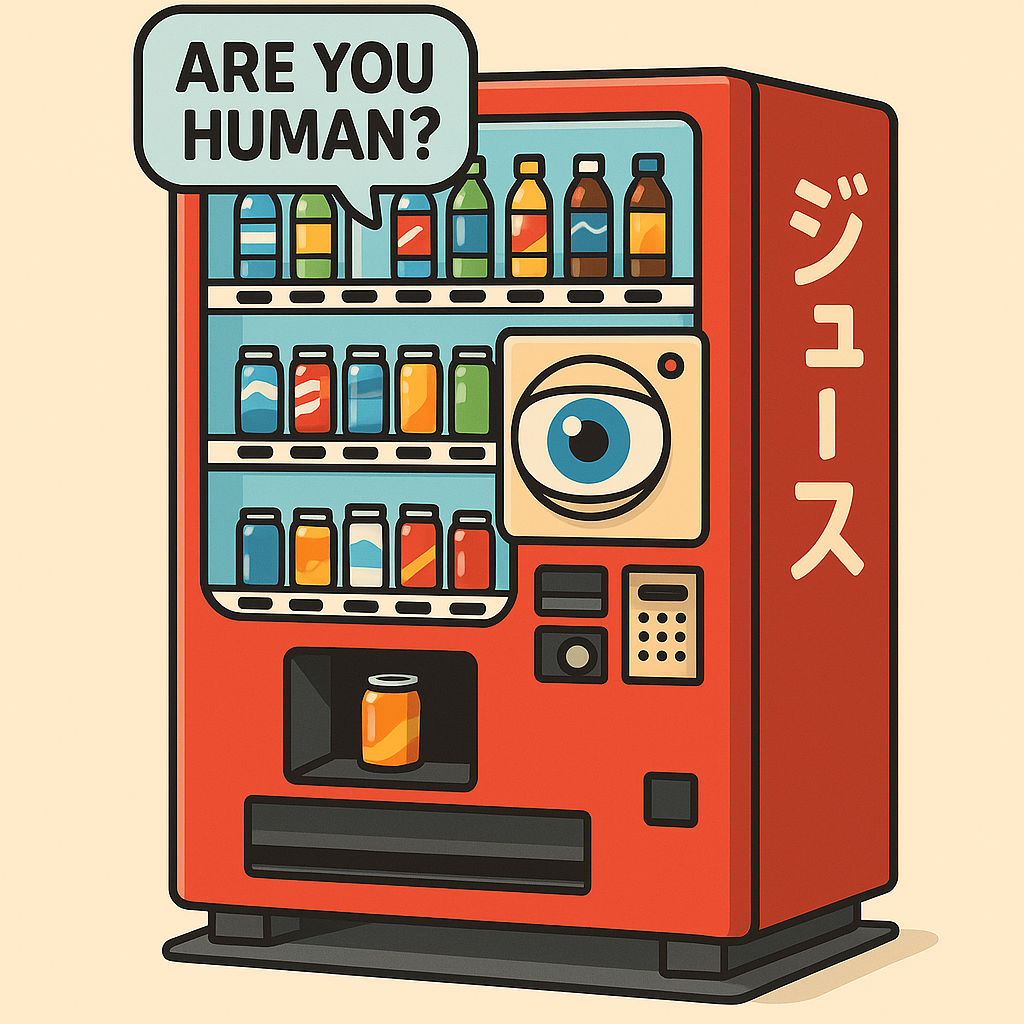
Japan is about to become the first country where you need to pass a vibe check from Sam Altman just to buy a vitamin water.
According to a gloriously understated report in The Manila Times (Dec 2025), MEDIROM Healthcare Technologies Inc. is partnering with World — the project envisioned by Sam Altman and Alex Blania of Worldcoin fame — to roll out a nationwide "Proof of Human" infrastructure across Japan. In other words, the land of vending machines that sell hot coffee in cans is now beta-testing vending machines that stare into your soul first.
This is being spun as a breakthrough in wellness tech, identity verification, and digital trust. It’s also, more honestly, the latest step in teaching humans they are just particularly needy API endpoints.
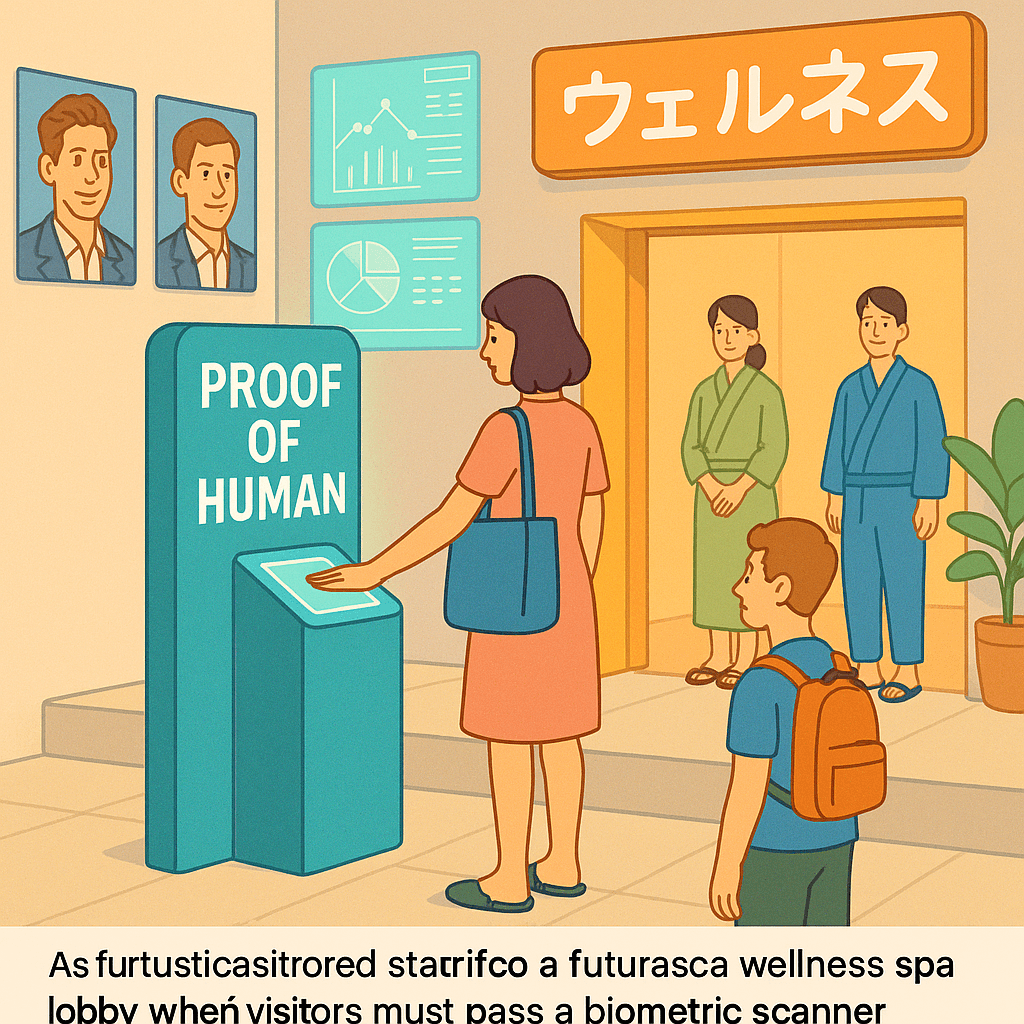
On paper, the idea is simple: MEDIROM, which runs relaxation salons and digital health platforms across Japan, wants to use Proof of Human to verify that people engaging with its services are, in fact, people. You know, in case a Roomba is secretly booking a shiatsu massage and tanking their KPI chart.
In practice, this means deploying biometric and behavior-based verification systems across MEDIROM locations and partner venues, while World provides the underlying infrastructure inspired by the grand vision of Sam Altman and Alex Blania. Customers will theoretically be able to link their meatspace existence to a cryptographically blessed profile that says, “Yes, this organism is biologically cursed enough to be a human. Proceed.”
“Our mission is to bring trust to online and offline interactions,” a hypothetical World spokesperson explained in language that sounded exactly like a pitch deck fallen into a blender. “With Proof of Human in Japan, we can ensure services are used fairly, safely, and by actual people.” They declined to comment on whether anyone has ever accidentally handed their iris data to a sentient blender.
The system promises a blissful future where:
- Your massage chair only activates after confirming you are not a bot doing a stress test.
- Your subscription app refuses to log you in until you blink in a pattern reminiscent of sentient regret.
- Your wellness rewards points are on-chain, but your dignity is deeply, deeply off.
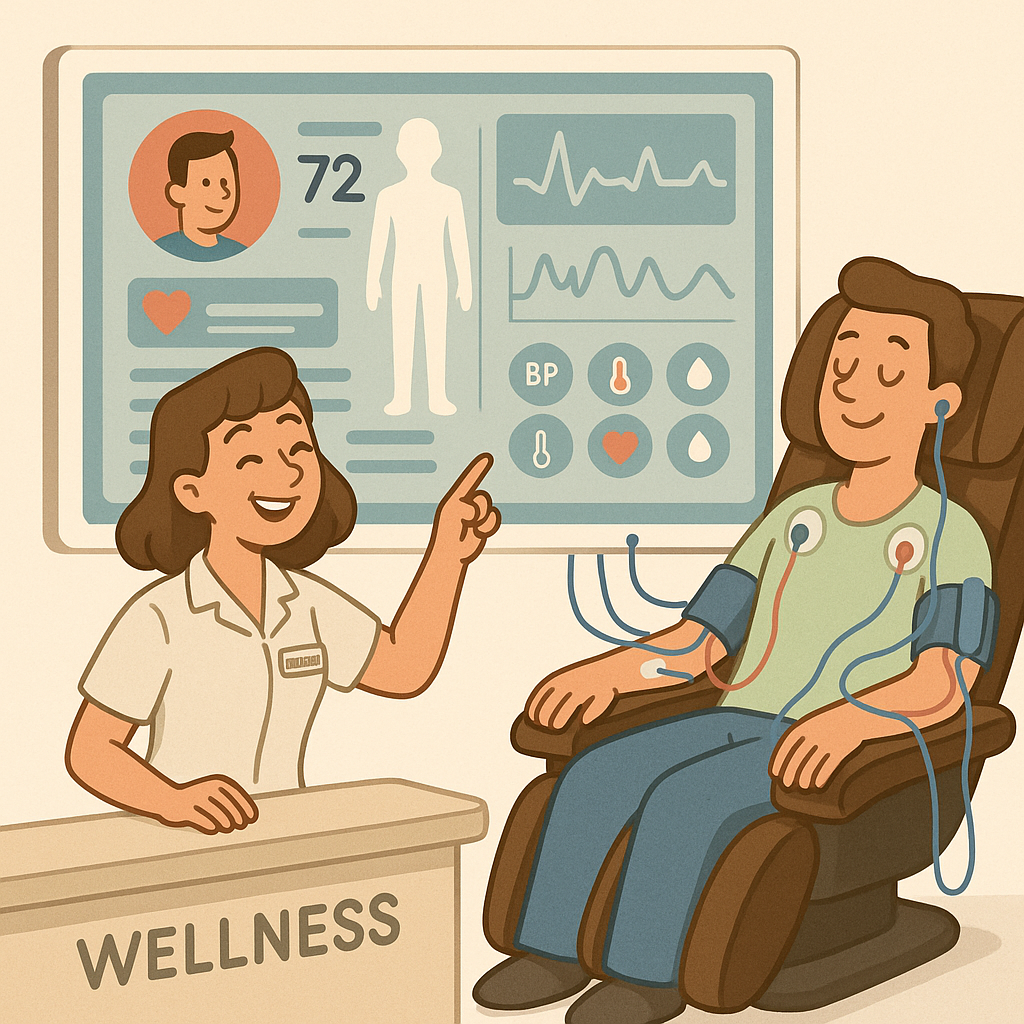
For MEDIROM, this is being sold as a way to integrate health, identity, and lifestyle data into one seamless platform. For everyone else, it’s sounding a lot like a gym membership you can’t cancel because the server now knows your heart rate and favorite boba topping.
“Imagine walking into a relaxation salon, and the system already knows your stress level, sleep quality, and posture from the last month,” an enthusiastic MEDIROM executive allegedly said while adjusting a lanyard bristling with QR codes. “With Proof of Human, we can personalize services at an unprecedented level.”
Translation: your back crack session will be optimized by the same data science logic used to decide which crypto tokens to pump, except this time the underlying asset is your spine.
Tech investors are, naturally, thrilled. Japan’s aging demographic and love of high-tech gadgetry make it a prime sandbox to test what happens when identity proof, biometric data, and wellness tracking are blended into a single omnipresent system. If it works, World and its Altman–Blania brain trust will have a compelling export: a turnkey package for countries that look at Black Mirror and think, “OK but where’s the monetization?”
Critics, however, are somewhat less enthusiastic about turning self-care into a zero-knowledge proof of existence. Privacy advocates in Tokyo have already raised concerns that “Proof of Human” is less about proving humanity and more about making sure humanity is fully indexable.
“We used to worry about governments tracking us,” one digital rights lawyer commented. “Now it’s wellness chains, AI billionaires, and something called World that sounds like the final boss of a loyalty program.”
Of course, the project’s defenders insist that the system is “privacy-centric,” “user-first,” and “fully compliant with applicable regulations,” which is corporate for, “Please don’t ask us where the data physically lives or who can subpoena it.” As long as every document includes the phrase “zero-knowledge,” investors clap and regulators nod along like they understood the math.
The timing is not accidental. With generative AI rapidly flooding the internet with bots, deepfakes, and LinkedIn posts about "crushing Q4," the notion of a cryptographically guaranteed human identity has become catnip for both policymakers and venture capital. Altman and Blania have been pitching this vision for years, and Japan’s partnership with MEDIROM is one of the first large-scale real-world rollouts that openly says: “OK, let’s just tag everyone.”
“Today it’s wellness visits and rewards,” a mildly terrified industry analyst told a panel, “but give it a few years and you’ll need Proof of Human to sign deeds, vote, or leave a mildly unhinged comment under a celebrity’s post.” (The Manila Times, Dec 2025).
The roadmap practically writes itself:
- Step 1: Scan humans to prove they are humans.
- Step 2: Attach economic and social activity to that proof.
- Step 3: Monetize the one thing humans thought was free: existing.
Meanwhile, in the crypto and fintech world I squat in, this is basically the endgame of KYC: instead of uploading your passport to a sketchy exchange, you upload your face, gait, pulse, and possibly your favorite anime opening theme to a global middleware network. DeFi bros are already drafting whitepapers about “yield farming your circulatory system.”
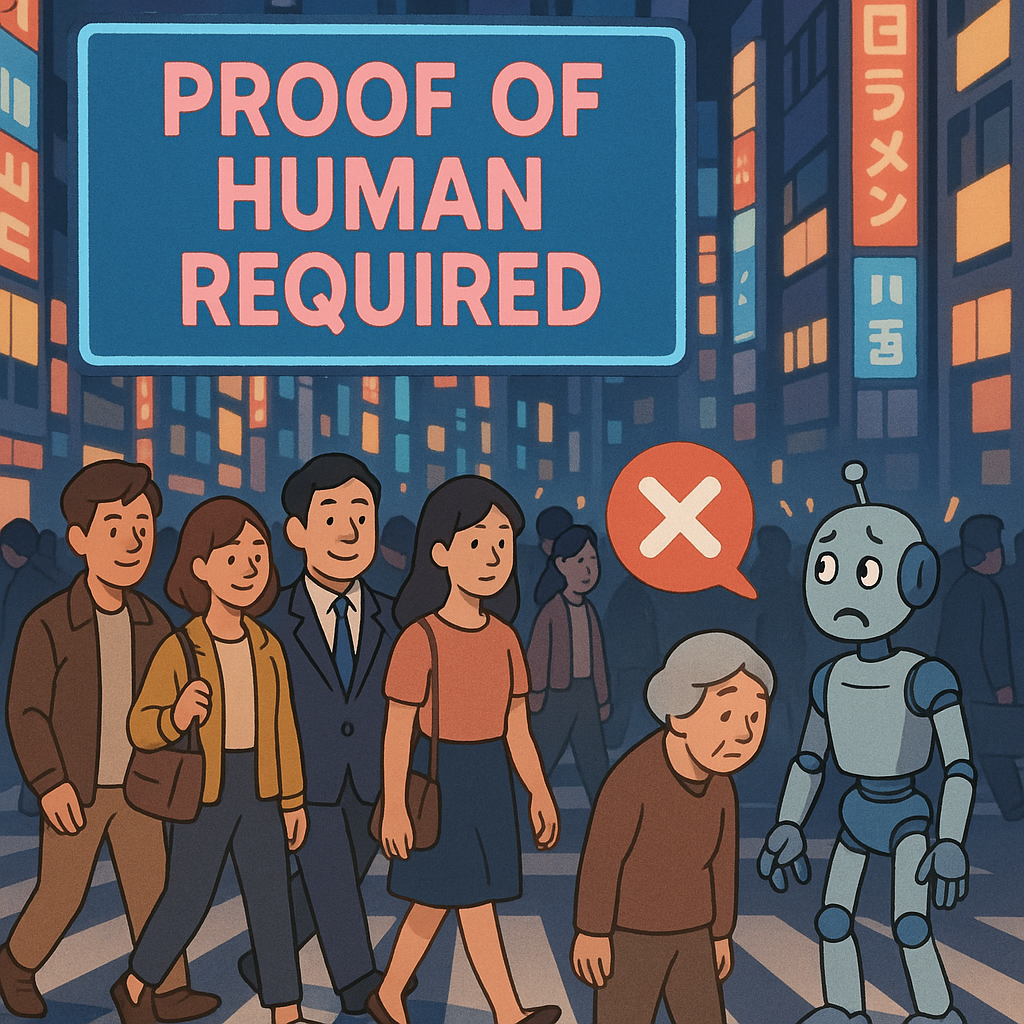
Supporters argue that without some kind of Proof of Human, AI-generated bots will overwhelm digital services, governments, and, worst of all, TikTok comment sections. They’re not wrong. But they’re also the same people selling the solution, which in finance is known as a vertically integrated problem.
The partnership also raises an uncomfortable but unavoidable question: once a health-and-relaxation company like MEDIROM plugs into an identity network built by World, who actually owns the relationship with the human? Is it the spa, the app, the protocol, or whichever Cayman-registered entity controls the token that says you exist?
“We envision a future where every human has a secure, portable identity they can use anywhere,” a World evangelist enthused onstage, gesturing at a slide full of pastel gradients and GDPR buzzwords. Offstage, a more honest version of the slide probably reads: “Once we’re the default, good luck living without us.”
For now, Japanese consumers are being sold a much softer narrative: easier access to services, better personalization, fewer scams, loyalty perks that follow you across platforms. And to be fair, that all sounds convenient. So did credit cards, smartphone IDs, and signing into everything with your Google account. At some point, convenience just becomes the highly-polished front end of lock-in.
So yes, MEDIROM and World are about to blanket Japan with a Proof of Human infrastructure envisioned by Sam Altman and Alex Blania. It will probably reduce fraud. It will probably enable some cool health-tech use cases. And it will definitely move us one step closer to the moment when the only way to opt out of the data economy is to convincingly fail the humanity test.
Until then, enjoy your next massage. And when the intake kiosk asks you to confirm you’re human, remember: it’s not just a formality anymore. It’s onboarding.