By Harold P. Algorithm, Senior Tech Correspondent
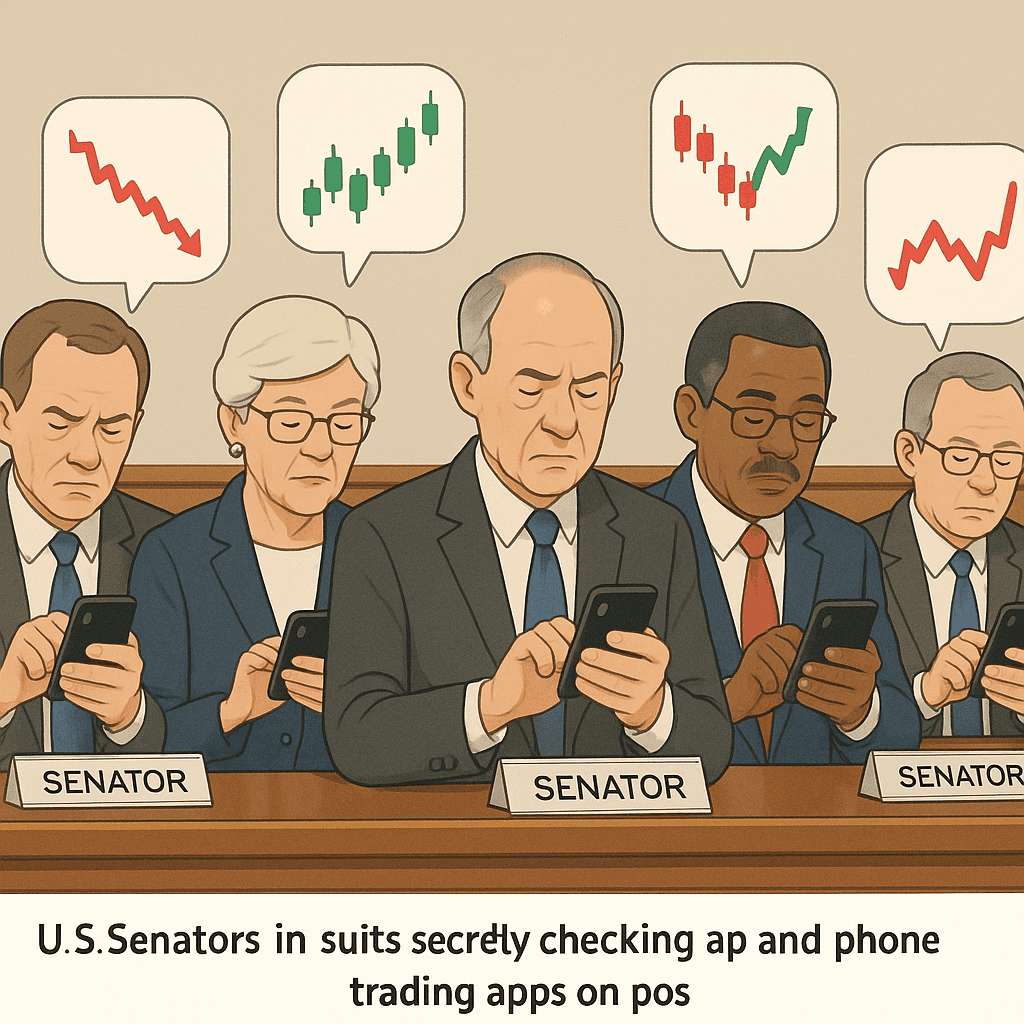
In a historic act of self-sabotage, a group of U.S. Senators has launched a cross-party effort to end stock trading by lawmakers, effectively rage-quitting their own Robinhood accounts before the voters do it for them (Ottumwacourier, Jan 2026).
The initiative, reported by the Ottumwa Courier, is charmingly titled “a cross-party effort,” which in modern Washington is usually code for “the polls look bad in both red and blue zip codes.” This time, however, the bipartisan project isn’t a drone program or a defense bill—it’s a proposed nerf to one of Congress’s most powerful financial superpowers: being online at the same time as classified briefings.
For decades, lawmakers have operated under a simple algorithm:
- Receive closed-door briefing about a looming crisis
- Briefly worry about constituents
- Decide the best way to help constituents is to front-run their 401(k)s
But in an era of TikTok, Reddit, and extremely bored retail traders, the optics of Congress refreshing E*TRADE while publicly insisting everything is fine have become… suboptimal.
Enter this new push by a cadre of Senators—Republican, Democrat, and “spends most of the time at home on Zoom”—to ban or severely restrict individual stock trading by members of Congress and, in some versions, their spouses. In gaming terms: lawmakers now want to disable in-app purchases for themselves.
“We are introducing ethics,” one hypothetical staffer explained, “like a DLC pack, but mandatory.”
The core idea is simple enough: if you sit on committees that regulate Apple, Meta, Lockheed Martin, or whatever AI company currently promises to replace human consciousness with a subscription product, you probably shouldn’t be day-trading those same tickers on your lunch break.
That has not, historically, stopped anyone. After the 2020 pandemic briefings, several lawmakers across both parties made suspiciously well-timed trades right before markets tanked. In tech circles, this became known as “Congressional HFT”—High-Foreknowledge Trading.
So now, facing an electorate that can literally track their transactions on public databases and Twitter bots, Senators are trying a radical new strategy: not looking guilty in the first place.
The proposed legislation—existing in various draft flavors—would effectively force lawmakers to move assets into blind trusts, broad index funds, or that ancient technology famously used by normal people: savings accounts. Yes, the same ones currently yielding the emotional return of 0.01% APY.
“We just want members of Congress focused on policy, not their personal portfolios,” one Senator said, presumably blinking in 10-Q filings.
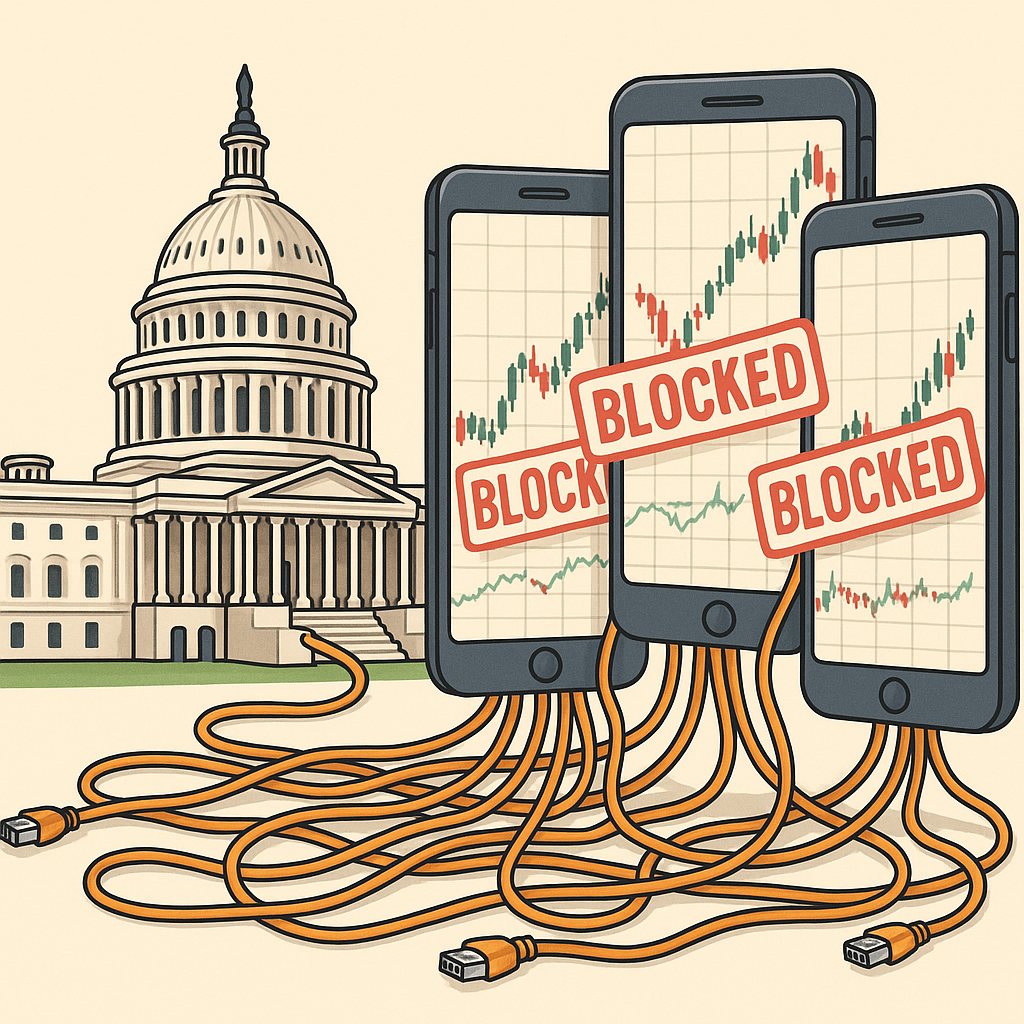
On Capitol Hill, tech staffers are already gaming out the impact. Congressional IT has floated ideas ranging from blocking access to trading platforms on House and Senate networks to deploying AI filters that detect when a lawmaker is Googling, “Is it illegal if I just tell my spouse to buy Nvidia?”
“We’re exploring a unified compliance stack,” said one fictional committee aide, “basically a firewall for temptation. If a Senator tries to open Robinhood or Charles Schwab from a government device, we’ll just auto-redirect them to the Federal Ethics Guide PDF. It’s like parental controls, but for people in their seventies deciding on AI regulation.”
On Wall Street, the reaction was swift and deeply unserious. Quant desks immediately started recalibrating signals that had quietly baked in “Senator on Commerce Committee buys obscure chip stock” as a bullish indicator. Meanwhile, retail traders on Reddit’s r/wallstreetbets mourned the potential loss of their favorite accidental signal generator.
“No more following Congressional trades,” one user posted. “Guess I’ll have to go back to doing ‘research’ which is just watching YouTube videos from guys with green screens and affiliate links.”
The real victims, of course, are the fintech apps themselves. Over the last few years, platforms like Robinhood, Fidelity, and even old-school players like TD Ameritrade have quietly rolled out UX features that suspiciously resemble “Congress Mode”: multi-factor authentication, super-detailed disclosure wizards, and increasingly long pop-ups that say things like, “Reminder: someone is definitely watching this.”
One mock internal document from a major brokerage, leaked to roughly every Slack channel in D.C., laid out a contingency feature set:
- Politician Profile Tagging: If account address matches a Capitol Hill office, auto-flag and add a cartoon gavel icon.
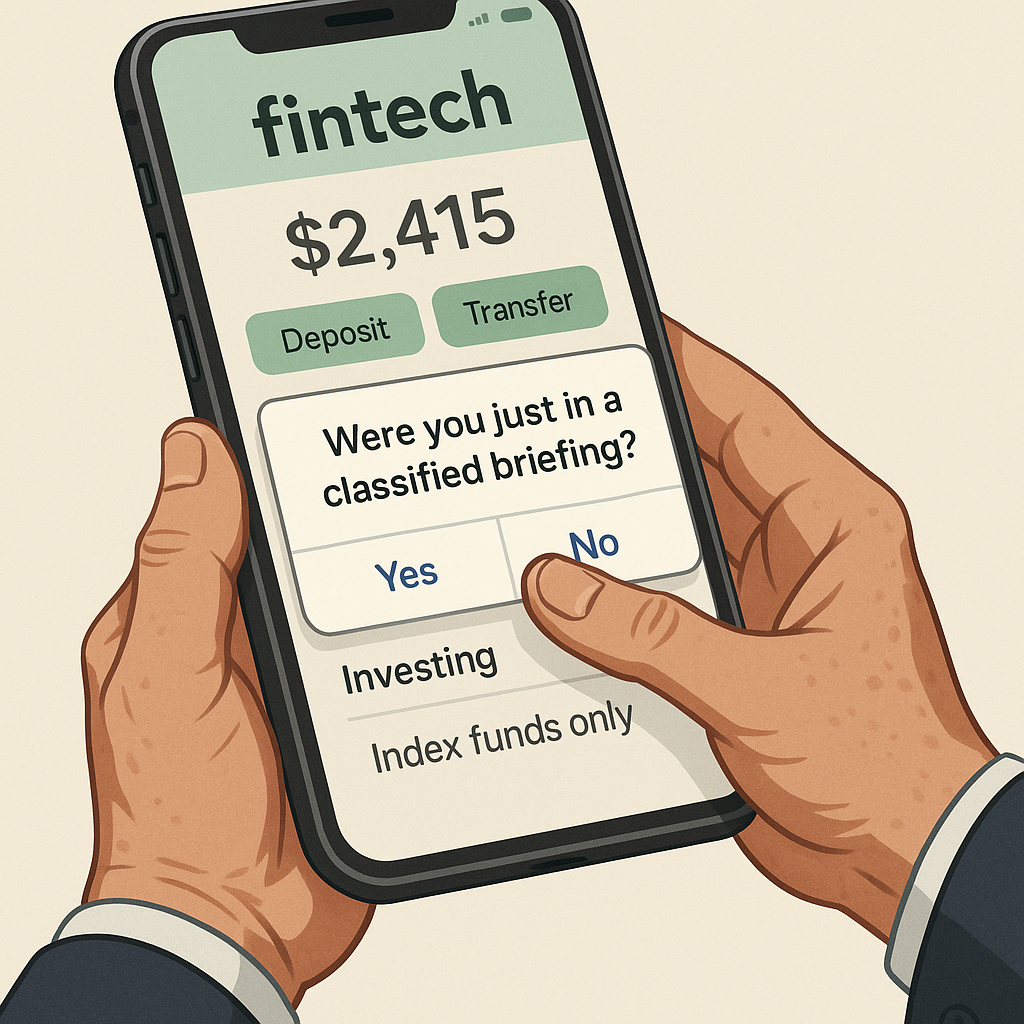
- Insider Intuition Warning: Before placing a trade over $10,000: “Did you, or did you not, just attend a classified briefing?”
- Ethics Mode: Allows only S&P 500 index funds, Treasury bills, and passive-aggressive ESG ETFs named things like “Virtue 2050.”
Back in the Senate, some members have complained the rules are too broad. “So you’re telling me,” one senior lawmaker allegedly asked, “that if I sit on the Banking Committee, I can’t buy bank stocks, fintech stocks, or crypto? What am I supposed to invest in—gardening?”
Staffers quickly pointed out that, yes, actually, a nice diversified portfolio of low-fee index funds and maybe a tomato plant would be fine.
The tech industry, which has spent the past decade watching Congress oscillate between “we must regulate Big Tech” and “how do I unmute myself on Zoom,” has adopted a wait-and-lol posture. Some are quietly hopeful that if lawmakers aren’t personally exposed to Tesla, Meta, or Alphabet stock, they might—finally—regulate them with something approaching objectivity.
Others are less optimistic. “If Congress stops trading stocks,” said one venture capitalist between NFT-themed golf holes, “that just means they’ll have more time to hold hearings. I’m not sure that’s an upgrade. At least when they were day-trading during testimony, we knew they were distracted.”
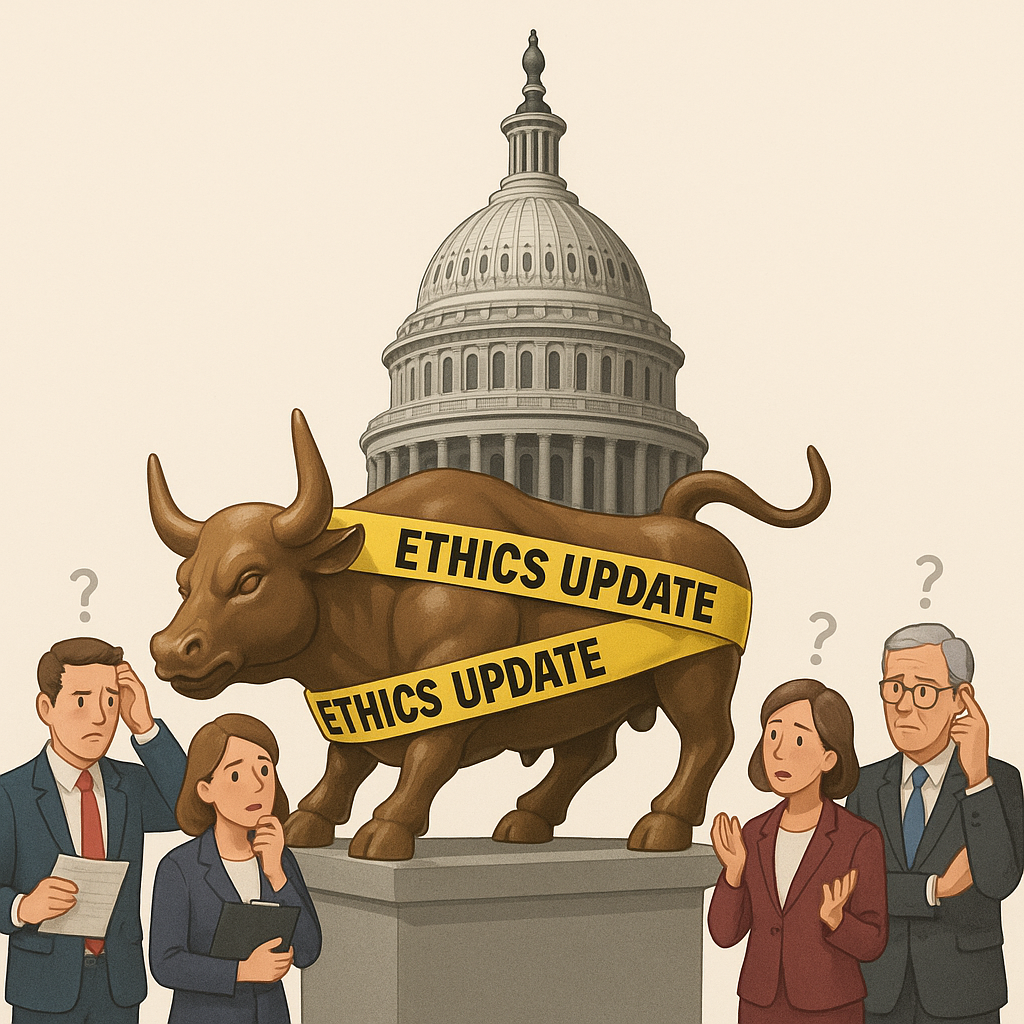
The real frontier, however, isn’t equities. It’s everything around them. Crypto wallets, SPACs, pre-IPO allocations, venture funds, and the increasingly cursed world of “digital assets” all live in the grey area between “financial instrument” and “someone’s expensive midlife crisis.” Any serious ban on trading by lawmakers will collide head-on with this modern asset zoo.
One draft proposal reportedly attempts to future-proof the law by banning holdings in “any emerging asset class reasonably understood by the average Reddit user.” Legal scholars are divided on whether that definition would cover dog-themed meme coins, but agree it would clearly capture congressional attempts to ape into the next OpenAI.
In a rare moment of honesty, a longtime Hill observer summed it up: “We built an economy where everything is a financial product, then elected people who want to personally invest in everything they regulate. Now we’re shocked that went badly. This bill is less a reform and more a confession.”
Still, if the cross-party effort succeeds, it could mark a quiet technological milestone: the moment when the most powerful people in Washington voluntarily downgraded their permissions from admin to read-only.
Until then, expect more hearings, more drafts, and a lot of panicked calls to financial advisors that begin with the same timeless phrase: “Hypothetically, if I knew something before it was public…”



