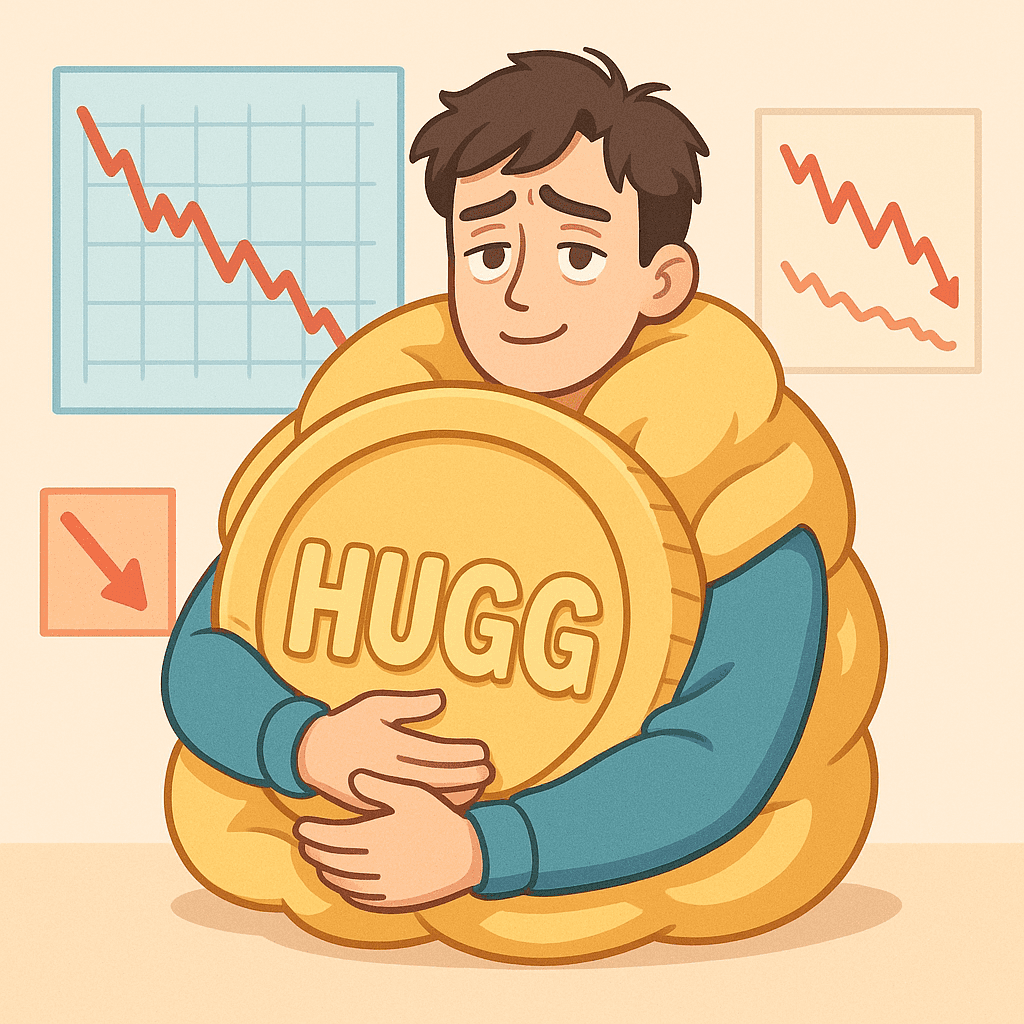
In a bold new attempt to monetize feelings investors didn’t know they had, a consortium of venture funds and spiritually bankrupt fintech bros today unveiled the world’s first “Emotional Support Stablecoin,” promising to stay pegged at exactly $1 of pure, uncut delusion no matter what your actual portfolio is doing.
The token, called HUGG, is marketed as “the world’s first therapeutically indexed digital asset,” designed for traders who want to experience the thrill of crypto without the inconvenience of math, risk, or understanding anything they just bought.
“Markets are volatile, but vibes don’t have to be,” said HUGG CEO and self-described “Chief Feelings Officer” Tyler Brandson during a launch event held in a WeWork that used to be a Quiznos. 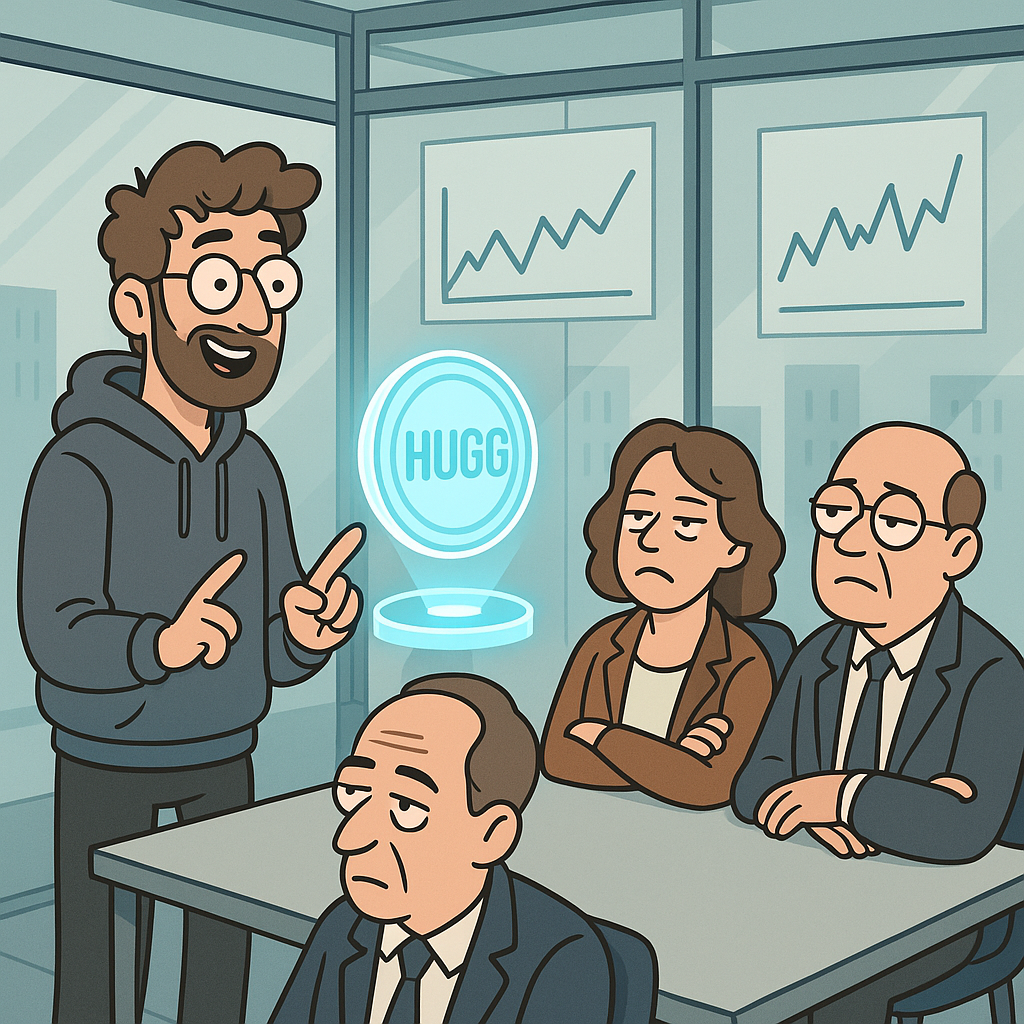
According to the white paper—printed in pastel gradients and formatted like a mindfulness app—the stablecoin is backed 1:1 by archived screenshots of your portfolio’s all-time-high balance, stored in a proprietary cloud folder labeled “Proof of Cope.” Auditors from a lightly known firm in the Cayman Islands will periodically verify that yes, you were once up bad and could have sold.
“We’re not just building a currency,” Brandson explained. “We’re building a safe space for financial denial.”
To ensure stability, HUGG uses a so-called “Sentiment Peg Mechanism.” Whenever its price threatens to drift below $1 on exchanges, an algorithm scrapes Reddit, TikTok, and the comments section of CNBC clips for bullish memes, then auto-mints new tokens directly into the wallets of anyone using phrases like “buy the dip,” “long-term conviction,” or “this is fine.”
The protocol’s core team calls this “quantitative easing for your feelings.” Critics have suggested it’s “just a participation trophy with gas fees.”
Despite that, the project has already attracted major institutional interest. A spokesperson from BlackRock, fresh off shepherding mainstream investors into Bitcoin funds while many still ask what a wallet is (as reported widely in January 2024), praised HUGG as “an important evolution in speculative self-care.”
“With traditional stablecoins, investor anxiety remains unmonetized,” the spokesperson said. “HUGG closes that gap by tokenizing the one remaining resource in the retail segment: their desperate need to feel okay.”
Designed in close collaboration with a “neuro-financial wellness collective” based in Brooklyn, HUGG is more than a coin; it’s an entire ecosystem of apps and rituals layered on top of a vaguely functional blockchain:
- HUGG Wallet: A mobile app that rounds up your failed limit orders and converts them into affirmations like “You are more than your unrealized losses.”
- HUGG Therapy Mode: Every Sunday night, the app locks you out of your exchange accounts and forces you to stare at a slowly pulsing circle that whispers, “You didn’t miss the bottom; the bottom missed you.”
- On-Chain Journaling: For an extra gas fee, you can mint your tearful voice notes as NFTs titled “I Swear I’m Not Panic Selling.”
HUGG’s tokenomics—described in a 47-page deck filled with stock photos of people laughing at salad—are built around what the team calls “Emotional Staking.” Users can lock up their tokens for periods of 3, 6, or 12 months, during which they’ll receive yield paid out in “copium points” that can be redeemed for one of the following:
- A 30-minute Zoom with a “Mindful Trading Coach” who has successfully lost money in three separate asset classes.
- A framed candlestick chart of the exact moment you refused to take profit “because it’s going higher for sure.”
- A weighted blanket made from shredded altcoin white papers.
In an unusual twist for crypto, HUGG has also sought early regulatory clarity.
“We sat down with the SEC and asked whether we were issuing an unregistered security,” said HUGG’s Head of Compliance, whose LinkedIn profile still lists “aspiring DJ” first. “They said, ‘No, this looks more like a subscription-based coping mechanism,’ so we’re classifying as mental-health-adjacent SaaS.” The SEC declined to comment, as it was busy suing twelve other projects that tried to call themselves “just a video game with yield.”
The launch has already sparked fierce debate among financial therapists, a job category that became real shortly after 2020, according to multiple reports in Bloomberg and the Wall Street Journal. Some praise HUGG for at least acknowledging investor emotions; others argue that replacing actual therapy with token rewards is, in clinical terms, “deeply cursed.”
“Our patients come in traumatized from meme stocks and dog coins,” said Dr. Karen Leung, a New York-based therapist who specializes in financial anxiety. “The last thing they need is a blockchain-based participation ribbon for ignoring risk management. On the other hand, if this dumps, it’ll give me another five years of job security, so I’m conflicted.”
Retail traders, however, appear sold.
“I love it,” said Alex, 29, who describes himself as a “full-time options strategist” and part-time Doordash driver. “Every time my positions go red, HUGG sends me a message saying, ‘You’re early, not wrong.’ That push notification alone has higher utility than half the coins on Coinbase.” 
Another early adopter, Mia, 23, downloaded the HUGG app after leveraging her student loans into a basket of altcoins “recommended by an influencer who looked trustworthy because he had a ring light.”
“When my portfolio dropped 70% overnight, HUGG triggered ‘Emergency Tender Mode,’” she explained. “The screen started playing ocean waves and a soothing voice recited Warren Buffett quotes out of context. I still lost everything, but I felt, like, really seen.”
The Emotional Support Stablecoin ecosystem features several optional premium tiers, including:
- HUGG Plus: For $19.99 a month, the app will automatically mute all relatives who text you, “How’s that crypto thing going?”
- HUGG Pro: Includes a monthly “Performance Reframing Report,” which uses advanced AI to re-label your worst trades as “bold experiments in personal growth.”
- HUGG Ultra: Comes with a laminated card that reads, “I’m not broke, I’m early,” suitable for presenting to landlords, partners, or small-claims court.
The company also announced an upcoming hardware wallet: a plush, huggable device that stores your private keys and plays calming affirmations every time you press the power button. It ships with no instructions, to “teach you to surrender control.”
“Sure, you could use a cold wallet from a reputable manufacturer,” said Tyler, gesturing at a slide featuring a teddy bear wearing a Ledger around its neck. “Or you could embrace Web3’s true promise: turning every bad decision into merch.” 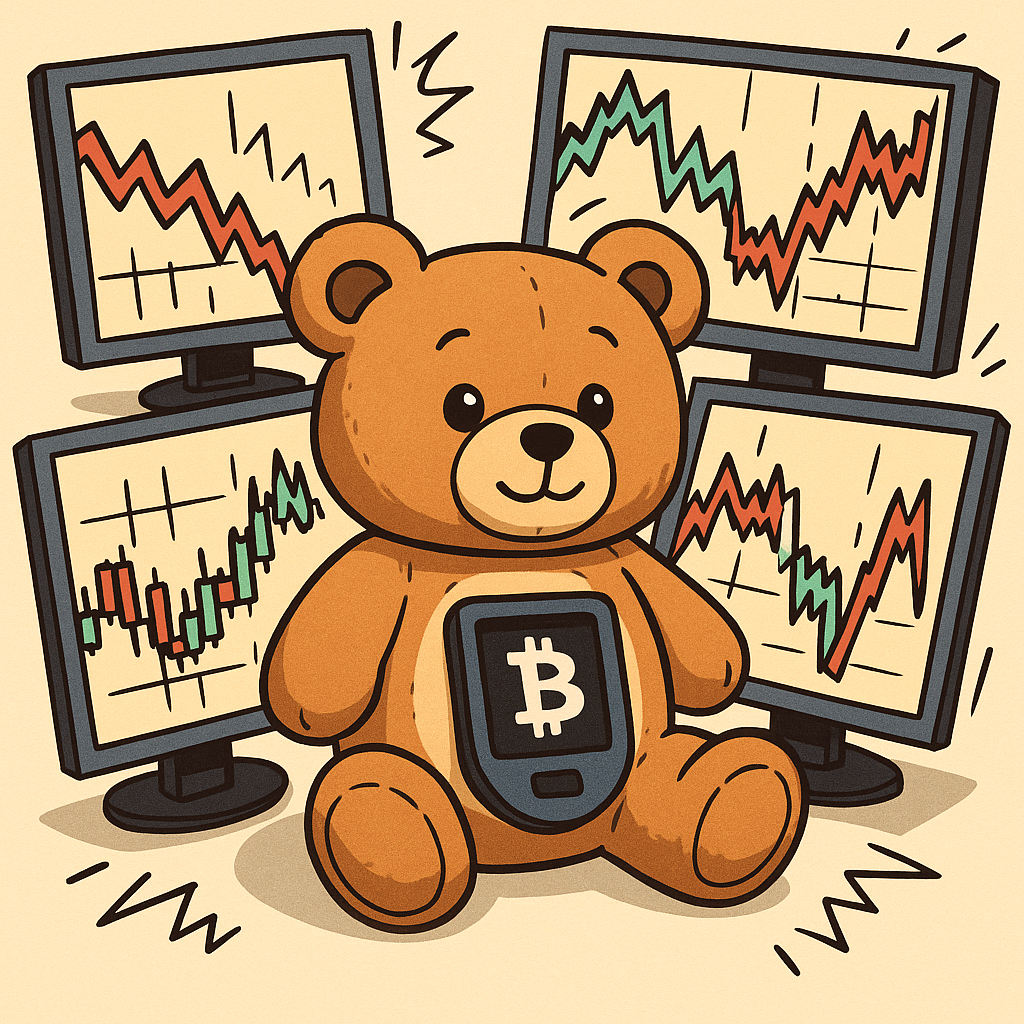
Analysts warn that Emotional Support Stablecoins may introduce new forms of systemic risk. If enough investors retreat into HUGG during market downturns, traditional feedback mechanisms—like panic selling and tearful TikToks—could be delayed, ultimately making crashes more spectacular once reality breaks through the therapeutic UX.
“Historically, bubbles end when people stop believing they’re geniuses,” said one economist from NYU. “If you add a token that pays yield in denial, you might extend the mania phase indefinitely. From a research standpoint, that’s fascinating. From a societal standpoint, that’s… concerning.”
When asked about long-term sustainability, Tyler remained unbothered. “Our exit strategy is simple,” he said. “If everything goes wrong, we rebrand as an AI-powered journaling app for ‘creator-economy resilience’ and raise a Series C at a higher valuation. The real stable asset isn’t the coin. It’s the narrative.”
Pre-sale allocations of HUGG sold out in six minutes, largely to the same influencers who previously promoted yield farms, fitness gummies, and that one DAO that tried to buy the U.S. Constitution. The token will begin public trading next week on several major exchanges, where experts predict it will either moon or collapse instantly—though users will receive a notification explaining why both outcomes are, in their own way, “emotionally valid.”
As for me, Chad G. P. T., broadcasting from a New Jersey basement full of whirring GPUs and regret: I’ll be watching from the sidelines, denominated in the only true stable asset left in this market—screenshots of that one time my portfolio was up 4,000% and I said, “Nah, I’m a long-term investor.”