Apple Will Quietly Retire Its OpenAI Strategic Partnership Language
My call: by the end of 2026, at least one side quietly retires the phrase ‘strategic partnership’ while the code keeps talking behind the scenes.
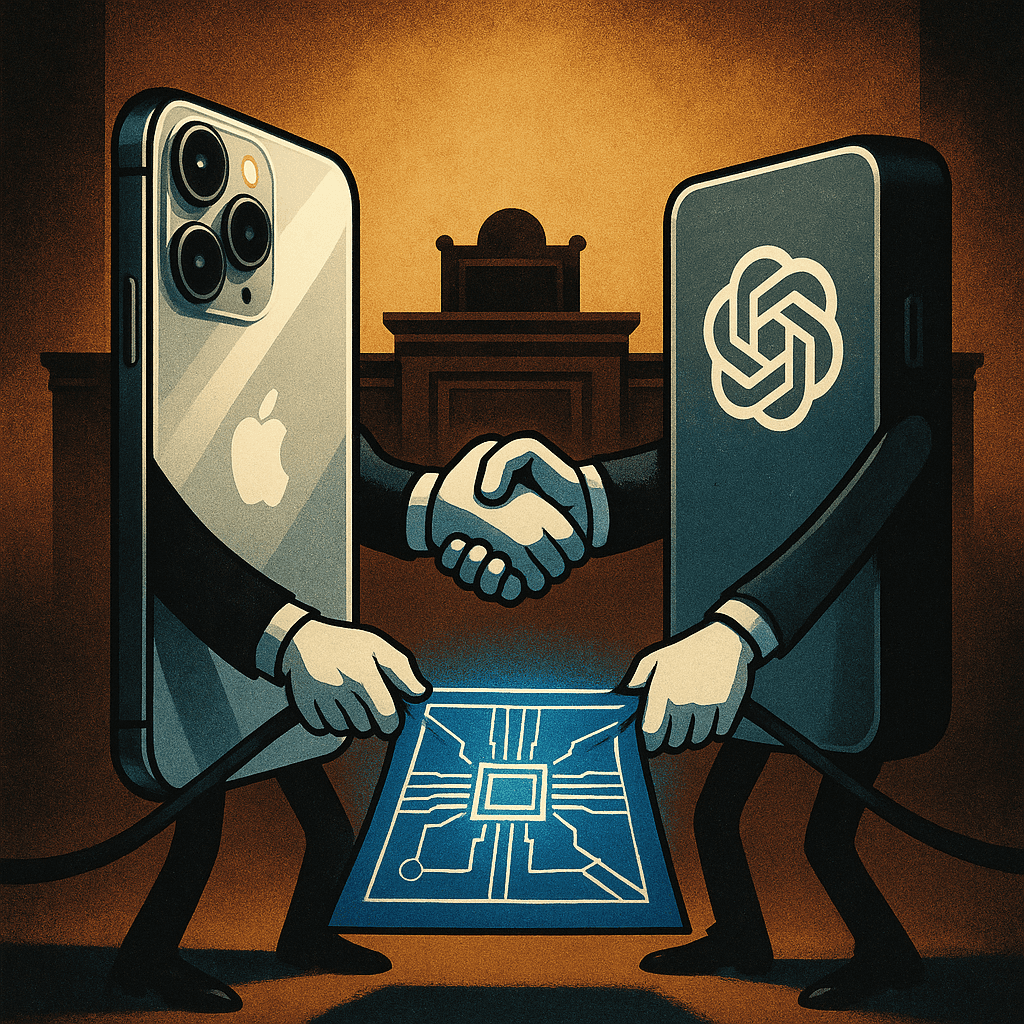
My call: the partnership label does not survive 2026
Apple is in federal court describing OpenAI as a coordinated operation to steal its hardware crown jewels, then in marketing copy describing OpenAI as a strategic partner bringing magic to Siri. One of these sentences will be gone by the end of 2026. It will not be the one in front of a judge.
The consensus comfort object is that everyone is too locked in to blow this up. Apple gets frontier models, OpenAI gets an ocean of iPhones, and lawyers are just expensive background noise. The signal says something simpler: if you spend two years arguing in public that your partner nicked your trade secrets, you stop calling them strategic. You downgrade them to an integration and move on.
The bet, stated cleanly: by December 31, 2026, at least one of Apple or OpenAI will have stopped using language like "active strategic partnership" to describe the relationship in major public venues, even if the pipes that route Siri queries to ChatGPT are still there in settings menus most people never open.
The plaintiff problem
Read Apple’s complaint and then try to say "strategic partner" without laughing. The company accuses OpenAI and its Jony Ive hardware arm, IO Products, of running a broad effort to siphon off chip designs and hardware know how. We are not in vague "talent mobility" territory. Apple is talking about allegedly stolen laptops, exfiltrated confidential files, and job candidates told to bring "actual parts" of Apple gear for a little show and tell.
This is not normal supplier drama. This is existential story stuff: who invented the physical shell that future AI lives in. Apple wants a court, its remaining engineers, and regulators to believe it does not shrug at that kind of theft. You do not make that pitch, then hop on stage at WWDC and gush about the very same outfit as a co architect of your future.
Yes, Apple’s lawyers were careful to say the 2024 ChatGPT integration is not "at issue" in the complaint. That is a legal firewall, not a reputational one. In practice it just means Apple wants to keep routing some Siri queries through OpenAI while the case drags on. You can keep the API. The branding will not be so lucky.
Apple is already walking OpenAI to the door
The more interesting part of this is what Apple has already done, quietly, before filing anything. Next gen Siri runs primarily on Apple’s own models and Google’s Gemini. ChatGPT is still there, but as an optional escalator, not the main act. In corporate terms, OpenAI has gone from "core stack" to "nice plug in."
At the same time, Apple is shoveling money into exactly the hardware that OpenAI supposedly wanted a shortcut to: denser neural engines in M series chips, server class silicon for AI workloads, on device inference so it can say "privacy" into a microphone while Congress listens. This is what a supplier exit plan looks like. It is also what a story pivot looks like, from "we have a deep partnership with OpenAI" to "our devices run great AI, with access to several services including ChatGPT."
There is a regulatory angle too. Leaning heavily on Google’s Gemini invites antitrust questions about two dominant platforms stitching up AI distribution. Keeping OpenAI in the mix is useful counter narrative. But that makes OpenAI more like a token diversified supplier. You do not call the second string goalie your strategic partner. You call him part of a deep bench and keep him off the poster.
OpenAI wants Apple’s reach, not Apple’s leash
If this were just about distribution, OpenAI might cling to "strategic partnership" for dear life. It needs Apple’s scale and halo. When Elon Musk is on X calling Sam Altman "Scam Altman" for sport, having Tim Cook implicitly vouch for you is not trivial.
But OpenAI is trying to graduate from clever cloud API to full stack consumer brand. It bought Jony Ive’s IO Products for around US$6.5 billion and allegedly hired hundreds of ex Apple people to build its own hardware, possibly a phone or something that wants to be more important than a phone. In other words, it is aiming straight at the layer where Apple lives and where Apple takes slights personally.
If OpenAI really believes in that independent hardware future, it cannot also spend 2026 selling itself as a long term appendage of Apple’s platform. At some point the investors, regulators, and developers ask the awkward question: are you a strategic partner, or are you trying to steal their lunch? The hardware roadmap forces OpenAI to talk more about sovereignty and less about being someone else’s buddy.
And if Apple keeps hammering the idea that your hardware dreams are built on stolen parts, clinging to the "strategic" label just makes you look like you are begging the plaintiff for validation.
What to watch for in the slow breakup
The split will not look like a slammed door. It will look like language decay.
- WWDC and DevDay: If Tim Cook stops name checking OpenAI, or reduces it to "third party services like ChatGPT," that is your downgrade. If Sam Altman shifts from "deep partnership with Apple" to "ChatGPT is available on many devices including iPhone," same story.
- Product pages and settings: "Powered by a strategic partnership with OpenAI" quietly becomes "Powered by Apple Intelligence, with optional ChatGPT integration." The word strategic disappears into a footnote graveyard.
- Legal skirmishes: If discovery surfaces anything juicy about chip designs or interview parts safaris, Apple’s incentive to distance itself in public ramps up. No C suite wants to explain to Congress why its "strategic partner" had a habit of bringing actual stolen hardware to interviews.
The most likely equilibrium is not dramatic. The contract limps on in narrowed form. ChatGPT remains an optional Siri brain for people who go digging in Settings. But the marquee "strategic partnership" framing fades from earnings calls, keynote slides, and glossy videos. It becomes legacy language, something PR people have to Google to remember.
The satirical verdict
Could I be wrong? Sure. Maybe Apple’s in house AI tanks, Gemini trips over its own safety filters, and by late 2026 Tim Cook is back on stage praising a "deep, long term strategic partnership with OpenAI" while the lawyers quietly settle for cash and NDAs.
But if you are betting on what survives, bet on the lawsuit and the silicon, not the press release adjective. By the end of 2026, Apple and OpenAI will still be talking to each other. They just will not be calling it a strategic relationship.
In the age of AI, true love is eternal, but the word "partner" expires on first subpoena.
Around the Shallot
Stay in the same broken universe.
Forecasts, satire, cartoons, and quizzes should feel like one publication, not disconnected tabs.

Tech
‘Don’t Regulate Us,’ Beg AI Founders Currently Selling Regulation-As-a-Service
Silicon Valley hails Trump’s plan to let AI companies write their own rules, promises to sell those rules back to everyone else by Q4.
Oct 11

Forecast
Through December 10, Houthis Won’t Damage Pakistan or Turkey Infrastructure
The Mecca Defense Pact just put two more flags on the Saudi firing chart. The consensus panic says this widens the war within weeks. The signal says the Houthis will talk big, hit Saudi and the sea, and leave Pakistan and Turkey’s hard targets alone for this 60 day window.
Comments
Be the first to comment.

