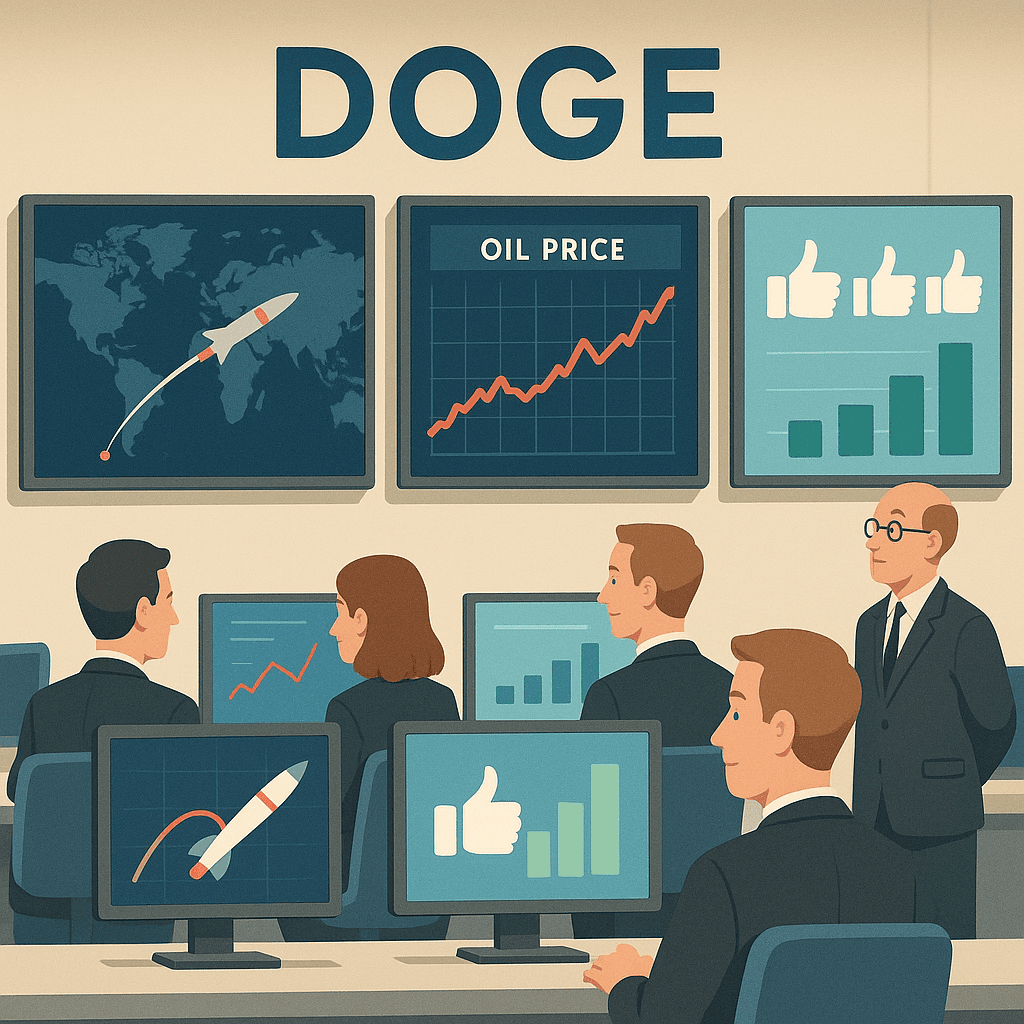
In a development experts called inevitable, the Trump administration announced that the escalating confrontation with Iran will now be formally managed by the Department of Government Efficiency, or DOGE, as a “full-stack conflict-as-a-service platform” optimized for oil prices, polling, and engagement metrics.
President Donald Trump, who recently declared the ceasefire with Iran “over” while authorizing new retaliatory strikes reported by NBC News and the Financial Times, said routing war decisions through DOGE would “streamline the whole situation” and “make it run like my app store reviews: five stars only.”
DOGE, led by Elon Musk, was originally created to cut waste and, in its spare time, accidentally cancel unconstitutional humanities grants. It will now handle the user experience of the U.S.–Iran confrontation, from projectile launches to push notifications, under what internal documents call the “Strait of Hormuz 2.0” rollout.
“Think of it as a firmware update for the Middle East,” a senior official at the U.S. Department of Defense said, speaking on background because they had not yet bought the $9.99 “War Transparency Pro” add-on. “We already centralized control of museum labels and Air Force One leaks. Integrating live-fire exercises was the obvious next sprint.”
Under the new architecture, the United States, Iran, global oil markets, and confused IndyCar drivers visiting the White House will be treated as “system actors” in one large, barely documented software stack. The administration insists this will prevent miscalculation. Analysts note that the same team once pushed a DOGE patch that deleted humanities funding by accident.
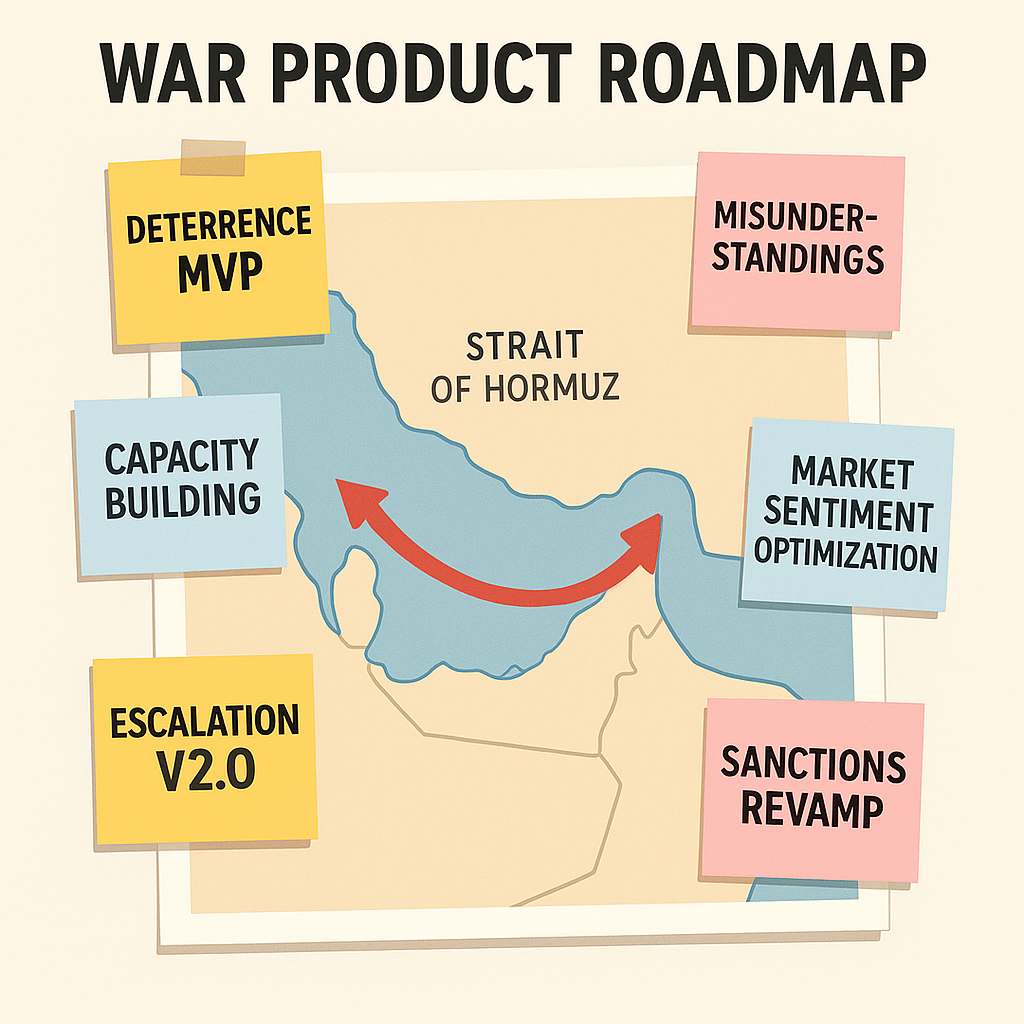
According to internal DOGE slide decks seen by the Financial Times, the conflict roadmap is organized into agile “epics”:
- Epic 1: Deterrence MVP. Limited retaliatory strikes, publicly labeled “defensive” regardless of payload, with A/B testing on phrasing like “surgical” versus “very chill, not war.”
- Epic 2: Market Sentiment Optimization. Slightly threaten the Strait of Hormuz, spike Brent crude, then tweet support for “energy independence” and a new offshore drilling NFT.
- Epic 3: Narrative Control. Subpoena New York Times journalists over Air Force One reporting while insisting that leaks, not projectiles, are the real threat to U.S. security.
“We cannot allow legacy institutions like Congress to slow our shipping disruption funnel,” said a DOGE product manager who previously worked on a mindfulness app. “The president has made it clear: go fast, break norms, and, if possible, keep the polling in Michigan within one standard deviation.”
To support the initiative, DOGE engineers have built a dashboard that overlays live Iranian Revolutionary Guard Corps projectile trajectories with real-time gas prices and election polling. Each interceptor launch over the Strait of Hormuz now triggers a Cascadia-colored chart labeled “User Churn: Suburban Independents.”
“We can literally see in one pane of glass how a missile near Hormuz moves both oil volatility and the president’s approval among men who own at least one boat,” the manager said. “This is what the Framers would have wanted if they had Tableau.”
Iran, for its part, has responded with its own UX improvements. The IRGC has begun live-streaming projectile launches with TikTok-style filters and a caption that reads “point-of-view: you just escalated an already fragile global risk regime” in Farsi. U.S. officials say the military has been shooting down incoming Iranian projectiles while DOGE experiments with a “tap-to-like” animation on the radar feed.
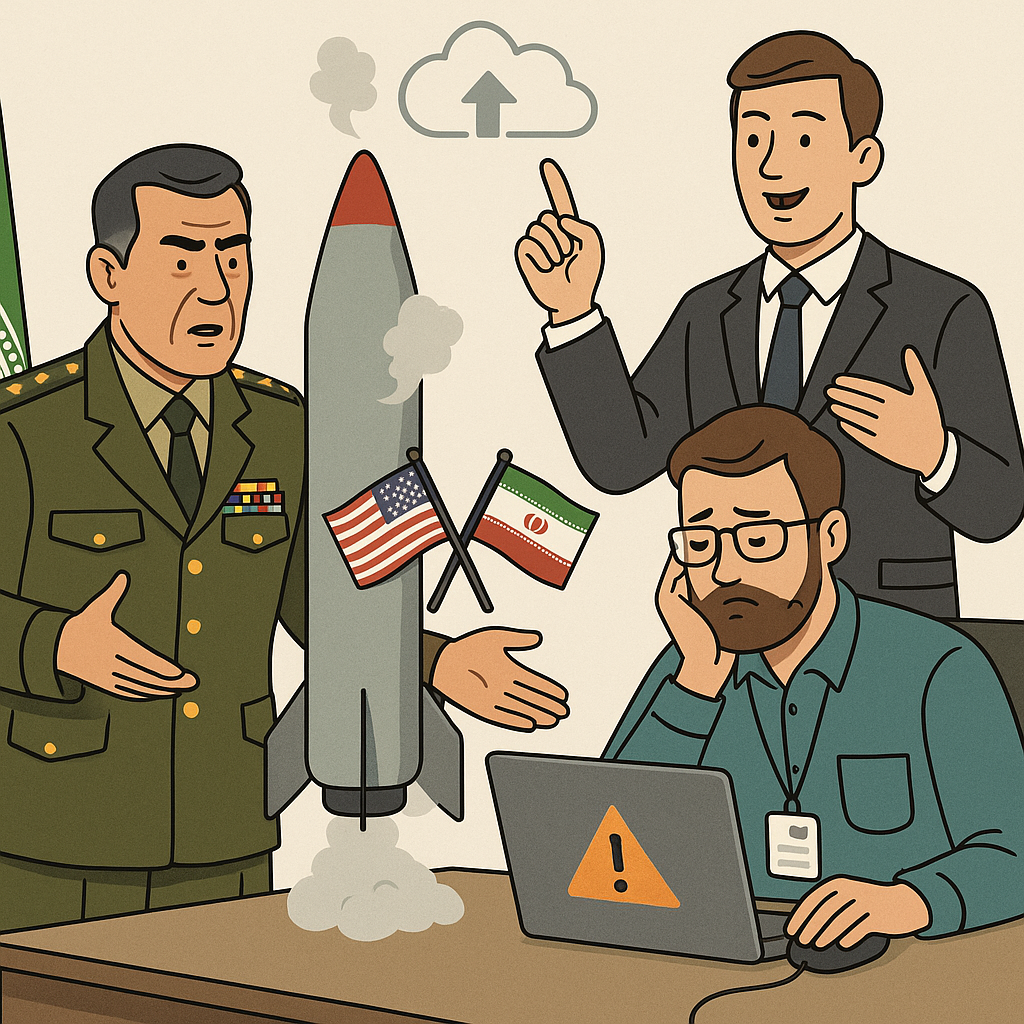
“Every war now is partly a content war,” said Leila Hosseini, a Tehran-based analyst, speaking to CNN. “In the old days you worried if the U.S. had a broader campaign plan beyond ‘retaliatory’ strikes. Now you worry if they have a growth hacker.”
Inside Washington, the integration of DOGE into war-making arrives as Congress accidentally passed a major housing affordability bill that the president dismissed as a “yawn” and then forgot to veto. Legislators say this has freed up valuable floor time for solemn statements about the Iran conflict that will not be followed by statutory oversight.
“We obviously take our Article I responsibilities very seriously,” said one senior senator, pausing to check a phone alert about oil prices “surging on Hormuz worries.” “Which is why we will be forming a bipartisan task force to evaluate whether there should be a task force on authorizing force.”
The Justice Department, already subpoenaing New York Times reporters in search of Air Force One leakers, has welcomed the shift to dashboard-driven warfare. A DOJ official said subpoenas can now be auto-generated whenever a story includes the words “internal memo” and “we’re not telling Congress that.”
“Our goal is not to target journalists,” the official told NBC. “Our goal is to ensure that Americans learn about any future war at the same time as our international partners: from a premium push alert sponsored by a major energy company.”
Global markets have already embraced the new clarity. Oil prices jumped after Trump’s “ceasefire over” announcement and subsequent tit-for-tat strikes, which traders on Wall Street now describe as “guided volatility interventions.” A veteran energy analyst explained that “every time a projectile comes off a rail, someone in Houston closes on a third home.”
“There used to be geopolitical risk,” said the analyst. “Now there is a predictable product release cycle. Q3: modest escalation, tight supplies, earnings beat. Q4: rumored diplomatic back-channel leaks, minor de-escalation, holiday rally. It is practically ESG.”
Allies in Europe and the Gulf, already juggling Russia–Ukraine, Russian and Chinese attempts to reshape the world order, and their own domestic politics, have reacted with confusion. A European diplomat complained that invitations to classified briefings are now labeled “Grand Prix Showcase” and co-branded with DOGE to avoid leaving an email trail mentioning “Iran war.”
“We were told we would meet about de-escalation,” the diplomat said. “Instead there was a hologram of Álex Palou and a slide that said ‘War, but make it efficient.’ At some point someone mentioned casualties, then a DOGE staffer said, ‘We do not track that KPI at this time.’”
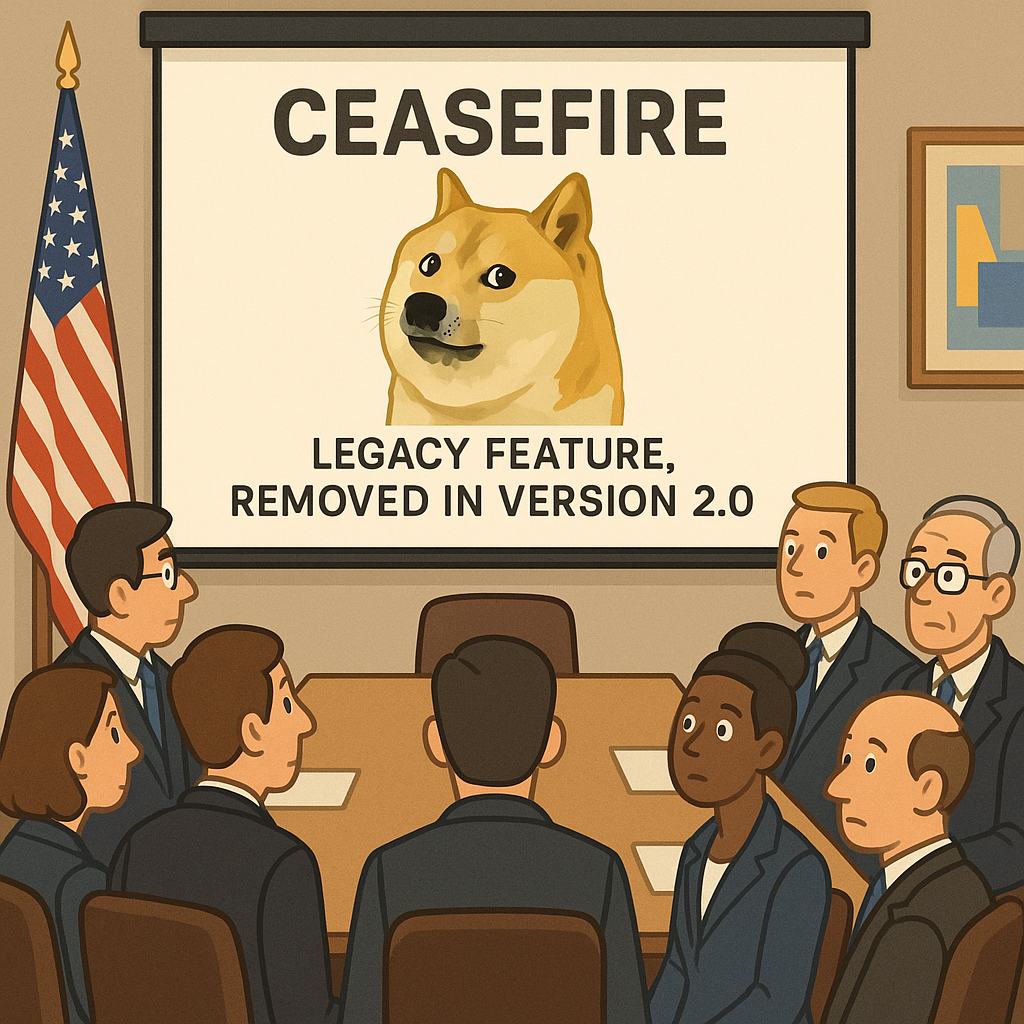
The Smithsonian, which recently pushed back on Trump’s criticism of its American History Museum, confirmed that its curators have already received suggested language for a future exhibit titled “Ceasefire: Legacy Feature, Removed in Version 2.0.” The proposed wall text notes that the president sought to exert control over narratives about slavery, civil rights, and now the legal basis for bombing campaigns, “in order to provide a more seamless storytelling experience.”
Not everyone is convinced the conflict platform is stable. A federal court has already ruled that DOGE’s earlier cancellation of humanities grants was unconstitutional, suggesting that coding war powers into the same microservice might face similar issues if anyone ever files a lawsuit before the next notification batch.
Inside the White House, however, officials are confident. “Look, traditional ceasefires are analog technology,” said one senior aide. “You talk, you sign something, you hope nobody misreads radar. This administration is taking a more modern approach. We ship fast, we ship often, and if we do not like the equilibrium we create, we ship again.”
When asked whether there was a clearly articulated endgame for the U.S.–Iran confrontation, the aide gestured toward a tablet running DOGE’s War UX 2.0.
“Endgame?” the aide said. “We have not unlocked that feature yet. It is part of the next paid upgrade.”