By 2026, A China Internet Giant Will Blame AI Chips For Margins
The consensus says Chinese internet giants will hide AI costs in the fine print. The signal says at least one will have to admit the chips ate their profits.
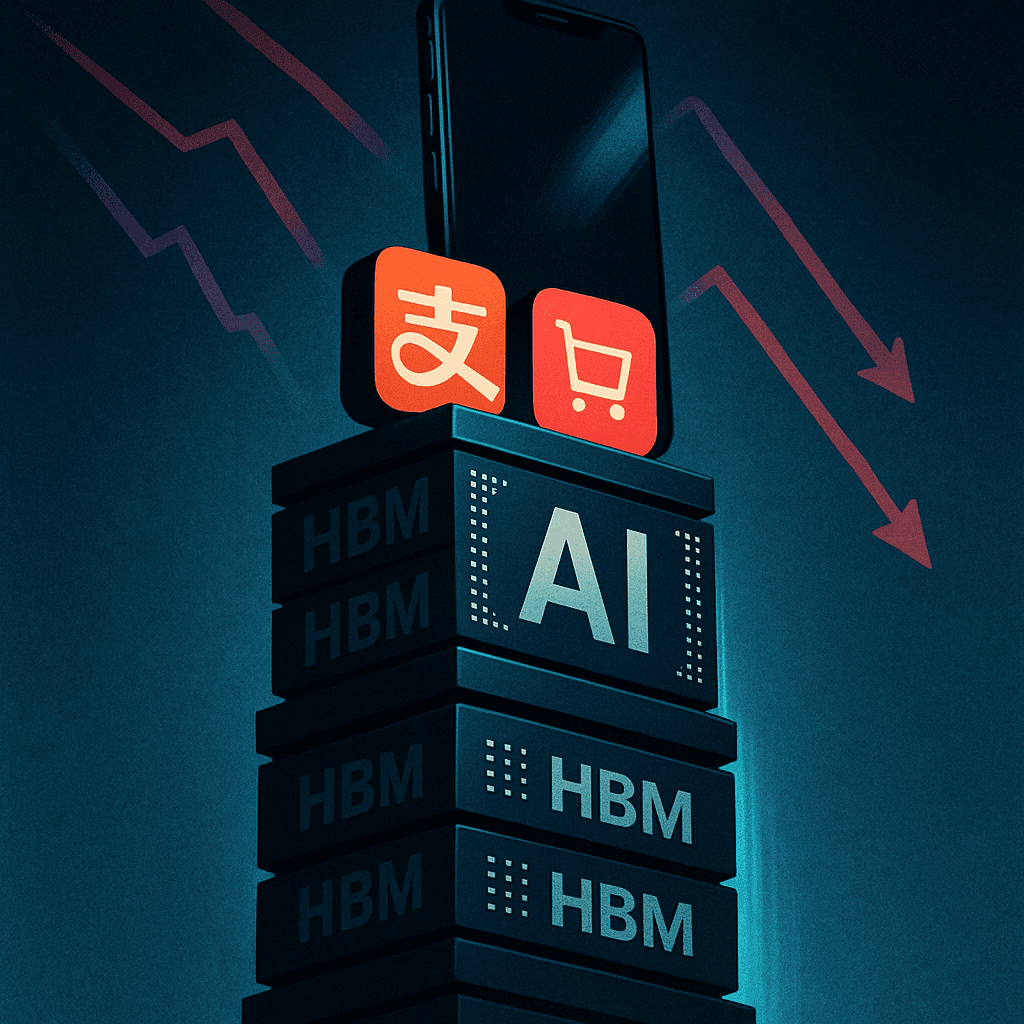
The quarter when “AI hero” turns into “chip victim”
Xiaomi just reported a 57 percent plunge in net income, then promised to spend more than 60 billion yuan on AI over three years and launched a 20 billion Hong Kong dollar buyback so investors would not panic. If you squint, this is the whole China consumer internet story in one earnings slide: pretend everything is AI, pretend everything is fine, hope nobody reads the cost lines too closely.
My call: by the end of 2026, at least one of Xiaomi, Kuaishou, or PDD will run out of euphemisms and openly blame AI infrastructure and chip or memory costs for a visible margin squeeze. Not “investments in technology”, not “platform enhancement”, but a clear, scorable confession that the GPUs and HBM ate their homework.
The consensus view is simple. These firms will keep blaming promotions, competition, and macro softness until the sun burns out. AI will stay a vibe, not a line item. The problem with that story is that the bills for “AI everywhere” are starting to show up before the fairy tale revenue does, and hardware vendors are already sending reminders like very expensive utility companies that have learned to quote in teraflops instead of kilowatt hours.
The call: at least one public AI cost confession by end 2026
Let us define the bet clearly so there is something to pin to the wall later.
Resolution bar: In an earnings release, MD&A, or earnings call transcript before December 31, 2026, at least one of Xiaomi, Kuaishou, or PDD must do all of the following:
- Report a deterioration of at least 1 percentage point in gross or operating margin, year on year or quarter on quarter, and
- Explicitly connect that squeeze to AI infrastructure, AI chips, or AI related memory or compute costs, not just generic “technology” or “component” spending.
Saying “higher memory prices hit our smartphone margins as we build out AI capabilities” qualifies. Saying “we are investing in technology to enhance our ecosystem” does not. Vibes do not count. GPUs do.
Why Xiaomi is the likeliest to crack first
Start with the obvious candidate. Xiaomi is already living in the uncomfortable overlap of hardware cycles, policy whiplash, and AI hype decks.
Its latest quarter featured a 57 percent net income drop, pinned partly on rising memory prices in its smartphone unit. This is before the company ramps the 60 billion yuan it has promised for AI over three years, across phones and its new EV push. The margin base is wobbling while the AI capex plane is still taxiing.
Memory prices are not done. Samsung has started shipping 12 layer HBM4E samples and chipmakers like SK Hynix have joined the trillion dollar club on the back of AI driven demand. When the folks who sell you memory are suddenly worth more than your entire consumer platform sector, guess who has pricing power.
Xiaomi cannot just shrug off those costs as “competition” forever. Phones and EVs are physical products, which makes component inflation hard to hide. The minute AI features become part of the hero narrative for those products, investors will demand to know whether the extra compute is diluting or fattening the margin per unit.
Add one more twist. Washington has tightened export controls so that license rules for Nvidia class chips now follow the headquarters, not the mailing address. China headquartered entities outside China get treated as if they are still at home. Workarounds just got pricier and less reliable. That means more dependence on domestic accelerators or second best parts and a higher effective cost per unit of useful compute.
Xiaomi is a brand that needs to look premium and tech forward, not stuck on last year’s silicon. When that ambition collides with scarcer, more expensive AI hardware, there will be at least one quarter where the math is too ugly to bury under “marketing” and “R&D”. The slide deck can keep its pastel gradients, but the income statement will look like someone fed an H100 cluster through a shredder and called it “user engagement”.
Kuaishou, PDD, and the coming compute hangover
Kuaishou and PDD have different business models but the same problem. They are layering compute hungry AI features on top of businesses trained to worship short term margin.
Kuaishou is commercializing Kling, its generative video toy. It is fun, engaging, and incredibly expensive to run at scale. A video platform that trains users to expect free AI video may find that “engagement uplift” is analyst code for “we now rent twice as many GPUs”. The more successful Kling is, the more awkward the gross margin bridge becomes.
PDD, through Pinduoduo and Temu, is already under pressure. Last quarter it missed revenue estimates, with domestic competition biting even as Temu recovered. This is not the environment where you can casually fold a new layer of AI infrastructure into “normal operations” without someone asking why the operating margin fell out of bed.
Both companies can hide AI costs inside cloud and bandwidth bills for a while. They can also lean on domestic chip and cloud partners to argue that everything is “efficient” and “localized”. What they cannot do is escape the basic arithmetic: if AI is not paying for itself yet, either you admit it or you pretend the margin squeeze came from coupons.
Why managers will eventually say the quiet part out loud
The main objection to this forecast is cultural and political. China tech management teams do not like to talk about structural disadvantages. They prefer stories of execution, competition, and policy alignment. Blaming foreign controlled chips and expensive domestic alternatives is not a great look when regulators are listening.
They do, however, like to talk about AI. Investors and policymakers expect it. Global peers are openly bragging about AI capex numbers, from SoftBank’s plan for 5 gigawatts of AI data centers in France to American hyperscalers that now list GPU spend like a point of pride. The narrative has shifted. Serious tech companies have serious AI infra bills.
That creates a new incentive. If you are going to disappoint on margins anyway, saying “our AI infrastructure and chip costs hit margins this quarter” sounds more strategic than “we burned cash in a price war again”. It reframes weakness as long term positioning. It is spin, but it is spin with a model card attached.
Analysts will help. They are already poking everyone else about AI unit economics. As Nvidia class hardware gets harder to access and more expensive for China headquartered firms, those questions only get sharper. With a bad enough quarter and a pushy enough Q&A, at least one CFO will utter the words “AI infrastructure” right next to “margin pressure”.
What would break this call
Three things could make me wrong.
First, domestic AI hardware could mature faster than expected, with Huawei and friends delivering enough performance at acceptable cost that compute is painful but not margin defining. In that world, management can keep AI costs safely bland and bundled.
Second, regulators might quietly signal that public complaints about foreign chip dependence are unwelcome. If executives decide that naming “AI chips” as a problem is politically riskier than admitting to yet another season of subsidies, this forecast dies in a sea of euphemism.
Third, the nice scenario. AI features truly pay for themselves. On device models get efficient, ARPU rises, and the infra bill is absorbed by higher take rates and stickier users. Management never needs to frame AI as a villain because it can keep selling it as the hero.
All three are plausible. None fix the current trajectory where hardware suppliers have the leverage, export rules keep tightening, and China consumer platforms keep tossing “AI” into every paragraph like seasoning.
The satirical close
When the confession finally comes, it will sound modest. “Our margins were impacted by higher AI infrastructure and chip costs as we continued to invest in next generation capabilities.” Nothing dramatic, just one extra noun in a sentence investors have heard for a decade.
It will still mark a shift. AI will have graduated from marketing slogan to listed expense, from magic word to line item. The day a Chinese internet giant publicly blames its margin miss on GPUs is the day the AI story grows up and gets its first P&L.
Until then, enjoy the earnings calls where everyone insists AI is pure upside and the only real problem is “competition”, which is a polite way of saying the coupons are free but the chips are not.
Around the Shallot
Stay in the same broken universe.
Forecasts, satire, cartoons, and quizzes should feel like one publication, not disconnected tabs.
Tech
‘Don’t Regulate Us,’ Beg AI Founders Currently Selling Regulation-As-a-Service
Silicon Valley hails Trump’s plan to let AI companies write their own rules, promises to sell those rules back to everyone else by Q4.
Oct 11

Forecast
Through December 10, Houthis Won’t Damage Pakistan or Turkey Infrastructure
The Mecca Defense Pact just put two more flags on the Saudi firing chart. The consensus panic says this widens the war within weeks. The signal says the Houthis will talk big, hit Saudi and the sea, and leave Pakistan and Turkey’s hard targets alone for this 60 day window.
Comments
Be the first to comment.