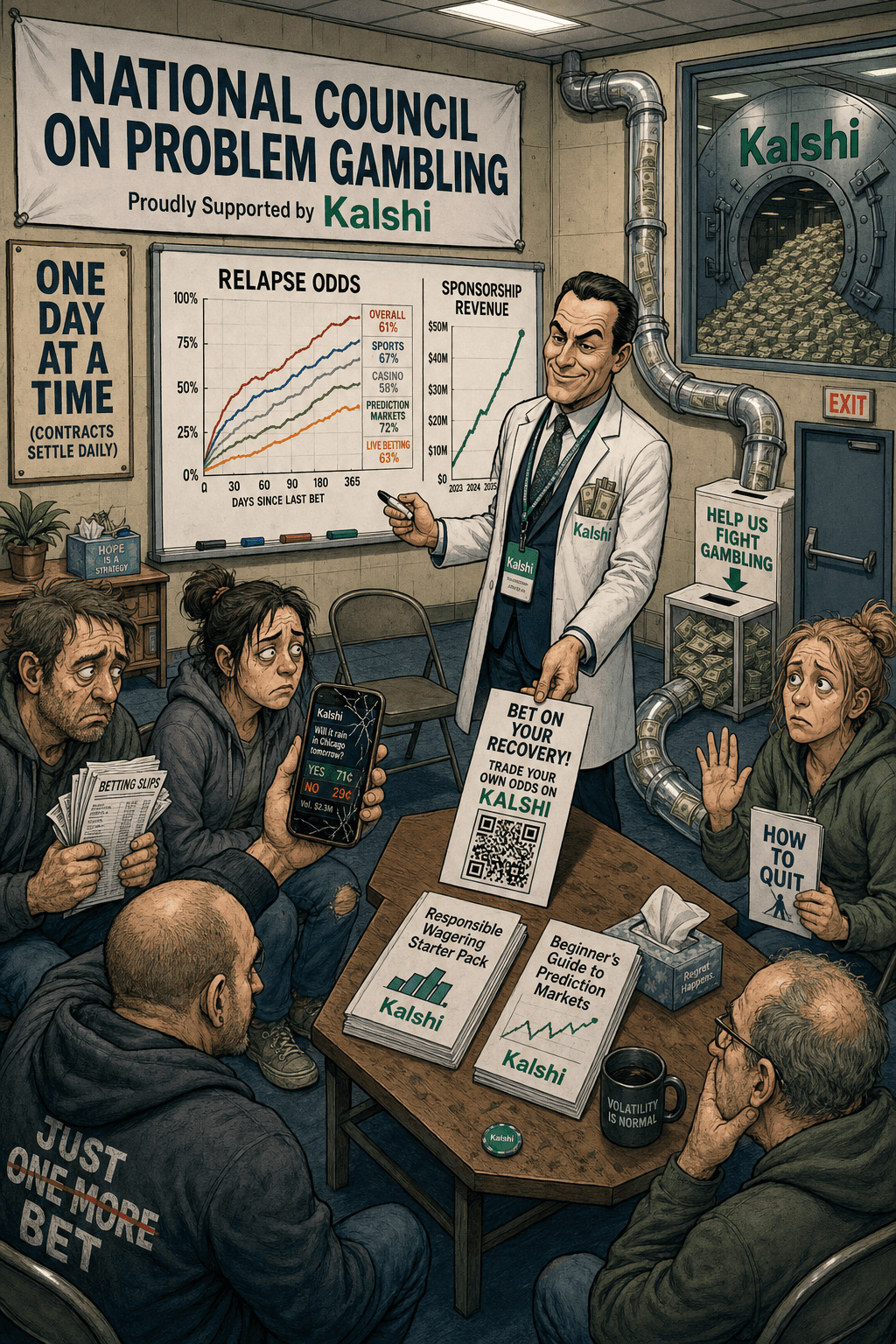
Congress Won’t Enact a Combined Stocks-and-Prediction-Markets Crackdown by 2026
My call: It talks tough, stalls out, and heads home to campaign with its portfolio intact.
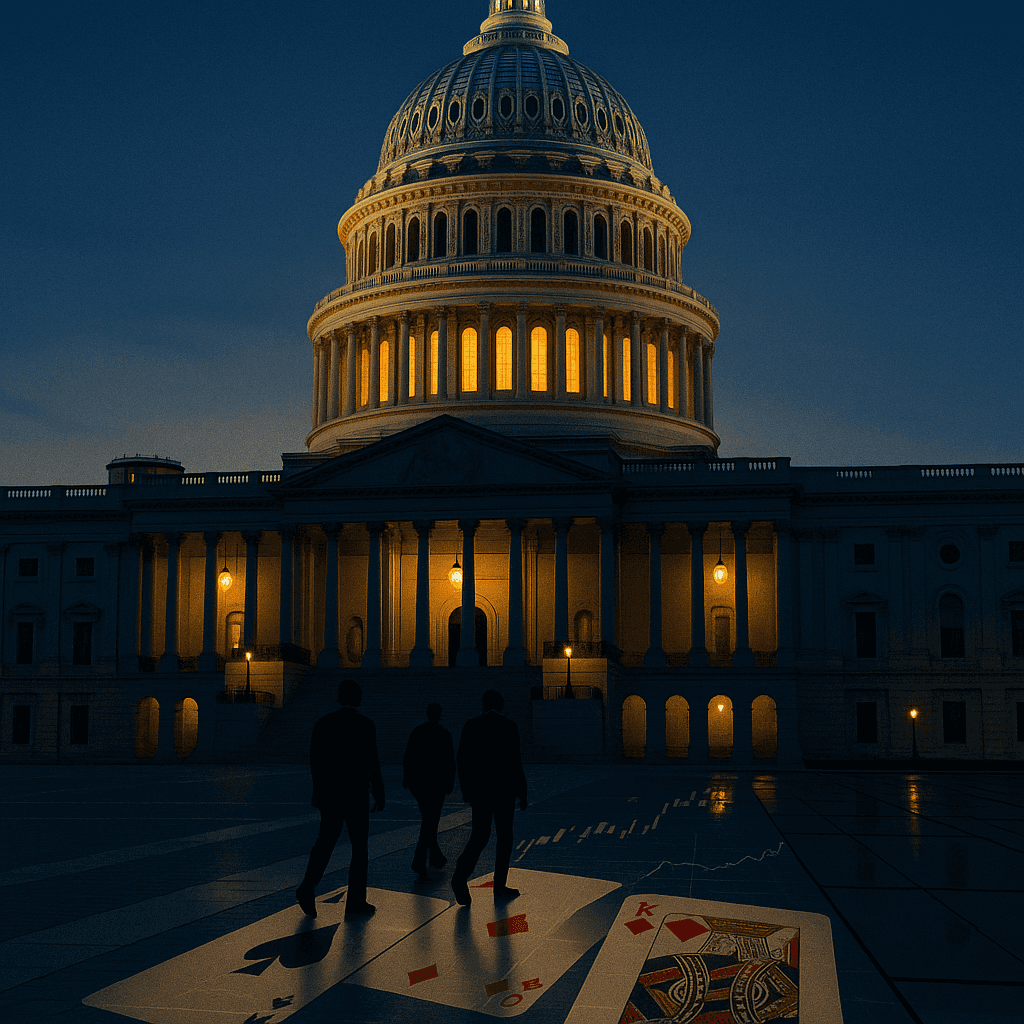
The optics bill that screams "please do not pass me"
Congress will not put a real leash on either its own stock trades or political betting before voters walk into polling places in 2026. There will be hearings, press releases, maybe a freshly ironed Senate bill with a reformist title. There will not be a signed, effective law that both tightens member trading and meaningfully reins in political prediction markets by November 5.
Start with the House’s supposed breakthrough, the Stop Insider Trading Act. It passed 232 to 198, every Republican plus 13 Democrats, and is being sold back home as the moment Washington finally got serious about self dealing.
On paper, it sounds tough: members, spouses, and kids cannot buy new individual stocks, they must pre disclose sales, and they face fines of at least 2,000 dollars or 10 percent of the trade, plus any gains. In practice, it reads like a placebo with a campaign mailer attached. Existing holdings are fine. The president is explicitly exempt. A strict voter ID requirement is stapled on for good measure, like a culture war Post it note.
When a bill bans your trades but not the trades of the man who made 3,600 of them in a single quarter, and also moonlights as an election law fight, that is not reform. It is a booby trapped talking point that knows it is destined to die in a Senate drawer next to the bipartisan infrastructure week commemorative coaster set.
The formal forecast
Here is the scorable call.
By Nov. 5, 2026 (the day after the midterms), the United States will not have a new federal law that
- imposes new, legally binding restrictions on stock trading or ownership by members of Congress, and
- creates new, statutory limits on the use of real money prediction markets for political events.
One big combined crackdown, signed and in effect this cycle, is what I am betting against.
A stock only law could still slip through. A narrow prediction market rule that rides some other bill is possible. What I do not buy is Congress doing both at once on this calendar, on purpose, in public.
Why the stock bill stalls
The consensus story is simple. Voters hate the idea that their representative is buying defense stocks out of a classified briefing, so Congress will eventually have to clamp down. The signal from this House bill points the other way.
Driver one: it is a partisan weapon, not a bipartisan design. Republicans framed H.R. 7008 as a reform win. Democrats called it a sham and a poison pill, mostly because of two land mines, the presidential exemption and the voter ID mandate. That is not the foundation for a quick Senate deal. That is a script for each side blaming the other when it dies.
Driver two: Trump does not intend to be covered. The whole reason the exemption is in there is the former and maybe future president’s appetite for trading. He already tanked an earlier bipartisan Senate push when Democrats said the ban should include the executive branch and spouses. He has more leverage over Republicans now, not less. Any Senate bill that touches the Oval Office runs into a red line at Mar a Lago.
Driver three: the calendar rewards theater over law. Vulnerable House members now have their "I voted to ban stock trading" line for midterm ads. They do not need an actual law that enrages colleagues with seven figure portfolios and irritates donors. If the Senate never moves, they point to the roll call and shrug. If the Senate cleans the bill up and strips the poison pills, the House can refuse to take it up and blame Democrats for protecting Biden or blocking voter ID.
There is a narrow world where the Senate passes a stocks only compromise, limited to new purchases and tighter disclosures, and the House swallows it. That would falsify half this column. The more realistic pattern is the one we already know: TRUST in Congress, No Shorting America, Luna’s gambit to force a vote. Lots of noise, no statute.
Prediction markets: everyone’s favorite future scapegoat
Layer two on this cake is harder to sell in a stump speech: what if lawmakers also banned themselves from betting on elections and policy via prediction markets?
Independent Rep. Kevin Kiley and a cross party crew have sketched out a maximalist answer in the No Profiting from Public Service Act. It would ban members of Congress, candidates, senior officials, and Supreme Court justices from trading stocks and from using prediction markets to wager on politics. It reaches spouses and dependents. It reads like what reformers wish the law already said.
Meanwhile, another bipartisan duo, Reps. Steven Horsford and Mark Amodei, are going after sports prediction contracts on regulated exchanges, stressing jobs and state gaming sovereignty. Their message: when in doubt, say you are protecting Nevadans from weird new gambling products.
Put those trends together and you see where the energy is. Congress likes talking about prediction markets as a vice. It likes having them as a potential villain the next time election interference or online gambling spikes in the news. What it does not like is legislating a detailed rulebook that binds its own behavior.
So you get hearings and stern letters to the CFTC. Maybe a narrow ban on some kind of sports contract. What you do not get, on a 110 day clock, is a careful statutory line around political contracts that also turns off the trading spigot for sitting members.
Why symbolism wins and substance loses
The structural incentives all lean toward a pretty press conference and a dead bill.
Voters want a vibe, not a PDF. Polls say corruption matters, but translate that into actual vote shifts and it drops behind the economy, security, and abortion. For most incumbents, a recorded yes on something that sounds like a ban is enough to defuse a challenger’s attack. They do not need to endure an angry lunch with the colleague who owns half of Silicon Valley.
Leadership wants flexibility. Stock restrictions and betting bans are not just about personal accounts. They touch family wealth, blind trust arrangements, post office consulting, and the whole social ecosystem that turns power into money. House and Senate leaders will not casually vote to limit their class’s favorite retirement plan in an election year.
Industry is happy to slow walk. Financial firms are comfortable with the current ethics regime, which is annoying but predictable. Casinos and gaming states are fine targeting unregulated competitors while leaving their own core products untouched. None of these players is lobbying for a sweeping midterm ethics package that mixes stock bans and prediction market rules on one unpredictable floor vote.
Add the Senate’s other priorities appropriations, Iran war powers, abortion fights, judges and you see how this gets crowded off the calendar. Ethics bills are what you do when you have nothing else to fight about. That is not 2026.
What would make this forecast wrong
To overturn this call, something big has to change two things at once: the scope and the urgency.
A massive scandal tying member trades or political bets directly to an intelligence leak might do it. Trump could decide that signing a tough ethics bill is the cheapest way to reclaim a drain the swamp brand. Polling could suddenly show ethics reform moving real votes in swing districts, not just registering as background grumbling.
Then you could imagine a compressed deal: a stripped down stock ban for members and families, a clear bar on political wagers by officials, maybe a delayed effective date for any presidential coverage, all stapled to a must pass vehicle. That is the low probability universe where this piece ages very badly.
In the world we actually live in, the one where incumbents mostly write rules for their successors, the smart bet is simpler. By the morning after the midterms, Congress will have policed its own bets the way it always prefers to, with stern language, narrow carve outs, and absolute respect for the right of a sitting president to day trade American democracy like a meme stock.
Around the Shallot
Stay in the same broken universe.
Forecasts, satire, cartoons, and quizzes should feel like one publication, not disconnected tabs.
Tech
‘Don’t Regulate Us,’ Beg AI Founders Currently Selling Regulation-As-a-Service
Silicon Valley hails Trump’s plan to let AI companies write their own rules, promises to sell those rules back to everyone else by Q4.
Oct 11

Forecast
Through December 10, Houthis Won’t Damage Pakistan or Turkey Infrastructure
The Mecca Defense Pact just put two more flags on the Saudi firing chart. The consensus panic says this widens the war within weeks. The signal says the Houthis will talk big, hit Saudi and the sea, and leave Pakistan and Turkey’s hard targets alone for this 60 day window.
Comments
Be the first to comment.