Ronaldo Won't Start Another Champions League Knockout Match Before 2027
Cristiano Ronaldo will not start a single Champions League knockout match before the end of 2026–27.
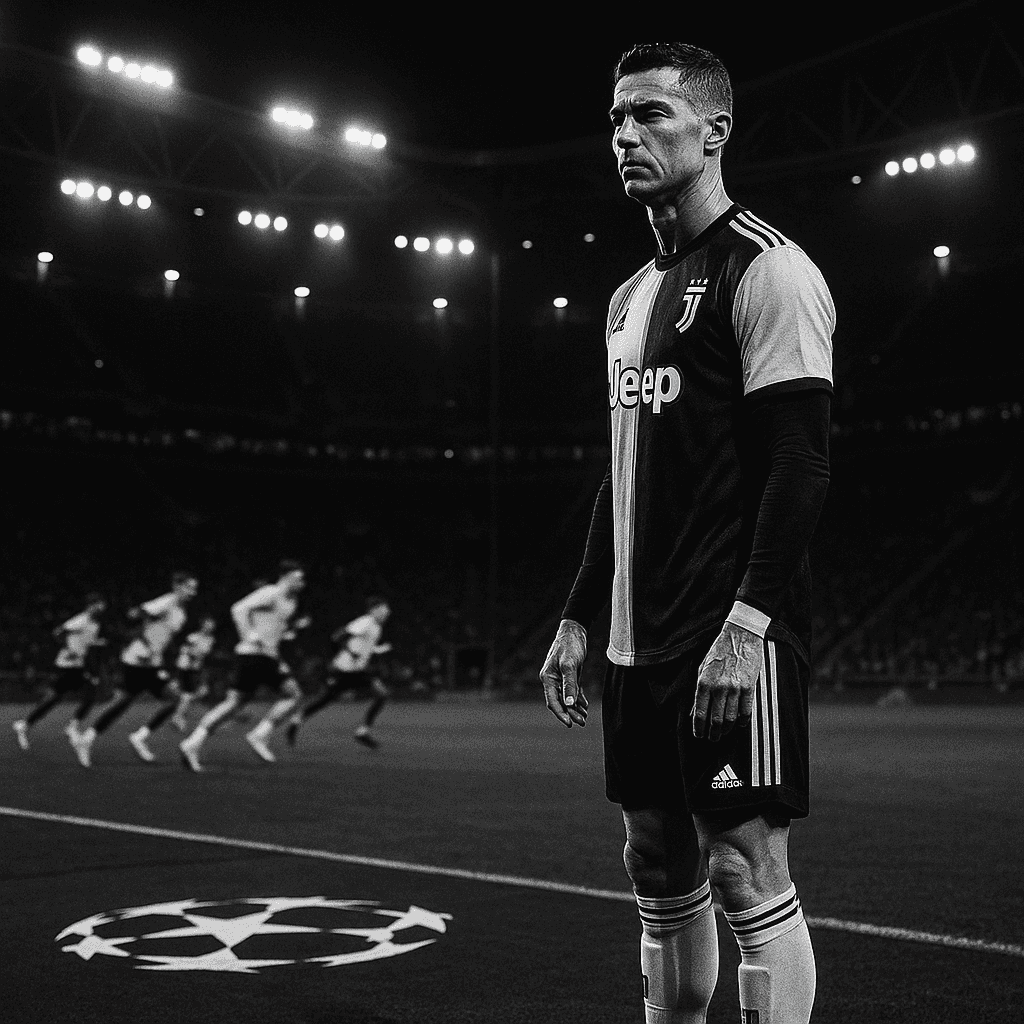
The fairytale is obvious. The football is not.
Lionel Messi just started his third World Cup final at 39. On the same field you had Lamine Yamal, barely out of school and already running games. It feels like the age curve has been bent. Longevity is now part of the elite toolkit. Anything seems possible.
That is how you get the instant reaction: if Messi can still carry Argentina, surely Cristiano Ronaldo has one more Champions League night in him. One more anthem, one more tunnel shot, one more knockout match where the cameras find his face before they find the ball.
My call: he does not start a single Champions League knockout tie between now and the end of 2026–27.
Not for Real Madrid, not for Sporting CP, not for a desperate Serie A contender. By the time the 2026–27 knockouts finish, Ronaldo will be 41 going on 42. The modern game is brutal on passengers. Romance can get you a transfer. It rarely gets you on the team sheet in March.
The bet: a clean, scorable claim
Let us pin this where we can find it later.
Resolution axis: any UEFA Champions League knockout match in the 2026–27 season or earlier. Round of 16 onward under the post reform format, home or away, first or second leg, however UEFA is choosing to name things that week.
Claim: Ronaldo starts zero of them. He can play in group games, in dead rubbers, in Europa League nostalgia tours. He can even come off the bench in a Champions League quarterfinal if some sporting director loses a bar bet. The line is simple: no knockout start on an official team sheet.
If I am wrong, he will be on the pitch when the anthem hits in a spring knockout game, and you can print this with the same glee normally reserved for net spend infographics.
Why the Messi template does not travel
Messi starting a World Cup final at 39 proves one narrow thing. If you are the best space reader of your generation, and your coaches are willing to redesign the system around you, you can drag your career into its late thirties with dignity and medals.
It is not proof that you can throw a 40 plus Ronaldo into a Champions League knockout game and hope vibes cover the press.
Messi’s current job is a low volume sprint role with high volume decision making. Argentina and Inter Miami both bend their structures around him. They stack runners so he does not have to, build coverage that hides his defending, and give him positional freedom to choose his moments. The World Cup final was the peak of that model, not its starting point.
Ronaldo’s template is different. He is a penalty box monopolist who wants the last touch, not the second phase pass. His defensive output has been near zero for years. That was workable at 32, when he could still lead transitions with power and vertical runs. At 40 plus, in a knockout game where every coach fears being out pressed on television, carrying a static striker is a luxury that looks like negligence.
High end clubs have stopped doing luxuries. Even Kylian Mbappé tracks back now, or at least sells the idea of tracking back. Coaches get sacked on screenshots of unoccupied half spaces. Nobody wants to be the manager explaining why his front line defended with nine.
The chain of miracles he would need
For Ronaldo to start a Champions League knockout game before the end of 2026–27, quite a few things have to fall into place in order.
First, he has to leave his current non UCL bubble on a wage level and role that a Champions League club can justify. That means accepting a pay cut big enough to satisfy a Sporting CP accountant or a cautious Serie A board that has been reading too many amortisation explainers.
Second, that club has to qualify for the Champions League under UEFA’s new, top heavy structure, which increasingly rewards teams who already employ players named Mbappé, Haaland or Jude Bellingham. Tier two regulars from Portugal, France and Italy are in play here, but they tend to be allergic to dead money and dead legs. Their entire model is resale value and collective sprinting.
Third, he has to be good enough at 40 plus that a serious coach looks at the data and thinks, yes, this is the man I want at the tip of my press against Bayern on a Wednesday. Not just scoring penalties in a slower league, but hitting sprint numbers that do not trigger a physio Slack meltdown.
Finally, that same coach has to look at his other forwards, the ones in their mid twenties whose agents keep a running log of perceived disrespect, and still pick Ronaldo to start the club’s most important game of the year.
Injuries could help him. An attacking crisis could help him. A romantic chairman trying to win Instagram in one budget cycle could help him. But this is a four leg accumulator, not a coin flip.
The incentives point away from him, not toward him
The biggest argument in Ronaldo’s favor is not football. It is capitalism.
A Champions League club that signs him gets shirt sales, TikTok content, a spike in global recognition and a press conference that trends in markets that could not find their stadium on a map. For an ambitious outsider in Portugal or Ligue 1, that is tempting.
But that same club also has to sit in front of its analytics department. Those people will arrive with charts showing pressing actions per 90, high intensity sprints, non penalty xG and the opportunity cost of handing 1,500 minutes to a legend instead of a 22 year old with upside. You can overrule the data to get him in the building. You cannot overrule what everyone will see when he jogs through a knockout first leg while Warren Zaïre Emery covers both half spaces on his own.
The GOAT symmetry storyline is powerful. Messi thriving at 39 in a World Cup final invites the reflex that Ronaldo must have an equivalent club moment left. Broadcasters hint at it when they build way too early 2030 World Cup lists and say you cannot count anything out in the Messi Ronaldo debate.
Coaches, unfortunately for the narrative, do not pick their starting XI to balance a decade of Ballon d’Or discourse. They pick whoever will get them through two legs without being run off the pitch by teenagers.
What would have to break my call
There are paths where this forecast dies in a blaze of YouTube compilations.
If Ronaldo shows an unusual level of humility on wages and role, the pool of clubs that can take a flyer on him expands overnight. If he leans into an impact sub identity in a stronger league and proves he can still bully top five league centre backs for 30 minutes at a time, a cautious manager might eventually talk himself into one knockout start.
A true injury crisis at a Champions League club could also flip the table. If you are the only senior No. 9 left standing before a quarterfinal, managers get surprisingly flexible about principles. There is also the nuclear option: one ownership group, somewhere between nostalgic and bored, might simply order a coach to "start the star" for commercial reasons.
These scenarios exist. They are the long tails of a probability curve, not the middle.
The satirical close: legacy, updated terms
Messi’s 39 year old World Cup start has shifted how we talk about age. It has not changed how much ground you can cover on tired legs when Nico Paz and Lamine Yamal treat you like a traffic cone.
Ronaldo will have plenty of lights, trophies on the mantel and social clips reminding you what he was. What he almost certainly will not have is a 2027 Champions League knockout team sheet with his name above the line.
In a way, it is fitting. The GOAT debate started as an argument about goals and titles. It might end as an argument about who could press longer without pulling a hamstring in 4K.
Around the Shallot
Stay in the same broken universe.
Forecasts, satire, cartoons, and quizzes should feel like one publication, not disconnected tabs.

Tech
‘Don’t Regulate Us,’ Beg AI Founders Currently Selling Regulation-As-a-Service
Silicon Valley hails Trump’s plan to let AI companies write their own rules, promises to sell those rules back to everyone else by Q4.
Oct 11

Forecast
Through December 10, Houthis Won’t Damage Pakistan or Turkey Infrastructure
The Mecca Defense Pact just put two more flags on the Saudi firing chart. The consensus panic says this widens the war within weeks. The signal says the Houthis will talk big, hit Saudi and the sea, and leave Pakistan and Turkey’s hard targets alone for this 60 day window.
Comments
Be the first to comment.