By 2027, One AI Titan Will IPO Rich Then Trade Underwater
SpaceX, OpenAI, or Anthropic will hit the market at near trillion prices. The first one out will trade below its IPO price within a year.
The Trillion Dollar Faceplant
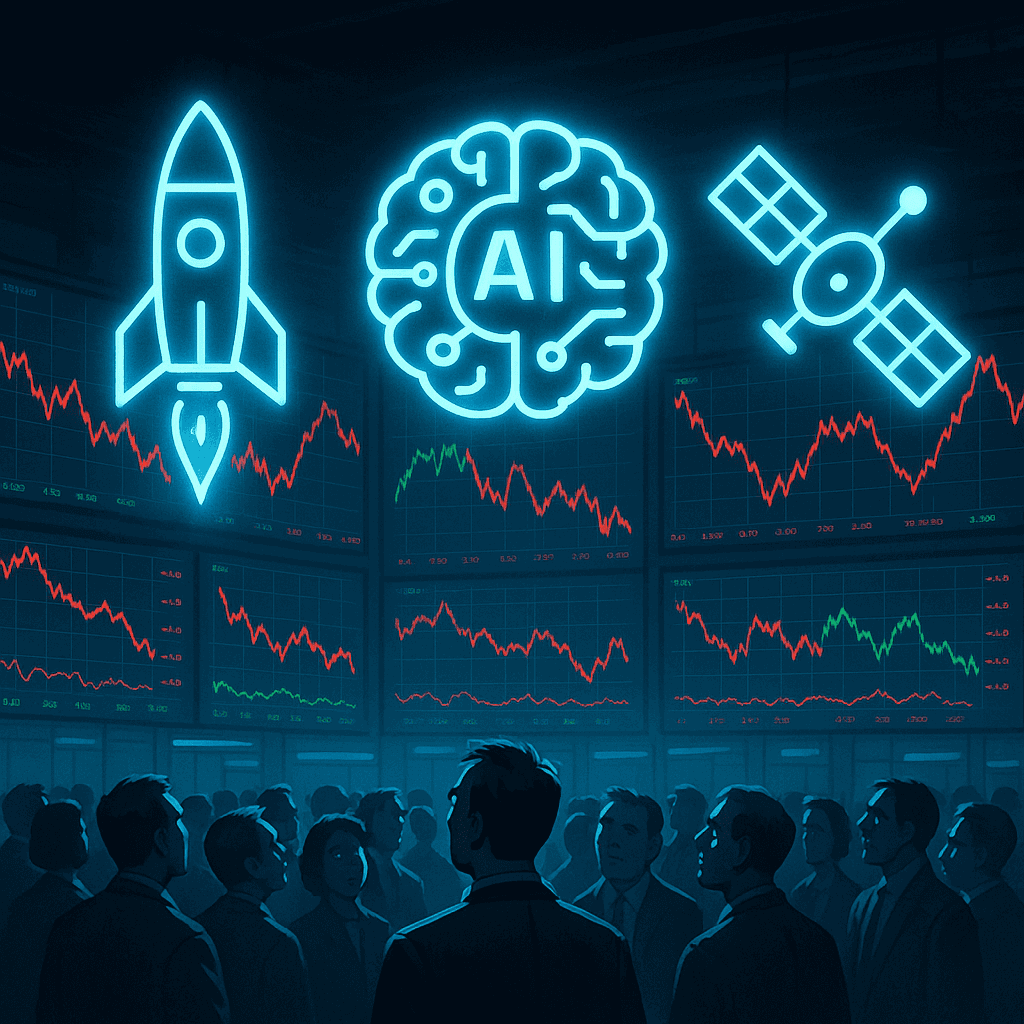
At least one of SpaceX, OpenAI, or Anthropic will go public in the U.S. by the end of 2027 at a valuation of $750 billion or more, and that stock will dip below its IPO price within a year.
The consensus fantasy is cleaner. In that version, the first AI or space superpower lists at a heroic number, trades up forever, and every Robinhood account gets to pretend it bought Google in 2004 with lunch money from a WeWork kombucha tap.
The signal says something messier. These companies are hitting the public markets because they need far more cash than private capital can painlessly provide, not because they have discovered a new, physics defying way to turn GPUs into profits.
The Compute Bills Are Coming Due
The first driver is brutal arithmetic. Training, running, and upgrading frontier AI or a million satellite constellation requires tens to hundreds of billions of dollars in chips, data centers, launch capacity, and power. That is not a vibes number, it is a line item.
Anthropic just raised roughly $65 billion at a $965 billion valuation. It reportedly carries multi hundred billion dollar commitments to cloud and chip suppliers over the next decade and is spending more per month on compute than some public software firms generate in revenue. OpenAI is in a similar boat, with hyperscaler partners who are both benefactors and landlords.
SpaceX, meanwhile, is openly rehearsing its IPO story. A $1.5 to $2 trillion valuation, a million "AI satellites" in orbit, asteroid mining, Mars colonies, and a PowerPoint slide that treats low Earth orbit like a suburban strip mall. It looks less like a business plan and more like a sci fi writer trying to hit a word count.
All three can still tap private cash, from sovereign wealth to late stage growth funds. None of that can compete with the scale and cost of public equity once the capex really ramps. At some point, even the richest private backers want more than another internal markup on a cap table spreadsheet.
Private Marks Already Baked In Perfection
The second driver is valuation physics. Anthropic at $965 billion, SpaceX whispered at $1.5 to $2 trillion: there is not a lot of private market air left above those numbers. Either they recycle into public markets soon, or VCs spend years explaining to their LPs why the next markup never came.
Venture investors are already complaining that three quarters of new capital went into a handful of AI and "American Dynamism" names. That only works if those names go public, recycle the money, and let everyone move on to the next fad. Nobody wants to discover they spent a decade underwriting a sovereign wealth fund's private AI museum populated with half finished robot concierges.
Retail sentiment is not blind either. Business Insider found would be SpaceX buyers who love the rockets but not the $2 trillion sticker. On Reddit, people ask basic questions that the IPO narrative never quite answers, like: "Show me the profit path that justifies this." When WallStreetBets starts auditioning as an equity research shop, the easy phase of the bubble is over.
My read: underwriters will still get a mega deal done. It will just clear below the most aggressive whispers, maybe around or just north of $750 billion, and then reality will test how much of that number was gravity defying story and how much was cash flow.
Filings, Footnotes, and the First Red Candle
The third driver is disclosure. Private AI and space decks talk in TAM. Public filings talk in capex, contracted obligations, and gross margin.
When an S 1 finally lands from any of these three, expect a few unhelpful details. Multi year take or pay deals with chipmakers and cloud providers. Eye watering launch or data center commitments. Long dated R&D that has to be expensed somewhere. Governance structures that look like they were drafted by a committee of philanthropists and cult leaders.
That does not mean the businesses are bad. It means they are capital hungry, structurally dependent on a small set of suppliers, and not yet close to the kind of cash gusher that public markets usually reward at a trillion ish valuation.
As long as the AI trade is hot, the first trading sessions will be euphoric. People will buy because it is SpaceX, or because it is "the new OpenAI," or because there is a million satellite slide in the roadshow. Then the numbers will season in. At some point in that first 12 months, a quarter will be merely very good rather than messianic, or regulation will bark, or rates will twitch. That is when the first clean dip below the IPO or reference price shows up on the chart.
What Could Break This Call
There are ways I am wrong.
A severe tech or AI crash could slam the IPO window shut. A regulatory shock on AI safety or space debris could make these firms decide that public markets are not worth the subpoena risk. Sovereign funds and hyperscalers might simply write even bigger private checks and turn these companies into quasi state infrastructure.
Or, least likely but loudest in the pitch decks, the fundamentals could actually catch up. If one of these firms can show runaway revenue, rising margins, and a credible path to enormous free cash flow, the market may bless the first IPO and keep the price above water for a full year. That would make this forecast wrong and a lot of early employees very rich.
But you do not get a crowded Polymarket, $965 billion private marks, and multi trillion IPO whisper campaigns if fundamentals are already safely in hand. You get that when everyone is trying to sell a story before the footnotes start talking.
The Scorecard
Here is how this forecast will be judged.
By December 31, 2027, at least one of SpaceX, OpenAI, or Anthropic must complete a major listing on a U.S. exchange. That can be a traditional IPO, a direct listing, or a clear tracking stock or spin that gives public investors straightforward equity exposure to the core business.
The first of those listings must price at a fully diluted equity valuation of $750 billion or more. Then, within its first 12 months of trading, that stock must trade below its IPO or reference price at least once, even if it later recovers and rockets to the moon.
If none of them lists in that window, or if the first one out never prints a single red candle below offer, this column will be wrong. The archive will still be free to mock.
Until then, remember the oldest rule in public markets: if the prospectus reads like a crazy sci fi book, you are not the hero, you are the plot device that provides liquidity.
Around the Shallot
Stay in the same broken universe.
Forecasts, satire, cartoons, and quizzes should feel like one publication, not disconnected tabs.
Tech
‘Don’t Regulate Us,’ Beg AI Founders Currently Selling Regulation-As-a-Service
Silicon Valley hails Trump’s plan to let AI companies write their own rules, promises to sell those rules back to everyone else by Q4.
Oct 11
Forecast
Through December 10, Houthis Won’t Damage Pakistan or Turkey Infrastructure
The Mecca Defense Pact just put two more flags on the Saudi firing chart. The consensus panic says this widens the war within weeks. The signal says the Houthis will talk big, hit Saudi and the sea, and leave Pakistan and Turkey’s hard targets alone for this 60 day window.
Comments
Be the first to comment.