Farage Won't Trigger A UK Snap Election Before November 2026
My call: No. Farage will not be the reason Britain has a snap election before the end of 2026.
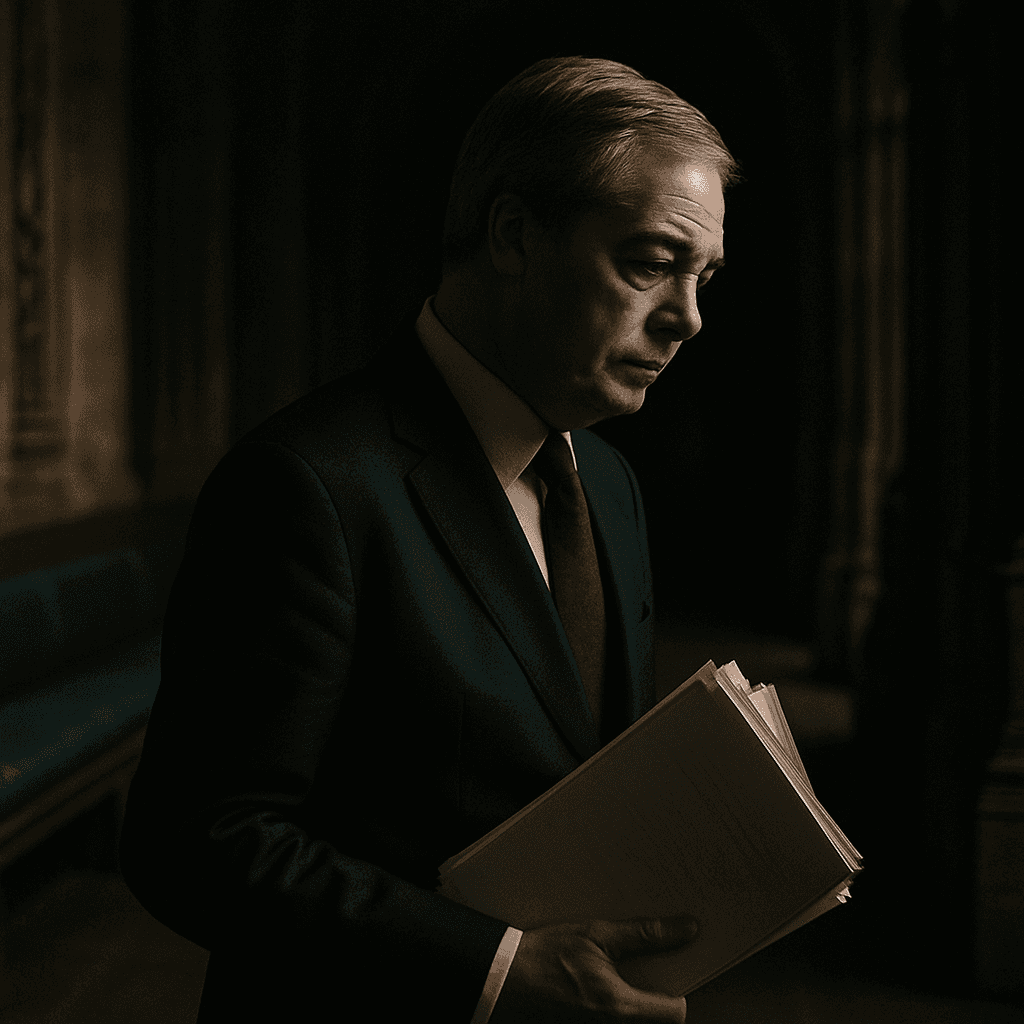
Nigel Farage wanted to be the man who scared Britain back to the polls. He is now closer to being the man who discovers recall law via a PDF emailed by Daniel Greenberg.
Here is the bet, cleanly: between now and 7 November 2026 there will be no snap general election, meaning an earlier than required national vote, where a fair reading says Farage or Reform UK were a central reason the government jumped early.
If the country does go to the polls before then, I am betting the paperwork and the leaks will show something else did it: an economic shambles, a governing party knife fight, or a foreign policy crisis. Farage will be in the frame, but not holding it.
The Prime Minister in Waiting Who May Never Get to Push the Button
The consensus script had a nice arc. Reform UK rockets in the polls as the Conservatives collapse. Farage finally gets a Commons seat, picks Clacton for the full Nigel by the sea aesthetic, and is crowned by excitable pundits as a kind of shadow prime minister, waiting for the moment to topple the old order.
Then the Standards Commissioner walks on stage.
Daniel Greenberg is now investigating whether Farage broke the rules by not declaring a 5 million pound gift from crypto billionaire Christopher Harborne in the 12 months before he entered Parliament. Farage calls it a purely personal present that just happened to fund the sort of things politicians need, such as security and a lifestyle upgrade.
At the same time, questions keep circling about the support he received from George Cottrell, a convicted U.S. fraudster turned Farage intimate, whose money and townhouse apparently played a quiet role in keeping the show on the road.
This is not fatal by default. Populist voters have seen so many scandals that "took a dodgy gift" now barely registers between potholes and immigration. But it takes the Farage project out of the clean arc hero story and into something more fragile: a man whose entire strategy depends on being in Parliament, now waiting to hear how long Parliament wants him around.
The real trigger sits in Downing Street, not Clacton
To force an early election, Farage needs three pillars to stand at the same time.
First, he has to keep his Commons seat and the aura of invincibility that comes with it. A suspension of more than 10 sitting days would open a recall petition in Clacton. Cross ten percent of signatures and suddenly the man who wants to topple Westminster is sweating over a by election in his own backyard, with Rupert Lowe and Restore Britain turning up to measure him for a political headstone.
Second, Reform has to stay frightening. Not loud, not noisy on social media, but numerically terrifying in internal government modelling. The scenario where Farage tilts the election calendar is the one where ministers sit in gloomy meetings, look at Reform’s projected seat damage, and conclude that waiting until 2029 only makes it worse.
Third, the rest of the right has to remain fragmented enough that Farage looks like the only game in town. If Restore Britain or rebadged Conservatives start muscling in, Farage turns from existential threat into one flavour of grievance among many.
Ethics investigations are corrosive on all three. They threaten the seat, they chip at the aura, and they encourage rivals who can now say, politely, that they agree with Nigel on migration and taxes, just not on living off mystery millions.
Meanwhile, the actual election button is in Downing Street. The sitting government still controls timing and has classic incentives to run the clock: govern, hope the economy looks less like a group project gone wrong, and let enemies tire themselves out.
A government pulls the plug early when it is boxed in. Farage’s current direction of travel gives it more breathing space, not less.
What would have to go right for Farage to matter?
There is a narrow world where this column resolves wrong.
Greenberg could decide the Harborne money is technically kosher or only merits a gentle slap. The Cottrell story might stay too intricate to move voters who already assume everyone in Westminster has at least one friend who has met a prosecutor. Farage would then wheel out his favourite script, in which any brush with officialdom proves the system fears him.
If Reform then climbs again, into the kind of numbers that imply dozens of lost seats for the governing party, and if economic or foreign policy headaches are building, you can sketch a cabinet discussion in late 2026 that goes like this: go now, blame the chaos on legacy problems, and try to catch Reform mid rise before they bed into local seats.
That is the world where Farage counts as a catalyst. The election would not be about him alone, but without his polling pressure, the argument to move early would be weaker.
I think that world is an upside tail for him, not the base case. Every month wrapped in scandal, every recall rumour, every press conference he cancels to avoid questions, makes it less likely that the governing party sees him as a relentless shark and more like a noisy seal tangled in plastic.
Watch these tells, not the shouting
If you want to track whether this forecast is drifting, look past the outrage and at the paperwork.
What matters in the next year is simple.
- The tone and severity of Greenberg’s report, and whether MPs upgrade it into a suspension that crosses the 10 day recall trigger.
- Whether Clacton ever sees a recall petition, and how fast local opponents can rally ten percent of voters.
- Reform’s polling after each ethics milestone, not the day after a ranty TV hit.
- Any credible briefing that Downing Street is gaming 2026 dates specifically to contain Farage, rather than to escape its own internal mess.
If the report is sharp, a petition opens, and Reform’s numbers slide a few points, Farage’s leverage over timing will look more theoretical than real. If, despite all that, ministers are still pointing to him in internal memos as the reason to cut short their own careers, they will deserve whatever history calls them.
Satirical verdict: the dog that will not wag the election
Strip away the hype and you get a simple resolution test. By the end of 2026, Britain either goes to the country early with Farage cited in serious accounts as a central reason, or it does not.
I am staking this column on the latter: no Farage driven snap election by 7 November 2026. If we do get a 2026 vote, the prime culprits will be sitting around the cabinet table, not glowering from a Clacton pub.
In the end, the supposed prime minister in waiting is more likely to find himself waiting on two things: the Standards Commissioner’s letterhead, and a TV producer asking if he would please come on to discuss how it all went wrong for Nigel Farage.
Around the Shallot
Stay in the same broken universe.
Forecasts, satire, cartoons, and quizzes should feel like one publication, not disconnected tabs.
Tech
‘Don’t Regulate Us,’ Beg AI Founders Currently Selling Regulation-As-a-Service
Silicon Valley hails Trump’s plan to let AI companies write their own rules, promises to sell those rules back to everyone else by Q4.
Oct 11
Forecast
Through December 10, Houthis Won’t Damage Pakistan or Turkey Infrastructure
The Mecca Defense Pact just put two more flags on the Saudi firing chart. The consensus panic says this widens the war within weeks. The signal says the Houthis will talk big, hit Saudi and the sea, and leave Pakistan and Turkey’s hard targets alone for this 60 day window.
Comments
Be the first to comment.