Hyperscalers Will Fall Short Of $1 Trillion AI Capex By 2027
My call: the big five never quite get there. The AI arms race stalls below a $1 trillion annual capex peak by the end of 2027.
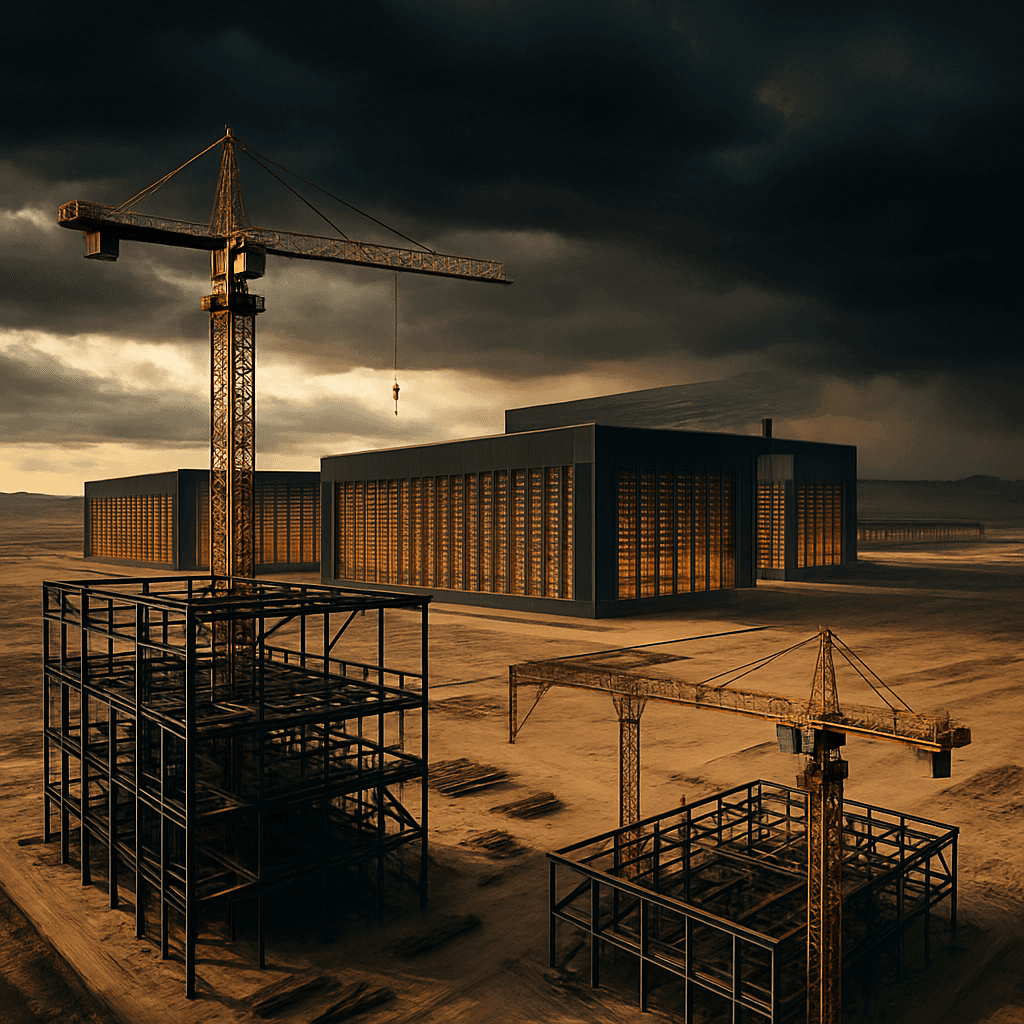
Here is the bet, clean and scorable: the big five hyperscalers never clock a full $1 trillion in AI capex on a trailing twelve month basis by the end of 2027. They stall somewhere in the high hundreds of billions, below $950 billion, then start talking about "discipline" a lot more than "land grab."
Street models from Evercore and Bank of America draw a straight line. Current estimates put 2026 capex at $700 to $900 billion for Amazon, Microsoft, Alphabet, Meta, and Oracle, mostly justified with the word "AI" and a shrug. Extend that slope a little, and you get a tidy trillion dollar arms race in 2027.
The problem is that physics is not the only constraint. There is also arithmetic, and boards, and a bond market that would like to be asked nicely.
The capex party and the missing revenue
The bullish script goes like this: AI is the new electricity, GPUs are the new oil, and anything less than maximal spend is dereliction of fiduciary duty. Amazon guides to roughly $200 billion in capex this year, Meta waves around a potential $145 billion, Microsoft points north of $120 billion, Alphabet nearly doubles guidance to the $175 to $185 billion range. Oracle tags along as the over caffeinated little sibling.
On the revenue side, the numbers are very real and very shiny. AWS is running at roughly $150 billion annualized, growing close to 30 percent. Google Cloud jumps more than 60 percent year over year. Microsoft’s AI line item blasts past a $37 billion run rate, more than doubling.
Yet Sequoia’s David Cahn does the simple subtraction and lands on a roughly $600 billion annual gap between AI infrastructure spending and AI ecosystem revenue. Allianz Research says AI capex growth is running about 46 percent ahead of AI revenue growth, already worse than the 32 percent divergence in the telecom bubble that left the world with cheap fiber and very sad bondholders.
So, yes, revenue exists. It just lives several exits behind the capex convoy, watching the taillights disappear.
Three brakes on the trillion dollar fantasy
To actually clear $1 trillion in AI capex TTM by late 2027, the big five need another two years of 30 to 40 percent growth in spend, plus investors willing to ignore the widening gap between cash out and cash in.
I do not think they get that far. Three pressures hit first.
1. Cash flow finally matters again. Free cash flow at the hyperscalers is already under strain. Allianz’s divergence metric is moving the wrong way. Morgan Stanley and JPMorgan project roughly $1.5 trillion in new tech sector debt to fund this build out. At some point, "we are the railroad barons of AI" stops working as a cover story for rising leverage and compressed FCF, especially if Treasury yields do not cooperate.
2. The insiders are saying the quiet part out loud. Sam Altman, whose business model depends on someone else footing the GPU bill, now calls wasteful AI capex the "most fair criticism" of the industry. He predicts "a much better rationalization of company spend relative to outcomes" within one to two years. Translation for the Prediction Desk: by the 2027 budgeting cycle, "build faster" loses every internal fight with "please stop lighting money on fire."
3. Demand is real, not infinite. Cloud backlogs are big but not bottomless. Google Cloud touts more than $460 billion of contracted backlog. That is impressive. It is also less than a single year of the AI capex pace Wall Street wants to see in 2027. Enterprises are still figuring out which AI projects survive contact with procurement, and consumers are just starting to hit the "more than $100 a month for bots" fatigue line. Infrastructure spend can front run demand for a while, but not forever.
The supercycle that looks suspiciously like a bubble
Nvidia’s Jensen Huang tours conference stages selling a hardware supercycle. Copper is hitting physical limits, optics are the new frontier, and every problem allegedly resolves to "buy more compute." Suppliers like Marvell are told they can aspire to the trillion dollar valuation club. When your main customer base is promising a trillion in spend, everyone hears what they want to hear.
Yet the pattern looks familiar. The telecom industry in 2001 also had a convincing story: bandwidth was the future, demand would arrive, and it was patriotic to lay fiber everywhere. It was even mostly correct in the twenty year view. In the five year view, it was a slow motion train wreck of overbuild, debt, and write downs.
The AI buildout has genuine technical constraints. Power, cooling, networking, and interconnect are all real bottlenecks that require expensive fixes. Engineers are not wrong when they say you cannot cheat physics.
But you can overpay it. When capex is growing 50 percent faster than the thing it is supposed to monetize, the physics that start to matter are the ones on the balance sheet.
What would prove this forecast wrong
For the trillion dollar capex print to arrive on schedule, two things have to go unusually right at the same time:
- AI revenue at AWS, Azure, Google Cloud, and Meta has to re accelerate so fast that the capex to revenue gap clearly narrows, not widens, over the next 6 to 8 quarters.
- Debt markets have to stay friendly enough that another trillion plus of tech paper gets absorbed at spreads that do not terrify CFOs or credit committees.
Maybe enterprises all decide they are thrilled to pay cloud prices for every spreadsheet and slide deck. Maybe consumer willingness to spend $100 a month on AI subscriptions turns out to be more durable than the average gym membership.
If that world shows up, I will eat this column in a 2027 resolution note.
Who loses if I am right
If AI capex peaks below a trillion, the losers are not the hyperscalers. They keep the data centers they already built, benefit from any long run "it all looks cheap in hindsight" upside, and quietly enjoy the improved cash flow.
The real damage lands downstream. GPU vendors, networking suppliers, and every "AI picks and shovels" stock that was priced as a perpetual motion machine of data center orders are the ones left explaining to investors why "orders were pushed out" is not a euphemism for "our customers sobered up."
Consumer AI startups, already concentrated into a top 10 oligarchy of unicorns, will find that the bar for being worth supporting with scarce, rationalized compute keeps rising. If you are not obviously making your hyperscaler landlord richer, the landlord has other tenants in mind.
The satirical close
Consensus today treats the $1 trillion AI capex threshold as a destiny, not a bid. The models say the line will be crossed. The charts are ready. The slide templates are already saved in PowerPoint.
My call: the trillion stays theoretical. By late 2027, the five giants will still be spending like superpowers, just not quite superpower plus trillion. Investors will congratulate them on their new "capital discipline," suppliers will discover what "non cancelable" really means, and the AI age will roll on with slightly fewer GPU cathedrals than advertised.
In other words, the future is still made of compute, just not of your spreadsheet.
Around the Shallot
Stay in the same broken universe.
Forecasts, satire, cartoons, and quizzes should feel like one publication, not disconnected tabs.

Tech
‘Don’t Regulate Us,’ Beg AI Founders Currently Selling Regulation-As-a-Service
Silicon Valley hails Trump’s plan to let AI companies write their own rules, promises to sell those rules back to everyone else by Q4.
Oct 11
Forecast
Through December 10, Houthis Won’t Damage Pakistan or Turkey Infrastructure
The Mecca Defense Pact just put two more flags on the Saudi firing chart. The consensus panic says this widens the war within weeks. The signal says the Houthis will talk big, hit Saudi and the sea, and leave Pakistan and Turkey’s hard targets alone for this 60 day window.
Comments
Be the first to comment.