S&P 500 Will Drop 10 Percent From Its AI High Within 120 Days
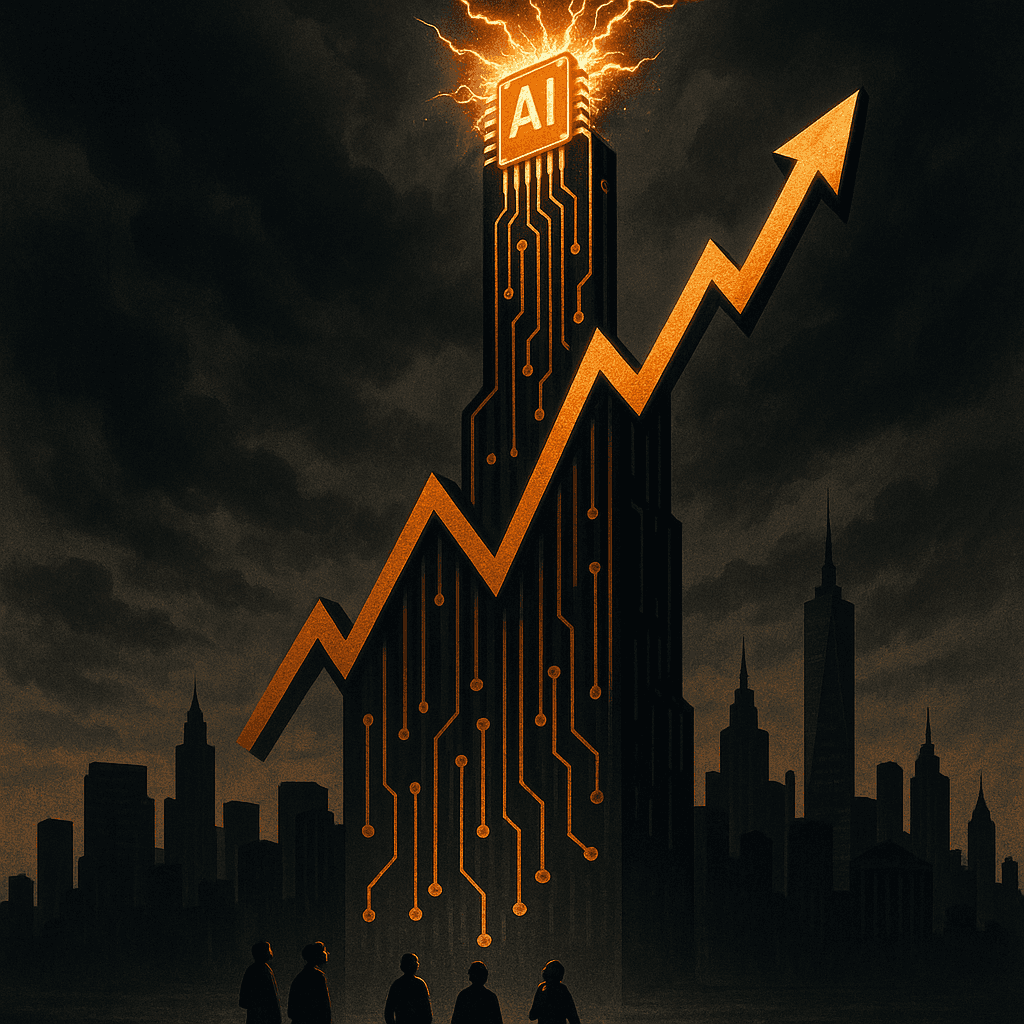
AI has turned the S&P into a tech ETF with better branding. I am betting that concentration cracks into a full 10% correction within four months.
Too Far, Too Fast: Betting on a 10% S&P Air Pocket Before Election Season
AI has turned the S&P into a tech ETF with better branding. I am betting that concentration cracks into a full 10% correction within four months.
The Call: A Clean 10% Drop, On the Clock
Let us skip the coyness. The S&P 500 will not float serenely from this AI high into the 2026 election. My call: before roughly four months are up, the index suffers at least one peak‑to‑trough drawdown of 10% or more from a closing all‑time or cycle high set in that window, on closing prices.
Not a vibe shift. A measurable correction. You can score it on a chart, not in a podcast recap.
The consensus says we are in an AI super‑cycle where every dip is a buying opportunity and the only risk is not owning enough Nvidia. The signal says we are replaying the middle chapters of an 80s paperback titled Too Far, Too Fast and everyone is skimming the epilogue about what happens next.
AI Mania Turned the S&P Into a High‑Beta Party
Start with the speed. In the two months through the end of May, the S&P sprinted about 16 percent higher, more than 11 percent year to date. Deutsche Bank counts only four peacetime episodes like this since World War II. The last time we moved this fast without climbing out of a recession was right before the 1987 crash.
This is not a broad American dynamism story. It is an AI options chain dressed in index drag. Information technology is up around 27 percent this year. A tiny cartel of names, mostly AI and chips, is doing the heavy lifting: Nvidia, Micron, Broadcom, Marvell, TSMC, Alphabet, plus the usual hyperscaler suspects.
Breadth is miserable. Ned Davis Research points out that the share of S&P 500 stocks outperforming the index over the last two months is scraping half‑century lows. Equal‑weight is lagging. You are not in a healthy bull market. You are in a pyramid built on a very expensive GPU rack.
At the fringes, the behavior has turned familiar in the worst way. Virgin Galactic rockets on a speculative run, then drops 32 percent on dilution fears in a single day. AST SpaceMobile and Planet Labs pop on double‑digit gains. These are not fundamentals, they are lottery tickets that trade during lunch breaks between Nvidia chart checks.
The Drivers: What Breaks the Spell
A 10 percent correction in this environment does not need a full macro crisis. It just needs gravity to reapply to a narrow, crowded trade.
Four things sit at the center of this forecast.
- Historic speed without a safety net. Outside of post‑recession rebounds, this rally pace only shows up in history right before bad things. The faster you go, the smaller the shock you need to skid 10 percent.
- Concentration and valuations. When a handful of mega‑caps account for a swollen share of index market cap and narrative oxygen, one wobble in AI earnings or capex guidance can produce a double‑digit hit to the leaders and a mechanical 10 percent hit to the index.
- Too‑calm money. Credit spreads are tight, volatility is sleepy, and everyone is pretending the Fed will tolerate an AI wealth effect while inflation stays fidgety. A slightly hawkish speech that name‑checks frothy equities is all it takes to reprice both bonds and stocks.
- Latent macro and geopolitical risk. The war in Iran and the prolonged closure of the Strait of Hormuz are sitting in the background like Chekhov’s oil barrel. Savings rates are back near pre‑2008 levels. Consumers are stretched. None of this is priced as if bad outcomes are allowed.
Layer on the software drama. That sector fell more than 37 percent from its 2025 peak into April on fears AI would chew through old business models, then ripped back and now sits at a so‑called key technical test. If those supposed AI losers roll over again on guidance, it adds another leg to a correction that does not even have to touch industrials or banks to hit 10 percent at the index level.
What Could Prove Me Wrong
The bullish counterpoint is simple: maybe this really is the rare time when the tree grows straight into the cloud.
In the no‑correction scenario, AI demand and monetization keep beating even the hyped‑up models. The next couple of quarters from Nvidia, Micron, TSMC, Alphabet and friends not only validate the capex binge, they upgrade it. The Fed, seeing inflation glide modestly lower, chooses not to talk sternly about equities. Geopolitics stay loud but irrelevant, oil spikes are brief, and every 5 to 8 percent dip gets erased before it qualifies as a correction.
Breadth even improves a bit. Lagging sectors grind higher, equal‑weight stops embarrassing itself, and the S&P spends four months going sideways with frequent, photogenic mini‑panics that all bottom at 9 point something percent from a recent high.
That is the cleanest path to my call being wrong. It is also a scenario that assumes this much positioning, this much leverage to one narrow theme, and this much macro risk can all tiptoe through a 120‑day window without a single spill over 10 percent. Possible, yes. Probable, no.
How To Tell Which World You Are In
If you want a live read on this bet, watch three things more than your favorite AI influencer.
First, breadth and concentration. If the percentage of S&P stocks beating the index refuses to heal and the top 5 or 10 names keep inflating their share of market cap, fragility stays high. A crack in one leader will drag the headline index, not just your tech fund.
Second, Fed rhetoric and credit spreads. A visible widening in investment‑grade and high‑yield spreads from today’s tight levels, paired with a Fed speech that frets about financial conditions, is your cue that the policy put has been moved a few strikes lower.
Third, oil and consumer stress. A sustained move higher in crude tied to Hormuz, plus rising credit‑card delinquencies and a weaker savings rate, will squeeze margins and earnings just as valuations are most fragile. AI is great at optimizing ad targeting. It cannot refuel tankers or top up household checking accounts.
The Stakes: Who Loses If I Am Right
A 10 plus percent correction from here is not the end of the AI story. It is the end of the fantasy that you can pay any price for it.
If this call lands, the losers are obvious. The new class of day‑traders who thought the S&P was a risk‑free AI savings account. The corporate treasurers tapping equity instead of debt because their stock chart looks like a start‑up’s pitch deck. The strategists who kept waving away 1987 comparisons as boomer ghost stories and are about to rediscover what a garden‑variety de‑rating feels like.
The winners are more boring. Anyone who remembered that a narrow, euphoric market with cheap credit and complacent volatility tends to offer, at minimum, one decent correction before an election cycle makes everything weird.
So yes, I am betting on a 10 percent air pocket before the political ads really start to hurt. Call it the first time in this cycle that AI will have to prove it can also accelerate gravity.
Around the Shallot
Stay in the same broken universe.
Forecasts, satire, cartoons, and quizzes should feel like one publication, not disconnected tabs.
Tech
‘Don’t Regulate Us,’ Beg AI Founders Currently Selling Regulation-As-a-Service
Silicon Valley hails Trump’s plan to let AI companies write their own rules, promises to sell those rules back to everyone else by Q4.
Oct 11

Forecast
Through December 10, Houthis Won’t Damage Pakistan or Turkey Infrastructure
The Mecca Defense Pact just put two more flags on the Saudi firing chart. The consensus panic says this widens the war within weeks. The signal says the Houthis will talk big, hit Saudi and the sea, and leave Pakistan and Turkey’s hard targets alone for this 60 day window.
Comments
Be the first to comment.