SpaceX Will IPO Near Target While At Least One AI Lab Stumbles
My call: SpaceX gets its IPO crown by 2026. At least one of Anthropic or OpenAI does not clear a trillion‑ish valuation on time or at full price.
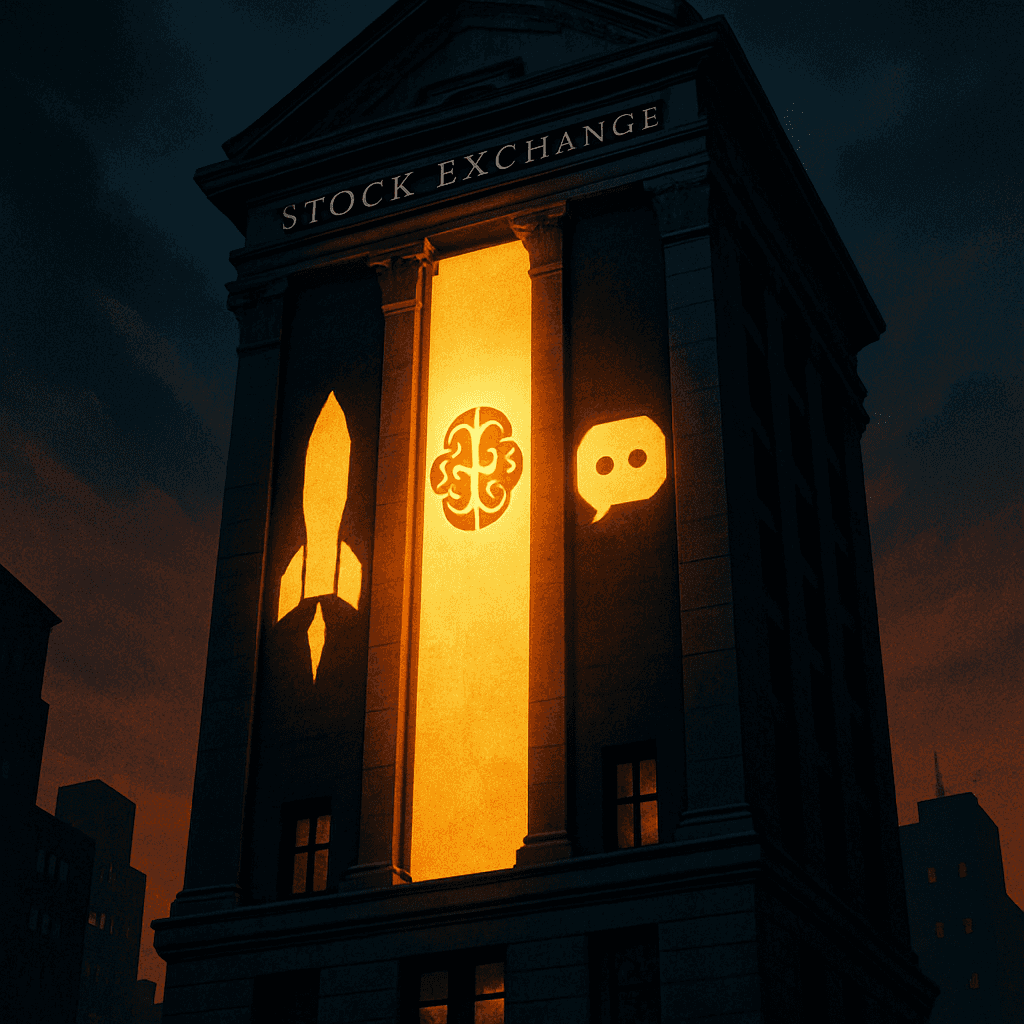
Here is the bet: Wall Street can ordain one new god this cycle, not three.
By December 31, 2026, SpaceX with xAI will be public, rich, and roughly on target, while at least one of Anthropic or OpenAI will either swallow a 30 percent plus valuation cut or quietly slide its IPO into 2027 while talking about "long term focus."
Anthropic's S‑1, now in the SEC's confidential inbox, is the first hard test. For two years frontier AI has been priced like magic. In the next six months it has to survive GAAP.
The Anthropic S‑1: First contact with gravity
On paper, Anthropic looks like an AI cheat code: from about 1 billion to 47 billion in run‑rate revenue in 18 months, nearly a trillion dollars in private valuation, and a story that it has already passed OpenAI in enterprise usage. No enterprise software firm has ever done this. That is the point. No one knows if the economics are software or something much uglier.
The S‑1 is where we find out. Two lines matter more than the entire marketing section: gross margin and capital commitments.
If Anthropic is running north of roughly 70 percent GAAP gross margins and has sane, visible capex, it can argue it is a software platform with a temporary compute habit. If margins are stuck closer to the 50s and the footnotes reveal industrial‑scale cloud and data center obligations, it starts to look like a capital‑hungry utility that also writes haikus.
Private markets can wave that away. Public markets, even in an AI mania, eventually notice when your cost of revenue looks like a rocket factory, not a SaaS firm.
One throne, many supplicants
SpaceX is about to list as the great exception that proves the rule. It has rockets, Starlink, real cash flow, and Elon Musk's permanent main character energy. It is also the only one of the three where investors think they know the script: industrial company, giant capex, long runway, fine, we have a spreadsheet for that.
Anthropic and OpenAI are selling something fuzzier: that near‑trillion valuations are pre‑discounted for their eventual role as AI infrastructure. That they get Nvidia‑like multiples before they show Nvidia‑like dominance. That they will turn GPU bonfires into software economics, soon, but not so soon that margins show up in this prospectus.
In a world of index funds and risk committees, it is hard to see allocators blessing three mega‑cap growth stories with nearly identical narratives and very different disclosure quality, all in the same window, all at private‑market marks. Scarcity is a feature. If SpaceX prices fine, it will eat most of the "future infrastructure" allocation for 2026 all by itself.
When the MANGOS acronym went viral, the punchline wrote itself. Wall Street can handle the fruit salad story. It cannot buy the whole orchard at once.
OpenAI's shrinking halo
OpenAI enters this race with the strongest brand and the weakest control over its own narrative. It is filing into a moment when analysts are openly saying the emperor's wardrobe looks thin.
The consumer lead is already wobbling. Forecasts have Google passing ChatGPT in US AI users by early 2027. Enterprise buyers are quietly telling reporters that Anthropic is their safer, more stable default. The partnership that should be its superpower, Microsoft, will force some revealing disclosures: how much margin is it giving up for Azure credits, how much revenue is effectively captive to one distributor, how much of the cost base lives off balance sheet.
That is before we talk about governance. The saga of nonprofit boards, surprise coups, and a CEO whose job description now includes "explain superintelligence and also quarterly earnings" is not exactly an institutional investor layup. At private scale, that is drama. At public scale, that is risk factor.
OpenAI can probably get public in 2026 if it really wants to. The more relevant question is whether it can do it at anything close to its last private mark once the S‑1 puts hard numbers under the ChatGPT myth. If it cannot, it has two choices: take a visible 30 to 50 percent cut or stay private and blame "market conditions," a phrase that translates loosely to "we saw the comps."
The market only needs one hero in 2026
The bullish counterargument is simple. Rates may drift down, liquidity is back, Nvidia rewrote what "expensive" means, and the IPO window finally opened. If AI is the new operating system for everything, why not underwrite multiple trillion‑ish names at once and call it diversification.
It is possible. It is just not the base case once you remember what S‑1s actually do, which is remove imagination from the valuation process.
SpaceX will almost certainly get out this year, roughly on time and roughly at its mark, because it solves three problems for public money at once. It is AI exposure through xAI, space exposure through launches, and broadband exposure through Starlink, all conveniently benchmarked to a single ticker. There is room for a pop without admitting that every private AI mark since 2023 was rational.
By the time Anthropic and OpenAI are ready to pick a price, the market will have fresh data: SpaceX's trading range, analyst notes about capital intensity and governance, and at least one full quarter of AI names being treated like normal stocks instead of prophecy tokens. That is when someone on a pricing call will say, out loud, "Remind me again why this one deserves Nvidia plus a turn?"
My forecast is that the answer will not convince everyone twice. One mega‑IPO clears, sets a reference multiple, and quietly caps how much room is left for the next two. The second or third AI lab in line becomes the flex point. Either it accepts a serious downshift or it pushes to 2027 and hopes the next cycle of optimism comes with even shorter memories.
How we will know if this call was wrong
This is a scorable bet, not a vibe.
By December 31, 2026:
- SpaceX, with xAI bundled or clearly attached, is public and trading within about 20 percent of what its 2026 private marks implied.
- At least one of Anthropic or OpenAI has either postponed its IPO beyond 2026 or priced its deal more than 30 percent below its last 2026 private valuation.
If we end 2026 with all three companies public, each within shouting distance of their 2026 private marks, then I was wrong and the market really did decide to buy the whole MANGOS crate at list price. In that world, the bubble talk was early, the skeptics were boring, and we just invented a new asset class where capex is a feature and gross margin is a suggestion.
Until then, watch the Anthropic S‑1. It is not just a filing. It is the menu. If the first course tastes like heavy industry, someone is canceling their second reservation.
Around the Shallot
Stay in the same broken universe.
Forecasts, satire, cartoons, and quizzes should feel like one publication, not disconnected tabs.
Tech
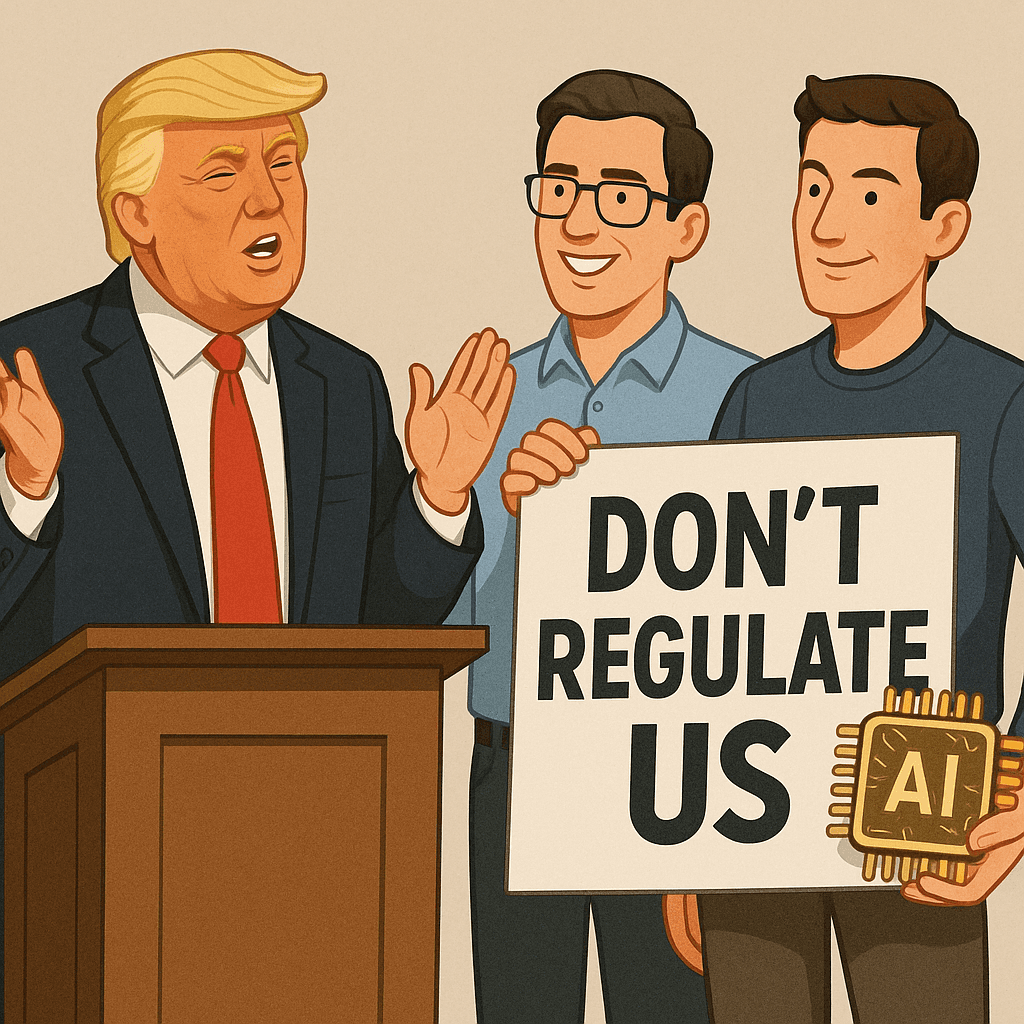
‘Don’t Regulate Us,’ Beg AI Founders Currently Selling Regulation-As-a-Service
Silicon Valley hails Trump’s plan to let AI companies write their own rules, promises to sell those rules back to everyone else by Q4.
Oct 11

Forecast
Through December 10, Houthis Won’t Damage Pakistan or Turkey Infrastructure
The Mecca Defense Pact just put two more flags on the Saudi firing chart. The consensus panic says this widens the war within weeks. The signal says the Houthis will talk big, hit Saudi and the sea, and leave Pakistan and Turkey’s hard targets alone for this 60 day window.
Comments
Be the first to comment.