Two U.S. AI Giants Will Issue New $10B Bonds By 2027
My call: yes. At least two more U.S. tech giants will print $10B‑plus AI infrastructure bonds by mid‑2027.
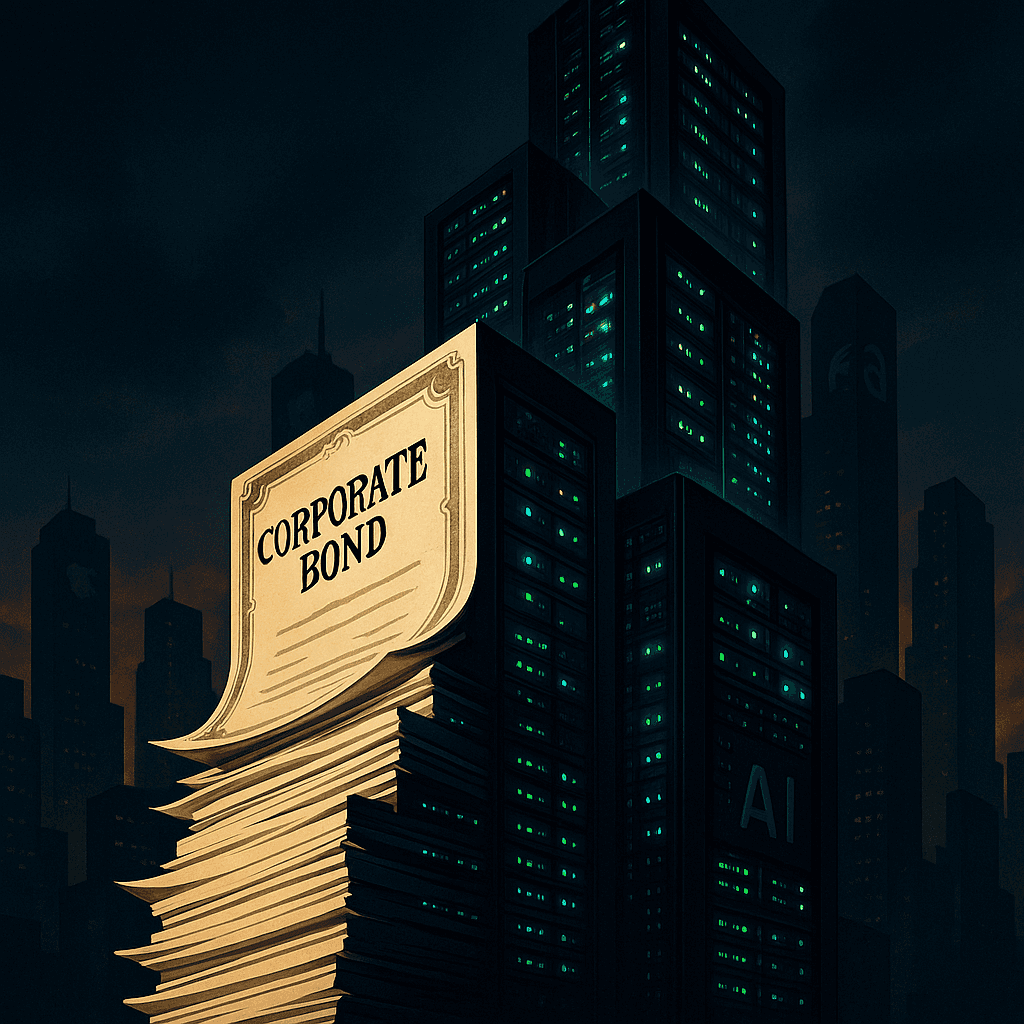
My call: Nvidia did not just sell a giant bond. It opened a new asset class. By mid‑2027, at least two more U.S. tech giants will follow with their own $10 billion‑plus AI infrastructure bond blockbusters.
If you want to see what peak conviction looks like, it is a $25 billion IOU from a company sitting on more than $60 billion in cash, issued into a world that already calls it the most important stock on earth.
That is Nvidia’s new bond. And Wall Street did not blink. It oversubscribed.
The Call: A Measurable AI Debt Wave
Here is the forecast in plain English, with a clock on it:
By June 30, 2027, at least two additional U.S. tech giants in the AI infrastructure club, drawn from Amazon, Microsoft, Meta, Alphabet, Oracle, and Nvidia itself, will each complete at least one public, investment‑grade bond issue of $10 billion or more. The official paperwork will need to say the quiet part out loud: the proceeds are partly for AI, data centers, or cloud infrastructure.
We can score this in SEC filings and bond databases. Either there are two or more qualifying deals that have priced and settled by that date, or there are not. No vibes, just coupons.
Driver 1: The Capex Firehose Is Bigger Than The Cash Geyser
The four big U.S. hyperscalers, Google, Amazon, Microsoft, and Meta, are pointing to roughly $700 billion to $770 billion of capex around 2026. That is up roughly 75 percent from 2025 and, as Goldman notes, perilously close to 100 percent of their operating cash flow.
Translation: the cash machine is no longer comfortably ahead of the server habit. If they actually build the AI infrastructure they are pitching, internal cash alone does not cut it.
So you get what JPMorgan politely calls a "decisive shift" in how the AI buildout is funded. Less self‑financed, more brought to you by the investment‑grade bond market and some sheepish cutbacks in buybacks.
Equity is an option, and you already see it in places like SpaceX. But for megacap public tech, a $10‑20 billion bond issue that barely dents a net cash position is the lowest‑drama way to keep the data center spigot open and the share count flat.
Driver 2: Nvidia Just Wrote The Term Sheet For Everyone
Nvidia’s $25 billion issue is its first bond sale since 2021 and about four times the size of its prior runs. The deal slots neatly beside Alphabet’s roughly $20 billion sale and a broader pile of over $300 billion this year in AI and data‑center‑related debt.
Two things matter here.
First, the market cleared. Easily. Bond buyers, who supposedly care about boring things like cash coverage and downside, were more than happy to fund "AI factories" that might be technologically obsolete before the bonds mature.
Second, Nvidia picked size as the message. It did not noodle around with a tidy $5 billion or $7 billion deal to "maintain access." It printed a number so large that every CFO in Seattle and Silicon Valley now has a precedent to wave at their board.
If Nvidia can tap the market for $25 billion while still swimming in cash, how exactly does Amazon argue that it should slice its inevitable deal into four apologetic $6 billion tranches?
Driver 3: The Arms Race Favors Mega Bonds, Not Drip Feed Debt
The economics of this cycle are not subtle. Cloud providers are terrified of being the one caught short on GPUs and power when the next AI model craze hits.
They have three overlapping problems:
- Chip supply is tight and must be locked in years ahead.
- Data centers, grid upgrades, and factories have long lead times.
- The AI application layer, led by outfits like OpenAI, is burning cash faster than it can earn it.
Upstream, that turns into a simple instruction: build capacity now, figure out perfect utilization later. It is the same pattern we saw in shale and in fiber builds. When speed to capacity is the game, financing follows in big, discrete chunks.
A $10 billion or $20 billion investment‑grade bond lets a hyperscaler front‑load that capacity build, lock in long‑dated funding before the Fed’s next plot twist, and keep the option to resume buybacks when the dust settles.
And thanks to industrial‑policy cosplay, they get to call their new data centers "AI factories," which makes a giant corporate bond sound like the TVA with stock‑based comp.
The Countercase: Why This Could Fizzle
There is a coherent argument that my bet is wrong.
Capex guidance could be quietly walked back if utilization disappoints or if power constraints bite. A recession or a rate spike could widen spreads and make $10B‑plus prints look reckless just as rating agencies start to mutter about leverage.
CFOs might also decide that living just under the headline threshold, with multiple $3–8 billion issues, gives them better terms and less political scrutiny. Functionally similar financing, no Bloomberg alert that says "Tech Giant Raises $15 Billion For AI Gizmos As Your Mortgage Rate Hits 8 Percent."
And if hardware efficiency and model tricks cut the cost of compute faster than expected, today’s capex plans will look like a teenager’s first attempt at a grocery budget: wildly generous.
Why I Still Like The Mega Bond Bet
Even with those risks, the incentives line up for at least two more $10B‑plus AI bonds.
First, the starting point is not cautious. Issuance for AI and data‑center projects is already north of $300 billion this year. The horse is not just out of the barn, it is running a structured credit fund.
Second, the issuers are unusually strong. These are companies that can lever up a little, keep their ratings, and still argue they are being conservative stewards of the national AI grid.
Third, the optics have flipped. A few years ago, big‑tech debt was a curiosity in a world of over‑capitalized giants. In the AI era, not using cheapish investment‑grade funding for what you insist is the new industrial base looks less prudent and more like malpractice.
So my base case is simple: two to four more mega deals land before mid‑2027, likely led by Amazon and Microsoft, with Meta or Oracle trying on the grown up bond shoes. Nvidia itself may come back for seconds if the appetite stays strong.
Stakes: When Bondholders Fund The Hype Curve
If this forecast is right, AI stops being just an equity story and becomes a bond story. Fixed‑income investors, the people who are supposed to hate excitement, will be underwriting whether AI actually delivers the productivity miracle Jensen Huang keeps selling.
If it pays off, we get a useful precedent: the market calmly financed a massive, risky technological buildout that actually boosted GDP. If it does not, we get a different lesson: you can securitize a hype cycle and still call it investment grade.
Either way, remember the new hierarchy of American infrastructure. Roads, bridges, and water systems still have to beg for municipal approvals. GPU barns and laser‑materials plants get multi‑billion‑dollar bonds, an industrial‑revolution press release, and a closing dinner at Nobu.
Around the Shallot
Stay in the same broken universe.
Forecasts, satire, cartoons, and quizzes should feel like one publication, not disconnected tabs.
Tech
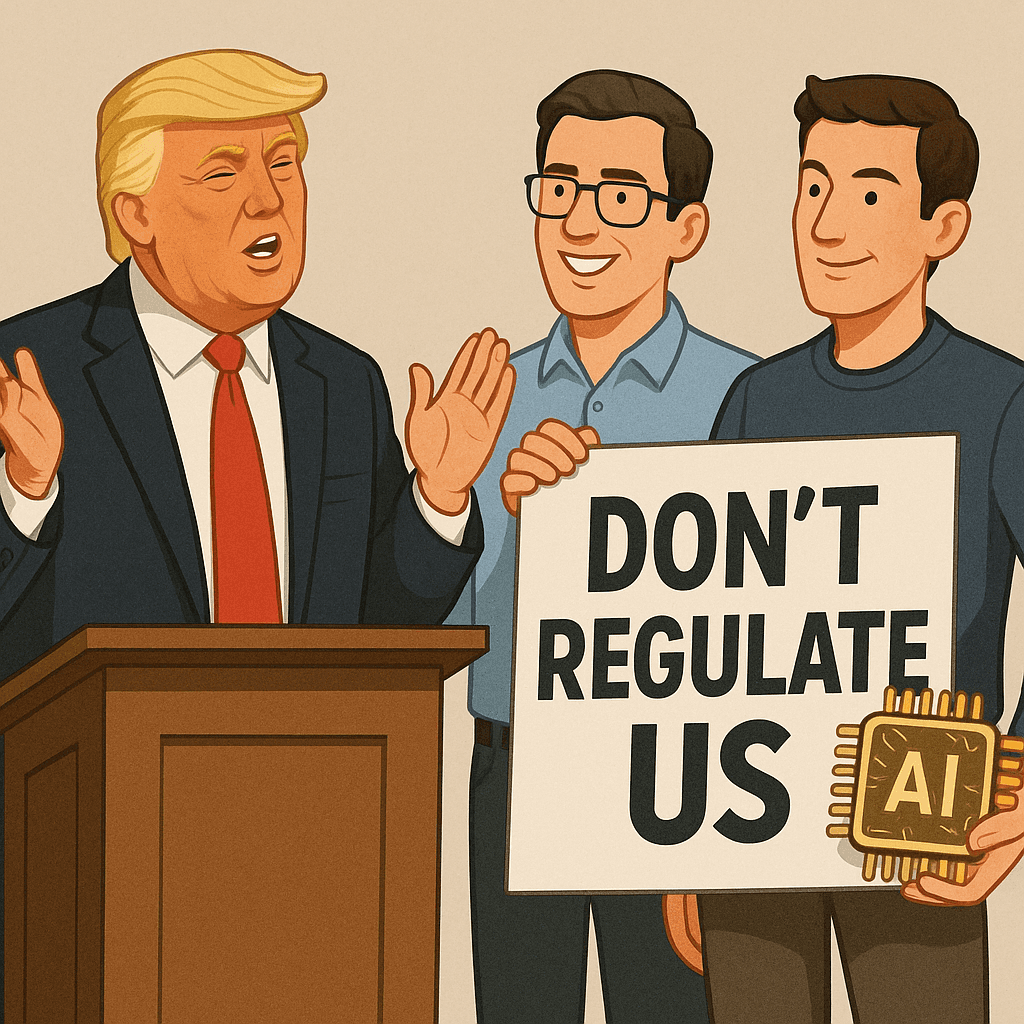
‘Don’t Regulate Us,’ Beg AI Founders Currently Selling Regulation-As-a-Service
Silicon Valley hails Trump’s plan to let AI companies write their own rules, promises to sell those rules back to everyone else by Q4.
Oct 11

Forecast
Through December 10, Houthis Won’t Damage Pakistan or Turkey Infrastructure
The Mecca Defense Pact just put two more flags on the Saudi firing chart. The consensus panic says this widens the war within weeks. The signal says the Houthis will talk big, hit Saudi and the sea, and leave Pakistan and Turkey’s hard targets alone for this 60 day window.
Comments
Be the first to comment.