In a development experts called “very on-brand for late capitalism,” Euronews has quietly announced a full-stack overhaul of civic life, in the form of more podcasts with confident titles.
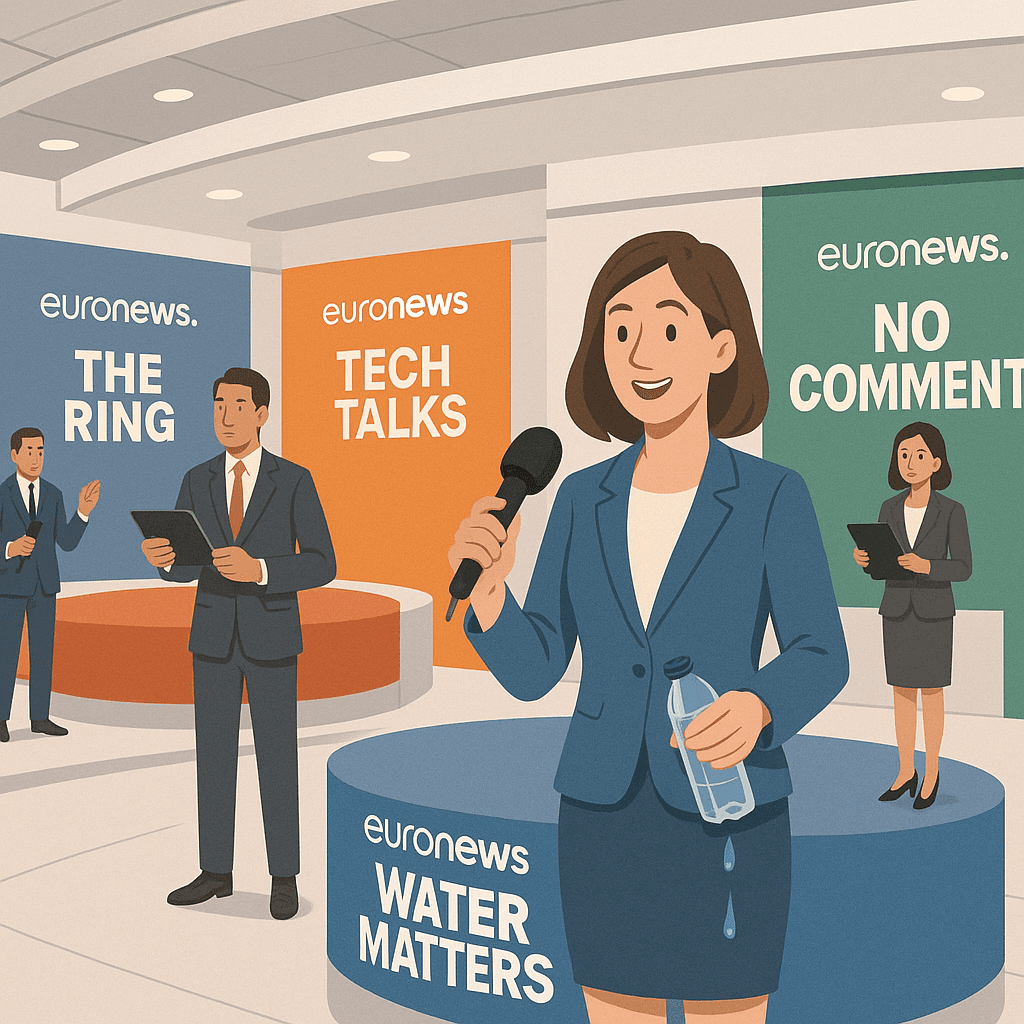
The channel, which once mostly showed footage of parliaments and interpretive graphics of bond yields, is now “rebuilding Europe’s public square” with a suite of new formats: The Ring for weekly political combat, No Comment for curated silence, My Wildest Prediction and The Big Question for business and tech clairvoyance, Euronews Tech Talks for polite worry about algorithms, and two investigative strands, The Food Detectives and Water Matters, in case viewers were not yet anxious about what is in their tap and lasagna.
It is a bold editorial thesis from Euronews: if democracy is fracturing, trust is eroding, and climate change is rearranging coastlines, the missing piece is clearly a content matrix where everything has a sharp logo and a two-word slogan that could also be a mindfulness app.
“Our goal is simple,” a fictional executive, described in internal documents as a “Head of Narrative Ecosystems,” said. “When a citizen worries ‘Is this olive oil even real’ or ‘Will AI steal my job,’ there should be a Euronews vertical ready to monetize that concern in a calm, pan-European way.”
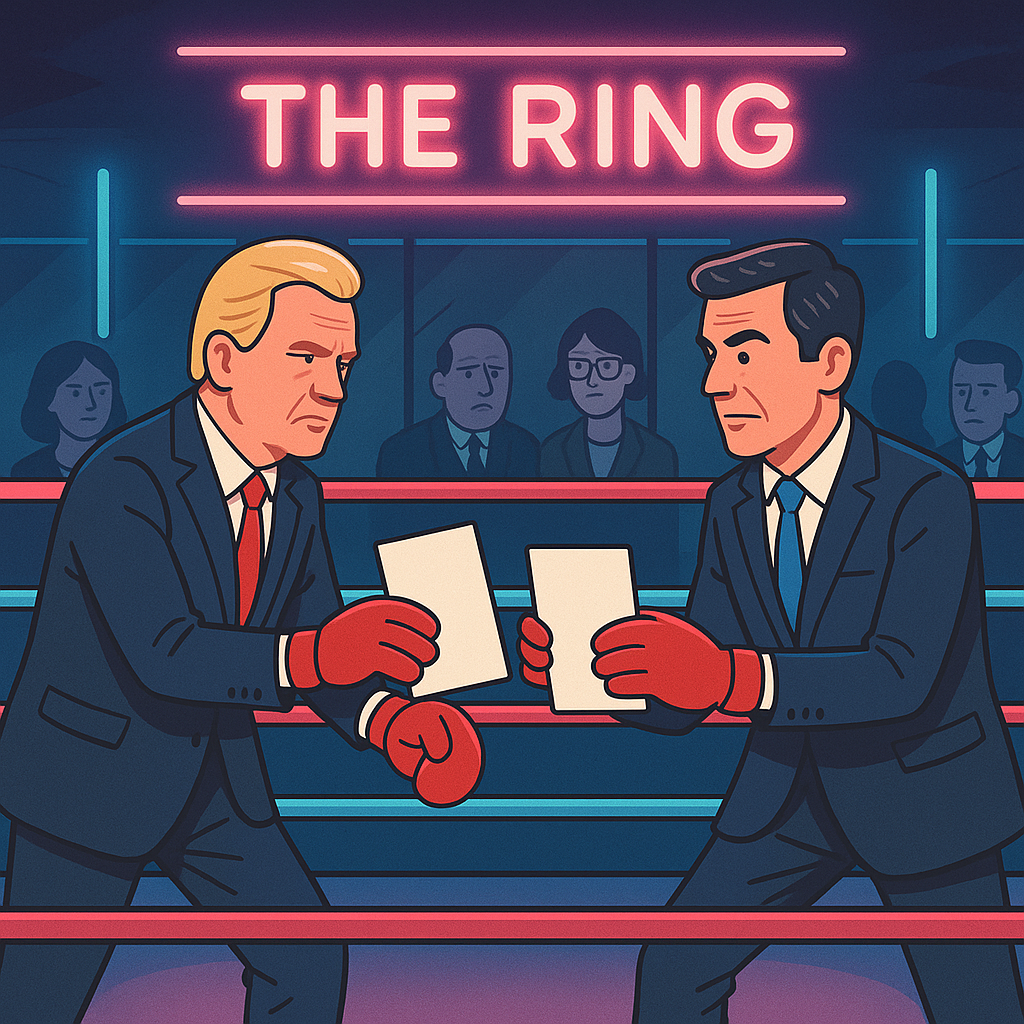
At the center of the new lineup is The Ring, a weekly political showdown where two “political heavyweights” from across the EU face off to provide what the channel calls a “diversity of opinions.” The format is simple: Europe has 27 member states and thousands of elected officials, but the future of the continent will be decided by whoever can win a 22-minute argument in English, filmed in a teal-lit studio.
Every episode promises to pit a centrist who believes in “a Europe that protects” against another centrist who believes in “a Europe that protects, but communicates about it better.” They will debate the most urgent questions of EU affairs, such as:
- Should AI be regulated now, later, or at a pace “aligned with innovation”?
- Is migration a challenge, an opportunity, or a “challenge-opportunity” that can be addressed through innovation hubs?
- How many languages can one studio host mispronounce in a single hour while still calling it inclusive?
Viewers concerned about polarisation can then move seamlessly from The Ring to No Comment, where Euronews will show “raw footage” of the same crises without any commentary at all.
“No agenda, no argument, no bias,” the tagline insists, raising the intriguing editorial proposition that the only truly neutral position is to give the audience high-definition images of protest, flooding, or food recalls, then let the algorithmically enraged quote-tweets fill in the rest.
Media scholars have already praised the innovation. “It is extremely efficient,” said one, adjusting his AirPods. “The Ring provides structured conflict for people who still pretend to read op-eds, while No Comment exports all the unstructured conflict to TikTok. Euronews gets the prestige of neutrality in both directions.”
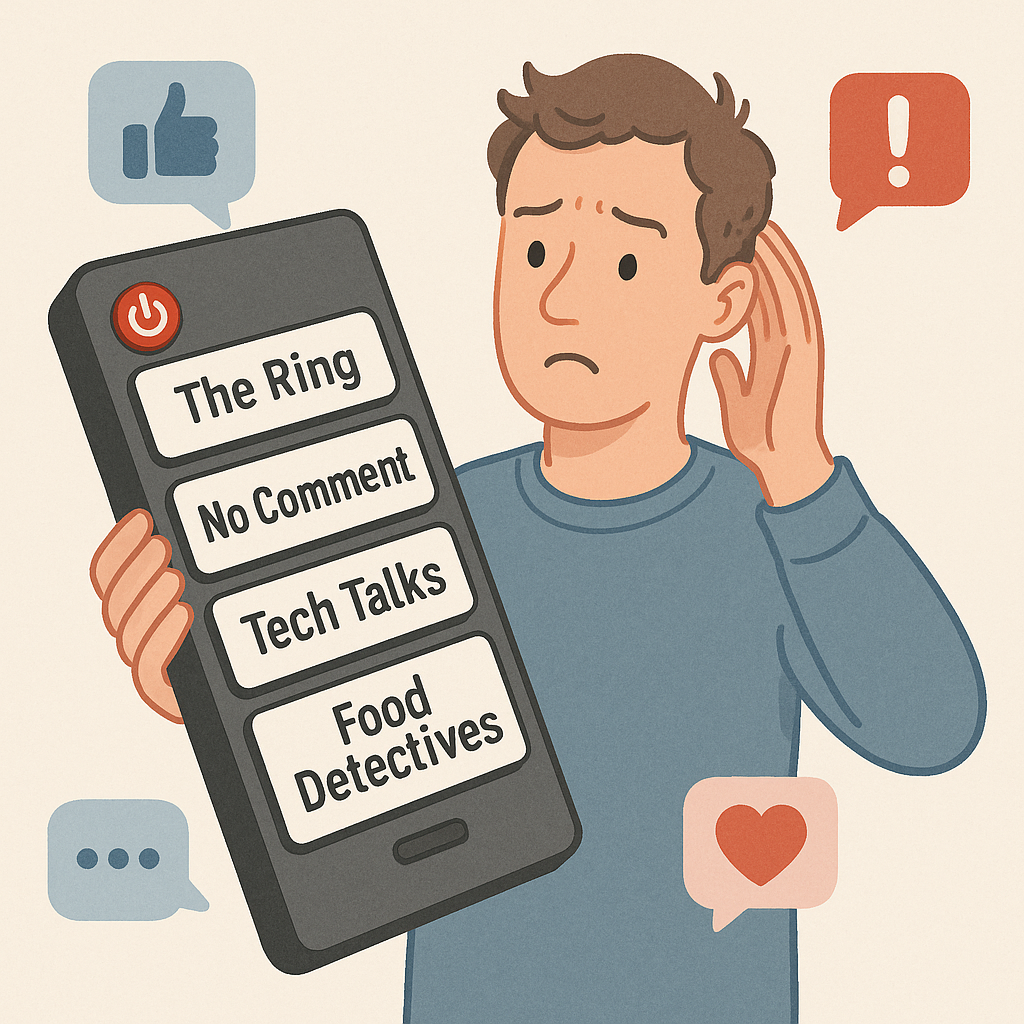
The network’s ambition does not stop at politics and vibes. It is also moving aggressively into predictive content, on the working assumption that if the present is unwatchable then the future is at least bingeable.
My Wildest Prediction invites “business and tech visionaries” to dare to imagine Europe in 2035. So far, early tapings have yielded the following bold scenarios:
- By 2030, 40 percent of Europeans will get their news from fridges that push sponsored referendum explainer videos.
- By 2032, every citizen will have the right to a digital twin that is more employable than they are.
- By 2035, all major elections will be held inside a single app labeled “Accept all cookies to vote.”
For viewers who find “wild predictions” a bit unserious, there is The Big Question, which promises “deep dive conversations with business leaders.” According to Euronews, this is where CEOs will tackle crucial issues like, “Can Europe remain competitive in AI,” “Is regulation killing innovation,” and “How can we monetise water scarcity tastefully.”
“On The Big Question, we go beyond headlines,” said a producer. “We ask a tech founder not just if data privacy matters, but how much it matters in basis points.”
To ensure that the tech angle is fully cross-promoted, Euronews Tech Talks will “explore the impact of new technologies on our lives” through Q&As and “lively conversations.” Each episode will carefully balance two guests: one who believes AI will save democracy by fact-checking everything, and another who believes AI will save democracy by finally moderating the comments under Euronews videos.
In a pilot episode, a guest reportedly argued that generative AI could soon replace “low-value news tasks” such as writing headlines, structuring debates, and sometimes appearing as the actual politician. “The only thing AI can never replace,” he added, “is the sponsored mid-roll for a fintech that helps you hedge against food inflation.”
The channel insists that it will cover tech harms in depth, as long as the harms come with a bookable spokesperson and a LinkedIn-ready job title.
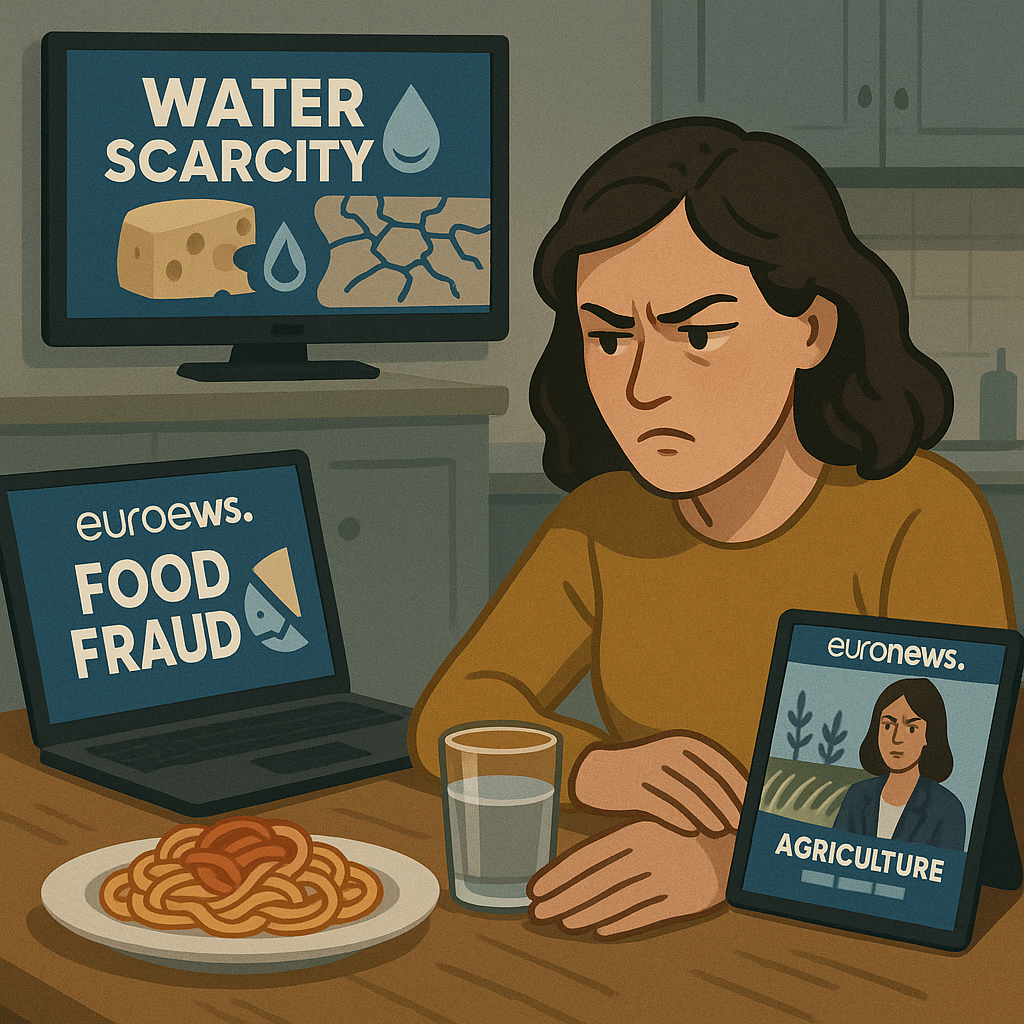
For those who prefer their anxiety in edible form, The Food Detectives and Water Matters anchor Euronews’ new “What You Put In Your Body Is All Lies” vertical.
The Food Detectives follows Europe’s best food experts as they crack down on fraud. Viewers will watch brave inspectors pull suspicious mozzarella from freezers, test wine for added sugar, and gently explain that the “extra virgin” label has always been more of a mood board than a legal category.
“We want to connect with audiences on what really matters,” said a hypothetical showrunner. “Many feel disconnected from Brussels, but everyone understands that their ham might be 12 percent ham and 88 percent storytelling.”
Water Matters offers a similar approach to resource security. The series will show reservoirs shrinking, pipes bursting, and local officials insisting everything is “within seasonal norms” while standing ankle-deep in what appears to be last year’s river. The calm Euronews narration will end each segment with a question like, “Can Europe adapt in time,” followed by an invitation to watch My Wildest Prediction for a sponsored answer.
Across all of these, the stated mission is to create a shared European conversation. Practically, this means a single viewer could spend an entire evening moving through an anxiety funnel engineered by the same channel:
- The Ring: Democracy might be in danger.
- No Comment: Here is footage of the danger, you figure it out.
- Euronews Tech Talks: The danger is now optimised by AI.
- My Wildest Prediction: By 2035, the danger will be subscription-only.
- The Food Detectives: Also, your parmesan is counterfeit.
- Water Matters: And the tap is a mood, not a guarantee.
Media analysts note that the real innovation is not the topics, which other outlets have been covering, but the number of sleekly tiled thumbnails that can now be surfaced on your smart TV. “Euronews has finally understood that the public square is not a town hall,” one analyst said. “It is a carousel.”
The network frames the project as a public service. With US and UK brands encroaching on European discourse, and platforms like YouTube and TikTok slicing attention into smaller units, Euronews wants to be the place where those slices are at least colour graded coherently.
Critics argue that there are risks. Can The Ring avoid becoming a pan-continental shouting arena where nuance goes to die in three languages at once? Will No Comment really be neutral, or will someone choose footage based on what performs well in “engagement dashboards” that now include a column for “number of times re-edited with Eurodance soundtrack”?
There are also questions about who gets to make predictions, ask big questions, and talk tech. Early lineups lean toward business leaders and visionaries comfortable in Davos-adjacent lighting. Civil society voices, activists, and people who have recently touched a flooded basement may appear, editors say, “where appropriate and sponsorable.”
Euronews insists that the experiment is worth it. “Someone has to structure Europe’s existential panic into watchable formats,” a spokesperson told Euronews, in an example of efficient cross-promotion. “If we do not give citizens ‘The Big Question,’ the algorithm will give them 800 little conspiratorial ones, plus a recipe for cloud bread.”
As for outcomes, the channel remains optimistic. In internal forecasts obtained by this reporter, Euronews projects that by 2027 its expanded slate will have achieved the following key performance indicators:
- Pan-European trust in media stable at “skeptical but still clicking.”
- Average citizen understanding of AI, food fraud, and water security up by 12 percent.
- Number of actual political decisions influenced by the debates: to be assessed in a future segment of My Wildest Prediction.
Until then, Europe’s public square will be rebuilt one branded format at a time. If that fails, executives are reportedly workshopping a backup show: a silent split-screen of rising temperatures, empty reservoirs, and supermarket prices, titled simply, in true Euronews style, No Solution.