U.S. and Iran Will Keep Their Missiles Off Each Other’s Homeland
My call: U.S. and Iran keep the war offshore through July 30

From Hormuz to Homeland?
My call: U.S. and Iran keep the war offshore through July 30
Everyone is talking like World War III is on sale for Prime delivery. The signal says something colder: both Washington and Tehran will keep shooting at each other’s edges, not each other’s cities, through the heart of the fragile peace window.
The consensus says "homeland war." The map says "coastal skirmish."
My call: between now and July 30, 2026, the United States and Iran will not trade direct strikes on each other's home territory.
That means no U.S. cruise missiles landing on IRGC bases deep inside Iran, beyond the Hormuz‑adjacent belt Washington is already hitting. No Iranian missiles dropping on U.S. soil or on unmistakably U.S‑flagged bases outside the immediate Gulf arc.
The ambient take right now is that the new U.S.–Iran memorandum of understanding is a dead letter and we are one misfire away from somebody leveling Bandar Abbas or taking a swing at Diego Garcia. The people who always predict apocalypse will eventually be right, just not on this thirty‑two‑day clock.
What we are watching instead is something less cinematic and more cynical: bargaining by artillery, carefully routed through tankers, coastal radars, and unlucky Gulf neighbors.
The call: War stays in the margins
Forecast window: now through July 30, 2026, the core of the MoU’s 60‑day test period and immediate aftermath.
Resolution test: The forecast fails if, before July 30, the U.S. conducts direct, attributable strikes on Iranian targets clearly beyond the current Hormuz operational belt, or if Iran hits U.S. homeland or clearly U.S‑flagged bases beyond the immediate Gulf theater.
Right now, the pattern is remarkably tidy for something involving explosives. The U.S. hits ten Iranian military targets tied to the Strait of Hormuz: surveillance, comms, air defenses, drone depots, mine layers. Iran hits a Panamanian‑flagged tanker carrying Qatari crude, then launches drones and missiles at Bahrain and Kuwait, the countries that rent their runways to America. Both governments read the same script, they just swap nouns around the word "defense."
If this were the prelude to homeland‑on‑homeland war, you would expect the geography to be drifting inward by now. It is not. It is tracing the coastline like a nervous finger.
Why the fire stays offshore
Start with the paper everyone is pretending to respect while they violate it: the June MoU, a 60‑day ceasefire‑adjacent framework that covers sanctions, Hormuz shipping lanes, and Iran’s nuclear program. The dates matter. As long as the thing is formally alive, both capitals have a political excuse to keep their military lawyers on speed dial and their targets technically "proportionate."
Washington’s incentives are brutally simple. Trump loves the sound of "Iran will no longer exist" in front of cameras. He does not love the idea of owning a multi‑month air campaign that soaks the Pentagon in money, the Gulf in fire, and his own election calendar in coffins. You can tweet regime change. You cannot live‑stream tanker convoys when the strait is mined and Brent is through the roof.
So CENTCOM is doing what militaries do when politicians want to look hard without going all in. It is dismantling the bits of Iran’s southern military infrastructure that touch freedom of navigation and pretending the rest of the country is a rumor. Radar here, a drone hangar there, a few mine‑layer boats on the side, all hugging the Hormuz theater.
Tehran’s logic is just as cold. The regime needs leverage over two things: sanctions relief and who gets to charge rent on ships squeezing past its coast. That means demonstrating it can hurt shipping and punish the Gulf monarchies without inviting a campaign that reaches the parts of Iran the IRGC actually cares about, like major command hubs or missiles parked far from the beach.
Hence the current playbook: hit Bahrain and Kuwait, where U.S. bases live, but with attacks that are as much message as massacre. Shake markets, not the regime’s remaining fiscal spine. Call every U.S. sortie a war crime and every Iranian launch self‑defense under the Islamabad truce.
Both sides are using lawyers’ verbs to describe soldiers’ actions because they are still trying to keep this inside the category of "contained conflict" instead of "open interstate war." Contained wars are unpleasant but familiar. Open wars demand victory conditions, and nobody has written those down.
The real red line: American body bags
The most likely way this forecast dies is not a clever Iranian plot or a devious U.S. plan. It is an accident with a PR department. A missile that hits the wrong barracks. A drone that slips past defenses and leaves twenty Americans dead on a tarmac in Kuwait.
That kind of image, flags on coffins, is the accelerator pedal Trump cannot fully control. The demand to "finish the job" would shift from cable news rhetoric to a bipartisan dare. That is when targets jump from coastal batteries to inland IRGC command centers, and the phrase "limited response" loses the word "limited." Within this 32‑day window, that is the main path to U.S. strikes well inside Iran.
On the Iranian side, the threshold for hitting U.S. homeland is even higher. Tehran knows a direct strike on American soil is an engraved invitation to regime‑ending war. If the system is rational at all, it will keep its longer‑range capabilities pointed at bases and partners where Washington still has political room to argue about proportionality.
The wildcards are the usual suspects. Israel is publicly polishing plans for operations "in Lebanon and Iran." Hezbollah is not disarming for anyone’s press conference. Iran‑aligned militias in Iraq and Syria still have their own calendars. Any of them can create a headline that says "Iran attacks," even if the chain of command is lossy and the timing inconvenient.
But even in the regional mess, you can see the guardrails. Israeli strikes, if they come, are more likely to be the quiet kind that Tehran absorbs and denounces than the kind that demand an immediate ballistic rebuttal on the U.S. The IRGC can push proxies harder without putting its own name on an attack that crosses the American homeland line.
Signals to watch while everyone screams "World War III"
If this forecast is going to fail quickly, the evidence will not be subtle. Watch for three clear shifts.
- Target geography. U.S. strikes jump from coastal and Hormuz‑linked assets to IRGC bases and command nodes near major Iranian cities. Or Iranian missiles start landing on U.S. facilities clearly outside the Gulf theater.
- MoU funeral rites. Not just angry statements, but formal suspensions, walkouts from Doha or Islamabad, and UN showpieces that say, in effect, "we consider ourselves unbound." Once the paper is burned in public, the target sets expand in private.
- Body count politics. The first incident with significant American fatalities or a spectacular civilian tragedy in Iran would hand every hawk in both capitals a megaphone. You will know it when you see the b‑roll.
Absent those, expect more of the ugly same: tankers harassed, Gulf allies rattled, Iranian markets sliding on every IRGC overreach, and U.S. spokespeople explaining how the latest airstrike is both firm and restrained.
The satirical verdict
So here is the bet in plain terms: through July 30, the U.S. and Iran will keep punching each other in the coastal ribs, not the national face. The war will stay zoned as a maritime and regional mess, not rezoned as an interstate slugfest.
If I am wrong, you will know it from the flight paths, not the hashtags. Until then, treat every "World War III" headline for what it is: clickbait for a conflict whose main innovation so far is figuring out how many countries you can bomb while still calling it a peace process.
Around the Shallot
Stay in the same broken universe.
Forecasts, satire, cartoons, and quizzes should feel like one publication, not disconnected tabs.

Tech
‘Don’t Regulate Us,’ Beg AI Founders Currently Selling Regulation-As-a-Service
Silicon Valley hails Trump’s plan to let AI companies write their own rules, promises to sell those rules back to everyone else by Q4.
Oct 11
Forecast
Through December 10, Houthis Won’t Damage Pakistan or Turkey Infrastructure
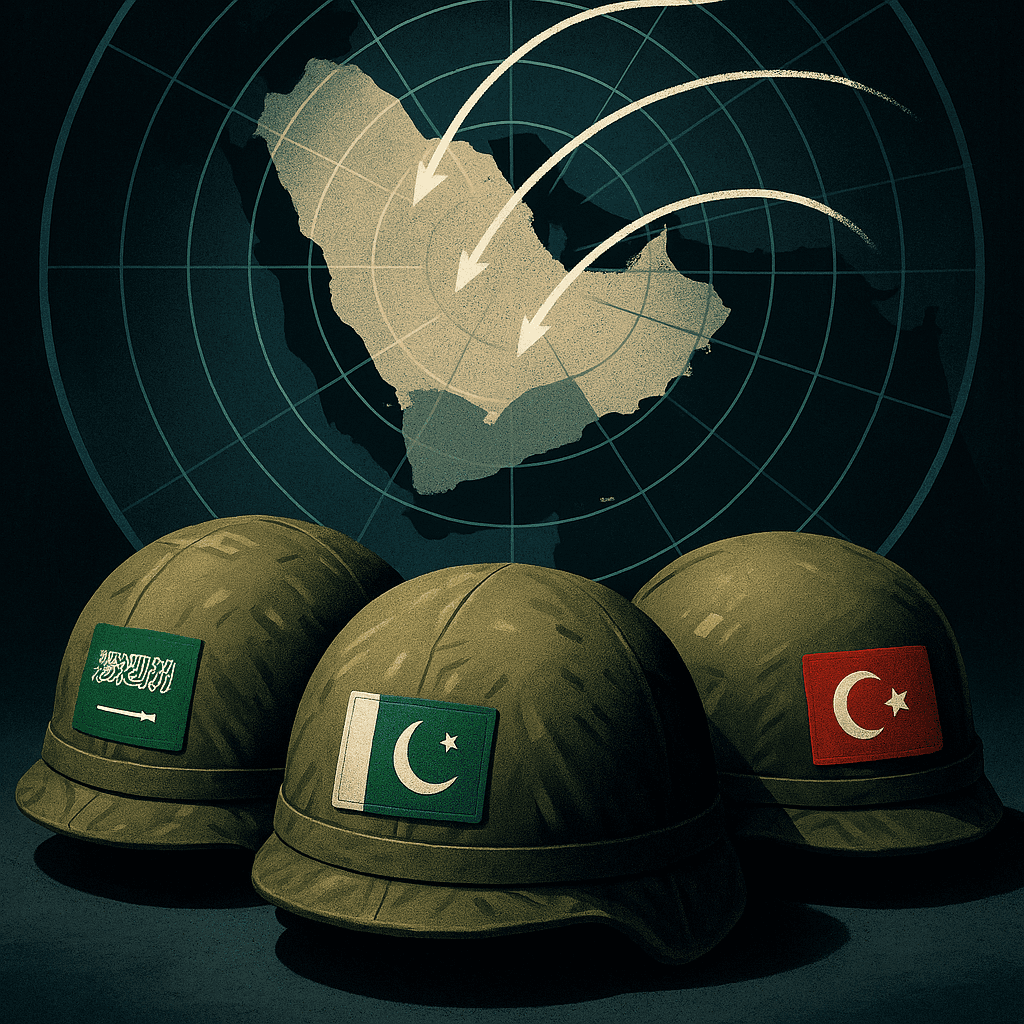
The Mecca Defense Pact just put two more flags on the Saudi firing chart. The consensus panic says this widens the war within weeks. The signal says the Houthis will talk big, hit Saudi and the sea, and leave Pakistan and Turkey’s hard targets alone for this 60 day window.
Comments
Be the first to comment.