U.S. And Iran Won’t Trade Deadly Naval Fire Before September 2026
My call: No U.S.–Iran naval showdown that kills sailors or sinks a warship before Sept. 1, 2026.
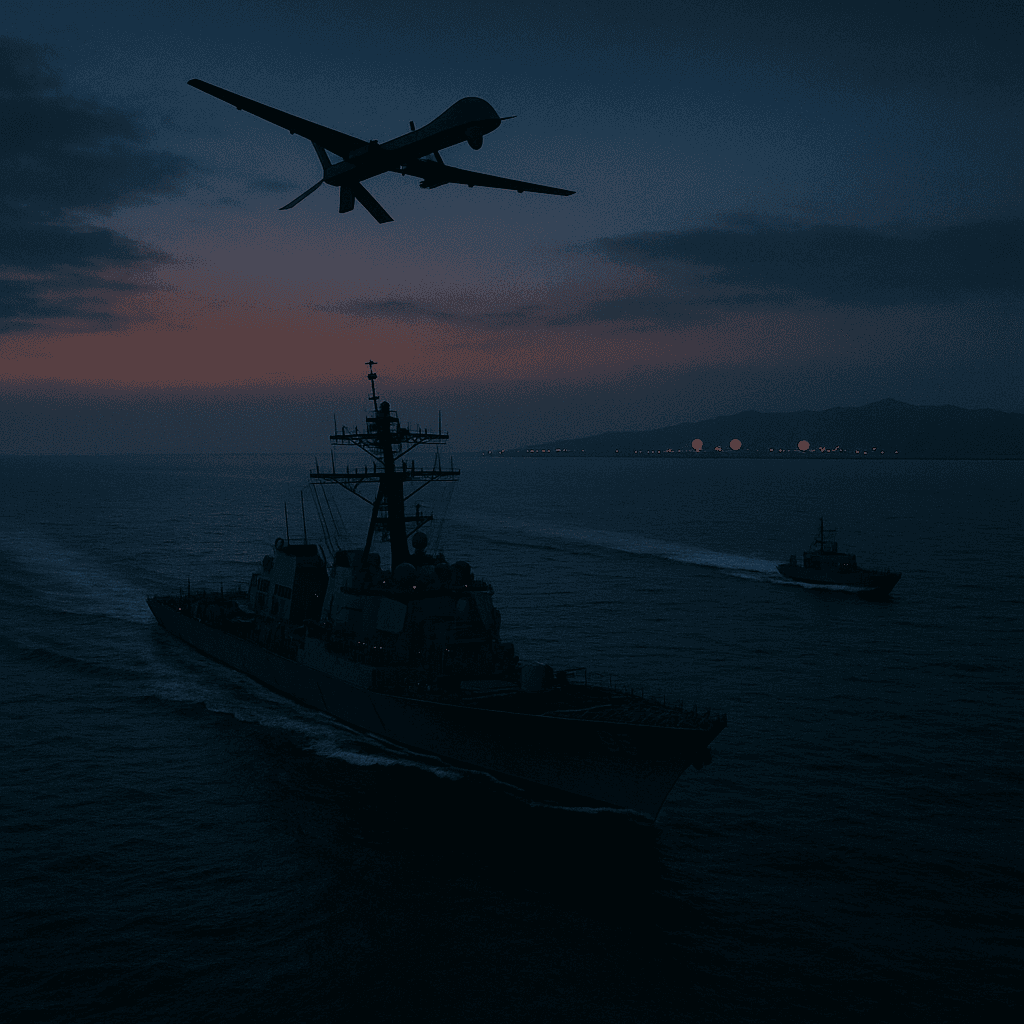
The war where everyone keeps missing on purpose
Most wars do not come with air raid sirens in Bahrain, drones over Hormuz, and a body count stuck at zero. Yet that is exactly where the U.S. and Iran have parked themselves: a shooting gallery in the Gulf, a ceasefire on paper, and peace talks in the background like hold music no one asked for.
My call: this stays a drone and radar war, not a naval bloodbath, at least through Sept. 1, 2026. No U.S.–Iran battle that kills sailors at sea, no major warship on either side sent to the bottom or quietly written off.
The consensus fear is simple. You keep throwing missiles and drones around one of the world’s busiest chokepoints, and sooner or later you get a tanker in flames and a destroyer limping to port. The signal says something different. Both capitals are working very hard to make sure that never quite happens, while pretending they are not.
The scorable bet
Here is the forecast, in plain terms you can throw back at me later. From now until Sept. 1, 2026, there is no direct, publicly acknowledged U.S.–Iran naval engagement in the Strait of Hormuz or Gulf of Oman that either:
- produces at least one confirmed military fatality at sea on either side, or
- causes the sinking or constructive total loss of a U.S. or Iranian naval vessel.
Mines that disable a commercial tanker, warning shots that hole an IRGC speedboat, a mysteriously scorched support ship that gets tugged to Dubai, all still count as a “no” for this call, as long as there is no clear U.S.–Iran naval shootout with dead sailors or a warship effectively gone.
The logic is not that the Gulf is safe. It is that both sides are trying to keep the danger very specifically away from ships and bodies, and corral it into a chessboard of expendable hardware and fixed coastal sites.
Why both sides like a loud, bloodless war
Iran has done something extraordinary and mostly illegal. It has turned the Strait of Hormuz into a partially closed toll booth, then started firing drones and ballistic missiles near U.S. forces and Gulf monarchies, while insisting it can hit the Fifth Fleet in Bahrain whenever it feels like it.
The United States has done something equally extraordinary. It has shot most of that down, hit Iranian coastal radar at places like Goruk and Qeshm Island, and then calmly told everyone there were no casualties, no damage, nothing to see here.
This is not luck. It is a shared rulebook that no one signs but everyone follows:
Iran’s incentives: Hormuz is Tehran’s bargaining chip. It proves Iran can hurt the world economy without winning a conventional war. What Iran cannot afford is a public naval humiliation. Lose a frigate or a swarm of fast boats on live TV and suddenly the blockade is an invitation for the U.S. to do it again, harder.
So Iran leans on drones and missiles. These can be plausibly exaggerated at home and walked back abroad. Hitting U.S. radar and bases in name while in reality hitting nothing keeps domestic hardliners happy and foreign escalation just below boiling.
America’s incentives: Trump wants to say two things at once: he is ending the war, and he is very, very tough on Iran. A big naval incident wrecks both lines. Dead U.S. sailors and a crippled destroyer are the kind of footage that spikes oil prices and buries stump speeches about cheap gas and strong farmers.
The Pentagon understands this. Hence the tight rules of engagement that focus on intercepting threats and smacking coastal infrastructure, not sinking ships. Hence CENTCOM’s press releases that read like a ritual: we intercepted, we retaliated, we suffered no casualties, Iranian claims are false.
Both sides get their talking points. Neither gets a war they cannot control.
The fragile middle: live fire, live peace talks
All of this plays out under a ceasefire that exists mainly in press conferences and on negotiation talking points. There are indirect U.S.–Iran talks on sanctions, the nuclear file, and reopening Hormuz. Yet missiles are flying at Kuwait and Bahrain, sirens are going off, and coastal radar is being turned into scrap.
That is the unstable middle the forecast sits on. Too much calm and both sides look weak at the bargaining table. Too much blood and there is no table.
The pattern so far is conspicuous. The U.S. hits unmanned systems and clearly military fixed sites. Iran lofts drones and missiles in ways that allow U.S. defenses to do their job, then claims spectacular success at home that CENTCOM flatly denies. Commercial shipping is harassed and menaced, not sunk in droves.
Historically, U.S.–Iran naval combat has been rare relative to the number of close shaves. The last real war-at-sea moment, in the late 1980s tanker war, followed clear escalatory steps like mining and casualties. Today’s dance looks more like a negotiated performance: dangerous enough to feel serious, choreographed enough to keep the casualty counter at zero.
What would prove this wrong
The forecast is not a vibe, it is a bet. Here is what would make me sweat it.
First, rules of engagement. If credible reporting shows the U.S. Navy can start firing preemptively on IRGC fast boats or aircraft inside wider exclusion zones, or that Iran has told its commanders to target U.S. warships, not just drones and radar, the ceiling on violence just moved.
Second, target choice. When you start seeing deliberate hits on manned platforms, like patrol boats or crewed coastal batteries, that signals both sides are willing to risk funerals. Dead gunners on shore are only a couple of decisions away from dead sailors at sea.
Third, defense failure. Thus far the interceptions have worked. The nightmare path is a missile that gets through and kills U.S. or Gulf personnel on land. That kind of visible failure can produce what strategists lovingly call “restoring deterrence,” also known as “overreacting at sea.”
Fourth, talks collapse. While negotiations drag, both sides have a concrete reason to keep their options open and their casualties low. Walkouts, ultimatums, or public vows to “completely close” Hormuz would strip away that restraint. A blockade that is officially permanent is one step closer to something the U.S. feels obliged to break with force.
Finally, civilian shipping incidents clearly tied to Iran. A seized or mined tanker that leaves sailors dead, especially under a friendly flag, piles pressure on Washington for a dramatic response. That is the road to a destroyer cracking open a swarm of IRGC boats, and the IRGC deciding they have to shoot back.
Why the quiet rulebook probably holds
The counterarguments are real. The IRGC does not exactly run on tight centralized control. The Strait is crowded and mistakes happen. Domestic hawks in both countries would love a clear enemy ship to point at in campaign ads and Friday sermons.
But over the next three months, the weight of incentives still points to calibrated skirmishing rather than a naval obituary.
Trump needs victory banners, not carrier task forces on breaking news. Tehran needs leverage at the talks, not a row of naval widows on state TV. Gulf monarchies need their ports open and their populations not hiding under sirens because someone finally misjudged a salvo.
So the likely near future looks like more of the same: dramatic intercept videos, dramatic Iranian claims, carefully un-dramatic casualty reports. Maybe a damaged commercial ship, maybe a burned-out fast boat. Plenty of risk, little appetite for a defining battle.
On balance, I stay with the call: no acknowledged U.S.–Iran naval clash that kills at sea or sinks a vessel before Sept. 1. If I am wrong, you will know it. Cable news will rerun the footage for weeks, oil will jump, and every official involved will swear they never saw this coming.
For now, the war at Hormuz remains the rare conflict where the hardware keeps dying so the politicians do not have to explain why people did.
Around the Shallot
Stay in the same broken universe.
Forecasts, satire, cartoons, and quizzes should feel like one publication, not disconnected tabs.

Tech
‘Don’t Regulate Us,’ Beg AI Founders Currently Selling Regulation-As-a-Service
Silicon Valley hails Trump’s plan to let AI companies write their own rules, promises to sell those rules back to everyone else by Q4.
Oct 11
Forecast
Through December 10, Houthis Won’t Damage Pakistan or Turkey Infrastructure
The Mecca Defense Pact just put two more flags on the Saudi firing chart. The consensus panic says this widens the war within weeks. The signal says the Houthis will talk big, hit Saudi and the sea, and leave Pakistan and Turkey’s hard targets alone for this 60 day window.
Comments
Be the first to comment.