Within 120 Days, SpaceX Stock Will Drop 30 Percent From IPO High
My call: Within four months of the IPO high, SpaceX logs a 30% closing-price drawdown. The rocket can still be historic and wildly overbid on the way there.
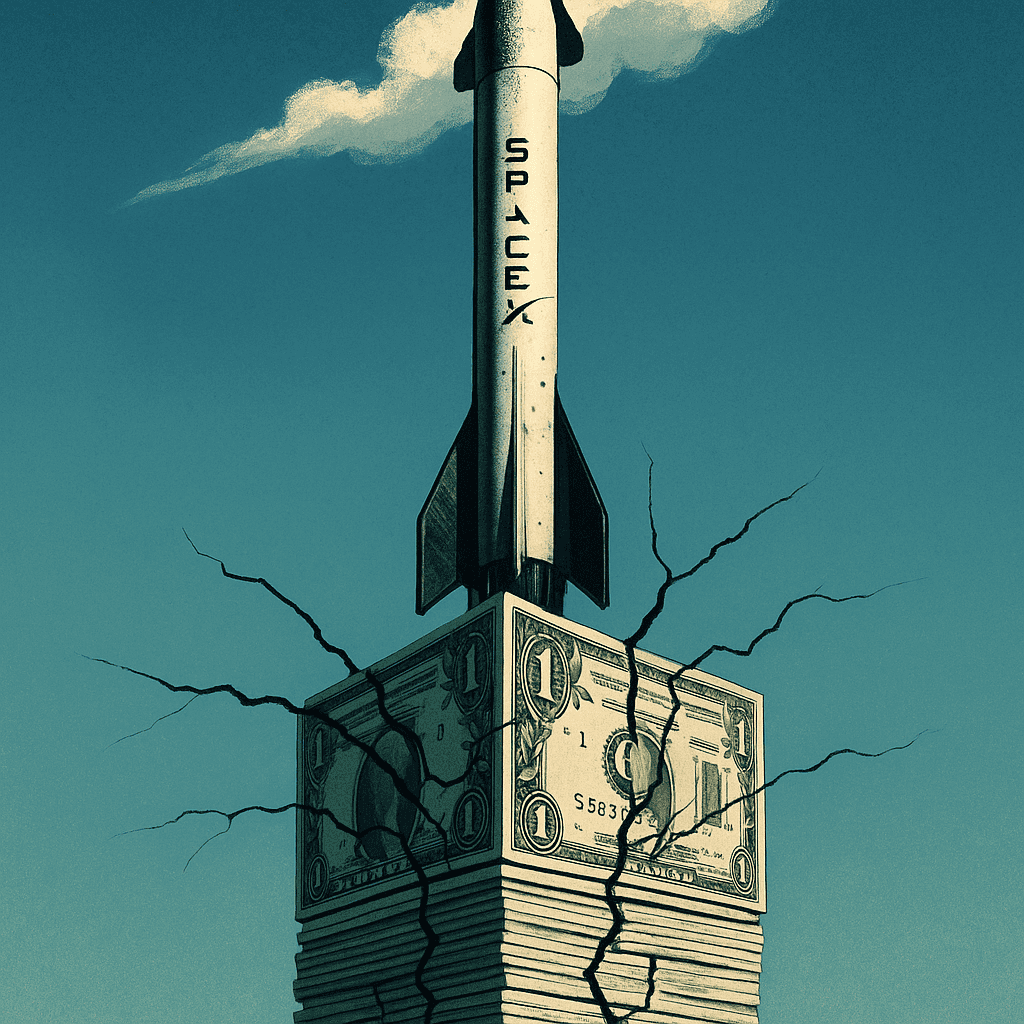
The bet: this thing cracks before it conquers
Here is my line in the launchpad concrete: within 120 days of its post-IPO closing high, SpaceX will have at least one day where the stock finishes 30 percent or more below that peak. Not an intraday swoon that Twitter swears was a buying opportunity. A real, official close in the mid 140s or worse if the top holds in the 200 to 218 band.
SpaceX can still be the most important industrial company of the century and trade like a meme coin on the way there. The market is currently trying to price Mars, orbital data centers, and the Elon Musk lifestyle brand all at once. My call is that the pricing experiment will include a sharp markdown, on schedule with every other over hyped float that forgot gravity exists.
The setup: a mega cap IPO wearing a meme stock costume
The consensus take is comfort food: this is just "the next Nvidia," a must own AI infrastructure platform that skipped its awkward teenage phase and rang the bell as a fully grown mega cap. That story explains the $2.5 trillion enterprise value on a float of roughly 4.2 percent. It does not explain why the options market is screaming 97 percent implied volatility for the next year.
At around 200 dollars a share, public buyers are paying roughly triple the 63 ish fair value tags coming from the fundamentals crowd at Morningstar and Freedom Capital. That gap does not automatically mean the quants are right. It does mean the current price embeds a lot of things going right on AI compute, orbital broadband, and Starship without much room for anything going sideways.
The trading tape says this is not a patient debate about discounted cash flows. Vanda has SpaceX as the single most bought stock by retail since the IPO, with Tesla seeing net selling in parallel. The Musk faithful are swapping their old posters for the "cleaner AI and tech" pinup, convinced they are upgrading to a more respectable addiction.
On the other side, a tiny float acts like a volatility amplifier. Every new buyer has to squeeze into the same cramped row of seats. That is a fantastic way to go up too far, too fast. It is also how you get trapped when the doors finally open and more shares flood in.
Why a 30% drawdown is more likely than a soft landing
Start with the simple mechanics. A stock with near triple digit implied volatility is being priced, by professionals with money on the line, as capable of wild swings in both directions. A 30 percent move from a hot IPO top is not some freak event. It is the middle of the distribution.
Layer on the supply curve. SpaceX sold a sliver of itself to the public, then left the rest locked up behind staggered schedules that run well past our four month window. That creates a scarcity boom. It also creates textbook overhang. Any hint of a secondary offering, any acceleration of insider unlocks, and the market has to digest a step change in available shares. The first chunky deal that prices at a modest discount to the screen will force everyone to update their mental valuation anchor.
Next, the fundamentals are not exactly cushioning the downside. The company is losing something in the ballpark of 5 to 6.4 billion dollars a year once you consolidate xAI and its expanding bonfire. Capex for Starship, Starlink, and a proposed megaconstellation of solar powered data center satellites is enormous. Even if you believe the AI compute agreements with Anthropic and Google, reportedly running at about 26 billion dollars annualized, SpaceX still has to prove they are durable, high margin, and not simply a very fancy way to subsidize infrastructure for Musk's own AI ambitions.
Meanwhile, history is unkind to the "it only goes up" narrative. Look at the last 15 years of large US tech IPOs. Most beat expectations in the first week. Less than half are still ahead of their debut high a year later. When lockups expire or the second quarter rolls in light, the market quietly takes back a chunk of the opening day enthusiasm.
Combine all of that and a 30 percent pullback stops looking like a crisis. It looks like a standard re rating in a regime where SpaceX, as PitchBook puts it, is destined to trade like Tesla on steroids, with 20 to 30 percent swings around milestones rather than tidy stair steps around earnings.
What could keep it aloft anyway
There is a real bullish case, and it is not just Reddit avatars with laser eyes. SpaceX has built two serious cash engines in launch and Starlink, with credible margins and national security grade strategic moats. The AI infrastructure story is not pure vapor either. If those data center satellites work anywhere near spec and the Anthropic and Google contracts prove sticky, investors will not care that orbital physics textbooks did not foresee this particular business model.
Then there is Musk himself, the most powerful narrative AR filter public markets have ever seen. A founder with his hit rate can get investors to look past near term losses and delayed timelines in a way no generic CEO can dream of. The PitchBook "credibility ledger" is instructive here. Two thirds of SpaceX's historic commitments get done. Only 17 percent hit the original schedule. Hardware eventually appears. Earnings and Mars dates do not.
If SpaceX strings together a strong sequence of visible wins in our window, things could stay frothy. Imagine: Starship hitting its cadence goals, more zero drama satellites lifting off, a splashy extension of AI compute deals, and no major secondary offerings until the fifth month. Retail keeps buying every dip, passive funds are still building positions, and the stock might only ever give back 20 percent before rocketing to new highs.
I just do not think the company, the capital structure, and the man at the center are wired for that kind of restraint.
The scoreboard: how we will know if gravity wins
Here is the resolution test I am willing to be graded on.
- Mark the highest closing price SpaceX prints in its early trading period, likely somewhere between 200 and 218 dollars.
- Watch every close through roughly 120 days after that top.
- If any close is at or below 70 percent of that peak, say 140 dollars or lower if the top is 200, this call hits.
The most obvious catalysts to watch are predictable: any announced share issuance or insider unlocks, the first true post-IPO financials that put meat on the AI infrastructure story, and the first high profile miss on the new orbital data center narrative. Add in the usual macro suspects, and you have plenty of excuses for sentiment to wobble.
If we make it four months with no 30 percent markdown, then I owe the cult more respect. It will mean Musk, scarcity, AI narrative, and index demand have fused into something stronger than the usual post IPO physics.
Until then, treat the current price like a launch webcast: spectacular to watch, genuinely historic if it works, and absolutely not the same thing as escaping Earth's gravity. Right now investors are paying all time high multiples for a company that still burns billions, on the theory that this time the laws of valuation do not apply.
My forecast is simple. Gravity is patient. The crowd is not. Place your bets on which one runs out of fuel first.
Around the Shallot
Stay in the same broken universe.
Forecasts, satire, cartoons, and quizzes should feel like one publication, not disconnected tabs.

Tech
‘Don’t Regulate Us,’ Beg AI Founders Currently Selling Regulation-As-a-Service
Silicon Valley hails Trump’s plan to let AI companies write their own rules, promises to sell those rules back to everyone else by Q4.
Oct 11

Forecast
Through December 10, Houthis Won’t Damage Pakistan or Turkey Infrastructure
The Mecca Defense Pact just put two more flags on the Saudi firing chart. The consensus panic says this widens the war within weeks. The signal says the Houthis will talk big, hit Saudi and the sea, and leave Pakistan and Turkey’s hard targets alone for this 60 day window.
Comments
Be the first to comment.

