By 120 Days, Burnham Won’t Trigger a Pre‑2027 UK Election
No early‑election move within 120 days; 2026 stays a threat, not a plan.
The call: Burnham blinks, not jumps
Andy Burnham is about to walk into No 10 on someone else’s landslide, selling a policy mix that sounds like “Starmer, but with feelings” and a northern postcode. The Westminster question writes itself: does he chase his own mandate fast, or squat on Keir Starmer’s for as long as the plumbing holds?
My call: within the next 120 days, he does not pull the trigger on an early general election for 2026. He will flirt with the idea, brief around it, and weaponise it. He will not schedule it.
The incentives to rush look tasty on paper. The constraints are uglier and, crucially, already on television.
Mandate deficit vs chaos fatigue
The story Labour wants to tell is neat. Voters chose the party in 2024, Starmer lost the room, Burnham finishes the job. The problem is that neat stories do not survive contact with Nigel Farage, newspaper front pages, or the British constitution.
Starmer resigning less than two years into a thumping majority does dent the moral authority of the 2024 result. “We did not vote for him” is an easy line for Reform and the Conservatives. Burnham, unlike a mid term Tory successor, is trying to pivot on policy as well as personality. Cost of living populism, rent controls, wealth taxes, a northern No 10, constitutional rewiring. None of that appeared in bold on the ballot.
So yes, there is a logic for an early mandate. But there is a louder national mood: no more drama. The public just removed a government, then watched its replacement implode in record time. Another trip to the polling station before the next World Cup is not obviously what anyone outside SW1 ordered.
Burnham’s first political problem is not “Do I have a personal mandate?” It is “Do I look like the adult in the room?” A snap election screams adrenaline, not adulthood.
The radical agenda that will not quite dare
The strongest case for going early is ideological. Persuasion UK’s mega poll tells Labour what its heart already believes: lean into cost of living populism, and the numbers perk up. Put rent controls and higher taxes on wealth on the menu, and a decent majority reappears, even in Reform curious seats.
Burnham’s people are not subtle about it. His allies brief that he is “not business as usual”, that his instincts are interventionist, that he will be “radical” on growth and living standards. Miatta Fahnbulleh is hovering at the edge of Treasury conversations. Angela Rayner is cheering from the left flank. Union leaders and activists smell ideological vindication.
But there is a second audience. Markets, the Treasury, and every business group that has spent two years being reassured Labour would not scare the horses. Rent controls and wealth taxes are not just another bullet point on a leaflet. They are a flashing “risk premium may apply” sign over gilts and investment decisions.
That is why, in his first months, Burnham will spend more energy proving he can govern than proving he can campaign. Expect the economic team to be a mixed ticket: one or two interventionists with real clout, anchored by continuity figures and careful Treasury language. Enough to signal a change of tone, not enough to send bond yields on a day trip.
If he is trialling rent rhetoric and wealth tax soundbites on live voters and live markets, he will want to watch how they land before staking an entire parliament on them. That argues for policy pilot schemes within the existing mandate first, manifesto rewrite and election later.
Reform UK, the tempting excuse
Nigel Farage would love an early election. He knows the script: the system is rigged against him, the establishment is panicking, and only Reform tells the truth about bills, borders, and the London blob. Leadership chaos is jet fuel for that story.
The polling, though, is sneakier. Once Starmer exits the stage and Burnham starts banging the cost of living drum, Reform’s angry plateau begins to look more like soft clay than granite. Voters who park with Farage to kick Labour up the backside do not suddenly become constitutional revolutionaries when a warmer, more interventionist Labour leader shows up.
Burnham’s best play for now is not “ask the country to crush Reform in 2026”. It is “steal Reform’s clothes and let its vote leak back slowly”. That means targeted cost of living moves, visible help on housing and energy, and a rhetorical war on corporate rip offs. All doable as governing acts, without an election.
If he pulls voters back that way, he has more time to pick his moment. If he fails, the argument for an early, high stakes fight with Farage might grow. But that failure will not be obvious inside 120 days, and certainly not in a way that justifies detonating the parliament on purpose.
The McSweeney warning label
There is one quote that matters more inside Labour than any polling crosstab. Morgan McSweeney, the architect of the 2024 victory, telling the BBC that the party simply was not prepared for power. They misjudged how fast they needed to deliver, they did not adapt to a changed world, they disappointed people.
This is not an opposition op ed. It is a confession from the former chief of staff. In every internal argument over timing, someone will now read that line back and say: “And you want to do a whole general election on top of this?”
McSweeney also backs Burnham, and even his plan for a Downing Street unit in Manchester. That matters. It frames devolution as something that can be “pushed through” from government, not dangled as a hypothetical reform if only the voters would kindly come back for an encore.
Burnham does not need a fresh election to open a Manchester hub, convene mayors, or legislate more powers for regions. He needs a majority, a spine, and a lawyer. He already has the first, he thinks he has the second, and the third can be hired.
So what will actually happen?
Over the next 120 days, here is the more boring, more likely script.
- His first big speech nods to a “renewed contract” but leans heavily on “delivering the 2024 mandate” and “stability”.
- He appoints a mixed Cabinet: some interventionists, some continuity, nobody designed to terrify the bond market for sport.
- He announces a review or “refresh” of key economic and devolution policies, framed as updating the existing programme, not tearing it up.
- He rolls out a visible cost of living package, time limited and tightly costed, and claims it as proof he can act without asking for permission again.
- Labour HQ quietly upgrades staff, data, and candidate lists, while publicly denying that this means a definite 2026 election.
What he will not do, within four months, is the one clean, scorable thing: name an election date for before the end of 2026, ask the King to dissolve parliament on that timetable, or launch a formal national campaign explicitly pegged to a pre 2027 poll.
He will want the option. He will not cash it in yet.
The satirical verdict
The consensus story has Burnham bursting into Downing Street, tearing up the script, and dragging Britain back to the polls in a blaze of northern populism. The signal says something duller. He will discover that prime ministers enjoy power even more than pundits enjoy hypotheticals.
So mark it: no early election move inside 120 days. By Christmas, he will still be promising to “let the people have their say in due course”, while quietly discovering that due course is suspiciously close to the last possible moment.
If consensus is a comfort object, Burnham is about to knit himself a new one: five full years of it.
Around the Shallot
Stay in the same broken universe.
Forecasts, satire, cartoons, and quizzes should feel like one publication, not disconnected tabs.

Tech
‘Don’t Regulate Us,’ Beg AI Founders Currently Selling Regulation-As-a-Service
Silicon Valley hails Trump’s plan to let AI companies write their own rules, promises to sell those rules back to everyone else by Q4.
Oct 11
Forecast
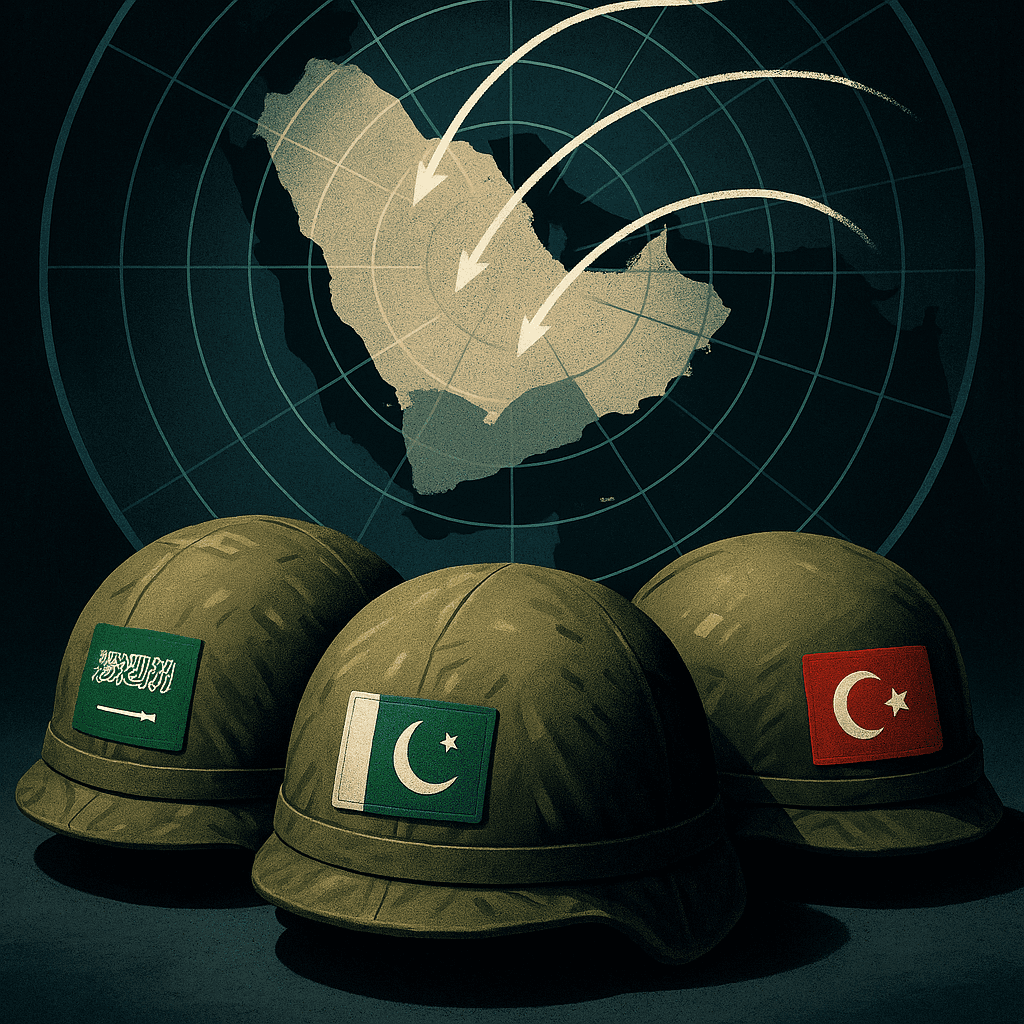
Through December 10, Houthis Won’t Damage Pakistan or Turkey Infrastructure
The Mecca Defense Pact just put two more flags on the Saudi firing chart. The consensus panic says this widens the war within weeks. The signal says the Houthis will talk big, hit Saudi and the sea, and leave Pakistan and Turkey’s hard targets alone for this 60 day window.
Comments
Be the first to comment.