By 2027, A Big Cloud Will Launch A Branded AI Router
The labs keep selling brains. The money is in the traffic cop.
The Bet: Someone Sells the Traffic Layer
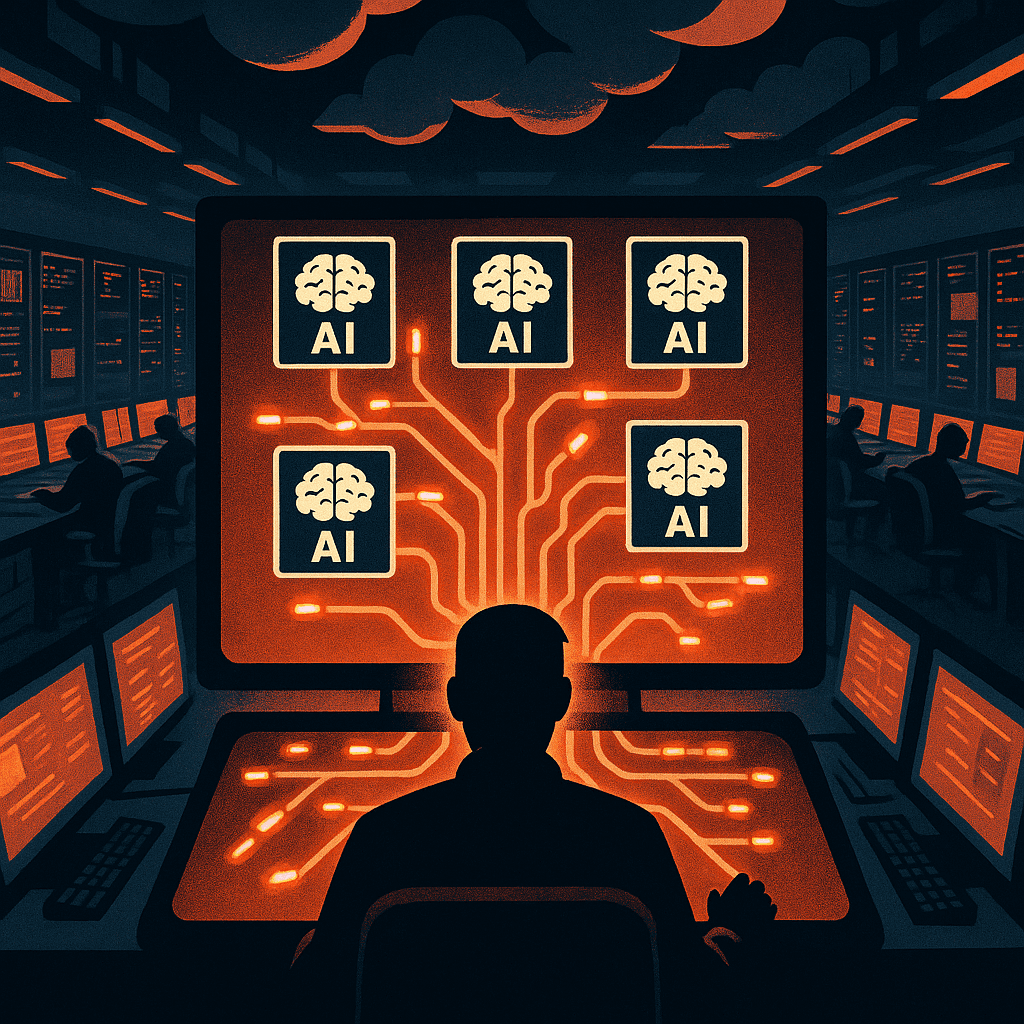
Before January 1, 2027, at least one of AWS, Microsoft, or Anthropic launches a clearly branded, multi‑model AI routing platform as a paid enterprise product. Not a buried feature, not a slideware architecture, a named thing with a SKU that decides which model runs your work and sends you the bill for that privilege.
The consensus fantasy is still that one model will rule them all. The reality in expense reports and procurement calls is much uglier. Companies are already quietly cheating on their primary vendor, swapping models whenever the CFO looks at the AI bill or a regulator learns what an inference is.
Routing, in other words, already exists. The question is who has the nerve to admit it on their pricing page.
The Drivers: Models Got Good, Then They Got Cheap
Once upon a hype cycle, you could claim your model was magical and justify any price. That window is closing. Capability gaps are shrinking. Price gaps are exploding. A specialist model undercuts a frontier one by 14× on narrow tasks. Claude Sonnet gets you nicer words at a noticeably higher line item.
When everything is good enough, enterprises behave like they always do: they arbitrage. Business Insider calls it modelmaxxing. You start the month on the shiny flagship model, hit your token ceiling, then quietly hand the rest of the work to something cheaper, maybe even open‑weight, and hope procurement never learns what you did to the data residency policy.
That behavior is no longer niche. Routing platforms are creeping from about 1 percent of firms to 5 percent. Startups like OpenRouter, Rayline, Fireworks, Together intercept requests and send them to the right model, or at least the cheapest one their customer can sleep with.
Add open‑weight and sovereign models to the mix and the game changes again. Nvidia’s Nemotron and friends give governments and big enterprises something they can audit, fine‑tune, and run in their own bunker. Mistral has turned “we run on your infra” into a sovereignty brand. When the model layer unplugs itself from the vendor’s data center, somebody has to coordinate the chaos. That somebody is the routing layer.
The Power Play: Clouds Descend, Labs Climb
Follow the money. AWS just put a billion dollars into Field Deployment Engineering, explicitly targeted at the “last mile” between models and real workflows. Microsoft responded with a $2.5 billion Frontier AI Deployment fund. These are not charity programs for confused CIOs. They are capitalization events for the control plane that sits above the models.
That is the same control plane Palantir is bragging about when Alex Karp tells The Information that agencies are dumping Anthropic for Nemotron running on Palantir. The details are murky, the structural signal is not. Governments want the right to switch models without rewriting their stack, and Palantir is gleefully auditioning for “sovereign router of record.”
The clouds can read a balance sheet. If Palantir and routing startups become the place where requests actually land, AWS and Microsoft become increasingly expensive electricity providers with a side hustle in model hosting. They do not spend billions to be the plumbing. They spend billions to be the switchboard.
Meanwhile, Anthropic is quietly behaving like a company that expects the margin to move above it. It is diversifying compute on to Google TPUs, renting SpaceX bandwidth, and flirting with its own chips. That is not a hobby. It is preparation for a future where whoever owns the routing layer squeezes the model suppliers on price.
Why They Have to Brand It
If routing is so obviously valuable, why has nobody slapped a logo on it? Right now, the clouds prefer strategic ambiguity. AWS calls Bedrock a foundation model service, Azure calls its thing a studio, Anthropic talks about Claude as a family of models with safety tooling. Routing lives inside the marketing goo as “orchestration” and “optimization.”
That works for early adopters who will read every doc page and wire it together themselves. It does not work for the next cohort: risk‑averse banks, regulated health giants, nervous governments that want model‑agnostic contracts and one throat to choke when a policy authorizes the wrong model in the wrong jurisdiction.
Those customers do not want vibes. They want something they can stick into an RFP. They want a brand name, an enterprise tier, SLAs on “route this class of task only to models whose weights live in this geography.” They want to know whether their router can hit Nemotron on‑prem, Claude via API, and whatever small model the finance team found on GitHub.
At that point, “it is part of our generic AI platform” stops closing deals. You need a real product line. That means:
- A distinct name or sub‑brand that a CISO can put on a risk register.
- Documentation that clearly markets multi‑model routing across at least two outside model families or open‑weights.
- Pricing or licensing that is separate from per‑model usage, whether metered or bundled.
The first player to check those boxes owns the category definition. Everyone else will be accused of copying their homework, even if they wrote the homework first.
Why This Could Still Be Wrong
The neat failure mode for this forecast is that the big three try to have it both ways. They keep quietly improving routing inside Bedrock, Azure, and Claude, but never pull it out as a standalone brand. It becomes a dense feature matrix, something you discover in a console rather than on stage at re:Invent.
That strategy avoids diluting their model brands and it keeps regulators slightly less interested in the fact that one company now automatically decides where half of corporate cognition gets executed. It also keeps co‑marketing partners happy, since nobody is officially selling a button labeled “send this workload to our competitor.”
There is also the possibility that enterprises simply do not want that much complexity. Many will pick one or two blessed vendors, crank the volume discounts, and call it “risk management.” If dynamic routing looks like extra ops without enough savings, budgets could tilt back to simple single‑vendor deals, with routing relegated to startups and Palantir for weirdos and spooks.
I do not think that version of the future beats the structural forces for long. Costs scale, regulators wake up, elections keep rewriting which frontier model is politically safe, and open‑weights keep improving. Complexity is not a bug anymore. It is the landscape. Someone has to sell the map.
The Call: Watch the Pricing Pages
So here is the scoring rule. This forecast resolves correct if, by January 1, 2027, at least one of AWS, Microsoft, or Anthropic has publicly launched a product that:
has a clear product or sub‑brand name, is sold as an enterprise offering with explicit pricing or licensing, and markets multi‑model routing as a core feature across more than one model family, including either third‑party APIs or open‑weight deployments.
If routing only exists as a fuzzy feature inside "AI platforms" with no distinct brand, SKU, or cross‑vendor positioning, this call is wrong, and the routing crown goes to Palantir and the startup routers by default.
My money is that a big cloud blinks first. They will not call it an "AI router" of course. We will get something like "Azure AI Fabric" or "Bedrock Control Plane" that sounds safely boring until you realize it is the gatekeeper to every model your company is allowed to think with.
Check back in 2027. If nobody has launched a branded router by then, it means the smartest people in the industry looked at trillions in potential margin and collectively decided to leave it to a handful of VC‑backed startups and Alex Karp, which would be the strongest argument yet that we really did build AI to automate human incompetence.
Around the Shallot
Stay in the same broken universe.
Forecasts, satire, cartoons, and quizzes should feel like one publication, not disconnected tabs.

Tech
‘Don’t Regulate Us,’ Beg AI Founders Currently Selling Regulation-As-a-Service
Silicon Valley hails Trump’s plan to let AI companies write their own rules, promises to sell those rules back to everyone else by Q4.
Oct 11
Forecast
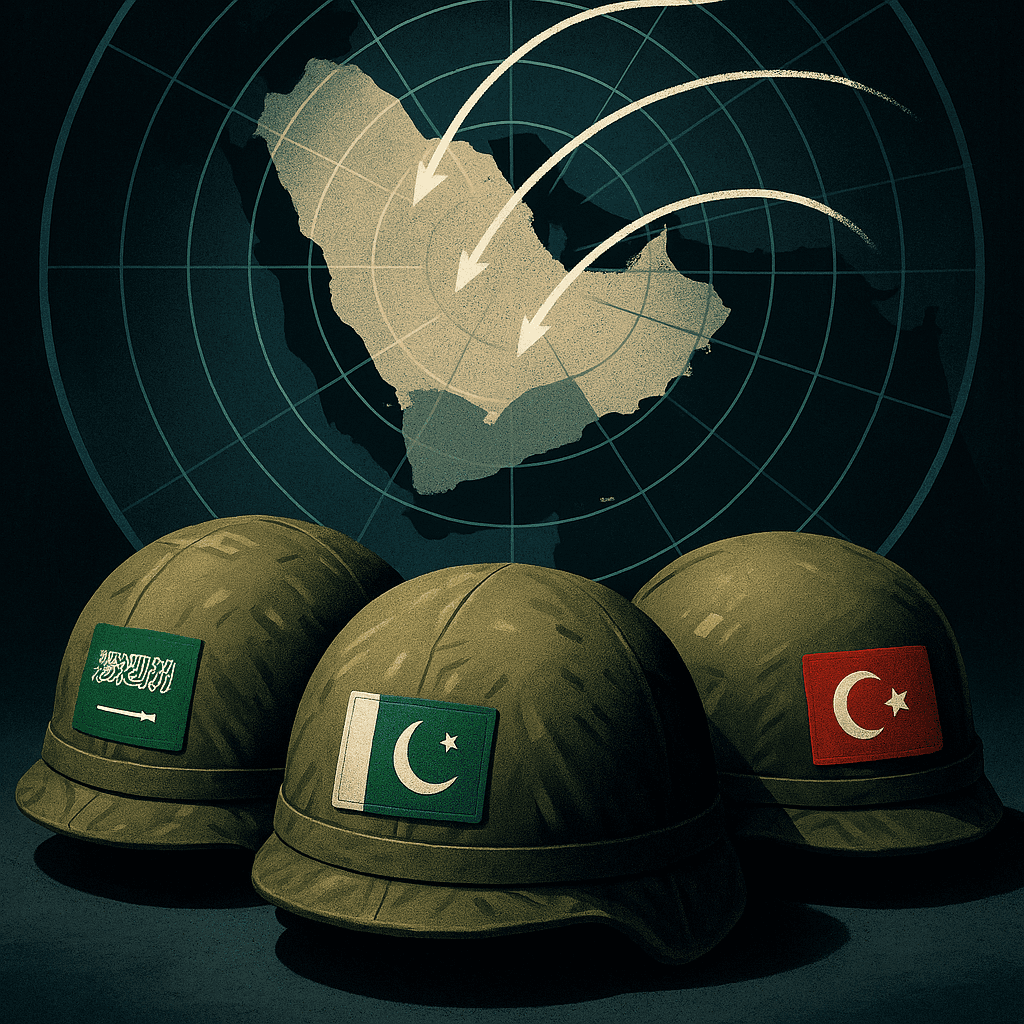
Through December 10, Houthis Won’t Damage Pakistan or Turkey Infrastructure
The Mecca Defense Pact just put two more flags on the Saudi firing chart. The consensus panic says this widens the war within weeks. The signal says the Houthis will talk big, hit Saudi and the sea, and leave Pakistan and Turkey’s hard targets alone for this 60 day window.
Comments
Be the first to comment.