By Ninety Days Out, Hormuz Oil Flows Will Stay Sub‑Three‑Quarter
My call: Three months from now, Hormuz is still too risky for three‑quarters of its old oil traffic.
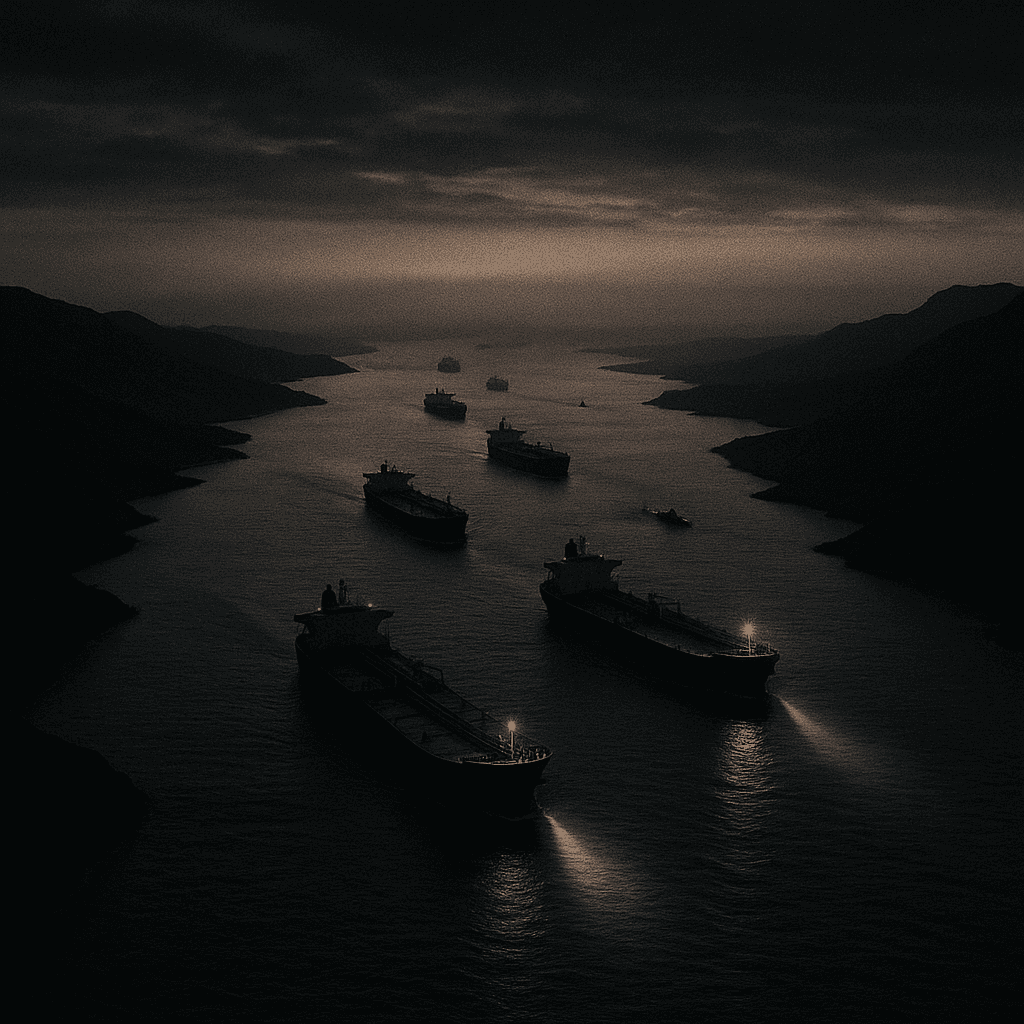
My call: Ninety days from now, the Strait of Hormuz is still not back to three quarters of its old oil and gas volumes under anything you would call normal commercial shipping.
The consensus wants a quick fix. The signal points to a long limp.
Everyone with a fuel bill is praying for the same headline: Trump and Xi strike breakthrough, Hormuz reopens, oil retreats. That is the comfort-object forecast. It feels responsible, it sounds diplomatic, and it politely ignores how wars and politics actually end.
The double chokehold on Hormuz, Iran’s naval grip on the strait plus the U.S. blockade of Iranian ports, has already dragged on long enough for the International Energy Agency to dust off words like “historic” and “permanent damage.” When the IEA starts talking in broken-vase metaphors, you are not in a tidy V-shaped recovery. You are in, at best, the era of drinking from the chipped side.
So here is the bet you can score later: three months from now, global oil and LNG moving through Hormuz will still be under 75 percent of prewar daily tonnage, and insurers will still be pricing the place like a bad neighborhood with nice views.
The bargaining gap is wider than the strait
Start with the paper trail. Iran’s last proposal arrived via Pakistan and read like a fantasy shopping list: war reparations from Washington, full Iranian sovereignty over Hormuz, sanctions gone, frozen assets back. Trump did not even pretend to chew on it. He spat it out on live television.
This is not a mid-deal quibble over sequencing. It is a fundamental mismatch in what each side thinks victory looks like. Iran is trying to convert its one working pressure point, energy disruption, into a wholesale rewrite of its status. The White House wants to walk into November claiming it crushed Iran, secured the strait, and did not pay for the privilege.
That kind of gap does not close in ninety days unless someone loses a war, a coup, or their mind. Iran’s theocracy, mutilated but still in control after assassinations up to the former supreme leader, has not collapsed. It is bleeding, not surrendering, and Hormuz is how it keeps the world interested.
Trump goes to Beijing, not to Geneva
Diplomatic optimists are pinning their hopes on Trump’s China trip. In theory, this is the pivot: Beijing is Iran’s biggest crude buyer, so Xi Jinping has leverage; Trump loves a made-for-TV “deal”; problem solved by photo op.
In practice, the trip is designed as pressure theater, not concession choreography. Trump has already framed the visit as a chance to make Xi “do something” about Tehran. His domestic base is primed to see any sanctions relief as capitulation, especially after the spectacle of a joint U.S.–Israeli war effort.
So the plausible Beijing outcome is not a grand bargain that normalizes Hormuz. It is something narrower and cheaper: maybe a carve out that lets some Chinese-bound cargo move under heavy escort, a humanitarian or “stability” channel, a few targeted waivers dressed up as toughness.
That nudges flows off the floor. It does not resurrect three quarters of prewar traffic with standard insurance and no diplomatic coronary risk.
Netanyahu’s open threat and the invisible insurers
Even if Washington and Tehran could squint their way to a framework, there is a third veto player in this story, and he is on American television saying the quiet part out loud.
Benjamin Netanyahu keeps insisting the war is “not over.” Nuclear material must leave Iran. If that does not happen by paperwork, he reminds viewers, the U.S. and Israel “can reengage them militarily.” This is not subtle. It tells Tehran that any climbdown on Hormuz without ironclad security guarantees is a mug’s game.
It also tells the people who actually decide whether the strait is “open” in a real-economy sense, the insurers, shipowners, and charterers, that tranquility is conditional and temporary. You can sign all the communiqués you want; if one Israeli interview can move war-risk premiums back to the ceiling, Hormuz is not back. It is on probation.
For our forecast, that matters more than the choreography of ceasefire announcements. Even a partial easing, a few protected corridors, does not count as a full reopening if the only tankers moving are state backed or effectively on combat tours.
Markets are already treating Hormuz as guilty until proven safe
The longer the strait stays choked, the less anyone believes in its old reputation as an unshakeable artery. Birol at the IEA has already declared the vase broken. Traders and governments are behaving accordingly: scrambling for non-Hormuz barrels, sweating pipeline capacity, stuffing crude into storage, signing boring but suddenly fascinating LNG contracts.
That adaptation does two unhelpful things for diplomacy. First, it dulls the urgency of a clean fix. Once you have spent real money on alternatives, the political appetite to give Iran sweeping concessions just to get back to the old normal shrinks. Second, it entrenches the view that Hormuz is structurally risky, which keeps risk premia and insurance costs high even if a few months go by without fireworks.
Put differently, the world is quietly rehearsing life with Hormuz as a chronic condition, not a one-off scare. The next ninety days are less likely to be a healing montage and more likely to be a slow acceptance arc.
The minority path to being wrong
There is a way this column looks foolish by late summer. It requires a sharp sequence that is visible from space: Trump and Xi emerging with a time bound, verifiable path to de escalation; Tehran dropping the reparations fantasy and parking its maximalist sovereignty claim; Israel holstering public threats long enough for underwriters to breathe; AIS data and satellite shots showing big tankers back in numbers; war-risk insurance close to prewar levels.
If that happens and average daily tonnage through Hormuz sits above 75 percent of its prewar baseline for a stretch under ordinary commercial cover, we will tag this forecast as wrong. No creative reinterpretations.
But look at the drivers as they stand: a shredded but surviving Iranian regime that needs leverage, a U.S. president who needs to look unbending, an Israeli prime minister who keeps saying “not over,” and global markets that are already diversifying away from the choke point.
Against that backdrop, betting on a three month miracle is not analysis. It is aromatherapy with a Bloomberg terminal.
Stakes: your gas bill and the new map
If this call is right, the world gets ninety more days of weaponized shipping lanes: higher energy prices, stickier inflation, slower growth, and a slow rerouting of the global energy map away from the Gulf’s narrow throat. Importers in Asia pay more, producers outside the region get a windfall, and every future conflict briefing includes a line that begins, “Remember when Hormuz stayed half broken for months?”
If it is wrong, and Hormuz really is humming back at three quarters capacity under normal terms by then, IEA metaphors will age badly, Xi will claim peacemaker status, Trump will tour the reopened strait in a bomber jacket, and traders will briefly pretend chokepoints can be tamed by press conference.
Either way, three months from now, we will know whether diplomacy reopened Hormuz or whether the market quietly unfriended it. My money says the oil flows will still be thin and the excuses will be thick, which is the only liquidity this war has reliably produced.
Around the Shallot
Stay in the same broken universe.
Forecasts, satire, cartoons, and quizzes should feel like one publication, not disconnected tabs.
Tech
‘Don’t Regulate Us,’ Beg AI Founders Currently Selling Regulation-As-a-Service
Silicon Valley hails Trump’s plan to let AI companies write their own rules, promises to sell those rules back to everyone else by Q4.
Oct 11
Forecast
Through December 10, Houthis Won’t Damage Pakistan or Turkey Infrastructure
The Mecca Defense Pact just put two more flags on the Saudi firing chart. The consensus panic says this widens the war within weeks. The signal says the Houthis will talk big, hit Saudi and the sea, and leave Pakistan and Turkey’s hard targets alone for this 60 day window.
Comments
Be the first to comment.