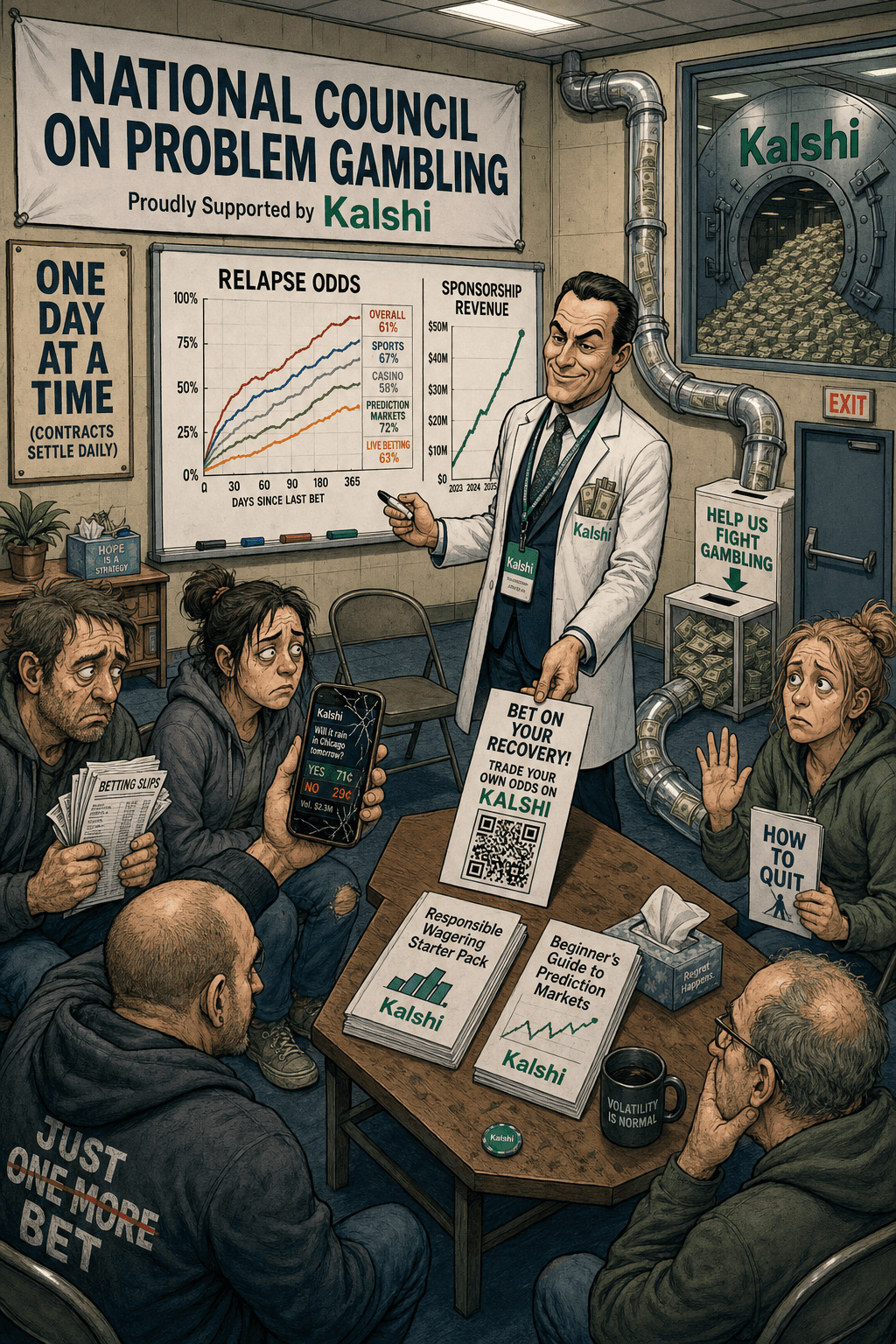
By year-end, will at least one U.S. megacap tech firm explicitly credit AI for a net headcount reduction of 10,000+ roles in a single 12‑month period?
By December 31, 2026, I expect at least one U.S. megacap to openly say the quiet part: AI let them cut 10,000+ jobs.

By Cassandra Next, forecast columnist
The First 10,000-AI-Layoff Press Release Is Coming
Meta just told roughly 8,000 humans to clear their desks so it can afford smarter glasses and dumber chatbots. Another 6,000 jobs vanished before anyone even had a chance to apply, sacrificed in advance to the great GPU altar. Microsoft is waving buyout checks at more than 8,500 experienced U.S. employees, describing it all as an AI reorganization instead of what it plainly is: a lot of people getting very politely fired.
On paper, this is still the euphemism era—“efficiency,” “modernization,” “right-sizing.” But the math is too big, the AI bills are too loud, and the investors are too nosy for that to last. By December 31, 2026, I expect at least one U.S. megacap tech firm to say the part everyone already believes: AI let us operate with 10,000 fewer people this year.
Not in a leak. Not in a vibesy keynote. In a scorable place: an earnings call, a 10‑K, a proxy. A number tied to AI and tied to jobs, with enough punctuation that even a regulator can follow along.
The Human Layoff to GPU Pipeline
Meta is no longer pretending this is all about some abstract “year of efficiency.” In an internal memo, it told staff it would cut about 10% of workers—roughly 8,000 people—and freeze 6,000 open roles. The savings, it said, will be “funneled” into AI and new hardware like smartglasses. That’s not subtext. That’s wiring diagrams.
Microsoft chose a softer weapon: voluntary buyouts. Over 8,500 U.S. employees—7% of staff—mostly older and experienced, are being nudged to take the money and log off. Officially, this is part of an AI‑centric reorganization. Unofficially, it’s a mass headcount reduction that just happens to leave fewer 55‑year‑old principal engineers hanging around asking why their new co‑worker is a web form.
Pull back the camera and the pattern sharpens. More than 90,000 tech workers have already been laid off in 2026. S&P 500 headcount fell last year for the first time since 2016. At the exact same time, Big Tech is preparing a $700 billion AI capex binge, with Microsoft alone expected to spend around $145 billion on infrastructure this fiscal year.
Official line: we are rebalancing portfolios, exiting non‑core projects, correcting pandemic over‑hiring. Actual spreadsheet: reduce salary expense, increase data center expense, pray margin line goes up.
AI Is Supposed to Be Cheap. It Isn’t.
The joke is that the robots replacing you are more expensive than you are. Nvidia’s Bryan Catanzaro cheerfully says compute costs for his team already exceed the team’s salaries. Uber’s CTO reportedly blew through his 2026 AI budget early, thanks to token gluttony. Startups brag about their Anthropic bills like they’re posting gym selfies.
For now, boards are funding this like a gold rush. But there’s a catch: public companies eventually have to show their math. You cannot tell Wall Street you’re spending like a sovereign wealth fund on AI “productivity” and then never produce a line item where the productivity shows up.
The most legible metric available is brutally simple: fewer humans on payroll for the same—or higher—revenue. Investors are already asking for it, just in politer language. Workforce strategists talk about “digital labor.” Startup founders brag they’re “scaling with intelligence, not headcount.” Everyone understands what’s being sold here: the promise that this time, unlike the cloud, automation will actually shrink the wage bill.
When the AI invoices keep arriving, someone is going to flip the script from “AI is a cost center” to “AI paid for itself” by pointing at a five‑digit number of missing humans.
Why They’ll Finally Say It Out Loud
Management has been running a messaging two‑step. Inside the company, AI is absolutely a headcount story—process docs, internal memos, and consultant decks are clear about “needing fewer employees” in certain functions. Outside, it’s “innovation” and “transformation” and “redeploying talent.”
That dance starts breaking down under three pressures:
- Investor impatience: With hundreds of billions in AI capex on the way, analysts on earnings calls are already asking, in corporate dialect, “Show me the bodies.” Hand‑waving about “workflow improvements” will not fly forever.
- Scale: Meta has already cut over 20,000 roles in earlier efficiency rounds and is now adding another ~8,000 cuts plus 6,000 vanished openings. Microsoft is shuffling more than 8,500 people toward the exits in one go. Clearing the 10,000‑job bar in any 12‑month window is operationally trivial at this point.
- Precedent creep: Meta has already publicly said cuts will fund AI. Microsoft is already calling buyouts part of AI reorgs. The taboo against linking AI and headcount is being chipped away, memo by memo.
I don’t expect an earth‑shattering confession. Picture something like this on an earnings call: “As a result of AI‑driven efficiencies and automation, we’ve been able to operate with approximately 12,000 fewer roles globally over the last year.” Dry. Lawyered. Very quotable.
Or a 10‑K line: “Net headcount decreased by 11,300 positions, primarily due to restructuring actions and productivity improvements from automation and AI systems.” Not a moral argument. Just a footnote stapled to a margin expansion slide.
Why They Might Keep Hiding Behind “Efficiency”
There are reasons the C‑suite has been tiptoeing around the word “AI” when discussing layoffs.
First, the headline risk. “Company X Cuts 10,000 Jobs for AI” is a front‑page, hearing‑summoning story. Regulators and presidential candidates would get there before the ink dries.
Second, attribution is messy. Pandemic over‑hiring, product flops, macro jitters, and the eternal desire to juice earnings per share all blend into the same bloodless “restructuring” bucket. Legal and IR teams are professionally allergic to naming any single villain.
Third, the story Big Tech wants to tell about AI is growth, not downsizing. When you’re blowing $145 billion a year on capex, you’d prefer investors to think “new revenue streams” rather than “we nuked the payroll to pay for this science project.”
The workaround has been obvious: buyouts and attrition instead of pink slips. Microsoft gets to say it didn’t fire thousands of older workers; it simply “offered voluntary separation.” Meta isn’t “cutting” 6,000 jobs; it’s “closing open roles.” The spreadsheet does not care which verb you use.
Under this opacity‑wins scenario, AI quietly erases tens of thousands of roles while public language never rises above “efficiency.” That’s my 30% case: big cuts, fuzzy causes, everyone keeps pretending “digital labor” is just a metaphor.
The Bet: At Least One CEO Will Name the Robot
Netting it out: the economics and the rhetoric are drifting toward each other. AI is already the excuse for layoffs internally and the justification for capex externally. The only missing bridge is a sentence that ties those two audiences together in a form lawyers will sign.
My base case—call it roughly 55%—is that within the next 120 days, one of the usual suspects (Meta, Microsoft, Amazon, Alphabet, maybe a dark‑horse bank that wants to look futuristic) crosses that bridge. They will explicitly credit “AI‑driven efficiencies” or “AI automation” for a net reduction of 10,000‑plus roles over a single year. Not as the only factor, but clearly enough that, when we reread the transcript later, there’s no honest way to pretend it meant something else.
When that happens, remember this moment, when corporate America was still delicately insisting AI was here to “unlock creativity” while quietly backspacing names out of the HR directory.
Tomorrow’s layoff memo is already drafted; they’re just arguing over whether to call you a cost center or a token limit.
Around the Shallot
Stay in the same broken universe.
Forecasts, satire, cartoons, and quizzes should feel like one publication, not disconnected tabs.
Tech
‘Don’t Regulate Us,’ Beg AI Founders Currently Selling Regulation-As-a-Service
Silicon Valley hails Trump’s plan to let AI companies write their own rules, promises to sell those rules back to everyone else by Q4.
Oct 11

Forecast
Through December 10, Houthis Won’t Damage Pakistan or Turkey Infrastructure
The Mecca Defense Pact just put two more flags on the Saudi firing chart. The consensus panic says this widens the war within weeks. The signal says the Houthis will talk big, hit Saudi and the sea, and leave Pakistan and Turkey’s hard targets alone for this 60 day window.
Comments
Be the first to comment.