Iran Will Disrupt Hormuz Shipping At Least One Week Before 2027
By the end of 2026, this ‘permanently toll free’ peace will have at least one week of very expensive fine print.
My call: the toll free Strait gets a week of turbulence before 2026 is out
Trump says Hormuz is now "permanently toll free." Iran’s war billboards say, in Farsi, "In Iran’s hands forever." When two governments announce the same deal with opposite verbs, do not invest in the noun, especially when one side is printing commemorative mugs before the ink is dry.
My call: between the signing of this US–Iran memorandum and December 31, 2026, there will be at least one 7 day stretch when the Strait of Hormuz is not the open, toll free firehose Trump is selling. Either Iran will move to monetize or "regulate" transit in a way that materially raises costs versus prewar norms, or shipping will slump below half the promised 40 to 50 ships a day after some incident or political dispute.
If this thing floats serenely through 2026 with stable, toll free flows and no week long disruption, I will happily eat crow. Right now, the text we have, the spin we do not, and the IRGC we absolutely do, point the other way.
The 60 day trial, not the lifetime subscription
Start with the one number both sides agree on: sixty. The public briefings, leaks, and Yahoo Finance write ups converge on a 60 day toll free window once the memorandum takes effect. After that, the story forks.
In Washington, the line is that 60 days is just a ramp. Trump talks about a "permanently toll free" strait, and a senior official says the text is "quite explicit" about toll free status for those first two months, with the expectation it rolls forward.
In Tehran, state media is selling something closer to a test drive. A proud Islamic Republic that "forced" the US to recognize its control. Joint "management" with Oman. Only the first 60 days guaranteed toll free. A big billboard of a military hand clutching Hormuz like a stress ball is not the visual language of a neutral maritime service provider.
So the actual architecture here is a short ceasefire wrapped in marketing: lift the blockade, let 25 ships a day climb toward 40 or 50, declare peace in time for the Friday signing ceremony, and promise that nuclear and missile questions will be tidied up in "technical negotiations" during the same 60 day window.
When the core fights are all postponed into the same small box that is supposed to guarantee long term access, you have not bought stability. You have bought a renegotiation cliff.
The IRGC owns the chokepoint, not the press office
If you want to know whether Hormuz remains open, ask who holds the guns, not who holds the pen.
Post war Iran is tilting from clerical rule toward military capture. The Revolutionary Guard is emerging as the dominant power center. Its business model is leverage, not integration. Hormuz is the one card that still scares everyone in the room.
Iran needs money. War damage and sanctions have shredded the economy. Vice President JD Vance is teasing up to 300 billion dollars in reconstruction funds if Tehran behaves: open the strait, play nice on nuclear, accept some inspections.
That is exactly the kind of conditional promise that invites extortion. If the cash moves slowly because Congress balks, or the White House trims relief under pressure from hawks, the IRGC will not shrug and say, "Ah well, sunk cost." It will reach for the asset it can weaponize in a week: "security fees," surprise inspections, or boardings that suddenly make insurers nervous again.
Remember, Iran’s Supreme National Security Council is already framing the memorandum as written with "active distrust." That is not the vocabulary of a side that plans to keep Hormuz boring for two and a half years just to help Trump’s gas price chart.
Markets heard the headline, insurers read the footnotes
Oil, equities, and politicians have already priced this as peace. "Let the oil flow," Trump says, and futures oblige. But shipping and insurance do not trade on applause lines.
Mines have to be cleared. Channels have to be verified. War risk premiums have to be justified to actuaries. Deutsche Welle’s business desk is already warning that even with a deal, disruption can persist for months. For underwriters, Hormuz is not suddenly Rotterdam with sunshine.
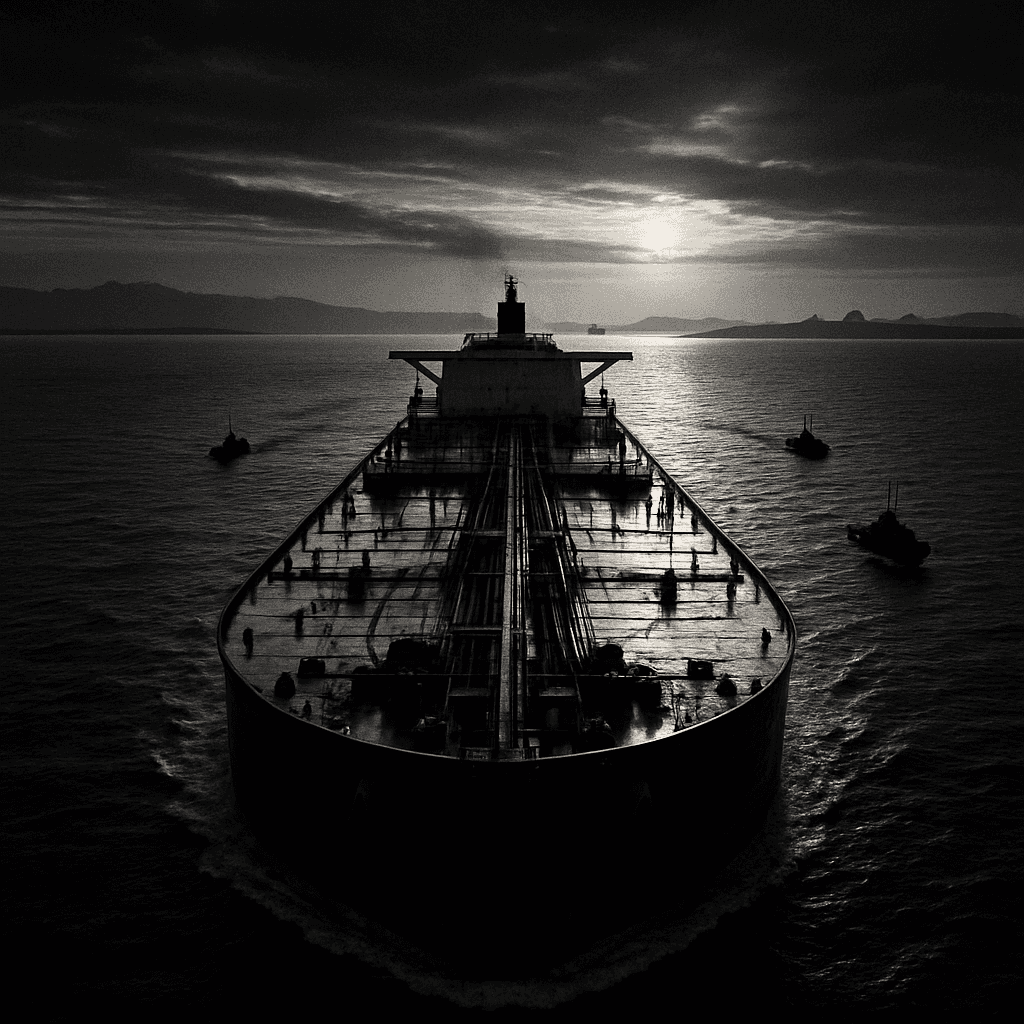
That is why the scoring bar for this forecast is not dramatic imagery, like a tanker in flames. A subtler reality will do. If an IRGC patrol decides to "inspect" a few tankers in a week when nuclear talks stall, insurers can hike premiums, captains can wait for escorts, and daily transits can dip below 20 ships, half the advertised target, without anyone formally announcing a blockade.
From the point of view of consumers, a week of constrained flows still hurts. From the point of view of this forecast, it is a clear breach of the White House sales pitch of a smooth, toll free spigot.
The technical talks time bomb
The other grenade sitting under this deal is labeled "technical negotiations." In theory, that 60 day window produces enforceable limits on Iran’s nuclear and missile programs, plus some understandings on proxies and regional fronts like Lebanon.
In practice, everyone is already using it as a suggestion box. Iran says it will keep "regulating" Hormuz. The White House denies it. Israeli leaders, according to the Los Angeles Times, privately see the terms as tying their hands and entrenching Iranian power. Trump officials cannot agree in the same news cycle whether there is front loaded sanctions relief.
This is not a recipe for a clean, technical compromise. It is a recipe for rolling mini crises. Each one will come with a very obvious IRGC lever: "Nice oil route you have there. Shame if the joint Iran–Oman management committee had concerns about certain tankers."
The counterargument is that Oman, Gulf producers, and European buyers will throw in enough money and diplomatic muscle to keep everyone calm. Maybe. But their leverage is financial and reputational. Iran’s leverage is physical and immediate. There is no faster way to remind the world that you matter than to slow a few dozen ships.
How this call could be wrong
There is a bull case against all this. It rests on the public text and on discipline in both capitals.
If the published memorandum really does lock in toll free passage well beyond 60 days, with Oman and maybe a multinational naval presence as referees, and if Trump and Vance front load enough visible economic rewards that the IRGC decides steady money beats episodic leverage, then Hormuz might stay more open than the cynics expect.
That scenario also requires Israel and its neighbors to swallow their doubts and avoid actions that give Tehran an excuse to reach for the strait. So far, that sounds like three different political systems all choosing restraint at the same time, for several years, in a region that treats restraint like a seasonal fad.
The satirical verdict
The Prediction Desk standard is simple: will we be able to score this later without interpretive dance. Here is the clean line.
If we get to December 31, 2026, and there has not been a single continuous week when either Iran slapped on meaningful tolls or quasi tolls, or traffic sagged below roughly 20 to 25 ships a day because of fear, mines, or manufactured squabbles, this forecast is wrong and the Trump–Vance sales pitch holds.
My money is on at least one such week. The memorandum reads like a 60 day ceasefire stapled to a wishlist. The power center in Iran profits from leverage, not predictability. The physical terrain is still littered with ways to cause trouble. And the domestic politics on both sides reward drama.
The Strait of Hormuz might be toll free on paper. In practice, it looks more like a subscription service, with your first 60 days free and surge pricing whenever someone in Tehran or Washington needs a headline.
Around the Shallot
Stay in the same broken universe.
Forecasts, satire, cartoons, and quizzes should feel like one publication, not disconnected tabs.
Tech
‘Don’t Regulate Us,’ Beg AI Founders Currently Selling Regulation-As-a-Service
Silicon Valley hails Trump’s plan to let AI companies write their own rules, promises to sell those rules back to everyone else by Q4.
Oct 11
Forecast
Through December 10, Houthis Won’t Damage Pakistan or Turkey Infrastructure
The Mecca Defense Pact just put two more flags on the Saudi firing chart. The consensus panic says this widens the war within weeks. The signal says the Houthis will talk big, hit Saudi and the sea, and leave Pakistan and Turkey’s hard targets alone for this 60 day window.
Comments
Be the first to comment.