Labour Will Make Andy Burnham PM Internally And Delay Any Election
My call: Labour will install Andy Burnham as prime minister through an internal contest, then refuse a snap election for at least 90 days.
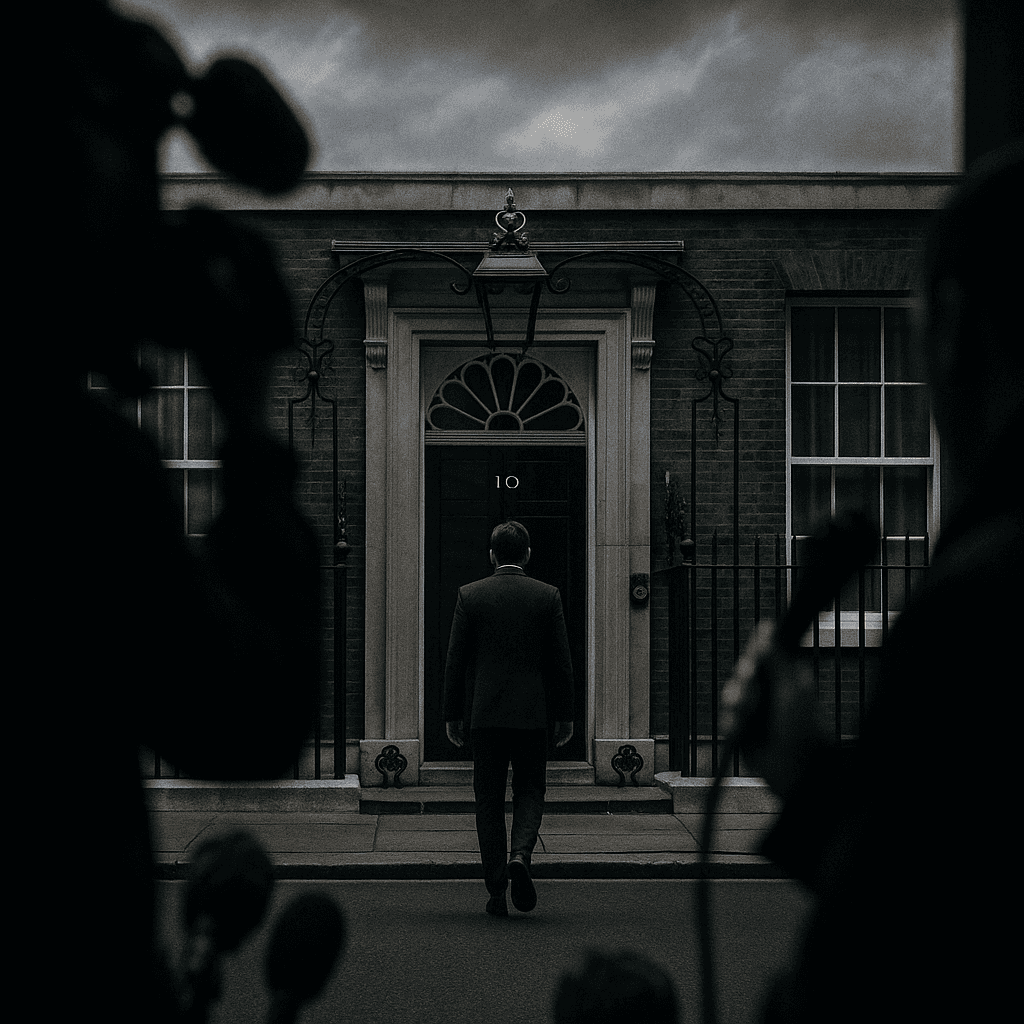
Keir Starmer is exiting Downing Street in record time. The UK is about to gain yet another prime minister that most voters never directly chose.
Here is the bet in plain English. Within the next 90 days, Labour will install Andy Burnham as prime minister through an internal leadership process and will not call or commit to a snap general election. The UK will get its seventh premier since 2016, selected by a few hundred Labour MPs and a nominations spreadsheet.
The consensus script says the optics are too toxic, that you cannot seriously unveil yet another unelected leader without hustling the country back to the polls. The signal says Downing Street is about to try exactly that, with a straight face and a fiscal rule.
The coronation is already in costume
The procedural story is dressed up as a contest. The practical story is a coronation with paperwork.
The Labour rules are doing most of the work. Any leadership hopeful needs 81 MP nominations to get on the ballot. That is one fifth of the parliamentary party, a hurdle designed to keep out jokers and, conveniently in this case, any serious alternative to the chosen man.
Burnham did not just wander back into Westminster. A safe Labour MP graciously vacated their seat so he could win a by election crafted for a leadership bid. He arrived in the Commons to a standing ovation and has already pocketed an endorsement from Wes Streeting, the rival who was supposed to be the real race.
Now the government has handed him confidential access talks and security briefings before candidate nominations even close. Those talks are meant for opposition leaders on the brink of an election. Here they are being used as pre match training for a man who is, formally, just another ambitious backbencher.
When Whitehall is already treating you as prime minister in waiting, you are not in a wide open contest. You are in a queue for the keys.
The 81 MP wall and the myth of the open race
Could anyone actually stop the coronation? In theory, yes. In practice, not before 16 July.
Darren Jones, Starmer’s numbers guy, and Al Carns, the ex defence minister, are being floated as challengers. Their pitch is pure good government energy: Britain should not get another prime minister by internal acclamation, and somebody needs to stress test Burnham’s economics.
There are two problems. First, they need those 81 MPs. A big chunk of the parliamentary Labour Party has already decided that the words “swift and orderly transition” sound a lot nicer to the bond markets than “ideological family therapy live on the BBC.” When a Cabinet Office minister is on air calling for speed, that is a signal, not a personal preference.
Second, Burnham’s allies have the classic front runner advantage. The more he looks inevitable, the harder it is for MPs to risk annoying his future whip by flirting with a challenger. Every new public endorsement for Burnham raises the effective cost of rebellion by one awkward shadow ministerial career.
The likeliest outcome is that Jones or Carns kick the tyres, make some speeches about democracy, and fall short of the threshold. If one of them does scrape on to the ballot, expect an accelerated, tightly managed contest that feels more like a ratification exercise than a genuine choice.
Why Labour will not risk the voters yet
Installing Burnham without a general election is not a legal problem. It is a vibes problem. Britain is already weary of midterm leadership swaps, and Labour spent years sneering at the Conservative carousel of unelected premiers. Now the carousel is in their garden and it matches the patio set.
Opposition leaders can smell opportunity. Ed Davey talks about a “merry go round of prime ministers.” Nigel Farage casts Burnham as yet another “professional politician” foisted on a disgusted public. The Greens mutter hopefully about “meaningful change” while keeping their options open. There will be motions, joint letters, perhaps a performative no confidence vote.
None of that forces an election. In a parliamentary system, the government asks for a dissolution. The opposition does not get a button marked “give us a mandate.”
From Labour’s perspective, a snap election is pure risk. They already hold a landslide that runs to 2029. The economy is fragile. The party is still cleaning up after the Mandelson fiasco and a bruising set of local results. Calling a voluntary national vote to validate a leader swap that voters did not ask for would delight constitutional purists and terrify anyone who remembers what British politics has done with the word “mandate” since 2016.
Burnham, for his part, is signalling continuity where it matters to jittery people in pinstripes. His upcoming speech is trailed as a promise to stick with the existing fiscal rules. He talks about council housing and public control of utilities, but wrapped in language about growth and stability. The message to markets is: yes, I have ideas, but I can read a gilt yield chart.
As long as the pound is not in freefall and gilt spreads are not screaming “radical left coup,” Labour can brazen out the legitimacy argument. They will insist that the 2024 majority was a mandate for a Labour government, not for the personal career plan of one former human rights lawyer.
What could break this script
For this forecast to fail, one of three things has to happen fast.
- A challenger actually clears 81 MPs and turns the race into a genuine ideological fight, forcing Burnham to outflank them by promising a public mandate.
- Public polling swings so hard for an immediate general election that Labour MPs start to panic about the optics of governing on fumes.
- Markets or ratings agencies take explicit fright at Burnham’s agenda, and party leaders decide that only a fresh election can reattach the words “stability” and “Labour” in the same sentence.
All are possible. None are visible yet. What we do see is a party machine that engineered Burnham’s return, locked in high nomination thresholds, and quietly started treating him as de facto premier before nominations opened. That is not how you behave if you are nervously workshopping a mandate.
Britain’s new normal: leadership by logistics
If this plays out as expected, the UK will have normalised a political logic that goes like this: the public hires a party, and the party hires the prime minister. Voters get their say every five years. Leaders get their say every time the focus groups wobble.
In the short term, that might even look efficient. The markets will stay mostly calm. The machinery of state will hum. Burnham will talk about reindustrialisation with one eye on the Red Wall and the other on the rating agencies. The merry go round will complete another rotation and the children will stop yelling for a minute.
But each unelected handover quietly writes a new line into the job description of British voter: you are a shareholder, not the hiring manager. The board appoints the CEO. Your role is to clap politely at the AGM and keep consuming.
So yes, expect Andy Burnham to walk into No. 10 by mid July, chosen by Labour’s internal calculus, not by the country. The elites will call it stability, the opposition will call it a stitch up, and a bored electorate will call it “whatever” until the next referendum shaped meteor appears.
On current form, Britain has not abolished the popular vote, it has just moved it to the complaint section.
Around the Shallot
Stay in the same broken universe.
Forecasts, satire, cartoons, and quizzes should feel like one publication, not disconnected tabs.

Tech
‘Don’t Regulate Us,’ Beg AI Founders Currently Selling Regulation-As-a-Service
Silicon Valley hails Trump’s plan to let AI companies write their own rules, promises to sell those rules back to everyone else by Q4.
Oct 11

Forecast
Through December 10, Houthis Won’t Damage Pakistan or Turkey Infrastructure
The Mecca Defense Pact just put two more flags on the Saudi firing chart. The consensus panic says this widens the war within weeks. The signal says the Houthis will talk big, hit Saudi and the sea, and leave Pakistan and Turkey’s hard targets alone for this 60 day window.
Comments
Be the first to comment.

