Trump and Xi Won't Finalize an Enforceable Trade Truce in 30 Days
No concrete, enforceable U.S.–China trade truce within 30 days, just gloss, pledges, and purchase orders.
The bet: Truce theater, not a real treaty
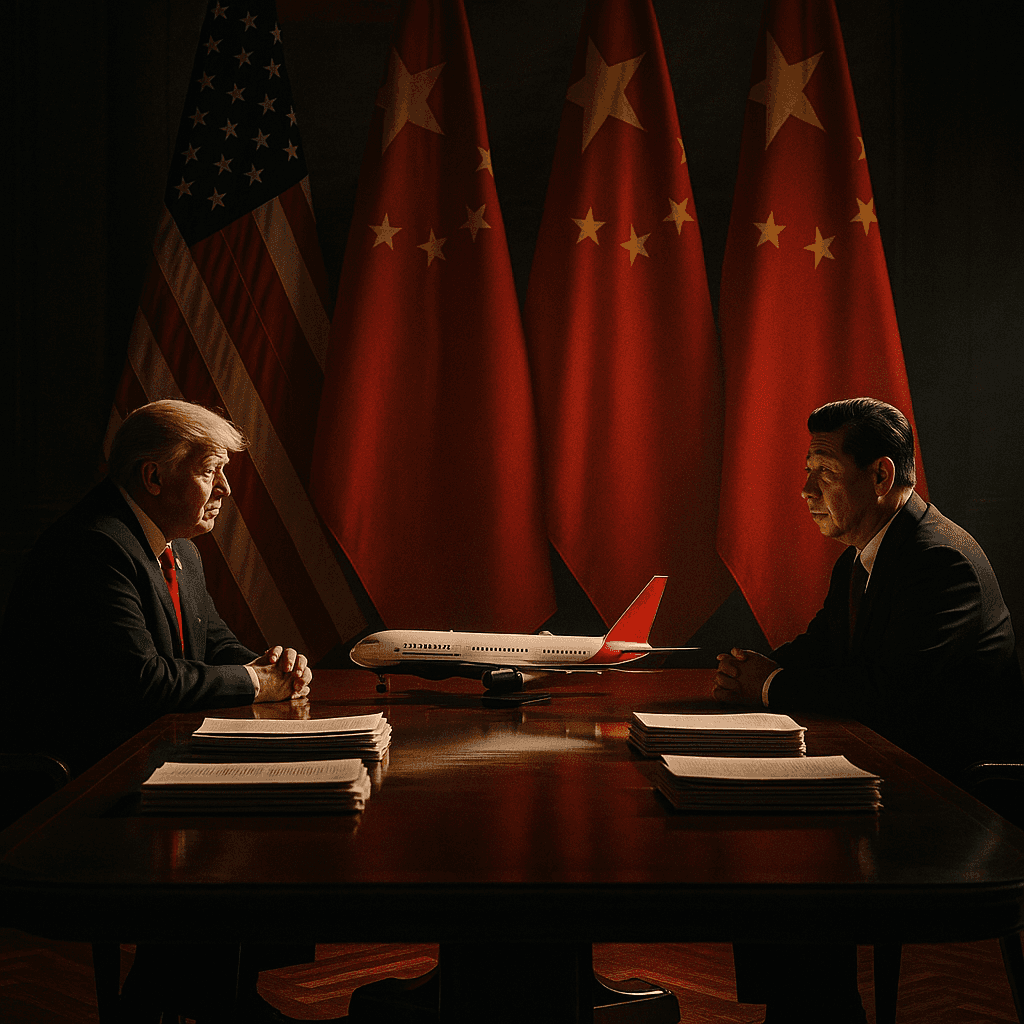
Picture the Beijing summit as markets would like it to be: Trump and Xi in the Great Hall of the People, chandeliers blazing, a line of CEOs as the backdrop, everyone waiting for the moment uncertainty gets packed into a neat PDF called something like the U.S.–China Trade Stability Accord.
My call: that PDF never shows up. Not in public, not in 30 days, not with real timelines and mutual obligations you could actually trade against.
You will get a handshake, large purchase announcements, optimistic talk about avoiding the Thucydides Trap, and maybe a shiny new Board of Trade. You will not get a concrete, enforceable truce that writes the current ceasefire into named law on both sides with time bound commitments anybody can verify.
The scorable claim
Here is the forecast in plain language you can later throw in my face:
By June 13, 2026, there will not be a signed U.S.–China trade agreement that (a) explicitly converts the current tariff and rare earths pause into a named framework or accord, and (b) contains at least one publicly disclosed, time bound implementation commitment on both sides. Symbolic extensions, aspirational communiqués, or vague frameworks without enforceable dates do not count.
If there is a document we can read, with a title, signatures, and clauses like "China will do X by date Y and the United States will do Z until date W," I am wrong. If all we get are carefully worded vibes plus some annexes about how many jets China might buy, this forecast stands.
Why the incentives scream optics over obligation
The hopeful scenario is that serious adults prevail, the ceasefire is formalized, and everyone can stop refreshing tariff rumor feeds. The actual incentives say the serious adults are performance artists working from different scripts.
Start with what both leaders do want: calm headlines and bragging rights. Trump is arriving in Beijing with markets at record highs and a delegation of billionaires who would love to exit with signed purchase orders. Xi is presiding over a faltering economy and wants to show that China is still a magnet for investment, not a sanctions pincushion.
That shared appetite for stability is real. It is also cheap. You can buy a lot of stability headlines with almost no structural concessions.
The hard part is what they want in return.
Washington’s list: big Chinese purchases of aircraft, farm goods, and energy plus more market access for U.S. firms. Beijing’s list: relief on U.S. export controls for advanced chips and manufacturing gear, less pressure on Chinese tech champions, and some visible dilution of U.S. support for Taiwan.
Those wish lists sit directly on top of each side’s red lines. U.S. semiconductor and AI restrictions are the core of Washington’s leverage, and support for Taiwan is one of the few bipartisan foreign policy positions left in American politics. On Beijing’s side, technological catch up and control over the Taiwan narrative are central projects, not bargaining chips.
It is hard to imagine those issues going into a detailed, public, time bound enforcement instrument in the middle of a war in Iran.
What a real truce would require
To beat this forecast, the two governments need to produce something more than a feel good joint statement about constructive dialogue. They need a document with teeth.
Look for three things in the next month:
- A named deal, not just a communiqué, that both sides explicitly call an agreement or framework on trade.
- Reciprocal, dated commitments, for example "China will purchase X billion dollars in U.S. goods by Q4 2027; the U.S. will maintain tariffs at Y percent until that date."
- Operational mechanics, such as how rare earths and tariff levels are monitored and what happens if either side cheats.
The history here is instructive. Previous Trump–Xi truces have been long on headline numbers and short on verifiable delivery. Purchases slip. Tariff threats reappear. Definitions get creative. When something is too painful to specify, it migrates into ongoing dialogue.
The early leaks around this summit look exactly like that pattern. Officials talk of mechanisms to support future trade and investment, of a Board of Trade, of forums on AI. They do not talk about locking in export control concessions or tariff ceilings for defined periods. Chip rules and Taiwan are on the agenda, which in practice means in the black box.
Markets want receipts, leaders want options
Wall Street and prediction platforms are not waiting for a grand bargain. They are betting on discrete, photo friendly outcomes you can quote on a trading floor: big aircraft orders, a handshake of a certain length, a mention of Iran or oil. The trade on Kalshi is whether Trump says Tehran, not whether annex 4(b) has enforceable milestones.
That matters. If investors were screaming for a codified truce, both sides might feel forced to swallow some pain to supply it. Instead, the price of admission to stability is relatively low: extend the October ceasefire, avoid new tariffs for a while, keep rare earths calm in public, wave some contracts, and let everyone pretend this amounts to predictability.
For Trump, that is perfect. He can claim the relationship is better than ever before, trumpet aircraft and soybeans, and quietly preserve the option to jack tariffs back up the next time a pollster frowns at him. For Xi, a somewhat predictable American president who is addicted to deal optics and unconstrained by his own bureaucracy is a feature, not a bug.
Binding timelines cut against both of their instincts. Trump hoards flexibility and headlines. Xi hoards strategic ambiguity and control. Neither man built his career by outsourcing power to an independent dispute resolution clause.
When avoiding the Thucydides Trap means avoiding specifics
Xi is leaning hard into the Thucydides Trap narrative, the rising power meets ruling power history lesson that launched a thousand think tank events. It sounds grand and statesmanlike. It is also a perfect rhetorical shield for doing almost nothing concrete.
If the story you are telling is that this is about the fate of world order, then of course you cannot get bogged down in petty details like tariff schedules or licensing timelines. You are here to make history, not publish annexes.
That works nicely for both sides. They can declare the summit a success if they simply do not blow up at each other. Any modest step, from a new hotline to an AI working group, can be packaged as institutionalizing stability rather than what it really is: costly clarity avoidance.
The Iran war and the Strait of Hormuz only deepen this temptation. When energy flows and regional wars sit on the table next to aircraft orders, the safest political play is to keep trade tools reversible in case the security picture shifts. That is not the backdrop against which you freeze export control policy in a legally binding way.
The satirical verdict
Here is how this likely plays out. Trump leaves Beijing claiming the biggest trade understanding in human history. Xi tells Chinese audiences that America has respected China’s core interests without quite explaining how. Traders celebrate their 8.5 second handshake contracts. Boeing executives check their phones. Somewhere, a Board of Trade subcommittee on strategic dialogue gets a logo.
What you will not have is a signed, named U.S.–China trade accord with mutual, time stamped commitments that tie either leader’s hands in ways voters or investors can hold them to.
The world’s two largest economies are about to prove once again that in a contest between enforceable rules and plausible deniability, plausible deniability clears the market every time.
If I am wrong and they hand us an actual, scorable treaty within 30 days, I will happily eat my words. Fortunately for my diet, the Beijing menu looks heavy on duck and light on binding commitments.
Around the Shallot
Stay in the same broken universe.
Forecasts, satire, cartoons, and quizzes should feel like one publication, not disconnected tabs.
Tech
‘Don’t Regulate Us,’ Beg AI Founders Currently Selling Regulation-As-a-Service
Silicon Valley hails Trump’s plan to let AI companies write their own rules, promises to sell those rules back to everyone else by Q4.
Oct 11
Forecast
Through December 10, Houthis Won’t Damage Pakistan or Turkey Infrastructure
The Mecca Defense Pact just put two more flags on the Saudi firing chart. The consensus panic says this widens the war within weeks. The signal says the Houthis will talk big, hit Saudi and the sea, and leave Pakistan and Turkey’s hard targets alone for this 60 day window.
Comments
Be the first to comment.