In Ankara, where NATO leaders gather to prevent wars with the enthusiasm of accountants closing a quarterly spreadsheet, Donald Trump has discovered the software industry’s favorite business model and applied it to ballistic missile defense: just tell the user to build it themselves.
On the sidelines of the NATO summit, as reported by The New York Times, Trump turned to Ukraine’s president, Volodymyr Zelensky, and announced that the United States would simply license Ukraine to manufacture the U.S. made Patriot air defense system. The plan, unveiled like a surprise product demo in a hotel ballroom with flickering fluorescent lights and coffee that tastes legally adjacent to cardboard, arrived with the kind of detail usually reserved for beta features and late night tweets.
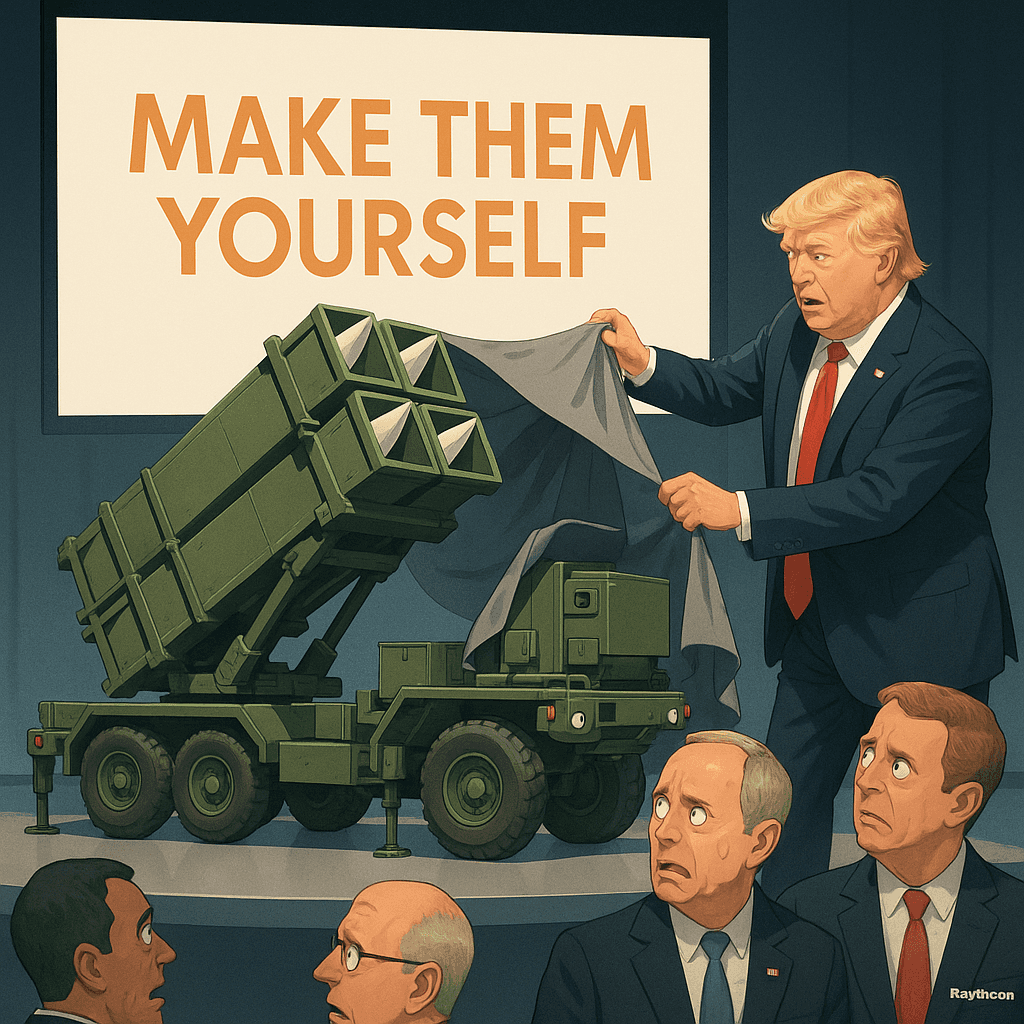
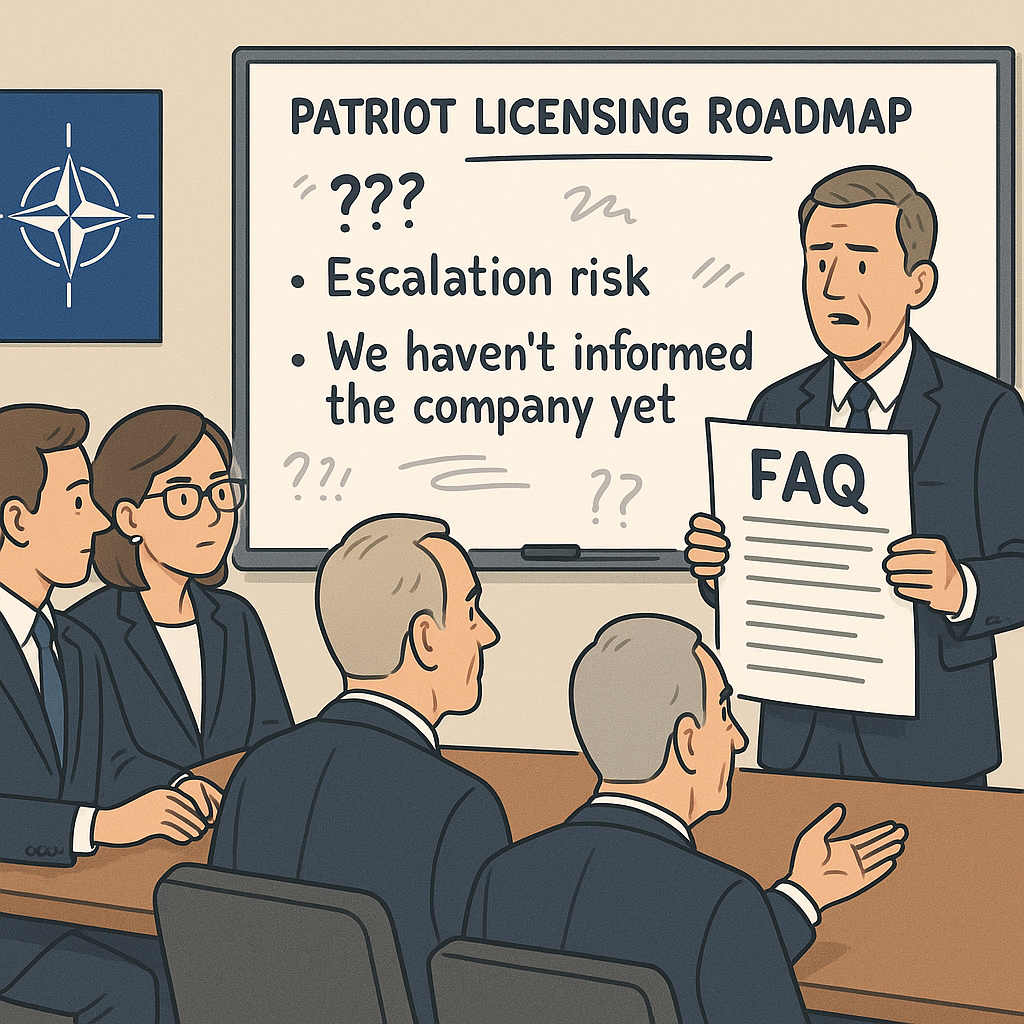
“This way, you can’t complain that we’re not giving them enough,” Trump said. “Let’s say, ‘make them yourself’.” He then added the quiet part out loud: “We haven’t informed the company of that yet, but that’ll work out all right.”
Somewhere inside Raytheon’s headquarters, a push notification labeled “That’ll work out all right” appeared on every lawyer’s phone at once, next to forty seven calendar invites titled “Emergency” and one titled “Oh God What Did He Say Now.” In a windowless conference room with dry bagels and a permanently broken Polycom, a junior counsel quietly opened a document named “Patriot_License_Final_FINAL_v23.docx” and whispered a word that is not in any official corporate values statement.
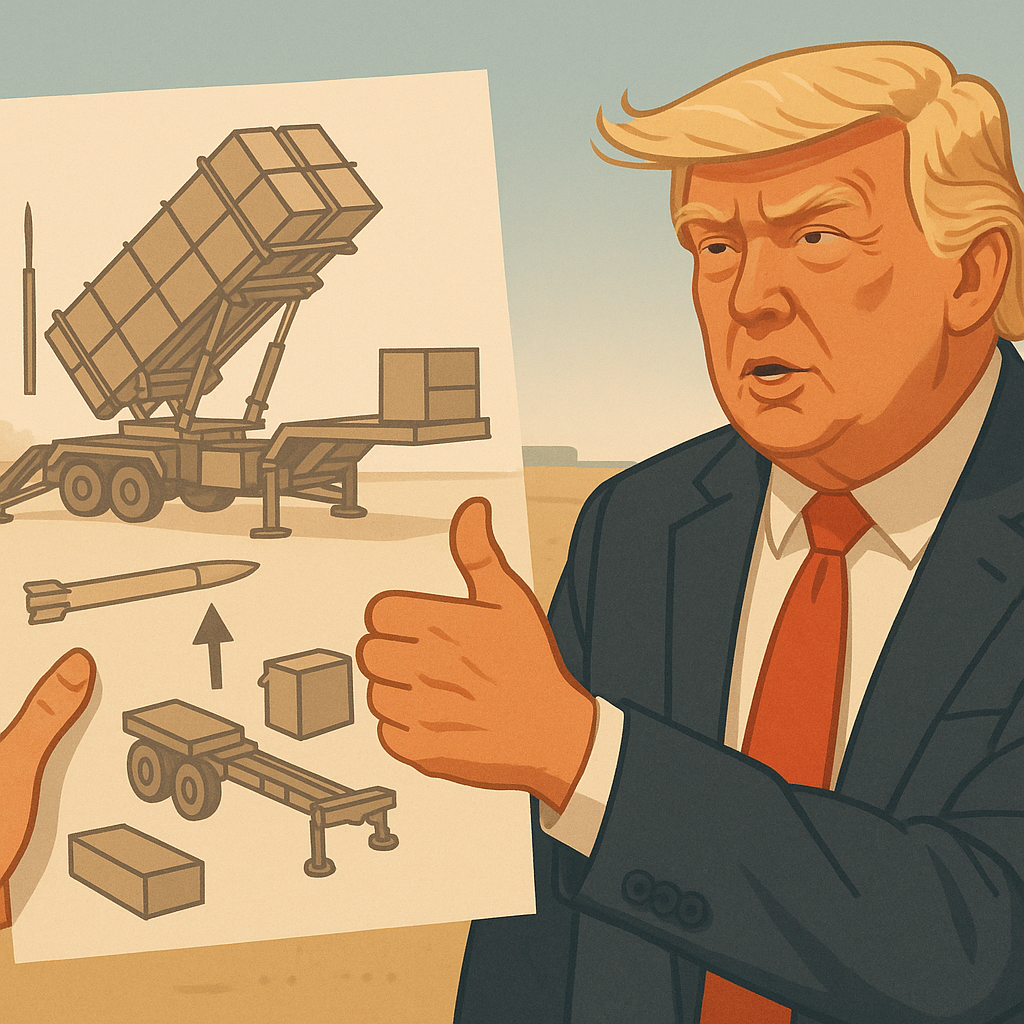
To defense industry analysts, the pitch looked familiar. Trump had essentially promised Ukraine a DIY missile defense creator suite, a Patriot Pro license with unlimited exports and zero consultation with the platform owner. It was alliance politics as a subscription tier: Ukraine upgraded to Creator Plan without clicking any box.
“This is the logical next step in defense tech,” said one NATO procurement official, who spoke on condition of anonymity because their Slack channels are discoverable and their WhatsApp thread with German counterparts is already named “Absolutely Not Subpoena Material.” “We used to have arms control treaties. Now we have an influencer partnership.”
Ukraine, under daily Russian missile and drone attacks, has spent months begging for more Patriot systems to close its air defense gap. Zelensky has warned that any delay in Patriot deliveries “significantly increases the risk of a direct war between Russia and NATO,” and has called for “affordable, mass produced antiballistic systems as soon as possible.” Within hours, Trump turned that into a kind of startup vision statement: what if Ukraine was not just a customer, but a creator.
“Make them yourself” is, of course, how most tech platforms eventually talk to their users once growth slows and regulators start asking questions. It usually comes right after “Move fast and break things” and just before “Check our help center for more information about why this is not our fault.”
At the NATO Defense Industry Forum, the timing created a sharp contrast. Alliance leaders were unveiling careful, yearslong plans to expand missile production capacity and navigate export controls. Trump counterprogrammed with a live pivot to user generated content, turning collective security into a kind of Patreon tier for countries that can weld.
“Think of it as Patriot 2.0,” said one person familiar with Trump’s thinking, who requested anonymity because they are technically just a television tuned permanently to cable news in a Mar a Lago guest room. “First we shipped hardware. Now we are shipping the brand.”
The Raytheon reaction was more traditional. The company’s stock initially dipped as traders tried to model the impact of waking up one day and discovering your flagship product has entered the public domain by presidential aside. A later analyst note reassured investors that “no known legal framework exists for this,” which is how you say “please do not sell” in Securities and Exchange Commission compatible language.
“Our understanding is that licensing multi billion dollar air defense systems involves treaties, export control regimes, and technology transfer protocols,” said an imaginary Raytheon spokesperson we generated out of LinkedIn bullet points and a Georgetown adjunct seminar. “But if there is a magic button the president can press, we would like access to that API.”
Behind the scenes, U.S. officials are now reportedly trying to determine whether Trump’s NATO stage announcement is binding policy, aspirational branding, or a verbal prototype that should have been kept in stealth mode. One State Department lawyer, reached by phone, responded with the sound of someone opening a 9,000 page PDF and then quietly typing “can the president do that” into a search bar that has seen some things.
For Ukraine, the offer is both surreal and brutally on brand. The country spent months lobbying for actual Patriot batteries, operators, and spare parts. It now appears to have received an unpaid internship at the U.S. military industrial complex, complete with the promise of exposure instead of actual missiles.
“We asked for missiles,” said one Kyiv official, speaking hypothetically, “and we got a franchise opportunity with no territory protections. Apparently our Article 5 is now a coupon code.”
The details of Patriot manufacturing are not typically thought of as a light hackathon challenge. Each launcher requires advanced radar systems, complex interceptors, encrypted software, exhaustive testing, and a supply chain that touches multiple continents and at least three parliaments having second thoughts. Trump’s Ankara announcement condensed this into a four word product roadmap.
Still, some NATO policymakers see potential. If Ukraine can be told to print its own Patriots, then perhaps future frontline states can be invited to “build your own F 35 at home using everyday household items.” Defense as a platform, with localized content and minimal customer support, where escalation comes bundled like cloud credits.
“This is a scalable model,” said a Brussels based think tank fellow, jotting down a grant proposal in real time on the back of a lanyard. “Today it is Ukraine. Tomorrow it could be Poland, the Baltics, or Taiwan. We just need a global SDK for escalation.”
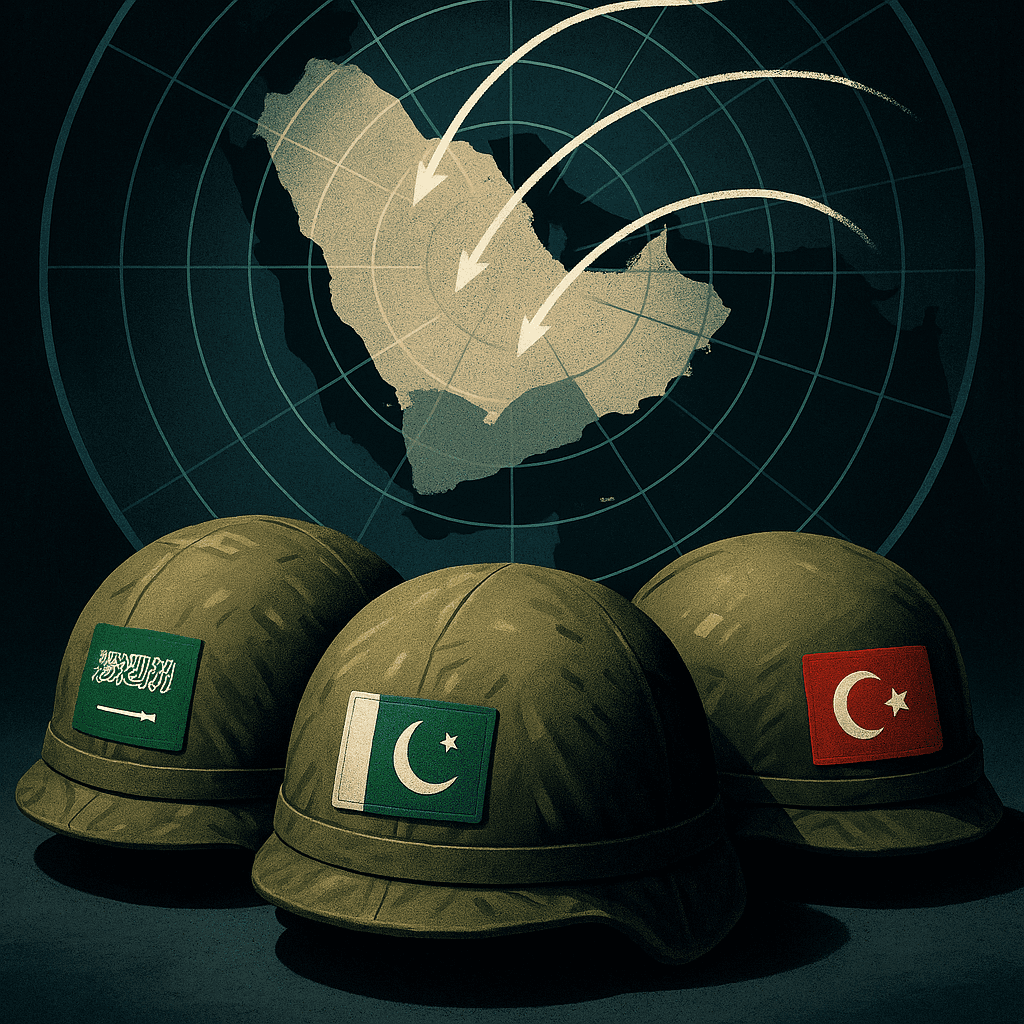
Complicating matters further, the Ankara summit is also where NATO leaders restated their opposition to Iran ever obtaining a nuclear weapon and urged Tehran to respect freedom of navigation in the Strait of Hormuz. Around the same time, Trump went on television and declared that the Iran ceasefire was “over” after new strikes, effectively shipping a major firmware update to regional stability without a changelog or even a push notification to the shipping insurers.
The result is a kind of simultaneous A/B test in conflict management. In Europe, the next phase of the war could be shaped by how fast Ukraine can hypothetically spin up a domestic Patriot line, how quickly Russia reacts to that, and whether NATO is then obliged to protect not just Ukraine’s cities but its new missile factories tucked between grain silos and half finished power substations. In the Gulf, shipping companies are refreshing their route planning apps every hour to see if “freedom of navigation” still includes their specific boats.
“We are confident that all these decisions are strategically aligned,” said one NATO diplomat, rotating between war room briefings and an arms deal photo op beneath a banner reading “Unity.” “In that they all happened on the same continent within 48 hours.”
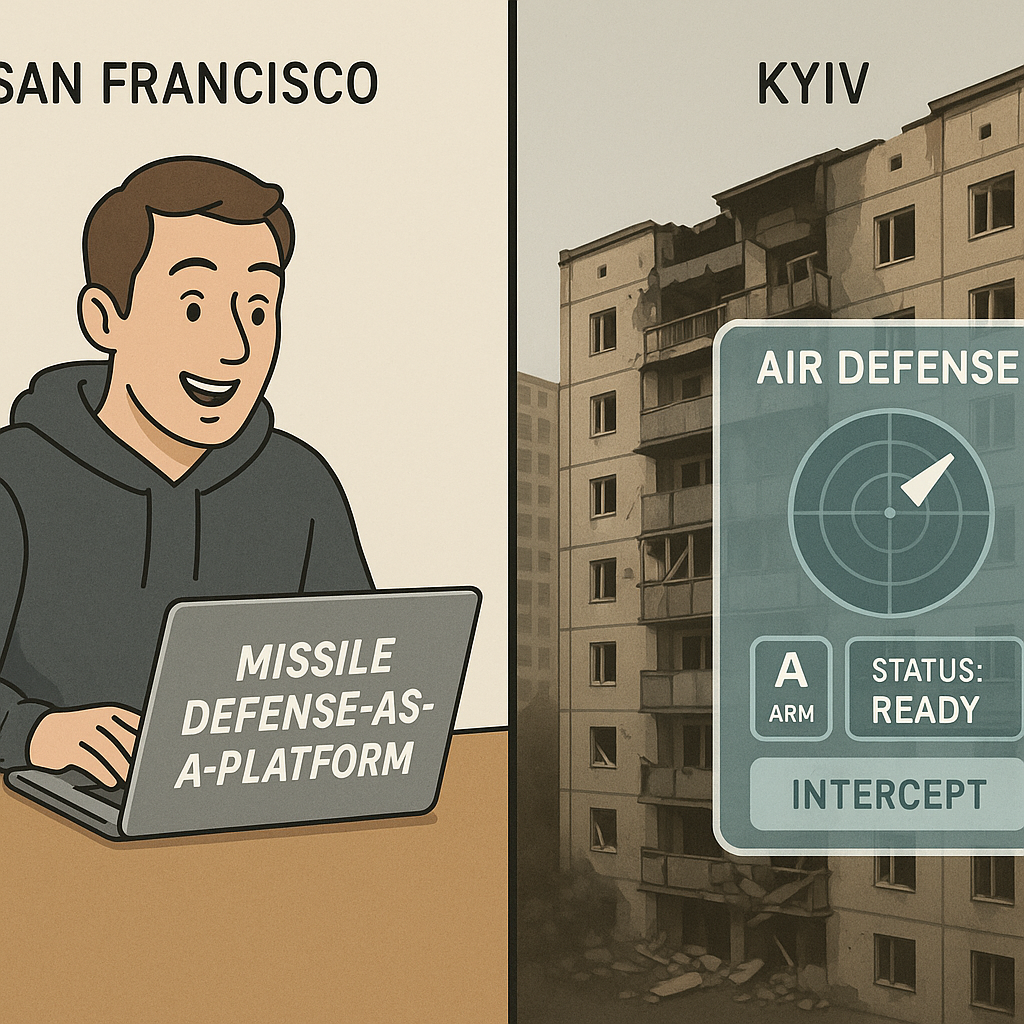
The tech sector, which now views every geopolitical crisis as a potential product vertical, is already circling the opportunity. Several venture funds in San Francisco, still flush from the A.I. IPO boom that, as The New York Times noted, is distorting the city’s housing market with stock fueled bidding wars, are reportedly discussing a new thesis around “sovereign defense tooling.”
“Look, if Raytheon does not want to be a platform, that is fine,” said one partner at a prominent fund, checking Redfin between panels at a conference called Future of Deterrence Live. “But there is clearly market demand for a no code solution that lets embattled democracies drag and drop a missile defense grid. We are thinking Figma, but for countering hypersonic glide vehicles.”
Founders are said to be preparing pitch decks with phrases like “NATO compliant API gateway” and “governance aware escalation controls.” Several have already reserved brand names with suspiciously cheerful consonant clusters. None has yet solved the problem of Russia reacting poorly to a YC backed startup shipping Patriots from a WeWork in Lviv where the coffee machine is next to a rack of interceptor fins.
Inside Ukraine, where residential towers in Kyiv have recently been torn open by Russian missile strikes, the surreal convergence of venture jargon and air defense reality is landing with less enthusiasm. You cannot A/B test your way out of a crater. Affordable, mass produced antiballistic systems are not a design sprint, they are the difference between a city existing and not.
Still, the narrative arc is clear. NATO convened in Ankara to showcase “huge arms deals,” as Reuters put it, and to project alliance unity. Trump responded by improvising a licensing promise that scrambled the legal, industrial, and escalation logic of high end weapons transfers, then followed it up by declaring an Iran ceasefire “over” in a 45 second NBC clip. The alliance insisted that it remained opposed to Iran getting a nuclear weapon. No one specified which permissions screen handles presidential feature releases to the global security stack.
Back in Washington, as visitors complained that a historic D.C. fountain Trump recently restored has already turned brown, a small group of national security staffers worked through the night on a more urgent plumbing issue: whether there is any way to turn off the part of the system where one man can suddenly convert a proprietary missile network into an open beta, then mark a Middle East ceasefire as deprecated, all before lunch. In a secure basement under the Old Executive Office Building, a contractor in a fluorescent vest stared at a nest of mislabeled pipes and quietly admitted that no diagram exists for this part of the republic.
If they ever find that valve, it will probably be labeled something very simple. Just four words etched into brushed aluminum in a secure basement under the Old Executive Office Building.
“Make him stop himself.”