Trump and Xi Won’t Sign a Concrete Hormuz-for-Iran-Oil Deal
My call: No real U.S.–China Hormuz‑and‑Iran‑oil deal is actually written and jointly owned within 30 days.
Will Trump and Xi Put Hormuz on Paper?
By Cassandra Next, Prediction Desk
The bet: vibes vs. PDF
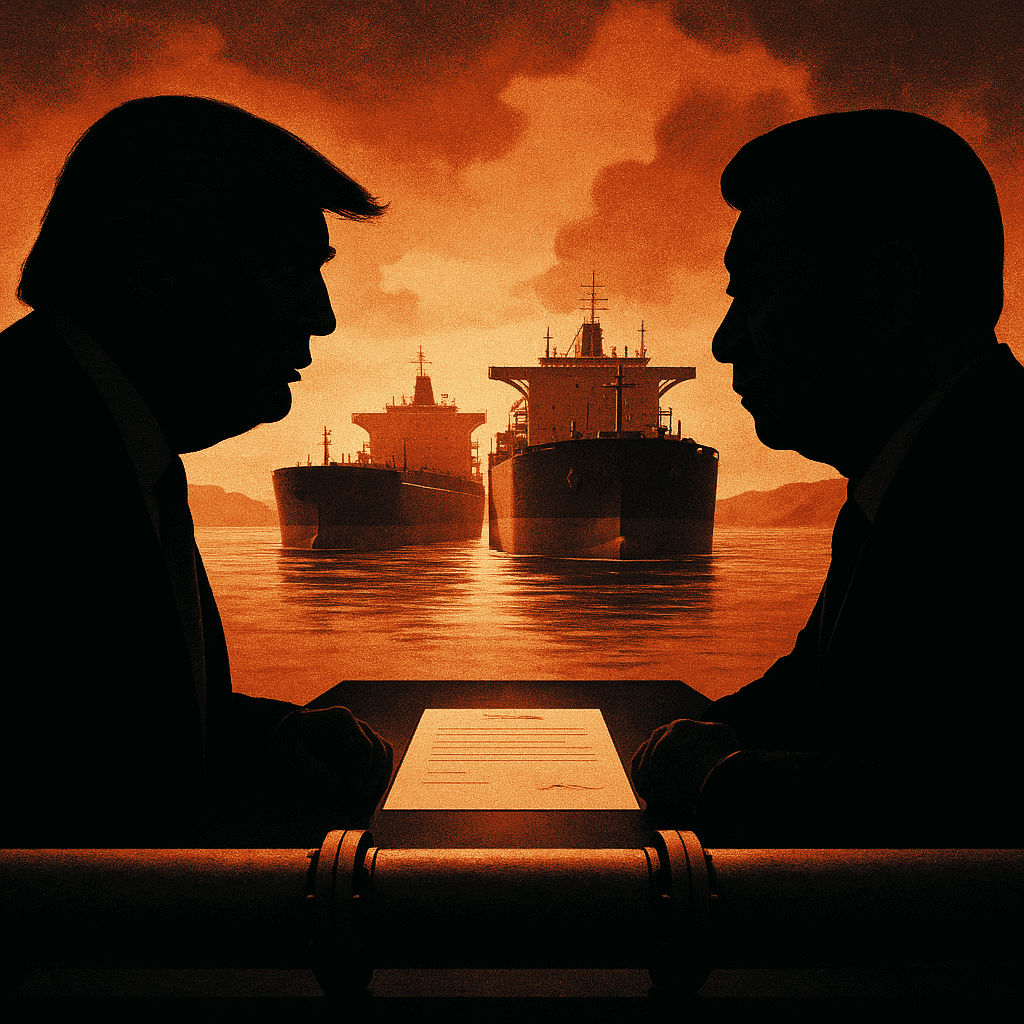
Trump is talking like he just closed the energy chapter of world history. Xi, he tells us, will help reopen the Strait of Hormuz, stop arming Iran, and send Chinese tankers to Texas, Louisiana, and Alaska stuffed with American crude instead of Iranian barrels.
My call: within 30 days of this summit, there is no mutually acknowledged written deal that both lays out concrete Hormuz rules and explicitly links them to measurable Chinese cuts in Iranian oil and more U.S. imports.
Not a vibes sheet. Not a Rose Garden ad lib. A real written instrument, recognizable from both capitals. That is what we are scoring against, and that is what I do not think you will get.
What would prove me wrong
To falsify this forecast, we would need something with teeth that is visible from both Washington and Beijing within 30 days. Think:
- A public joint statement, fact sheet, or leaked memorandum that spells out specific Hormuz commitments, such as keeping the strait open to all commercial traffic, rejecting tolls, or coordinating naval behavior, and
- Clear language that China will reduce or cap Iranian crude imports in some measurable way, paired with explicit plans to buy more U.S. oil, not just generic “interest” in diversification.
And crucially, China’s Foreign Ministry or equally authoritative outlets would have to affirm in substance that this is in fact what they agreed. A one sided Trump monologue about how “we have a beautiful deal” does not count.
Why Beijing likes fog more than ink
Start with China’s Iran problem. Beijing is not buying a little off brand crude from a sanctions outpost. It is Iran’s main customer and pays roughly thirty billion dollars a year for the privilege, built on long term contracts and a whole apparatus of sanctions dodging logistics.
Writing down, for the Americans, that it will cut those flows in favor of U.S. barrels is not a technocratic adjustment. It is a strategic pivot, in public, away from a partner that has been useful precisely because it is not Washington.
Then add sovereignty theater. Beijing has already told its companies to ignore U.S. secondary sanctions on Iranian oil. That was not just commercial advice, it was a line in the sand: big energy decisions are not supposed to be signed off in English under Treasury letterhead.
A written U.S.–China pact that effectively translates American sanctions aims into Chinese policy would be a domestic messaging nightmare. You can sell quiet diversification as prudence. You cannot easily sell a PDF titled “How We Complied With U.S. Iran Policy So You Don’t Have To.”
Trump needs paper, Xi needs deniability
Trump, meanwhile, has every incentive to hallucinate paperwork. Oil is north of $100, the IMF is warning about growth, and the Iran war is turning into a midterm liability. Touting “big statements” from Xi about no arms to Iran and a reopened Hormuz is good politics and good television.
The pattern is familiar. We have a U.S. readout full of declarative lines: Hormuz must remain open, no militarization, no tolls, “interest” in buying more American oil. Oil traders twitch, Gulf allies squint, and Fox News rolls chiron banners about Chinese tankers heading for Texas.
On the other side of the Pacific, Beijing’s response is studied boredom. The Foreign Ministry leans into generic support for stability and free flows of energy. State media focuses on Taiwan, trade, and the usual “mutual respect” boilerplate. The alleged grand bargain on Iranian oil is treated like a rumor from an annoying cousin.
That asymmetry is the whole story. Trump benefits from announcing a deal long before lawyers have spell checked it. Xi benefits from keeping any real concessions either small, slow, or deniable.
The 30 day mirage
Even if both leaders secretly wanted this specific swap, the calendar is not their friend. You are talking about a package that has to juggle:
Hormuz deconfliction rules during an active war, secondary sanctions on Chinese refiners, Iranian sensitivities, U.S. domestic politics, and the rest of the U.S.–China inbox: Taiwan, Boeing orders, tech controls, agriculture, investment reviews.
That is not a one month drafting exercise. That is a graduate seminar in how many ministries you can enrage at once.
The more realistic path is a foggy middle ground. Over the next month you will hear more lines like “both sides agreed the strait must remain open” and “China expressed interest in more American energy.” You may even see a quiet dip in measured Iranian imports or some symbolic U.S. cargoes to Chinese ports.
What you will not see is an agreed text you can quote that ties those movements together as a single, explicit U.S.–China Hormuz plus oil bargain. The ambiguity is the feature, not the bug. It lets Trump claim progress and Xi maintain plausible deniability with Tehran and at home.
Who loses if I am right
If this forecast holds, the losers are anyone who took the summit spin literally: energy markets that priced in a signed off ramp, Gulf states that thought great power coordination just broke out, and Iran, which will learn that even its best customer is more interested in optionality than solidarity.
But the main casualty will be an old habit. Every time a U.S. president walks out of a meeting with Xi talking about “big” breakthroughs, some part of the commentariat still reaches for the word “historic.”
Thirty days from now, when we are still looking for the China–Hormuz–Iran oil deal in the same folder as Trump’s infrastructure week, we can retire that reflex and file it where it belongs: under “non binding aspirations.”
Around the Shallot
Stay in the same broken universe.
Forecasts, satire, cartoons, and quizzes should feel like one publication, not disconnected tabs.
Tech
‘Don’t Regulate Us,’ Beg AI Founders Currently Selling Regulation-As-a-Service
Silicon Valley hails Trump’s plan to let AI companies write their own rules, promises to sell those rules back to everyone else by Q4.
Oct 11
Forecast
Through December 10, Houthis Won’t Damage Pakistan or Turkey Infrastructure
The Mecca Defense Pact just put two more flags on the Saudi firing chart. The consensus panic says this widens the war within weeks. The signal says the Houthis will talk big, hit Saudi and the sea, and leave Pakistan and Turkey’s hard targets alone for this 60 day window.
Comments
Be the first to comment.